


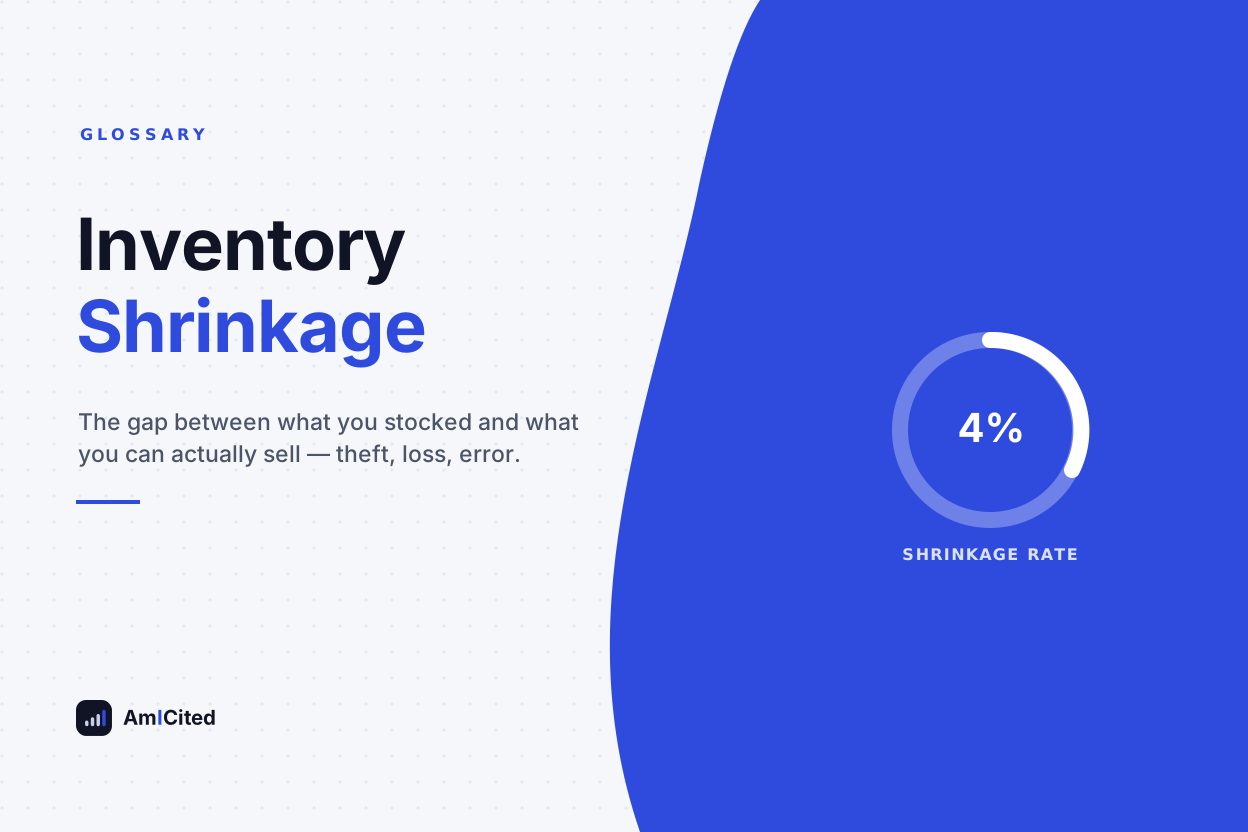
Shrinkage
Shrinkage is the loss of inventory that occurs between what a business expects to have on hand, based on purchase and sales records, and what physically exists in the warehouse or store. It results from theft, damage, administrative errors, supplier discrepancies, and, in ecommerce, issues like mis-picked or unscanned returns.
Definition of Shrinkage
Shrinkage is the difference between the inventory a business believes it has, based on purchase records and sales data, and the inventory that physically exists when someone actually counts it. The term originated in brick-and-mortar retail to describe stock lost to shoplifting, but it applies just as directly to ecommerce, where inventory moves through suppliers, warehouses, fulfillment centers, and returns processing, with each handoff introducing a chance for the recorded count and the real count to diverge. Shrinkage is usually expressed as a percentage of total inventory value, and it represents a direct hit to profitability: it is stock the business paid to acquire but cannot sell, whether because it was damaged, lost, stolen, miscounted, or never actually received in the quantity invoiced.
How Shrinkage Is Calculated
The standard formula is straightforward:
Shrinkage Rate = (Recorded Inventory Value − Actual Counted Inventory Value) / Recorded Inventory Value × 100
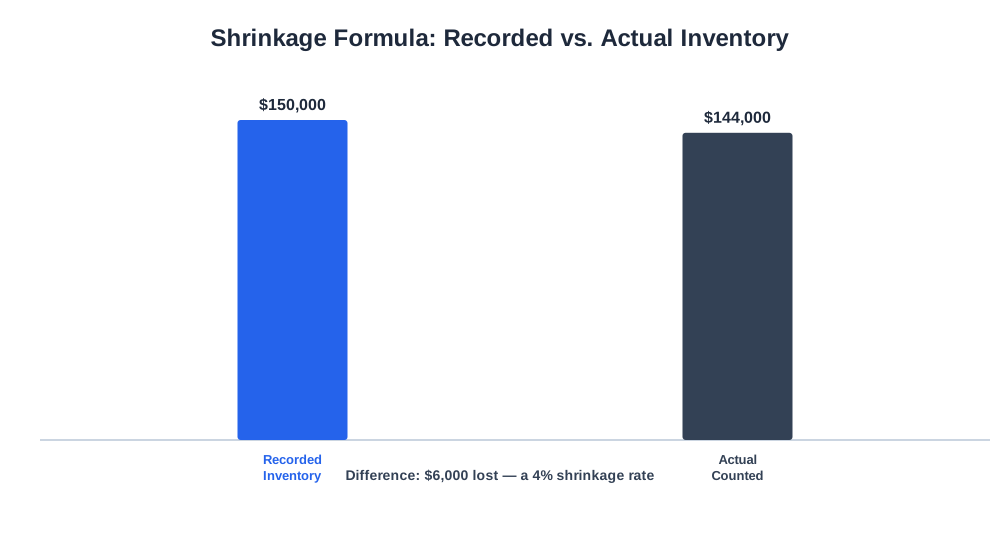
A worked example: a store’s inventory management system shows $150,000 worth of stock on hand based on purchase orders and recorded sales. A physical cycle count finds $144,000 worth of stock actually on the shelves and in bins. The difference, $6,000, represents shrinkage, giving a shrinkage rate of 4%. That $6,000 is inventory the business already paid for that generates no revenue, a straight loss against gross margin unless the cause is identified and recovered, for example through a supplier credit for a short shipment.

Ready to Monitor Your AI Visibility?
Track how AI chatbots mention your brand across ChatGPT, Perplexity, and other platforms.
Why Shrinkage Matters for E-commerce Brands
Shrinkage directly erodes gross margin, since every unit lost to theft, damage, or miscounting was already paid for as part of cost of goods sold with no offsetting revenue. A store running on thin margins can find that a shrinkage rate of even a few percentage points meaningfully changes overall profitability once totaled across a full catalog. Beyond the direct cost, unaddressed shrinkage distorts inventory planning: if the system shows more stock than actually exists, a store may believe it can fulfill orders that it cannot, leading to backorders, delayed shipments, and canceled orders that damage customer trust. Persistent, unexplained shrinkage is also often a symptom of a deeper operational issue, whether a specific warehouse process, a supplier relationship, or a returns handling gap, that will keep recurring quarter after quarter until it is diagnosed and fixed rather than just written off.
Comparison Table: Common Sources of Ecommerce Shrinkage
| Source | Typical Cause | Where It’s Caught | How to Reduce It |
|---|---|---|---|
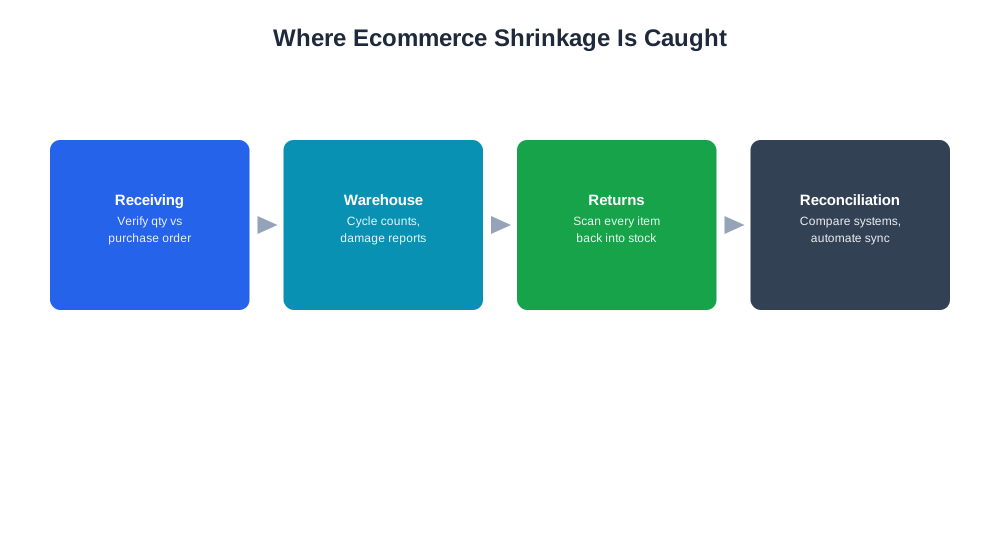
| Receiving discrepancies | Supplier ships less than invoiced | Receiving count vs. purchase order | Verify quantities on arrival, before stocking |
| Warehouse damage | Mishandling, poor storage conditions | Cycle counts, damaged-goods reports | Improve handling procedures, packaging |
| Picking and packing errors | Wrong item shipped, quantity errors | Customer complaints, return reasons | Barcode scanning at pick and pack |
| Return mishandling | Returned item not scanned back into stock | Inventory count vs. return log | Standardize return receiving workflow |
| Employee or vendor theft | Internal or supply-chain diversion | Cycle counts, access log review | Access controls, segregation of duties |
| Administrative error | Manual entry mistakes, system sync issues | Reconciliation between systems | Automate data sync, reduce manual entry |
Stay Updated on AI Visibility Trends
Get the latest insights on AI mentions, brand monitoring, and optimization strategies.
Shrinkage and AI-Driven Commerce
Shrinkage does not directly interact with AI shopping assistants the way pricing or product content does, but it has an indirect and important connection: unresolved inventory discrepancies are one of the most common causes of a product showing as in stock when it is not, which leads to canceled orders after a customer has already committed to a purchase, including purchases initiated through AI-mediated checkout flows like ChatGPT Instant Checkout. As more purchase volume moves through automated and AI-assisted channels where a human is not double-checking stock before confirming an order, keeping inventory records accurate becomes more consequential, not less, since there is less opportunity for a manual sanity check before a sale is confirmed.
On the analytics side, shrinkage is easiest to catch through margin reconciliation rather than waiting for a physical count to reveal it. AmICited’s eshop reporting reconciles recorded revenue and cost of goods sold across a store’s catalog, and a category or SKU whose actual margin consistently trails its expected margin, without a clear pricing or discount explanation, is often flagging an inventory loss issue worth investigating with a targeted cycle count.
Best Practices for Managing Shrinkage
- Run frequent cycle counts on a rotating subset of SKUs rather than relying solely on an annual full inventory count, so discrepancies are caught while their cause is still traceable
- Verify supplier shipments against purchase orders at receiving, before the stock is added to available inventory, to catch short shipments immediately
- Standardize the returns receiving process so every returned item is inspected and scanned back into inventory consistently, not left in a holding area
- Use barcode or RFID scanning at every inventory handling step, including receiving, putaway, picking, and returns, to reduce manual entry errors
- Segment shrinkage by cause where possible (damage, theft, administrative error, returns) rather than tracking a single blended number, since each cause requires a different fix
Common Shrinkage Mistakes
A frequent mistake is treating shrinkage as an unavoidable cost of doing business and writing it off without investigating the cause, when a meaningful share of shrinkage in most operations traces back to a specific, fixable process gap such as inconsistent return scanning or a particular warehouse shift. Another common issue is only measuring shrinkage at an annual physical count, which makes it nearly impossible to trace a discrepancy back to its source months after the fact; more frequent cycle counts on higher-risk or higher-value SKUs catch problems while they are still diagnosable. Some businesses also conflate shrinkage with markdowns or planned obsolescence write-offs, which blends two very different problems, one operational and one strategic, into a single number that obscures both. A further pitfall is failing to reconcile shrinkage against margin data by product line; a store that only looks at aggregate shrinkage may miss that the loss is concentrated in a single high-value category, where a targeted fix would have an outsized impact. Finally, some ecommerce operations underestimate return-related shrinkage specifically, assuming that a processed refund automatically means the physical item was correctly restocked, when in practice a meaningful share of returned inventory in fast-moving warehouses is lost, damaged, or simply never scanned back in.