


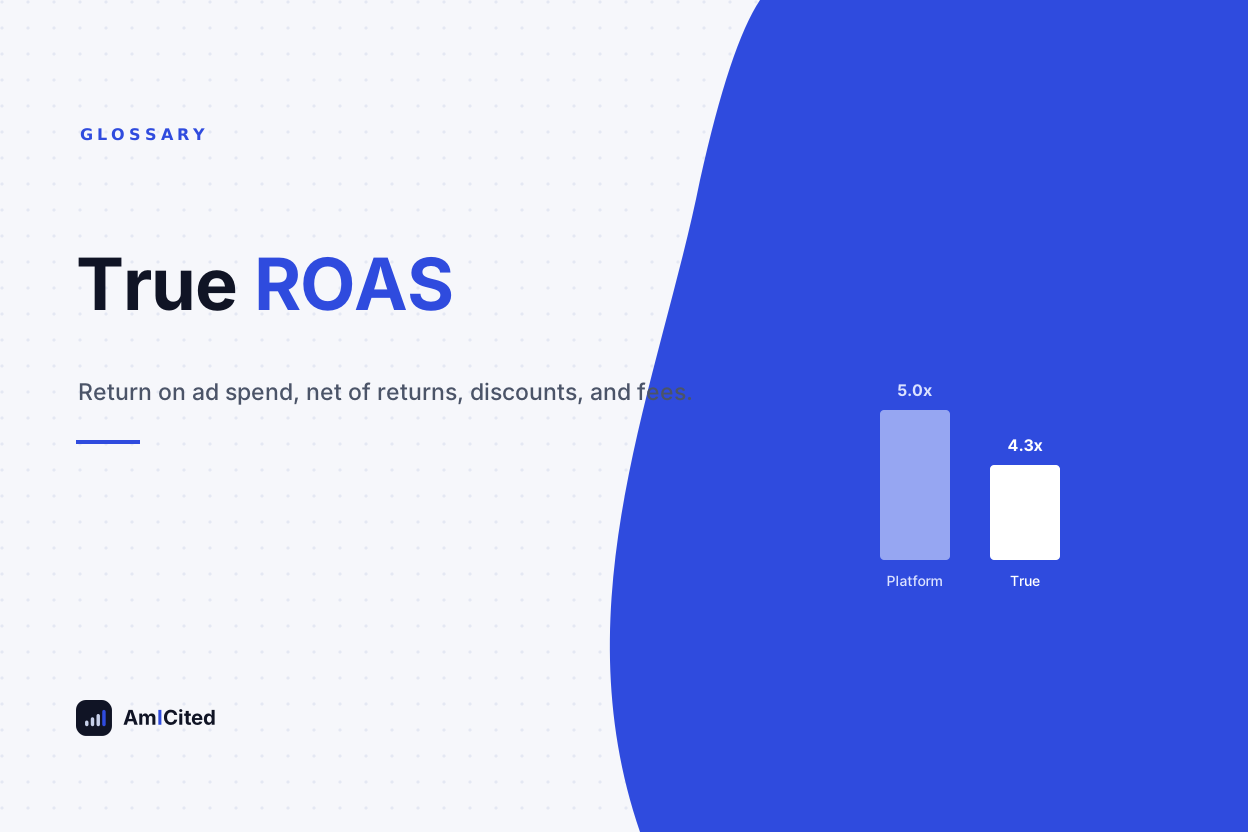
True ROAS
True ROAS is a return-on-ad-spend calculation based on actual, reconciled revenue attributed to advertising, rather than the revenue a platform like Meta or Google self-reports through its own attribution model. It corrects for over-attribution, cross-channel double counting, refunds, and other gaps that inflate platform-reported ROAS.
Definition of True ROAS
True ROAS (true return on ad spend) is a corrected version of the standard ROAS metric that uses reconciled, net revenue actually attributable to an advertising channel, rather than the revenue figure that ad platform (Meta, Google, TikTok, and similar) reports about their own performance. Standard ROAS is calculated as revenue divided by ad spend, but the revenue side of that equation is usually pulled straight from the ad platform’s own attribution system — a system with a direct incentive to claim credit for as many conversions as possible. True ROAS instead starts from a store’s actual order and payment data, subtracts refunds and chargebacks that occurred after the sale, and resolves cross-channel attribution conflicts (where two or more platforms both claim credit for the same purchase) before dividing by ad spend, producing a number closer to what the business actually earned from its advertising.
How True ROAS Is Calculated
The standard ROAS formula is straightforward: revenue attributed to a channel divided by spend on that channel. The complexity in true ROAS comes from getting the revenue side right. The process typically involves: pulling actual order-level revenue from the store platform rather than the ad platform’s dashboard; matching each order to its real acquisition source using first-party tracking rather than relying solely on the ad platform’s own pixel; subtracting revenue from orders later refunded or charged back; and, where multiple platforms claim credit for the same order (a common occurrence when a customer clicks a Meta ad, later clicks a Google ad, then purchases), assigning that order’s revenue to a single source using a consistent attribution rule instead of letting both platforms count it in full.
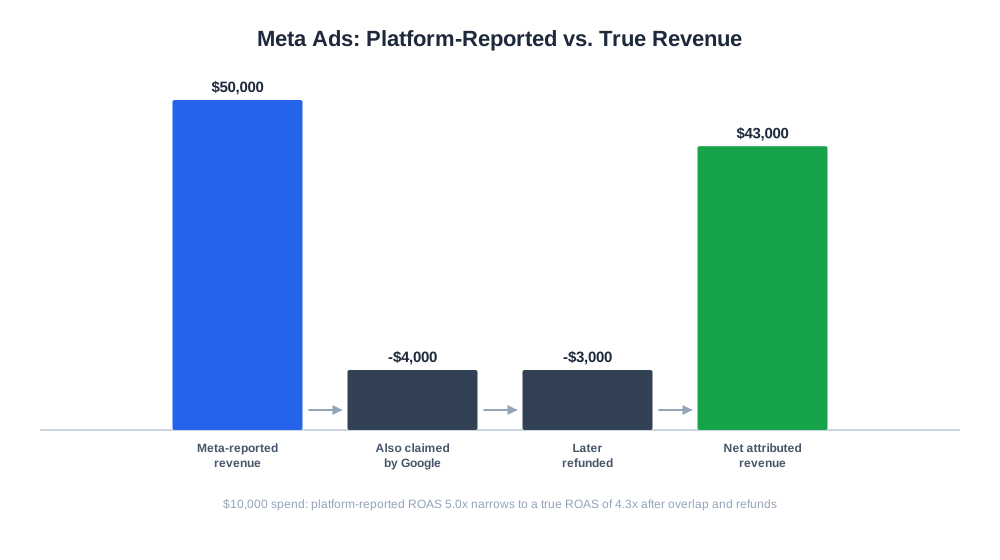
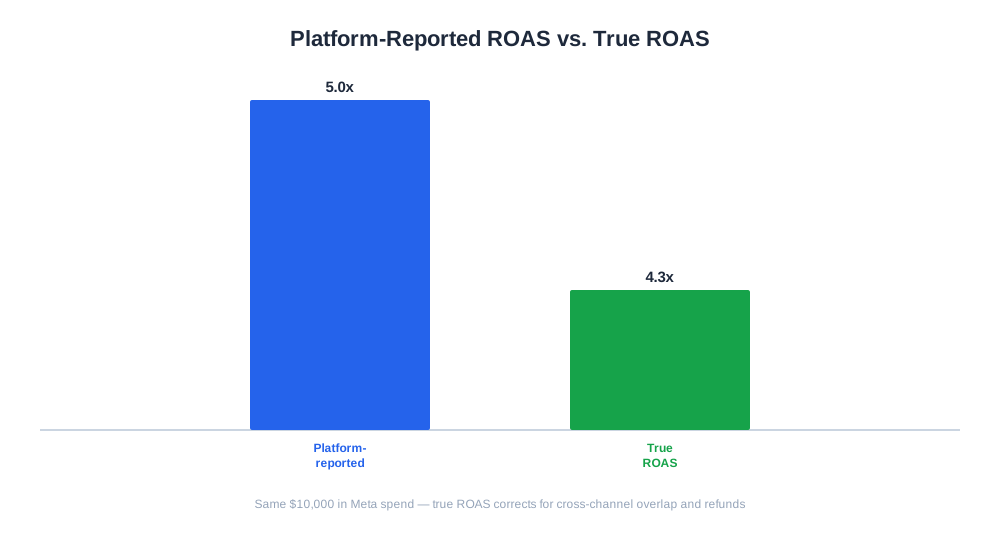
A worked example: a store spends $10,000 on Meta ads in a month. Meta’s own ads dashboard reports $50,000 in attributed purchases, for a platform-reported ROAS of 5.0x. When the store reconciles that $50,000 against actual order data, it finds $4,000 of those “conversions” were also claimed and counted by Google ads for the same orders, and $3,000 worth of the attributed orders were later refunded. Net attributable revenue for Meta comes to $43,000, producing a true ROAS of 4.3x — a meaningfully different number than what the platform’s own dashboard suggested, and one that could change a budget allocation decision.

Ready to Monitor Your AI Visibility?
Track how AI chatbots mention your brand across ChatGPT, Perplexity, and other platforms.
Why True ROAS Matters for E-commerce Brands
True ROAS matters because budget decisions made on inflated numbers compound over time. A merchant who allocates spend based on each platform’s self-reported ROAS, without reconciling for overlap and refunds, will systematically overinvest in whichever platform’s attribution model is most aggressive about claiming credit — not necessarily the platform actually driving the most incremental revenue. Over a full year, this can mean thousands of dollars shifted toward a channel that looks more efficient on paper than it is in reality, at the expense of a channel whose true performance is being understated because it plays attribution more conservatively.
This matters even more for stores with above-average return rates, since a sale attributed and celebrated at the moment of purchase can silently reverse days or weeks later without the ad platform’s ROAS figure ever adjusting downward to reflect it.
Platform-Reported ROAS vs. True ROAS
| Aspect | Platform-Reported ROAS | True ROAS |
|---|---|---|
| Revenue source | Ad platform’s own attribution system | Store’s actual reconciled order data |
| Cross-channel overlap | Each platform counts independently, often double-counting | Resolved to a single attributed source per order |
| Refunds/chargebacks | Rarely subtracted after the original sale | Subtracted to reflect net kept revenue |
| Attribution window | Set generously by the platform itself | Set by the merchant based on realistic customer behavior |
| Bias | Inflated in the reporting platform’s favor | Neutral, tied to actual business outcomes |
Stay Updated on AI Visibility Trends
Get the latest insights on AI mentions, brand monitoring, and optimization strategies.
True ROAS and AI-Driven Commerce
The rise of AI shopping surfaces — ChatGPT Shopping, Perplexity Shopping, Google AI Overviews — adds a further attribution wrinkle: purchases influenced by an AI assistant’s product recommendation may not carry a clean referral tag back to the ad or content that originally drove awareness, making it even easier for traditional ad platforms to overclaim credit for a sale that was actually influenced elsewhere in the customer’s research journey. As more purchase paths run through AI intermediaries rather than direct ad clicks, merchants relying purely on platform-reported ROAS risk an even wider gap between what platforms claim and what actually happened.
This is exactly the calculation AmICited’s eshop_get_cac_roas tool is built around: it computes CAC and ROAS from ad spend reconciled against actual attributed revenue rather than trusting each platform’s self-reported numbers, giving merchants a consistent, comparable true ROAS figure across channels including newer AI-driven discovery paths.
Best Practices for Calculating True ROAS
- Always calculate true ROAS from net revenue (after refunds and chargebacks), not gross order value at the moment of sale.
- Use a single, consistent attribution model across all channels when resolving cross-platform overlap, rather than letting each platform’s dashboard stand alone.
- Reconcile ad spend and revenue on the same cadence you make budget decisions — weekly reconciliation is of limited use if budget is reallocated daily based on platform dashboards.
- Compare true ROAS against gross margin, not just revenue, since a channel with a high true ROAS on low-margin products may still be less profitable than a lower-ROAS channel selling higher-margin items.
- Revisit attribution windows periodically; a window set too generously will keep inflating true ROAS even after correcting for platform overclaiming.
Common True ROAS Mistakes
A common mistake is calculating true ROAS once and treating it as a fixed multiplier to apply going forward, when in reality attribution overlap, refund rates, and channel mix all shift over time and require ongoing recalculation rather than a one-time correction. Another frequent issue is correcting for cross-channel overlap but forgetting to subtract refunds, which still leaves a materially inflated number for any store with a meaningful return rate. Some merchants also apply true ROAS corrections inconsistently across channels — reconciling Meta carefully while leaving Google’s self-reported number untouched — which produces a comparison that looks apples-to-apples but isn’t. Finally, a subtler mistake is over-correcting: using an attribution window so conservative that it strips real, later-converting customers out of a channel’s credit entirely, understating true ROAS in the opposite direction and leading to underinvestment in a channel that is actually performing well over a longer consideration cycle.