


Wishlist
A wishlist is an e-commerce feature that lets shoppers save products they're interested in for later, without adding them to the cart or completing a purchase. It acts as a bridge between browsing and buying, letting customers bookmark items across sessions and devices until they're ready to convert.
Definition of Wishlist
A wishlist (also called a “save for later” list or favorites list) is a saved collection of products a shopper marks as interesting without committing to purchase. It sits earlier in the funnel than the shopping cart: a customer can browse a product page, click a heart or bookmark icon, and store that item in a personal list tied to their account, a cookie, or a local device. Unlike cart contents, which are usually meant to be checked out quickly, wishlists are designed to persist — a shopper might add an item in January and not revisit it until a holiday sale in November. For merchants, the wishlist is both a customer convenience and a data source: it reveals which products generate interest that hasn’t yet converted, information that’s difficult to capture any other way, since abandoned browsing sessions leave no explicit signal of intent.
How Wishlists Work
Most wishlist implementations follow the same basic mechanism. A shopper clicks a save icon on a product or collection page, and the item is added to a list associated with their customer account (or, for guest users, a browser cookie or local storage entry). The list is then accessible from a dedicated wishlist page, often with quantity, size, or variant details preserved. From there, merchants typically layer on secondary features:
- Price-drop alerts — an email or notification when a saved item goes on sale
- Back-in-stock alerts — a notification when a saved out-of-stock item becomes available
- Shareable lists — a public link a customer can send to friends or family, common for gift registries
- Move-to-cart — a one-click action to convert a wishlist item into a cart item
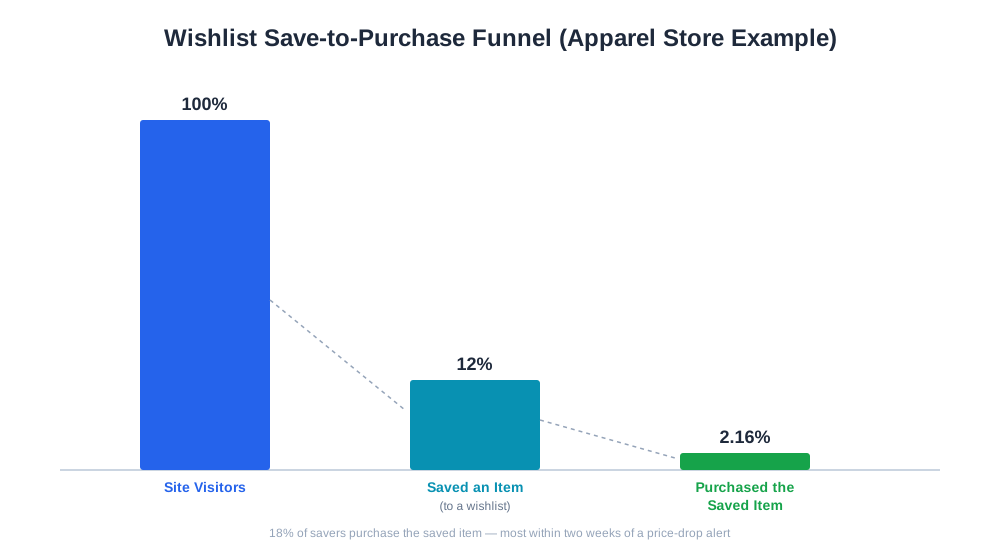
A simple worked example: an apparel store adds a wishlist button to every product page. Over a month, 12% of site visitors save at least one item. Of those, 18% eventually purchase a saved item — most within two weeks of a price-drop email. Without the wishlist and its follow-up alerts, that 18% would likely have represented lost, unrecoverable demand.

Ready to Monitor Your AI Visibility?
Track how AI chatbots mention your brand across ChatGPT, Perplexity, and other platforms.
Why Wishlists Matter for E-commerce Brands
Wishlists matter because most purchase decisions aren’t made on the first visit. A shopper comparing several jackets, waiting for a paycheck, or checking with a partner before buying furniture needs a way to keep their intent alive between sessions. Without a wishlist, that intent typically evaporates — the shopper closes the tab and may never find the product again, especially if they don’t remember the brand name or search term they used to discover it.
From the merchant’s side, wishlists convert an invisible signal (interest) into a visible, actionable one. A product that’s frequently wishlisted but rarely purchased might have a pricing objection worth testing with a promotion. A product that’s rarely wishlisted at all might not be resonating regardless of traffic. Aggregated across a catalog, wishlist data functions as an early-warning system for demand that standard conversion-rate reporting misses entirely, because it never reaches the cart.
Wishlist vs. Shopping Cart vs. Cart Abandonment
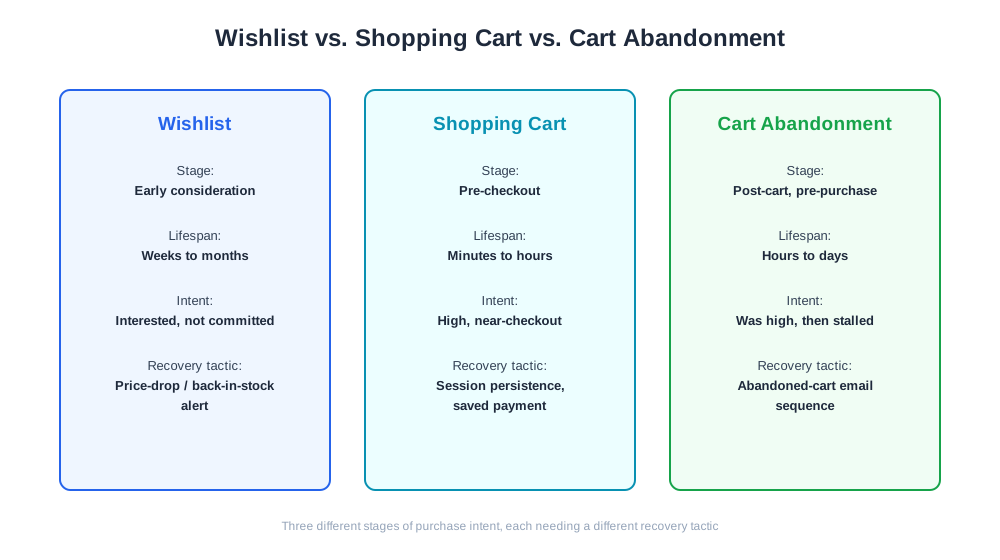
| Feature | Wishlist | Shopping Cart | Cart Abandonment |
|---|---|---|---|
| Stage in funnel | Early consideration | Pre-checkout | Post-cart, pre-purchase |
| Typical lifespan | Weeks to months | Minutes to hours | Hours to days before it expires |
| Purchase intent | Interested, not committed | High, near-checkout | Was high, then stalled |
| Common recovery tactic | Price-drop or back-in-stock alert | Session persistence, saved payment | Abandoned-cart email sequence |
| Best for | Gifts, high-consideration items | Any active shopping session | Recovering near-miss transactions |
Stay Updated on AI Visibility Trends
Get the latest insights on AI mentions, brand monitoring, and optimization strategies.
Wishlists and AI-Driven Commerce
As AI shopping assistants like ChatGPT Shopping, Perplexity Shopping, and Amazon Rufus become more common entry points for product discovery, wishlist behavior is starting to matter beyond a single store’s own site. A shopper might ask an AI assistant to “find me options like the jacket I saved earlier,” which depends on wishlist data being portable or at least well-structured on the merchant side. Wishlists that are readable and shareable — with clean product titles, availability status, and pricing metadata — are more likely to be usefully referenced when a customer returns via an AI-mediated search rather than a direct site visit.
On the analytics side, understanding which products get wishlisted but not purchased is closely related to broader product-performance monitoring. AmICited’s e-commerce reporting gives merchants visibility into which products and customer segments drive the most repeat engagement, which pairs naturally with wishlist data: a product with high saves and low conversion is a strong candidate for a targeted promotion, while a product with strong AI-assistant visibility but weak wishlist activity may need better on-page merchandising to earn the save in the first place.
Best Practices for Wishlists
- Make the save action a single click, visible on both product listing pages and individual product pages, not buried in a menu
- Persist wishlists to a customer account rather than relying solely on cookies, so items survive device switches
- Trigger automated price-drop and back-in-stock alerts rather than expecting customers to check back manually
- Show wishlist item availability clearly (in stock, low stock, discontinued) so the list stays useful over time
- Allow guest wishlists that merge into the account wishlist once the shopper logs in or creates an account
- Surface aggregate wishlist counts (“214 people have this saved”) sparingly, only where it adds credible social proof
- Review wishlist-to-purchase conversion by product line periodically to catch pricing or messaging issues early
Common Wishlist Mistakes
A frequent mistake is treating the wishlist as a static feature with no follow-up — the save button exists, but nothing happens after a customer clicks it. Without price-drop or back-in-stock automation, the wishlist becomes a dead end rather than a re-engagement channel, and the store loses the entire point of collecting the data. Another common issue is forcing account creation before a shopper can save anything, which adds friction at the exact moment a customer is still deciding whether they like the brand; a guest-to-account merge flow solves this without losing the data. Some stores let wishlisted items silently go out of stock or get discontinued without updating the list, so customers return to a dead link and lose trust in the feature. A subtler mistake is never analyzing wishlist data at the product level — treating it purely as a UX nicety rather than a demand signal — which leaves merchandising and pricing teams blind to interest that never converted. Finally, some stores over-notify wishlist customers with frequent marketing emails tied to every saved item, which drives unsubscribes; the fix is to alert only on meaningful changes like a real price drop or restock, not routine reminders.