



How to Find Your AI Visibility Content Gaps
A step-by-step method for finding exactly where your AI visibility gaps are: content audits, competitor citation analysis, and testing your brand across ChatGPT...
7 min read
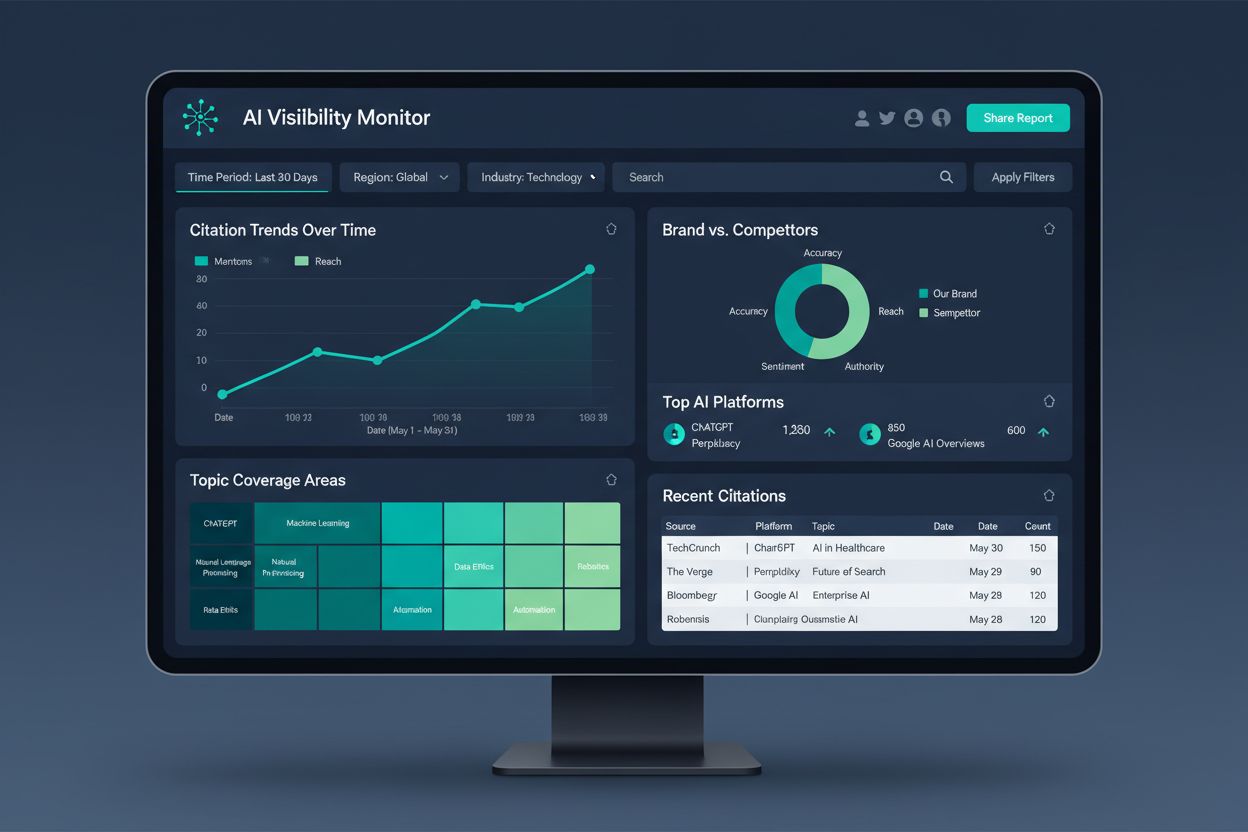
Once you know where your AI visibility gaps are, here’s how to prioritize them, brief them, produce them, and verify they actually earned citations in ChatGPT, Perplexity, and Google AI Overviews.
This post picks up exactly where gap diagnosis leaves off. If you haven’t already run a content audit, competitor citation analysis, and direct prompt testing across ChatGPT, Perplexity, and Google AI Overviews, start with how to find your AI visibility gaps —that’s the methodology for producing the prioritized list this post assumes you already have. What follows here is the execution side: how to turn a list of confirmed gaps into a prioritization order, a content brief, a production workflow, and published content that actually earns the citation you were missing. Skipping straight to writing without a confirmed, prioritized list is the single most common reason gap-filling content underperforms—teams write what they assume is missing instead of what testing proved is missing.
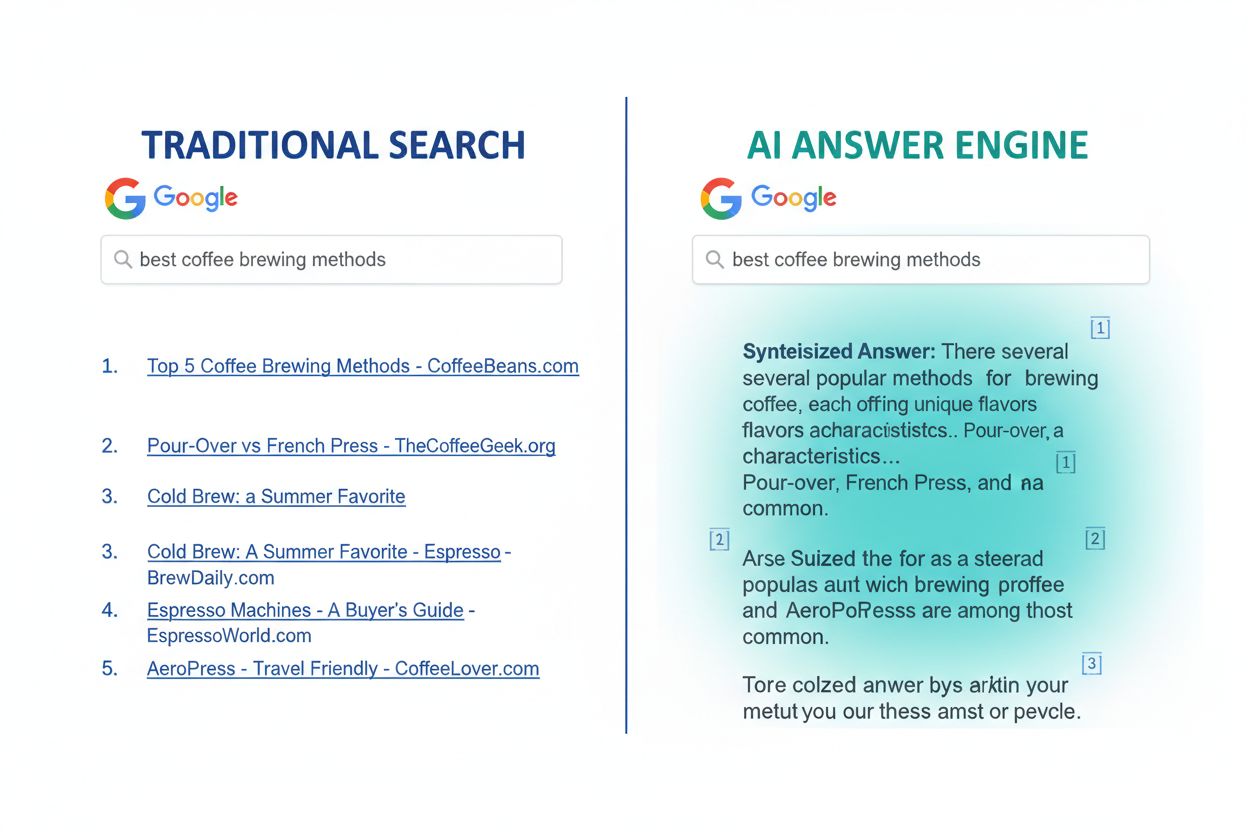
Producing content for AI citations requires different execution choices than producing traditional SEO content does, even when the underlying research is the same. The table below shows where the production approach diverges:
| Dimension | Traditional SEO Content | AI-Visibility Content |
|---|---|---|
| Writing goal | Rank for a target keyword | Get quoted or paraphrased in an AI-generated answer |
| Structure | Narrative flow optimized for dwell time | Answer-first, scannable sections optimized for extraction |
| Success signal | Page 1 ranking, organic traffic | Appearance and accurate framing in AI responses |
| Editing priority | Keyword density, internal linking | Entity clarity, factual precision, source attribution |
| Timeline to results | 3-6 months | 2-4 weeks for initial indexing, longer for consistent citation |
The practical implication for your production process: a brief written for traditional SEO content and a brief written for AI-visibility content should not look the same, even when they’re targeting the same topic. The next few sections cover how to build a brief and a draft specifically for the AI-visibility case.

Track how AI chatbots mention your brand across ChatGPT, Perplexity, and other platforms.
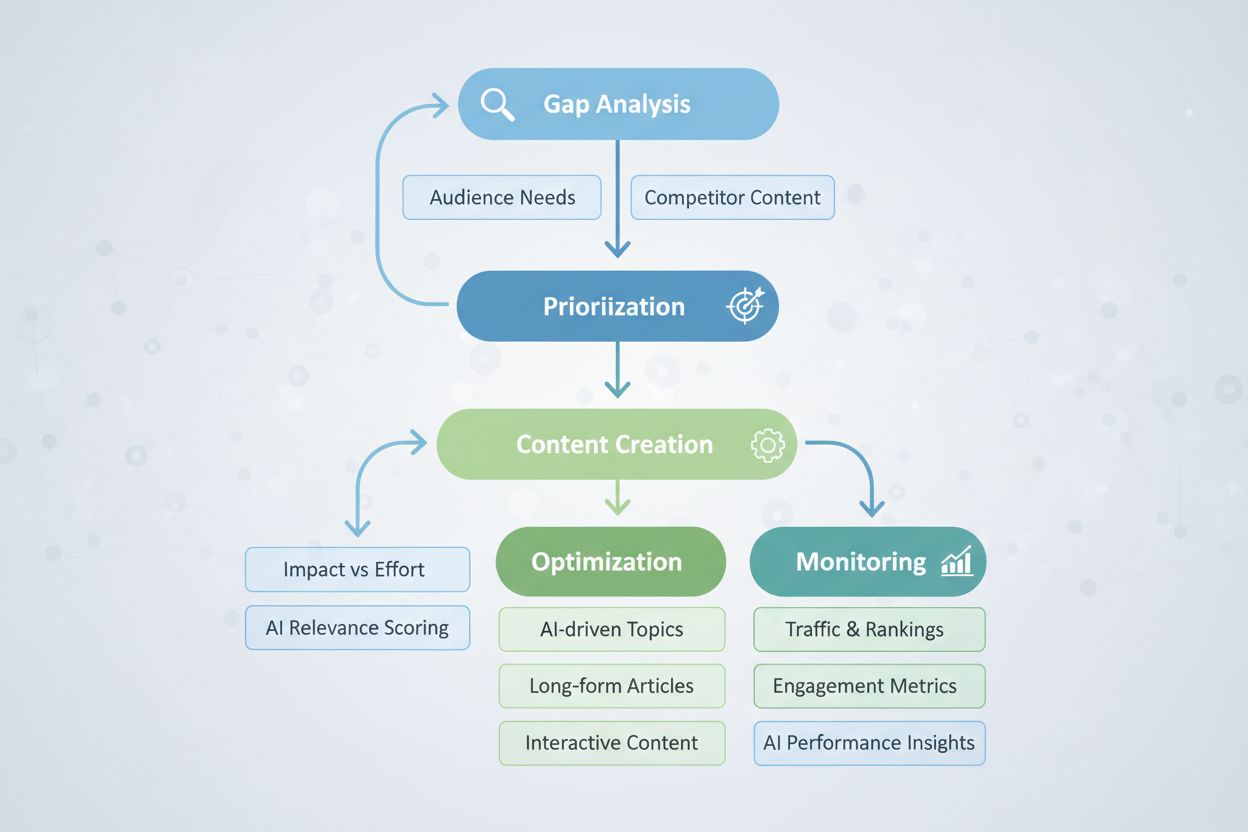
Not every gap on your list deserves equal urgency. Score each one against four factors: business relevance to your actual products or services, search demand reflected in how often the topic surfaced during your prompt testing, competitive opportunity—whether the citation is currently held by a weak or an entrenched competitor—and implementation effort, meaning whether you’re expanding existing content or starting from nothing. A high-relevance gap where a weak competitor holds the citation and you already have a page covering 60% of the topic should jump to the front of the queue; a low-relevance gap requiring a brand-new comprehensive guide can wait. Run this scoring before any writing begins, and revisit it monthly, since new gaps and new competitor citations both change the ranking over time.
Each prioritized gap needs a brief before it goes to a writer, and a good one answers five questions: What specific gap type is this (topical, citation, semantic, freshness, structured data)? What exact prompts, from your diagnostic testing, currently fail to surface your brand? What entities a comprehensive answer needs to cover, so the writer isn’t guessing at scope? What format AI systems favor for this query type—a comparison table, a numbered process, a definition-first explainer? And what does the competitor content currently winning the citation look like, so the writer knows what bar they’re actually clearing? A brief missing any of these five turns into a guessing exercise, and guesswork is exactly what a confirmed, tested gap list was supposed to eliminate.
Get the latest insights on AI mentions, brand monitoring, and optimization strategies.
Writing to close a confirmed gap requires specific tactical choices. Lead with a clear definition of the topic and its key entities in the first 100 words, using natural language that mirrors how people actually ask the question. Structure the piece with scannable sections and numbered lists rather than dense paragraphs—AI systems extract information more reliably from clearly delineated segments than from narrative prose. Use headings phrased as the actual questions people ask (“What Are the Three Types of Sustainable Packaging?” rather than “Packaging Solutions”). Include author credentials and a publication date prominently, since AI systems weight verifiable expertise and recency. Back claims with specific data points and proper attribution—evidence-based content is what gets treated as citable. Add schema markup so AI systems can parse the page’s structure programmatically. Above all, answer the complete question your brief identified rather than a fragment of it; if the brief says the gap covers transportation, energy, diet, and consumption, a draft that only covers transportation hasn’t actually closed the gap.
A single well-written piece rarely closes a gap on its own if your production process is ad hoc. Set up a content calendar sequenced by your priority scoring, not by whatever topic is easiest to write that week. Assign a single owner per brief who’s accountable for both the draft and the fact-check pass, since accuracy matters more for AI-visibility content than for traditional SEO content—an AI system that catches an error once may deprioritize the source going forward. Build in a structural review step, separate from the editorial review, that checks headings, entity definitions, and schema markup against the brief before publishing. Treat this as a repeatable pipeline rather than a one-off project: gaps reopen as competitors publish and as AI models retrain, so the calendar needs a standing slot for re-diagnosis and follow-up content, not just a one-time push.
Content quality alone isn’t sufficient if the technical layer blocks AI systems from processing the page correctly. Implement structured data markup using schema.org vocabulary so AI systems can explicitly parse what the page is about. Use canonical tags to make sure AI systems credit the right URL when multiple versions of similar content exist on your site. Keep load times fast and the page mobile-optimized, since slow or broken pages get skipped during AI crawling and re-indexing. Write descriptive meta descriptions and title tags that match the page’s actual content, since mismatches between metadata and body content are a common reason otherwise-solid content still fails to close a gap.
New content earns citations faster when it’s backed by visible authority signals, not just good writing. Give each piece a detailed author bio establishing relevant credentials and experience, so AI systems have a clear signal of who’s speaking and why they’re qualified. Where possible, earn citations and backlinks from authoritative sources in your industry—third-party validation carries more weight with AI systems than self-published claims. Keep a consistent publishing cadence on the topic cluster the new piece belongs to, since isolated one-off posts build less topical authority than a piece that’s clearly part of an ongoing, comprehensive body of work on the subject.
The only real test of whether a piece of content filled its gap is re-running the exact prompts that identified it in the first place. Go back to the prompt set from your diagnostic phase and test each one again 4-8 weeks after publishing, then again at the 2-3 month mark for gaps that needed entirely new content. Track AI mention frequency for the specific topic, citation rate (whether the AI attributes the answer to you specifically, not just mentions your brand in passing), and whether the framing is accurate to what you published. If a gap hasn’t closed after the expected timeline, go back to the brief before rewriting from scratch—often the issue is a missing entity or the wrong format rather than a completely wrong topic. Log results against your original prioritized list so you can see, gap by gap, which content actually converted into a citation and which needs another pass.
Viktor Zeman is a co-owner of QualityUnit. Even after 20 years of leading the company, he remains primarily a software engineer, specializing in AI, programmatic SEO, and backend development. He has contributed to numerous projects, including LiveAgent, PostAffiliatePro, FlowHunt, UrlsLab, and many others.

Once you've published content to fill a gap, track whether it actually gets picked up by ChatGPT, Perplexity, and Google AI Overviews. Get the data that tells you what's working.
A step-by-step method for finding exactly where your AI visibility gaps are: content audits, competitor citation analysis, and testing your brand across ChatGPT...

Community discussion on finding content gaps for AI search visibility. Real experiences from content strategists on identifying topics AI cites that you don't c...
Find AI search content gaps by comparing competitor citations, diagnosing missing topics and prioritizing improvements.
Cookie Consent
We use cookies to enhance your browsing experience and analyze our traffic. See our privacy policy.