



AI Share of Voice: Measure Brand Visibility
Learn what AI share of voice is, how to measure it across ChatGPT, Perplexity, and Google AI Overviews, and strategies to increase your brand's visibility in AI...
10 min read
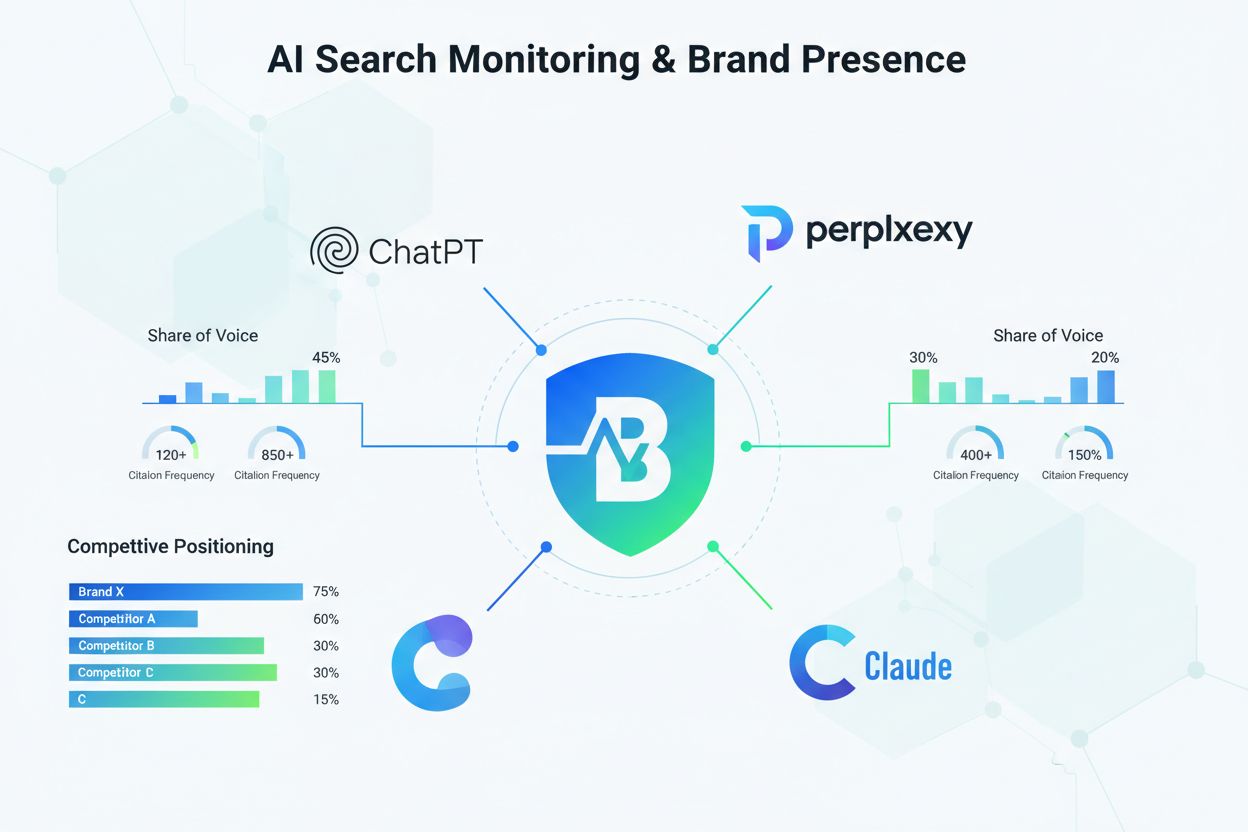
A tactical playbook for growing your AI share of voice against named competitor types on ChatGPT, Perplexity, Gemini, and Google AI Overviews: benchmarking, content tactics, and a prioritized action plan.
If you’ve already built a prompt library and calculated where you stand, you know the mechanics: Share of Voice (SoV) is the percentage of AI-generated answers where your brand is mentioned, cited, or recommended relative to every brand named in those same answers. If you need the formula and framework for calculating that number in the first place, start there. This guide picks up where measurement leaves off: what to actually do when a competitor is ahead of you, broken down by the type of competitor you’re up against and the tactics that close each kind of gap.
Winning matters because AI answers are a zero-sum conversation. A synthesized response to “What’s the best project management tool for remote teams?” typically surfaces three to five names. Every mention a competitor earns in that shortlist is, functionally, a mention you didn’t get. Traditional competitive strategy measures exposure opportunities across channels; AI competitive strategy measures who gets to be one of the finite slots in a single synthesized answer.
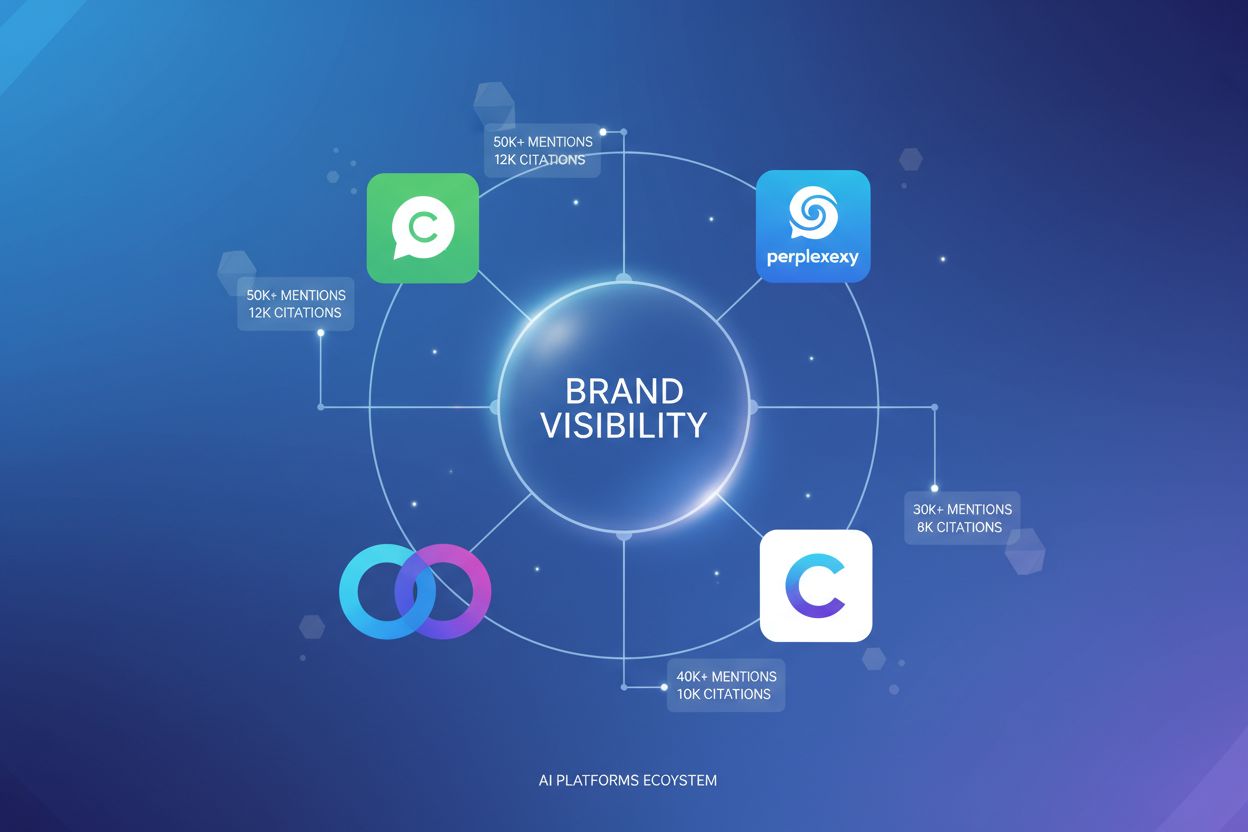
The shift to AI-powered search is accelerating faster than most marketers realize. ChatGPT now attracts over 800 million weekly active users, with more than 1 billion queries processed daily. Perplexity hit 780 million queries in May 2025, growing approximately 20% month-on-month. Meanwhile, 58% of consumers have already replaced traditional search engines with generative AI tools for product recommendations, according to Capgemini research.
That volume matters less than the shape of the answer it produces. Traditional search returns ten blue links, along with impressions and reach metrics that reward simply showing up somewhere on the page; a curious user can scroll past a competitor and still find you. AI search returns a short, synthesized list, and if you’re not on it, there’s no “page two” for the user to keep scrolling through. That structural difference is why competitive share of voice, not just presence, is the metric that determines whether you’re in the room.
| Dimension | Chasing Rankings | Chasing AI Share of Voice |
|---|---|---|
| What “winning” looks like | Outranking on a keyword | Displacing a named competitor from the answer |
| Ceiling on competitors | Effectively unlimited (page 2, 3…) | 3-5 brands per answer, no overflow |
| Where the gap shows up | Position 1 vs. position 8 | Present vs. simply absent |
| Volatility | Weeks to months | Digital Applied found 40-60% of cited domains in active categories shift monthly |
Because the answer set is small, closing a gap against one competitor often means directly displacing them, not just adding yourself alongside them. That reframes competitive strategy: it’s not enough to become “AI-visible” in the abstract, you have to become more citable than the specific brand currently occupying the slot you want.

Track how AI chatbots mention your brand across ChatGPT, Perplexity, and other platforms.
Your AI competitors are not automatically the same brands you fight for Google rankings. Some brands dominate AI visibility while struggling in traditional search, and vice versa. Before you can close a gap, you need to know exactly who’s occupying the slots you want and what kind of competitor they are. Three types tend to recur:
The entrenched incumbent. A category leader with years of third-party coverage, reviews, and press mentions baked into the training data of every major model. Incumbents are hard to displace on broad, top-of-funnel prompts (“best CRM software”) but often have thinner coverage on specific use cases or emerging sub-categories, that’s where you can compete.
The fast-moving challenger. A newer brand publishing aggressively, shipping comparison pages, and actively working PR and third-party placements to earn citations. Challengers move fast and can gain or lose share within a single tracking cycle. Watching their publishing velocity tells you where the category is heading before it shows up in your own numbers.
The third-party aggregator. Not a direct competitor at all, but a review site, directory, or “best tools for X” roundup that AI cites in place of any single vendor. When an aggregator owns a query, no single brand is winning it, which means there’s an opening: if you can get featured prominently within that aggregator’s content, you inherit some of its authority.
To build this list, run the same prompt set you use for your own tracking against each candidate competitor’s name, and note who actually shows up, how often, and in what context. This kind of prompt research is what separates a real competitive set from an assumed one, and it often surfaces a competitor you hadn’t considered. Some teams roll it into a single index alongside citation rate and sentiment for a quick executive-level snapshot, though the prompt-by-prompt detail is what actually informs the tactics below.
Once you know who you’re up against, the next step is finding exactly where the gap is, because not every gap is worth closing with the same urgency.
Compare your share against each competitor, prompt by prompt. If an incumbent appears in 60% of relevant AI responses while you appear in only 25%, that’s a real gap, but the more useful question is which specific prompts drive it. Are they dominating comparison queries? Awareness-stage definitional questions? Late-stage “which should I buy” queries? These patterns tell you where to focus.
Investigate why they’re winning. When a competitor consistently outranks you in AI responses, look at what they’re actually doing: What content are they publishing that gets cited? How is their brand positioned in the sentence that names them, favorably, neutrally, or as a fallback option? What third-party mentions do they have that you don’t? Are they using schema markup or content structures that make their pages easier for AI to extract? How AI describes you in that mention matters as much as whether you’re mentioned at all, two brands can both show up in 40% of responses and be in very different competitive positions depending on the language wrapped around the name.
The distance between where you rank against a competitor on one prompt versus another is rarely uniform, so treat each prompt as its own mini-benchmark rather than averaging your way to a single number and calling the analysis done.
Prioritize the close gaps, not the biggest ones. A prompt where you’re at 25% and a competitor is at 40% is a faster, higher-leverage win than one where you’re at 2% and they’re at 70%. Small content improvements can flip a close gap; a wide gap usually requires a sustained campaign. Build your roadmap around the closest opportunities first.
Get the latest insights on AI mentions, brand monitoring, and optimization strategies.
Generative Engine Optimization (GEO) is the practice of making your brand and content more likely to be surfaced, cited, and favorably framed by AI models than a named competitor’s. Four tactics do most of the work.
1. Establish unmistakable brand positioning. AI platforms need clear, consistent information to understand and recommend your brand over an alternative. Make your value proposition explicit across every digital touchpoint: what you do, who you serve, and why it matters relative to the obvious alternatives. Add credibility signals, testimonials, case studies, client logos, certifications, press features, awards, that reinforce authority. Consistent, credible information across multiple sources makes a model more likely to reach for your name instead of a competitor’s when generating a recommendation.
2. Create AI-friendly, high-quality content. AI systems favor content that’s structured, comprehensive, and authoritative over content that merely exists. Use clear headings, short paragraphs, and bullet points that make information easy to extract. Cover topics thoroughly with in-depth, expert-level detail rather than surface-level summaries a competitor could match easily. Include statistics, research findings, and verifiable data, fact-dense content is what gets pulled into a synthesized answer instead of paraphrased from a rival’s page. Use schema markup so AI systems can parse your content’s structure and purpose accurately.
3. Get featured on trusted third-party sites. AI platforms reference news publications, industry directories, review platforms, and high-authority blogs when generating answers, and a competitor with stronger third-party coverage effectively has more “votes” in the AI’s synthesis than you do. Contribute expert insights to high-authority publications in your niche, get listed in credible directories, and secure coverage through digital PR and guest posts. Reddit and Quora discussions carry particular weight for product recommendation queries; review platforms like G2, Trustpilot, and Capterra are a major citation signal for B2B and SaaS comparisons specifically.
4. Build entity authority. Create comprehensive “About” pages using Organization and Product schema markup that explicitly states your founding date, leadership, product lines, and unique value propositions, details that differentiate you from a competitor an AI might otherwise treat as interchangeable with you. Maintain FAQ sections answering the specific questions customers ask when comparing you to alternatives; AI systems extract these Q&A pairs directly for conversational responses. Keep brand information accurate and consistent everywhere it appears online.
AI models frequently generate product comparisons in direct response to “[Brand A] vs [Brand B]” queries, and this is one of the highest-leverage tactics for displacing a specific named competitor, because it’s the one place you can directly shape how the comparison is framed.
If you don’t have a comparison page against a competitor on your own site, the AI relies entirely on third-party sources to answer that query, and you lose control of the narrative entirely. What to create:
These pages have to be substantive and fair. AI models can detect, and often downweight, content that’s purely promotional without genuine comparative substance. The goal is to be the most useful source the AI can cite when answering the comparison question, not the most aggressive advocate for yourself.
Not all visibility gaps deserve equal investment. Once you’ve benchmarked your position and identified tactics, sequence the work:
Closing a gap once doesn’t mean it stays closed. Digital Applied’s research found that 40-60% of cited domains in active categories shift monthly, which means a competitor you displaced this month can reclaim the slot next month if you stop watching.
Keep a consistent monitoring cadence. Run comprehensive competitive benchmarking monthly across all major platforms and your full prompt set, supplemented by weekly spot-checks on the prompts where the fight is closest or highest-stakes. Daily monitoring can catch fluctuations from model updates or a competitor’s sudden PR push, but for most teams monthly benchmarking with weekly spot-checks is sufficient to act on.
Build authentic authority, not quick fixes. The brands sustaining their lead in AI search are the ones establishing genuine expertise rather than trying to game the system. As models grow more sophisticated, they increasingly reward authentic, substantive content and penalize manipulative tactics, which means the sustainable version of this playbook and the effective version of it are the same thing.
Adapt as platforms change. AI platforms continuously update their models and retrieval methods. Stay informed about major changes and watch how your share shifts after each one; a drop that coincides with a known model update is a different problem than a drop that coincides with a competitor’s product launch.
Review quarterly, act monthly. Track not just visibility metrics but downstream outcomes, do gains in share correlate with increased referral traffic, leads, or conversions? Use that signal to decide where to keep investing and where a tactic isn’t paying off despite moving the visibility number.
Measuring your AI share of voice tells you the score. Winning it is the ongoing work of identifying exactly which competitor occupies the slot you want, understanding why, and closing that specific gap faster than they can open a new one elsewhere. The brands treating this as a sustained competitive discipline, not a one-time audit, are the ones who will still own their category’s AI answers a year from now.
The competitive advantage goes to the brands that start now: identify your real AI competitive set, benchmark where the closest gaps are, run the GEO tactics that match each competitor type, and keep re-measuring. The moment an AI recommends your brand instead of the incumbent’s on a prompt you targeted is the moment you know the playbook is working. AI visibility is no longer optional, and now that it’s measurable, it’s also winnable.
Yasha is a talented software developer specializing in Python, Java, and machine learning. Yasha writes technical articles on AI, prompt engineering, and chatbot development.

Monitor how AI platforms mention your brand against competitors across ChatGPT, Perplexity, Google AI Overviews, and more with AmICited. Get real-time insights into your AI share of voice and competitive positioning.
Learn what AI share of voice is, how to measure it across ChatGPT, Perplexity, and Google AI Overviews, and strategies to increase your brand's visibility in AI...

Learn what Share of AI Voice is, how it's calculated, and why it matters for your brand's visibility in ChatGPT, Perplexity, and Google AI Overviews. Discover s...

What AI share of voice means, the three formulas for calculating it, and a step-by-step framework for tracking it across ChatGPT, Perplexity, and Google AI Over...
Cookie Consent
We use cookies to enhance your browsing experience and analyze our traffic. See our privacy policy.