


Abandoned Cart Recovery
Abandoned cart recovery is the set of tactics an e-commerce store uses to re-engage customers who added items to their cart but left before completing checkout. It typically combines automated email, SMS, and on-site reminders with incentives to bring the customer back and complete the purchase.
Definition of Abandoned Cart Recovery
Abandoned cart recovery refers to the tactics an online store uses to bring back customers who added products to their cart but left the site without completing checkout. Because cart abandonment represents lost revenue on a customer who has already shown clear purchase intent — unlike a cold visitor who never engaged with a product — it’s one of the highest-leverage points in the e-commerce funnel to recover. Recovery typically works through automated triggers: once a cart is identified as abandoned (usually defined by a time threshold with no further checkout activity), the store sends a sequence of reminder messages via email, SMS, or on-site retargeting, often escalating in urgency or incentive across the sequence. The goal isn’t just to remind the customer the cart exists, but to address whatever caused the abandonment in the first place, whether that was hesitation over price, an unexpected shipping cost, or simple distraction.
How Abandoned Cart Recovery Works
A typical recovery flow begins when a customer adds an item to their cart and provides identifying information — most commonly an email address, captured either through account creation, a newsletter signup, or a checkout field filled in before the customer exits. If the customer leaves without completing the order within a defined window, the store’s automation platform (built into the storefront or handled by a dedicated tool like Klaviyo) triggers the first recovery message, usually within one to three hours. If the cart still isn’t recovered, a second message follows roughly a day later, sometimes with more detail about the product or a small nudge like free shipping. A third and final message, sent a day or two after that, often includes a stronger incentive such as a limited-time discount code, reserved for the tail end of the sequence rather than offered upfront.
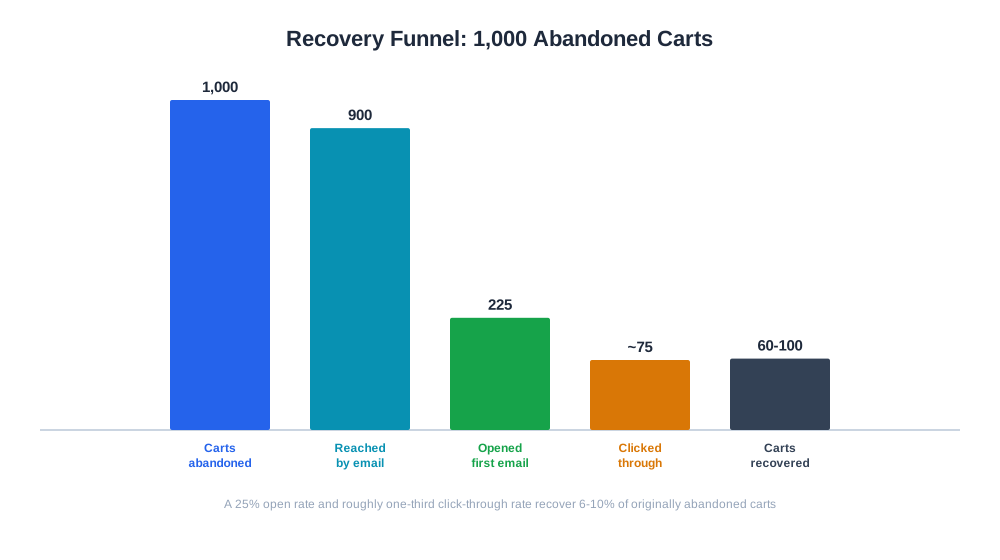
A worked example: a store sees 1,000 carts abandoned in a month. A recovery sequence email lands in front of 900 of those customers (some emails are invalid or unsubscribed), 25% open the first email, and roughly a third of openers click through to their cart. Of those who click through, a meaningful share complete checkout — bringing back perhaps 60 to 100 of the original 1,000 abandoned carts, representing real revenue that would otherwise have been lost entirely.

Ready to Monitor Your AI Visibility?
Track how AI chatbots mention your brand across ChatGPT, Perplexity, and other platforms.
Why Abandoned Cart Recovery Matters for E-commerce Brands
Recovery matters because abandoned-cart customers have already cleared the hardest part of the funnel: choosing a specific product and adding it to cart. Compared to acquiring a brand-new customer, re-engaging someone who abandoned a cart is typically far cheaper, since it doesn’t require additional ad spend to rebuild awareness and consideration from zero. Even modest recovery rates compound meaningfully at scale — a store with a high volume of monthly cart abandonments can see recovery efforts contribute a real, sustained percentage of total revenue once the automation is running consistently.
Recovery also serves a diagnostic purpose beyond the immediate revenue: patterns in abandonment (a spike at the shipping cost step, or abandonment concentrated on mobile) reveal friction points in the checkout flow that are worth fixing directly, rather than only patching after the fact with reminder messages.
Recovery Channel Comparison
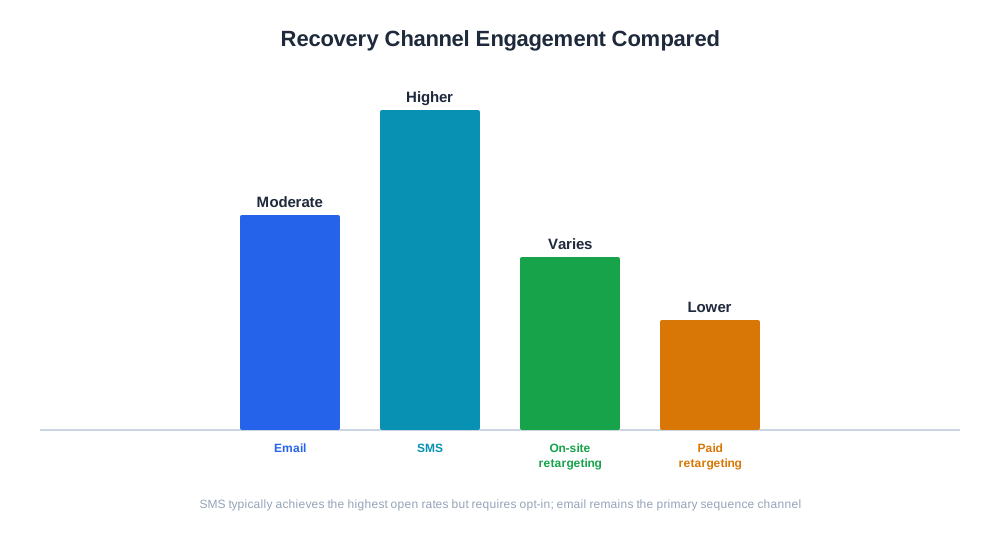
| Channel | Typical Open/Engagement Rate | Speed | Best Use |
|---|---|---|---|
| Moderate | Minutes to hours after trigger | Primary channel, works for most sequences | |
| SMS | Higher open rate, requires opt-in | Immediate | Time-sensitive nudges, final reminders |
| On-site retargeting/popups | Varies by traffic | Immediate, on return visit | Catching returning visitors before they leave again |
| Paid retargeting ads | Lower, but scalable | Ongoing over days | Reaching customers who didn’t provide an email |
Stay Updated on AI Visibility Trends
Get the latest insights on AI mentions, brand monitoring, and optimization strategies.
Abandoned Cart Recovery and AI-Driven Commerce
As shopping increasingly happens through conversational and agentic interfaces — a customer researching a product through ChatGPT Shopping or comparing options via Perplexity Shopping before landing on a merchant’s site — the concept of “cart abandonment” is starting to extend earlier in the journey, to abandoned research or comparison sessions that never even reach a traditional cart. Merchants optimizing for this newer discovery pattern should think about recovery not just as a post-cart email sequence, but as part of a broader customer journey strategy that accounts for how AI assistants influence purchase decisions before a customer ever adds an item to cart.
On the store’s own analytics side, spotting abandonment patterns requires visibility into order status data broken down meaningfully. AmICited’s eshop_get_order_mix report shows order status breakdowns across a store, which surfaces abandonment patterns by payment method, product category, or customer segment — useful for prioritizing recovery efforts toward the segments where abandonment is most concentrated and most recoverable, rather than treating all abandoned carts as equally worth pursuing.
Best Practices for Abandoned Cart Recovery
- Send the first recovery message within one to three hours of abandonment, while purchase intent is still fresh.
- Use a short sequence (two to four messages) rather than an aggressive, drawn-out campaign that risks feeling like spam.
- Reserve discount incentives for later messages in the sequence, not the first touch, to avoid training customers to abandon carts deliberately.
- Combine email and SMS where opt-in is available, since the two channels tend to reach customers at different moments and with different urgency.
- Address likely abandonment causes directly in the message — showing the specific product, restating shipping and return policy clearly, and removing friction rather than just generically reminding.
- Monitor recovery rate over time by channel and segment to identify which tactics are actually converting versus which are just adding message volume.
Common Abandoned Cart Recovery Mistakes
A frequent mistake is sending recovery messages too aggressively — three or four emails within the first day — which tends to suppress future engagement rather than drive recovery, since customers who feel pressured are more likely to unsubscribe than convert. Another common issue is leading with a discount in the very first message, which trains repeat customers to abandon carts intentionally in order to trigger a coupon code, quietly eroding margin on sales that would have happened anyway at full price. Stores also sometimes fail to capture an email address early enough in the checkout flow, which means a large share of abandoned sessions can’t be targeted with direct recovery messaging at all — moving the email field earlier in the checkout process (before shipping and payment details) can meaningfully increase the addressable share of abandoned carts. Finally, a common blind spot is treating every abandoned cart the same regardless of cart value or product type; a high-value cart abandoned over shipping cost concerns needs a different message than a low-value cart abandoned due to simple distraction, and generic one-size-fits-all recovery sequences leave conversion potential on the table in both directions.