


Cart Abandonment Rate
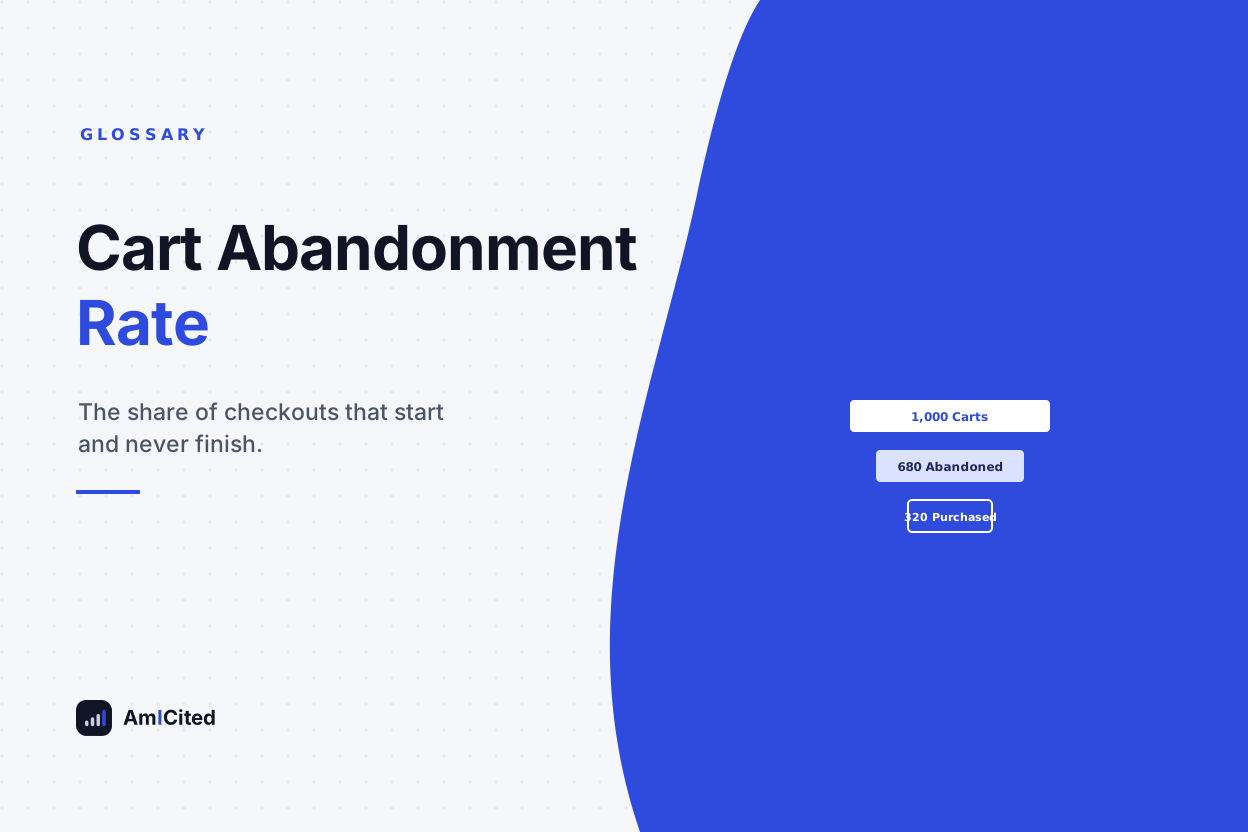
Cart abandonment rate is the percentage of shoppers who add items to their online cart but leave the site without completing the purchase. It's calculated by dividing abandoned carts by total carts created, and it's one of the most closely watched conversion metrics in e-commerce because it directly represents lost, near-completed revenue.
Definition of Cart Abandonment Rate
Cart abandonment rate measures the percentage of online shoppers who add one or more items to their shopping cart but leave the website without completing the purchase. It’s calculated by dividing the number of abandoned carts by the total number of carts created in a given period, then expressing the result as a percentage. Cart abandonment is one of the most persistent and closely watched problems in e-commerce, because it represents demand that was already demonstrated — a customer took the active step of selecting a product — but was lost somewhere between that decision and payment. Unlike a bounce from a landing page with no expressed interest, an abandoned cart represents a much stronger, more specific signal of near-completed revenue that a store failed to capture.
How Cart Abandonment Rate Is Calculated
The formula is: cart abandonment rate equals the number of abandoned carts divided by the total number of carts created (completed purchases plus abandoned carts), multiplied by 100. A cart is generally counted as abandoned once a defined period passes — commonly somewhere between 30 minutes and a few hours, depending on the platform’s tracking configuration — without the shopper completing the order.
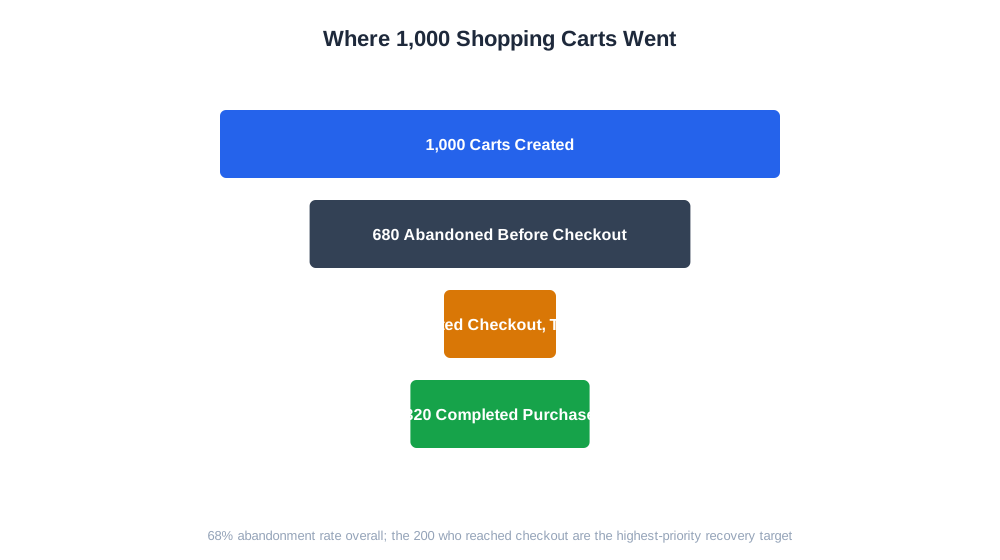
A worked example: an online store sees 1,000 unique shopping carts created in a week. Of those, 320 result in a completed purchase, and 680 are abandoned before checkout finishes. The cart abandonment rate is 680 divided by 1,000, multiplied by 100, equaling 68 percent. It’s useful to break this down further by stage: if 200 of those 680 abandoned carts actually started the checkout process — meaning the shopper entered shipping or payment information before leaving — that subset represents a higher-intent abandonment worth prioritizing for recovery efforts over the 480 shoppers who added an item but never attempted checkout at all.

Ready to Monitor Your AI Visibility?
Track how AI chatbots mention your brand across ChatGPT, Perplexity, and other platforms.
Why Cart Abandonment Rate Matters for E-commerce Brands
Cart abandonment represents some of the most efficiently recoverable revenue available to an e-commerce store, because the customer has already done the hardest part of the funnel — deciding they want a specific product — and the barrier to completing the sale is usually something fixable, like an unexpected cost, a confusing form, or a moment of hesitation that a well-timed reminder can resolve. This is why abandoned cart recovery emails and retargeting ads tend to convert at meaningfully higher rates than cold acquisition traffic: the audience has already self-selected as interested, unlike a new visitor who hasn’t yet expressed intent. Tracking abandonment rate over time also surfaces friction points in the checkout experience itself; a sudden increase in abandonment concentrated at a specific step, like the shipping cost reveal or the payment page, points directly to a fixable problem rather than a vague decline in overall demand.
Cart Abandonment Causes and Fixes
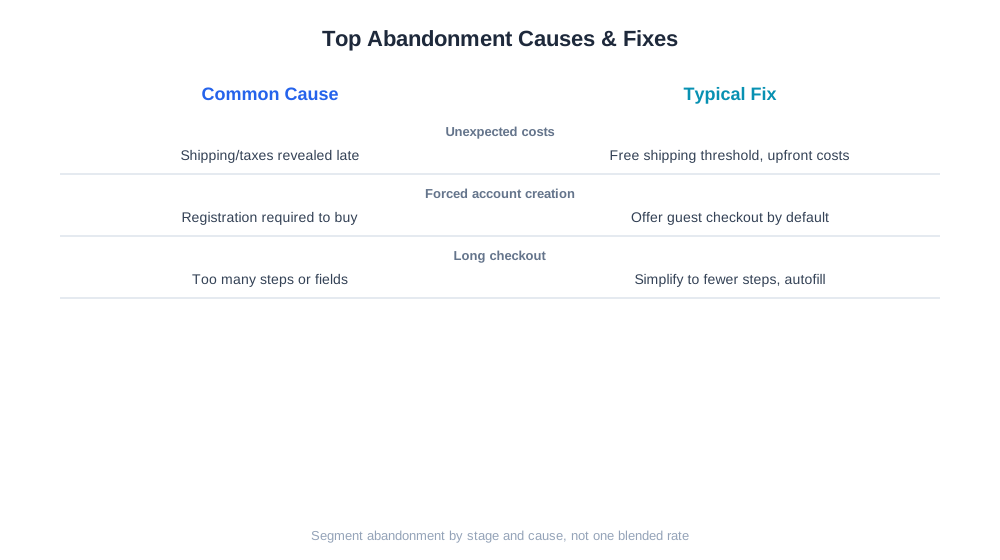
| Common Cause | What It Looks Like | Typical Fix |
|---|---|---|
| Unexpected costs | Shipping, taxes, or fees revealed late in checkout | Free shipping threshold, upfront cost estimates |
| Forced account creation | Checkout requires registration before purchase | Offer guest checkout as a default option |
| Long or complex checkout | Too many steps or form fields | Simplify to fewer steps, enable autofill |
| Payment security concerns | Unfamiliar payment gateway or missing trust signals | Display recognized payment badges, secure checkout indicators |
| No purchase intent yet | Comparison shopping, saving for later | Retargeting ads, wishlist features, abandoned cart emails |
Stay Updated on AI Visibility Trends
Get the latest insights on AI mentions, brand monitoring, and optimization strategies.
Cart Abandonment and AI-Driven Commerce
Cart abandonment behavior is shifting as more shoppers begin their research or even parts of their purchase journey through AI shopping assistants like ChatGPT Shopping and Perplexity Shopping, which can compare products and prices across multiple retailers before a customer ever lands on a specific store’s cart page — meaning some traffic reaching a store’s checkout already arrives with either unusually high or unusually low purchase intent depending on how the AI system framed the recommendation. This makes it more important than ever to track abandonment by traffic source and understand which channels bring genuinely purchase-ready shoppers versus comparison browsers. On the operational side, AmICited’s eshop_get_order_mix tool breaks down orders by outcome — completed, abandoned, refunded — as a share of total activity, giving a merchant a clear view of where in the funnel abandonment is concentrated and whether recovery tactics like reminder emails are actually converting lost carts back into completed orders, rather than just generating abandonment statistics without a matching recovery signal.
Best Practices for Reducing Cart Abandonment Rate
- Surface shipping costs and estimated taxes as early as possible in the shopping experience, rather than revealing them for the first time at the final checkout step.
- Offer guest checkout as the default path, saving mandatory account creation for after the purchase is complete if it’s needed at all.
- Simplify the checkout flow to the fewest necessary steps and fields, removing anything that isn’t essential to completing the transaction.
- Send abandoned cart recovery emails promptly, typically within a few hours, while the shopper’s intent is still fresh, and test different messaging and incentive levels.
- Segment abandonment data by device, traffic source, and checkout stage rather than tracking a single blended rate, since the causes and fixes differ significantly across these groups.
Common Cart Abandonment Rate Mistakes
A frequent mistake is treating the entire abandonment rate as representing pure lost revenue, when a significant share of abandoned carts come from shoppers who never had strong intent to purchase in that session — comparison shoppers and window shoppers inflate the raw number without representing an equivalent amount of recoverable sales. Another common problem is only measuring abandonment in aggregate rather than breaking it out by checkout stage, which hides the difference between a shopper who added an item and left immediately versus one who entered payment details and abandoned at the last step — the latter is a much higher-priority recovery target. Some stores also send abandoned cart recovery emails with generic, delayed timing that misses the window when purchase intent is strongest, reducing the effectiveness of what should be one of the highest-converting email types in the business. It’s also common to focus recovery efforts entirely on email while ignoring checkout friction itself, treating the symptom rather than the underlying cause — if unexpected shipping costs are consistently driving abandonment at a specific step, no amount of follow-up email will fix a problem that a clearer pricing display would prevent in the first place. Finally, businesses sometimes fail to account for legitimate multi-session shopping behavior, flagging carts as abandoned and triggering aggressive recovery campaigns for customers who fully intend to return and complete the purchase on their own within a day or two.