


Basket Abandonment
Basket abandonment describes a shopper who adds items to their online shopping cart but leaves the site without completing the purchase. It is measured as a rate — the share of started carts that never convert to a completed order — and is one of the most closely watched metrics in ecommerce checkout optimization.
Definition of Basket Abandonment
Basket abandonment, also called cart abandonment, occurs when a shopper adds one or more items to their online shopping cart but leaves the site or app without completing the checkout process. It is distinct from browsing without adding anything — a basket abandonment implies at least some level of purchase intent was reached before the shopper left. Basket abandonment is tracked as a rate rather than an absolute count, since the raw number of abandoned carts on its own doesn’t say much without knowing it against total carts created.
How Basket Abandonment Rate Is Calculated
The standard formula is:
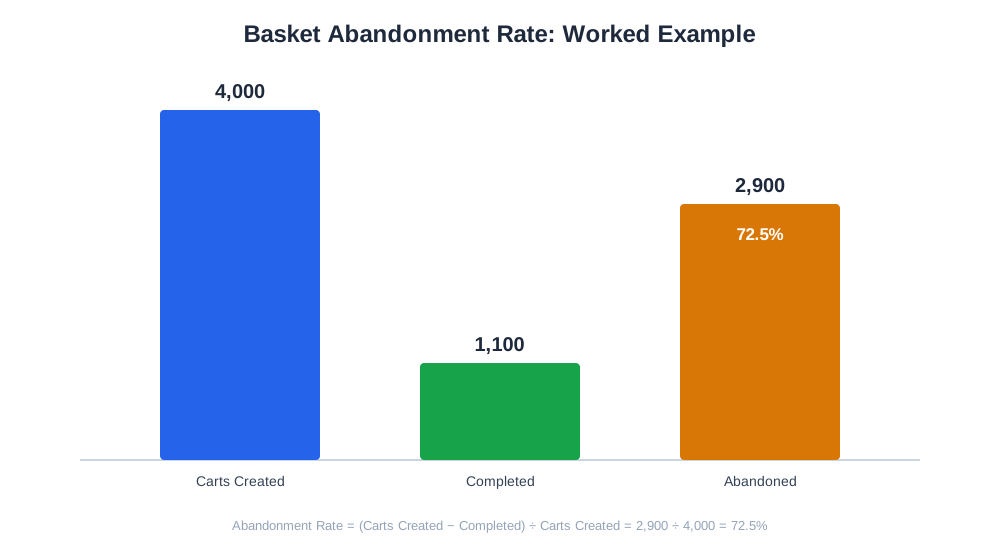
Basket Abandonment Rate = ((Carts Created − Completed Purchases) ÷ Carts Created) × 100
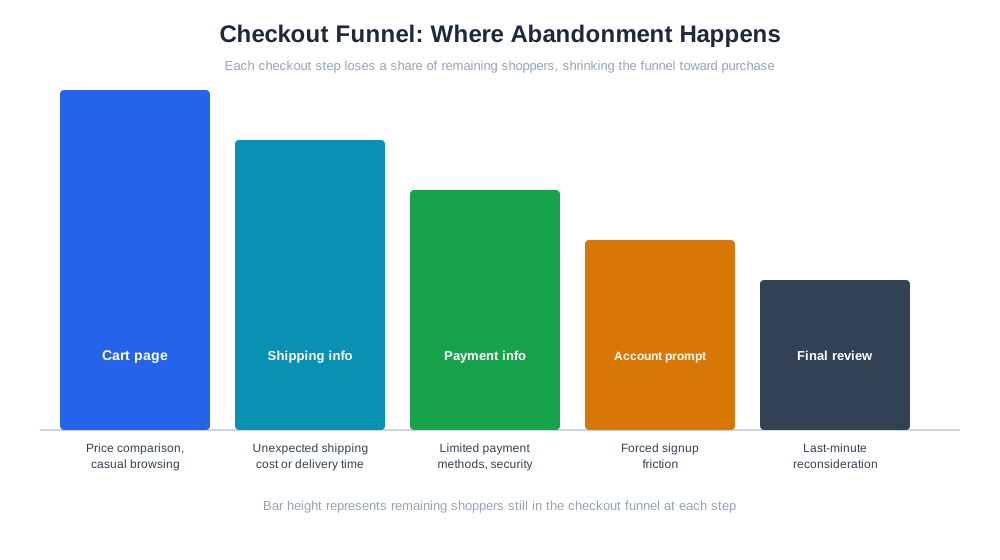
A worked example: a store sees 4,000 carts created over a month, and 1,100 of those result in a completed order. Subtracting completed purchases from carts created gives 2,900 abandoned carts; dividing by the 4,000 total carts created gives an abandonment rate of 72.5%. This is a broad, whole-funnel view. Many stores also track abandonment at specific checkout steps (cart page, shipping information, payment information) to isolate exactly where in the process shoppers are dropping off, since a spike at the payment step points to a different problem than a spike at the shipping information step.

Ready to Monitor Your AI Visibility?
Track how AI chatbots mention your brand across ChatGPT, Perplexity, and other platforms.
Why Basket Abandonment Matters for E-commerce Brands
Basket abandonment matters because it represents demonstrated purchase intent that didn’t convert — unlike a bounce from a landing page, an abandoned basket means a shopper actively chose products and moved partway toward buying, which makes the drop-off more diagnosable and often more recoverable than earlier-funnel losses. A high abandonment rate concentrated at a specific step (say, right after shipping costs are revealed) is a strong, specific signal about what’s driving shoppers away, in contrast to a vague overall conversion rate problem. Because a meaningful share of abandoned baskets represent genuine near-misses rather than shoppers who were never going to buy, basket abandonment is also one of the more directly actionable metrics in ecommerce, since recovery tactics like reminder emails and retargeting ads specifically target this group of already-interested shoppers.
| Abandonment Point | Likely Cause | Typical Fix |
|---|---|---|
| Cart page | Price comparison, casual browsing | Cross-sell prompts, saved cart for return visit |
| Shipping information step | Unexpected shipping cost or delivery time | Show shipping estimate earlier in the funnel |
| Payment information step | Limited payment methods, security concerns | Add trusted payment options, display security badges |
| Account creation prompt | Forced signup friction | Offer guest checkout as the default |
| Final review step | Last-minute reconsideration, error message | Simplify review page, fix technical errors |
Basket Abandonment and AI-Driven Commerce
As more shopping research and comparison shifts to AI assistants like ChatGPT Shopping and Perplexity Shopping, a portion of what used to look like basket abandonment on a single site may actually reflect a shopper comparing that product across several stores through an AI-mediated conversation before deciding where to buy — meaning the cart wasn’t truly abandoned so much as it was one stop in a longer, AI-assisted comparison process. This makes it worth analyzing basket abandonment alongside broader visibility and comparison data rather than assuming every abandoned cart reflects a checkout problem unique to that store. On the analytics side, AmICited’s eshop_get_order_mix report gives merchants the completed-order half of this picture, showing patterns in what does convert by customer type and payment method, which provides useful context for interpreting whether an abandonment spike reflects a real checkout issue or simply reduced traffic quality from a particular channel.
Stay Updated on AI Visibility Trends
Get the latest insights on AI mentions, brand monitoring, and optimization strategies.
Best Practices for Reducing Basket Abandonment
- Display shipping costs and estimated delivery times as early as possible, ideally on the product or cart page
- Offer guest checkout by default rather than requiring account creation before purchase
- Simplify checkout to as few steps and form fields as reasonably possible
- Support multiple recognizable payment methods, including digital wallets, to remove payment-related friction
- Send a recovery email sequence for abandoned carts, with the first message going out within a few hours
- Use exit-intent prompts or small incentives sparingly, reserved for high-value carts rather than every visit
Common Basket Abandonment Mistakes
A frequent mistake is treating overall basket abandonment rate as a single problem to solve, when in reality abandonment concentrated at different checkout steps has entirely different causes and fixes — without step-level tracking, teams often apply a generic fix (like a discount popup) that doesn’t address the actual friction point. Another common issue is revealing shipping costs, taxes, or extra fees only on the final payment step, which causes shoppers who were otherwise committed to abandon once the true total is higher than expected; surfacing these costs earlier, even as an estimate, reduces this specific abandonment cause significantly. Some stores also send recovery emails too late or too generically, missing the window when purchase intent is still fresh, or sending an identical message to every abandoner regardless of cart value or how far they got in checkout. Comparing a store’s abandonment rate against a generic industry benchmark rather than its own historical trend by channel and device is another frequent analytical error, since a rate that looks “high” against an industry number might actually be normal or even good for that store’s specific traffic mix. Finally, over-relying on discount-based recovery tactics for every abandoned cart can train customers to abandon intentionally in anticipation of a follow-up discount, which erodes margin over time without addressing the underlying friction that caused the abandonment.