



Predictive AI Visibility
Learn how predictive AI visibility uses data analytics and machine learning to forecast future trends in AI-generated answers. Discover how brands can anticipat...
9 min read
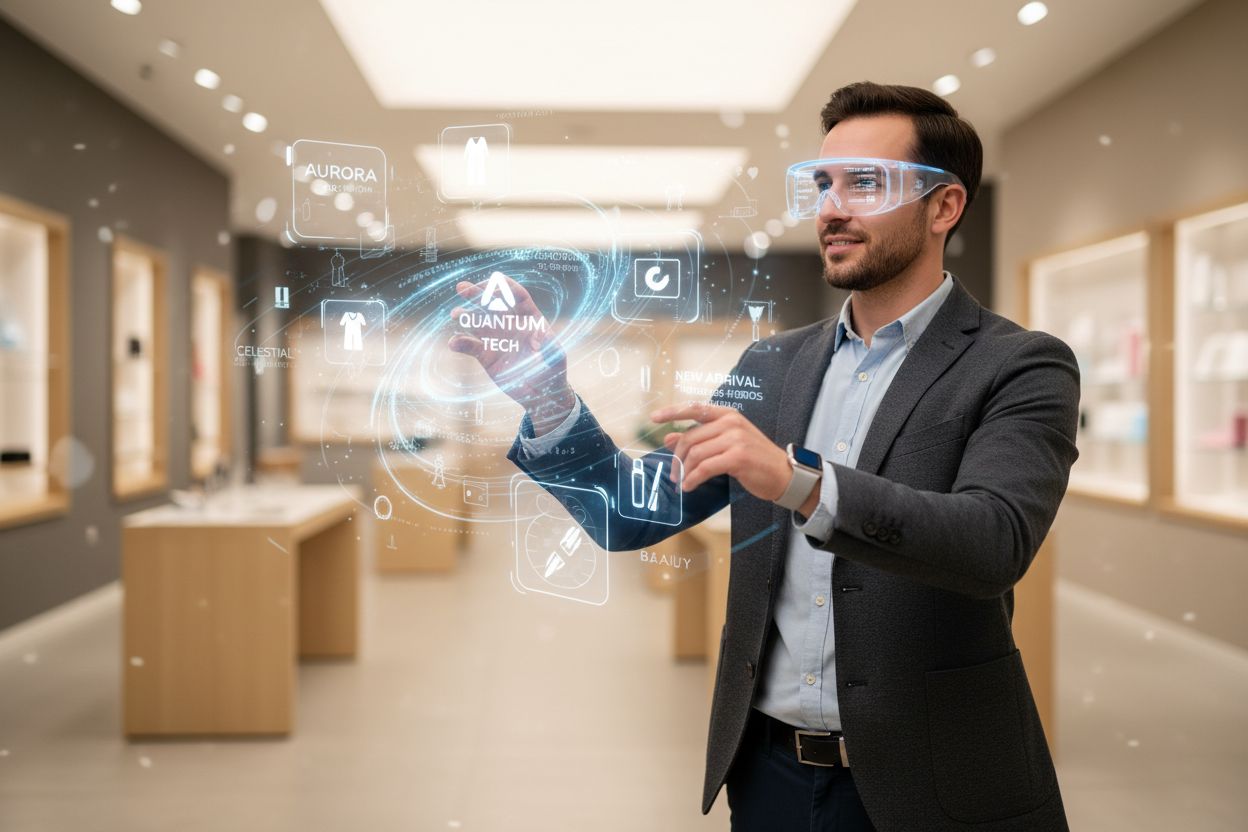
AI Wearable Integration refers to the seamless incorporation of artificial intelligence technologies into wearable devices such as smartwatches and AR glasses, enabling intelligent voice assistants, gesture controls, and personalized recommendations that transform how consumers discover and interact with brands in real-time.
AI Wearable Integration refers to the seamless incorporation of artificial intelligence technologies into wearable devices such as smartwatches and AR glasses, enabling intelligent voice assistants, gesture controls, and personalized recommendations that transform how consumers discover and interact with brands in real-time.
AI Wearable Integration refers to the seamless incorporation of artificial intelligence technologies into wearable devices such as smartwatches, fitness trackers, AR glasses, and health monitoring bands. These intelligent devices use machine learning algorithms to process real-time data from sensors, enabling personalized experiences and predictive insights for users. By combining AI with wearable hardware, companies can deliver context-aware recommendations, health analytics, and interactive features that adapt to individual user behavior and preferences. This integration represents a fundamental shift in how consumers interact with technology, moving from passive devices to intelligent companions that understand and anticipate user needs.
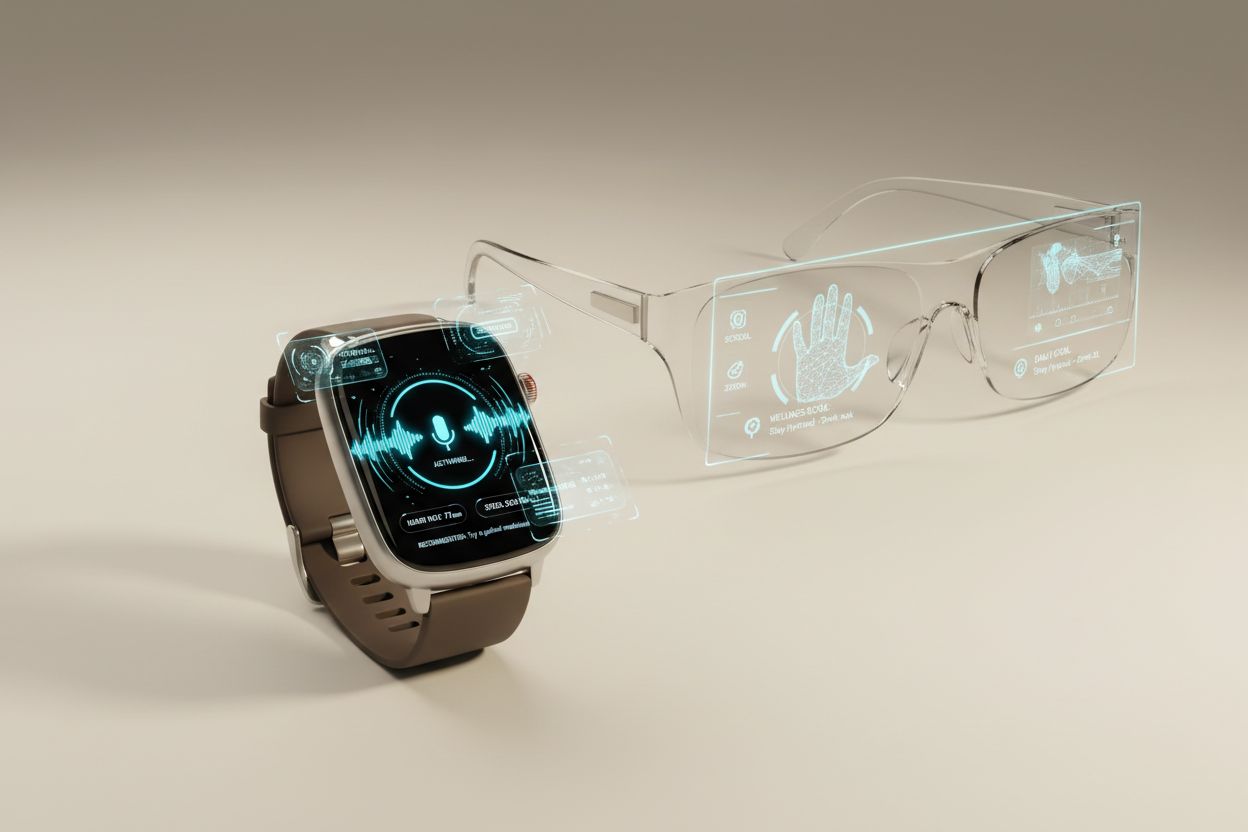
The foundation of AI wearable integration relies on several critical technologies working in concert. Edge computing allows AI models to run directly on wearable devices, reducing latency and improving privacy by processing sensitive data locally rather than sending it to cloud servers. Machine learning algorithms enable devices to learn from user behavior patterns, improving accuracy and personalization over time. Sensor fusion combines data from multiple sensors—accelerometers, gyroscopes, heart rate monitors, and GPS—to create comprehensive understanding of user context and activity. Natural language processing (NLP) powers voice commands and conversational interfaces on wearables, making interaction more intuitive. Computer vision in AR wearables allows devices to understand and interact with the physical environment. 5G connectivity provides the bandwidth necessary for real-time data transmission and cloud synchronization.
| Technology | Function | Impact on User Experience |
|---|---|---|
| Edge Computing | Local AI processing | Faster response times, better privacy |
| Machine Learning | Pattern recognition | Personalized recommendations |
| Sensor Fusion | Multi-sensor data integration | Comprehensive activity tracking |
| NLP | Voice and text understanding | Natural interaction |
| Computer Vision | Visual environment analysis | AR/VR capabilities |
| 5G Connectivity | High-speed data transmission | Real-time synchronization |

Track how AI chatbots mention your brand across ChatGPT, Perplexity, and other platforms.
AI-powered wearables have become powerful channels for brand discovery, fundamentally changing how consumers encounter and engage with products and services. Through contextual awareness, wearables can recommend products based on location, time of day, user preferences, and real-time activity—for example, suggesting a sports drink when a fitness tracker detects intense workout activity. Voice-activated shopping on smartwatches enables frictionless purchasing experiences, allowing users to make buying decisions without reaching for their phones. Wearable devices collect rich behavioral data that helps brands understand consumer intent at critical moments, enabling hyper-targeted marketing campaigns. AR glasses create immersive brand experiences, allowing consumers to visualize products in their environment before purchase. The intimate nature of wearables—worn close to the body and constantly active—creates unique opportunities for brands to build deeper emotional connections with consumers. Personalization engines powered by AI analyze user data to deliver brand messages that feel relevant and timely rather than intrusive.
AI wearables are transforming multiple industries with practical, high-impact applications. In healthcare, smartwatches monitor vital signs and detect irregular heart rhythms, alerting users and healthcare providers to potential health issues before they become critical. Fitness trackers use AI to create personalized workout plans that adapt based on performance data and recovery metrics. In enterprise settings, AR glasses equipped with AI assist technicians by providing real-time guidance, equipment identification, and maintenance instructions, significantly reducing error rates and training time. Retail applications include smart mirrors that use computer vision to recommend clothing sizes and complementary items based on what customers are trying on. Mental health wearables track stress levels and emotional patterns, triggering interventions or mindfulness reminders when needed. Navigation and tourism applications use AI wearables to provide contextual information about landmarks and attractions as users explore new environments.
Get the latest insights on AI mentions, brand monitoring, and optimization strategies.
The AI wearables market is experiencing explosive growth, with projections indicating the global market will reach $96.7 billion by 2030, growing at a compound annual growth rate (CAGR) of 16.8%. Consumer adoption has accelerated significantly, with approximately 1.1 billion wearable devices in use globally as of 2024, up from 722 million in 2019. Smartwatches represent the largest segment, accounting for 35% of the wearable market, followed by fitness trackers at 28% and AR glasses at 12%. Millennials and Gen Z consumers show the highest adoption rates, with 67% of users aged 18-34 owning at least one wearable device. Enterprise adoption is also surging, with 42% of organizations planning to deploy AI wearables for employee productivity and safety monitoring within the next two years. The integration of AI capabilities has been a key driver of this growth, as consumers increasingly value intelligent features over basic activity tracking.
As AI wearables collect increasingly sensitive personal data—including biometric information, location history, and behavioral patterns—privacy and security concerns have become paramount. Wearable devices continuously transmit data to cloud servers and third-party applications, creating multiple potential points of vulnerability where personal information could be intercepted or misused. Regulatory frameworks like GDPR and HIPAA impose strict requirements on how companies handle health and personal data, yet enforcement remains inconsistent across jurisdictions. Ethical concerns arise around data ownership and consent, particularly when users may not fully understand how their information is being used for AI training and algorithmic decision-making. Companies must implement end-to-end encryption, secure authentication protocols, and transparent data policies to build consumer trust. The challenge of balancing personalization—which requires data collection—with privacy protection remains one of the most critical issues facing the industry. Users should regularly review privacy settings, understand data sharing agreements, and consider the trade-offs between convenience and data exposure.
Not every brand needs a wearable strategy, and the decision hinges on a few concrete factors rather than general enthusiasm for the category. Category fit is the first filter: fitness, health, fashion, and mental wellness brands see the clearest returns because their products map directly onto what wearables already track—vital signs, activity, and style preferences—while brands outside these categories have to work harder to find a relevant contextual trigger. Audience overlap matters next: with 67% of 18-34 year-olds owning at least one wearable device, brands whose core customer base skews toward that demographic have a stronger case than those serving older or less device-saturated segments. Weigh the technical cost against the channel’s constraints: battery life limitations, small-screen UX challenges, and interoperability problems across proprietary platforms mean a wearable integration project often costs more engineering time than a comparable mobile or web initiative for a similar reach. Consider whether AR or smartwatch fits your use case: smartwatches suit time-sensitive, convenience-driven interactions like price alerts or health-based recommendations, while AR glasses suit product visualization and immersive experiences—choosing the wrong form factor for your product category wastes the investment. Check whether monitoring infrastructure already exists: if you can’t currently track brand mentions and sentiment across digital channels, building that measurement capability (through a platform built for it) should come before, not after, a wearable integration push, since you need a way to prove the channel is working.
Despite rapid advancement, AI wearables face significant technical and practical challenges that limit widespread adoption. Battery life remains a critical constraint, with most smartwatches requiring daily charging, limiting their utility for continuous health monitoring and real-time AI processing. Accuracy and reliability of sensors can be affected by factors like skin tone, movement artifacts, and environmental conditions, leading to inconsistent data quality. User experience design is challenging on small screens and limited interfaces, making it difficult to deliver complex AI-driven features intuitively. Interoperability issues persist, as different manufacturers use proprietary platforms and data formats, preventing seamless integration across devices and services. Cost barriers remain significant, with advanced AI wearables priced beyond the reach of many consumers, limiting market penetration in developing regions. Algorithm bias in AI models trained on limited demographic data can lead to inaccurate or discriminatory outcomes for underrepresented populations.
AI wearables have become essential tools for brand monitoring and consumer sentiment analysis, enabling companies to track how their products and services are perceived in real-world contexts. Wearable devices generate continuous streams of behavioral data that reveal how consumers actually use products, providing insights far more detailed than traditional surveys or focus groups. Brands can monitor mentions, reviews, and social media discussions about their products through AI-powered sentiment analysis integrated into wearable platforms. Real-time feedback loops allow companies to identify product issues, quality concerns, or customer satisfaction problems as they occur, enabling rapid response and improvement. Platforms like AmICited.com have emerged as specialized tools for tracking brand mentions, citations, and influence metrics across wearable ecosystems and digital channels, helping companies understand their visibility and impact in the wearable technology space. Competitive intelligence gathered through wearable data helps brands benchmark their performance against competitors and identify market opportunities. The integration of wearable data with brand monitoring systems creates a comprehensive view of consumer behavior, enabling data-driven decision-making that improves product development, marketing strategies, and customer engagement initiatives.
Track how your brand is mentioned and referenced in AI-powered wearable ecosystems. Understand your visibility in smartwatch apps, AR glasses interfaces, and voice assistant recommendations with AmICited's advanced AI citation monitoring.
Learn how predictive AI visibility uses data analytics and machine learning to forecast future trends in AI-generated answers. Discover how brands can anticipat...

Learn how to integrate AI visibility data from ChatGPT, Perplexity, and Google AI into your marketing technology stack for better insights and ROI.

Learn how AI product discovery uses conversational AI and machine learning to surface personalized product recommendations and improve e-commerce conversions. U...
Cookie Consent
We use cookies to enhance your browsing experience and analyze our traffic. See our privacy policy.