


Anchor Product
An anchor product is a store's strongest-pulling item, one that consistently appears alongside a wide variety of other products in customer baskets, making it a natural hub for cross-sell and bundle recommendations. Anchor products are identified by analyzing purchase data for which items most reliably co-occur with the broadest range of other products, not simply which items sell the most units.
Definition of Anchor Product
An anchor product is an item in a store’s catalog that consistently draws a wide range of other products into the same customer order, making it a natural centerpiece for cross-sell recommendations, bundles, and merchandising decisions. The defining characteristic is not sales volume but co-purchase breadth: an anchor product is one that reliably appears alongside many different other SKUs across many different orders, rather than one that simply sells a high number of units on its own. A store’s single best-selling item is not automatically its anchor product if that item is typically purchased alone; conversely, a moderately selling item that consistently shows up in baskets with several other complementary products is a genuine anchor, even if its own standalone sales figures are unremarkable.
How Anchor Products Are Identified
Identifying an anchor product requires analyzing historical order data for co-occurrence patterns, a technique closely related to market basket analysis. Rather than ranking products by units sold or revenue, the analysis ranks products by how many distinct other products tend to appear in the same order, and how consistently that pattern holds across the full order history.
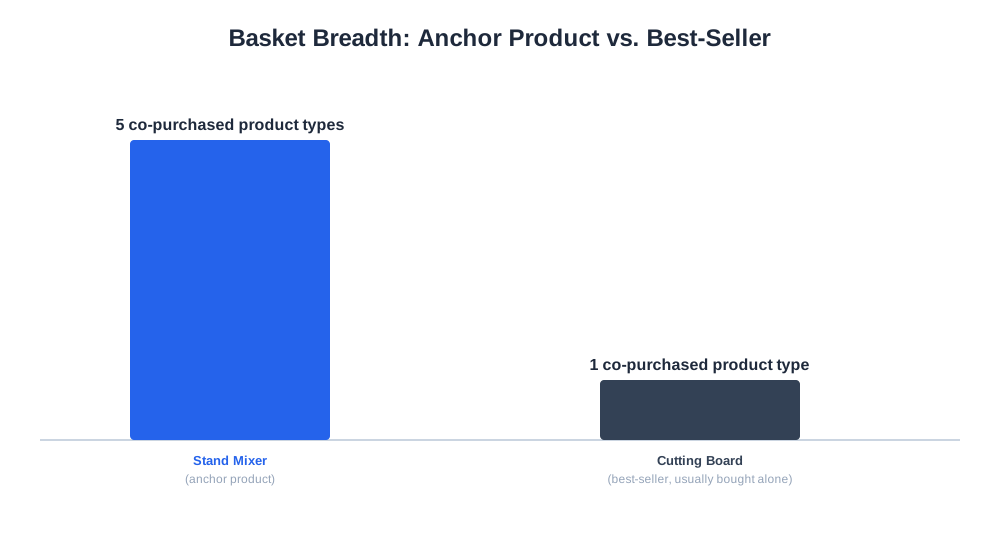
A worked example: a kitchenware store sells a popular stand mixer. Order data shows the mixer appears in baskets alongside mixing bowls, dough hooks, stand mixer covers, recipe books, and several attachment accessories, spanning a wide range of the catalog’s accessory category. By contrast, the store’s best-selling cutting board, while selling more total units, is overwhelmingly purchased alone or with one other item at most. The stand mixer is the anchor product here: it is the item around which a cross-sell or bundle strategy for the accessory category should be built, since the co-purchase relationship already exists organically in customer behavior.

Ready to Monitor Your AI Visibility?
Track how AI chatbots mention your brand across ChatGPT, Perplexity, and other platforms.
Why Anchor Products Matter for E-commerce Brands
Anchor products matter because they represent the most efficient place to invest merchandising effort. Building a bundle or cross-sell campaign around a product that already reliably pulls other items into the basket is working with existing customer behavior rather than trying to manufacture a new purchase pattern from scratch. This makes anchor-centered bundles and recommendations more likely to convert, since the demand connection between the anchor and its companion products has already been demonstrated by real purchase data rather than assumed by a merchandiser’s intuition. Anchor products are also useful for inventory and assortment planning: understanding which product functions as an anchor for a category helps a store prioritize which items to keep well-stocked and prominently featured, since a stockout or discontinuation of an anchor product can suppress sales across the whole cluster of items that typically accompany it, not just the anchor’s own sales.
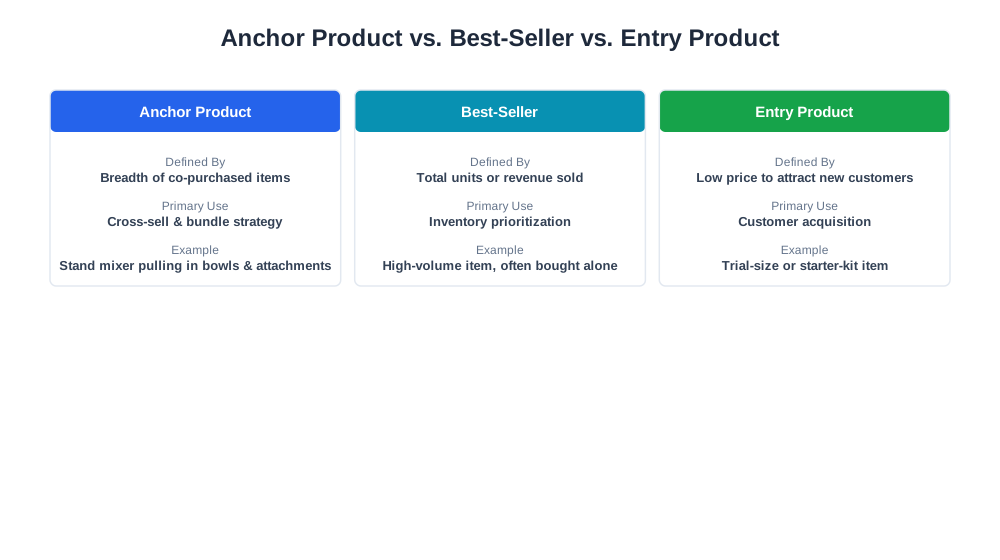
Comparison Table: Anchor Product vs. Best-Seller vs. Entry Product
| Concept | Defined By | Primary Use | Example |
|---|---|---|---|
| Anchor Product | Breadth of co-purchased items in the same basket | Cross-sell and bundle strategy | A stand mixer that pulls in bowls, covers, and attachments |
| Best-Seller | Total units or revenue sold | Inventory prioritization, promotion | A high-volume item, often purchased alone |
| Entry Product | Low price point designed to attract new customers | Customer acquisition | A trial-size or starter-kit item |
Stay Updated on AI Visibility Trends
Get the latest insights on AI mentions, brand monitoring, and optimization strategies.
Anchor Products and AI-Driven Commerce
As AI shopping assistants like ChatGPT Shopping, Perplexity Shopping, and Amazon Rufus increasingly compile product recommendations and comparisons on a shopper’s behalf, having clear, accurate co-purchase relationships documented in product data becomes more valuable. An assistant helping a shopper choose a stand mixer, for example, may also surface commonly paired accessories if that relationship is reflected in the product’s feed data or “frequently bought together” signals, effectively extending a store’s own anchor-product merchandising logic into the AI assistant’s response.
Identifying anchor products reliably requires analyzing real order data rather than guessing from category logic or sales rank alone. AmICited’s eshop_get_product_bundles report is built specifically to surface anchor products by measuring which items pull the widest variety of others into the basket, giving merchandisers a defensible, data-backed starting point for deciding which products deserve featured cross-sell placement, bundle construction, and prioritized inventory attention.
Best Practices for Anchor Products
- Identify anchor products through actual co-purchase data rather than assuming your best-seller is automatically your anchor
- Build cross-sell and bundle offers around confirmed anchor products first, since the underlying demand connection is already proven
- Keep anchor products well-stocked and prominently featured, since a stockout can suppress sales across the whole cluster of items typically purchased alongside them
- Re-identify anchor products periodically as the catalog and customer base evolve, since new product launches or shifting preferences can change which item functions as the anchor for a category
- Look for anchor products within specific categories or customer segments rather than searching for a single store-wide anchor, since larger catalogs often have several
Common Anchor Product Mistakes
A frequent mistake is assuming the highest-volume product in a catalog is automatically the best anchor, when sales volume and basket breadth are different measurements entirely; a high-volume item purchased almost exclusively alone provides little leverage for cross-sell strategy despite its strong standalone numbers. Another common issue is building bundles around a merchandiser’s intuition about what “should” pair well, rather than verifying the pairing against actual order data, which can result in bundles that make logical sense on paper but don’t reflect real customer buying behavior. Some stores also fail to protect anchor product availability, treating it like any other SKU for inventory planning purposes, when a stockout on a true anchor product can quietly suppress sales across an entire cluster of dependent accessory items. A further pitfall is identifying anchor products once and never revisiting the analysis, missing shifts that occur as new products launch or seasonal patterns change which item is actually pulling the most co-purchases in a given period. Finally, some merchandising teams conflate anchor products with entry-level or loss-leader products; while both can drive additional purchases, an anchor product is defined by basket breadth and can sit at any price point, not necessarily the lowest one in the catalog.