



Average Basket Value
Average basket value is the average amount a customer spends in a single shopping cart or transaction, calculated by dividing total revenue by the number of transactions over a period. The term is used almost interchangeably with average order value, though basket value is more commonly used in physical and grocery retail while order value is the standard e-commerce term. This page is a completeness entry for search purposes; for the full treatment of this metric, see Average Order Value.
Definition of Average Basket Value
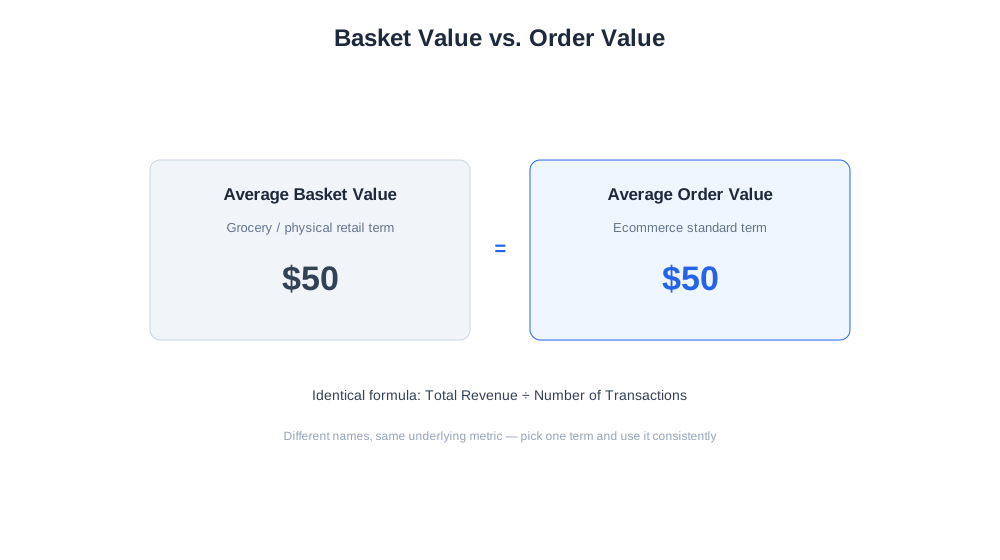
Average basket value is the average amount a customer spends per transaction, calculated by dividing total revenue over a period by the number of transactions in that same period. It’s worth being direct about this term: average basket value and average order value (AOV) are, for nearly all practical purposes, the same metric under two different names. Basket value is the term more commonly used in grocery and general physical retail, reflecting the literal shopping basket or cart a customer fills before checking out, while average order value became the standard term as e-commerce grew and there was no physical basket involved. If you’re researching this metric for an online store, the deeper resource on this site is the Average Order Value glossary entry, which covers the formula, benchmarks, and optimization strategies in full — this page exists mainly so the term is covered for anyone searching it under the basket-value name specifically.
How Average Basket Value Is Calculated
The formula is identical to average order value:
Average Basket Value = Total Revenue ÷ Number of Transactions
Worked example: a store generates $40,000 in revenue from 800 transactions in a month.
- Total revenue: $40,000
- Number of transactions: 800
- Average basket value: $40,000 ÷ 800 = $50
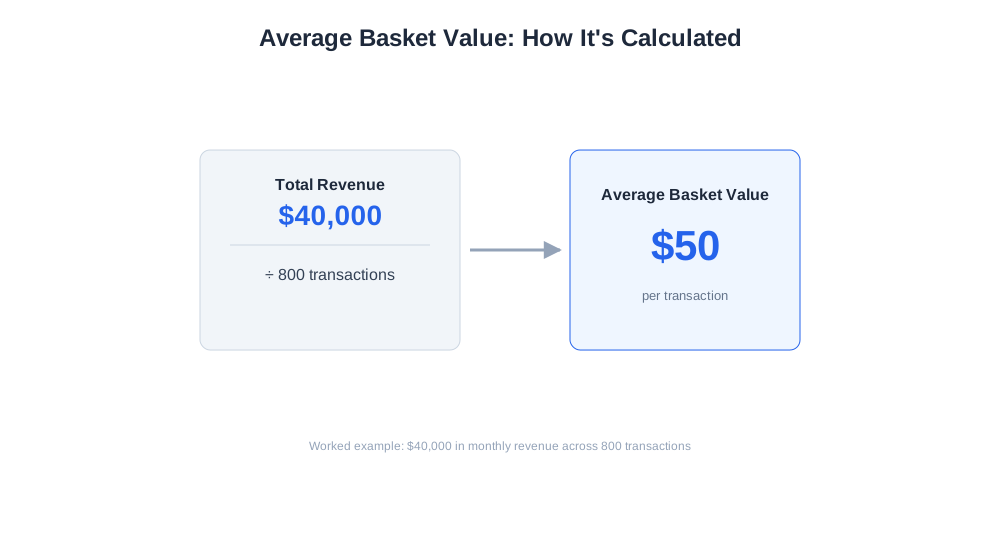
This is the exact same calculation and result that would be reported as average order value on an e-commerce platform’s analytics dashboard — the two terms are simply drawn from different retail traditions describing the same underlying number.

Ready to Monitor Your AI Visibility?
Track how AI chatbots mention your brand across ChatGPT, Perplexity, and other platforms.
Why the Distinction Still Matters a Little
While the metric itself is identical, the terminology choice can matter in a couple of narrow situations. In omnichannel retail, where a business tracks both in-store and online transactions, basket value is sometimes used specifically for the in-store or point-of-sale side, while order value is reserved for online transactions, allowing a retailer to compare the two channels side by side. In grocery and convenience retail specifically, basket value analysis sometimes extends into basket composition — what specific combination of items typically appears together — which overlaps closely with market basket analysis, a related but distinct technique focused on product-pairing patterns rather than the dollar total alone.
Best Practices
Whichever term a business uses internally, the levers to increase it are the same: cross-sell relevant add-ons at checkout, offer a free-shipping threshold slightly above the current average to nudge customers toward adding one more item, bundle complementary products at a modest discount, and use a recommendation engine to surface relevant products at the moment a customer is deciding whether to add more to their basket. AmICited’s eshop_get_kpis tool reports this metric directly from transaction data as part of the standard executive KPI deck, alongside margin and retention figures, so merchants get one consistent number rather than reconciling separately labeled basket and order value figures from different systems. For the full discussion of benchmarks, calculation nuances, and optimization tactics, see the Average Order Value glossary page, which covers this same metric in depth.
Stay Updated on AI Visibility Trends
Get the latest insights on AI mentions, brand monitoring, and optimization strategies.
A Note on Which Term to Use
For an online store, there is little practical reason to track both average basket value and average order value as if they were separate metrics — doing so usually just creates two dashboards reporting the same number under different labels, which invites confusion rather than adding insight. The more useful decision is simply picking one term and using it consistently across reporting, dashboards, and team conversations, so that a merchandising or marketing discussion about “raising basket value” and a finance discussion about “average order value” are clearly understood to be about the exact same lever. Retailers that operate both a physical storefront and an online store are the one case where keeping both terms distinct, and mapping each explicitly to its channel, can genuinely help avoid conflating in-store and online purchasing behavior when the two channels behave differently.