


Cross-Sell Rate
Cross-sell rate is the percentage of orders in which a customer purchases an additional, related product alongside their original item, whether prompted by a recommendation or added on their own. It's a core efficiency metric for measuring how well a store turns single-item purchases into multi-item baskets.
Definition of Cross-Sell Rate
Cross-sell rate measures how often a customer’s order includes an additional, related product beyond the one they originally came to buy. It’s the metric that quantifies how effectively a store’s product recommendations, bundling, or merchandising turn a single-item purchase into a multi-item basket. A store selling a camera might cross-sell a memory card, a case, or a tripod; cross-sell rate tells the merchant what percentage of camera orders actually included one of those add-ons.
How Cross-Sell Rate Is Calculated
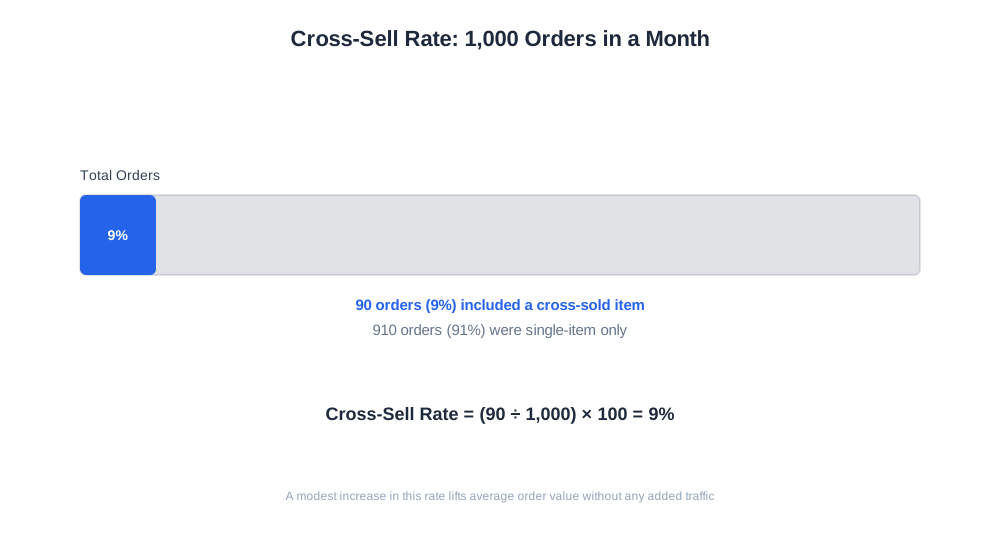
Cross-Sell Rate = (Orders Including a Cross-Sold Item ÷ Total Orders) × 100
Worked example: a store sells 1,000 orders in a month. Of those, 90 orders included at least one additional recommended product beyond the customer’s primary item.
Cross-Sell Rate = (90 ÷ 1,000) × 100 = 9%
Some merchants calculate this more narrowly — measuring only orders where a specific on-site recommendation module was shown and then accepted, which isolates the direct effect of that recommendation rather than counting any multi-item order regardless of cause.

Ready to Monitor Your AI Visibility?
Track how AI chatbots mention your brand across ChatGPT, Perplexity, and other platforms.
Why Cross-Sell Rate Matters for E-commerce Brands
Cross-sell rate is directly tied to average order value and, by extension, overall revenue efficiency per customer acquired. Since acquiring a customer to the site already carries a fixed marketing cost, getting that same customer to add one more relevant item meaningfully improves the return on that acquisition spend without requiring any additional traffic. A modest improvement in cross-sell rate, applied across a large order volume, can move average order value more reliably than most acquisition-side optimizations, because it depends entirely on merchandising and recommendation quality rather than external traffic conditions.
Cross-Sell Rate and AI-Driven Commerce
As AI shopping assistants like ChatGPT Shopping and Perplexity Shopping start suggesting complementary products alongside a primary purchase, the accuracy of a merchant’s own cross-sell logic becomes a useful signal for what these assistants might recommend as well. A store with well-validated, frequently-purchased-together product pairs is better positioned to have those same pairings picked up and echoed by an AI assistant helping a shopper complete a purchase.
Improving cross-sell rate starts with knowing which products are actually bought together, rather than guessing based on catalog structure alone. AmICited’s eshop_get_product_bundles tool surfaces real co-purchase patterns from a connected store’s order history, giving merchants a data-backed list of pairings to prioritize for on-page recommendations instead of relying on assumptions about which items “should” go together.
Stay Updated on AI Visibility Trends
Get the latest insights on AI mentions, brand monitoring, and optimization strategies.
Best Practices for Cross-Sell Rate
- Base recommendations on actual co-purchase data, not assumed product relationships
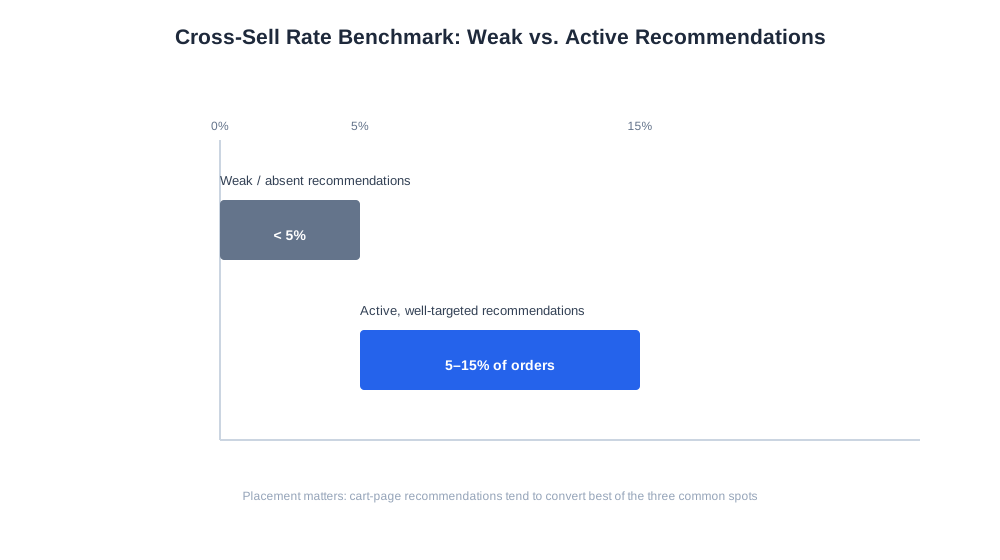
- Place cross-sell prompts on the cart page, where customers have already committed to buying
- Keep recommendations limited to one or two highly relevant items rather than a long list that dilutes attention
- Track cross-sell rate by product category, since some categories naturally cross-sell better than others
- Test recommendation placement and framing periodically rather than assuming a single setup is optimal indefinitely
Common Cross-Sell Rate Mistakes
A common mistake is recommending products based on merchandising assumptions rather than actual purchase data, leading to irrelevant suggestions that customers ignore or find mildly annoying. Another frequent issue is placing cross-sell prompts too early in the funnel, such as on a landing page before the customer has committed to buying anything, where they’re far less receptive than they would be at the cart stage. Some stores measure cross-sell rate in aggregate only, missing that it’s strong in one category and nearly nonexistent in another, which hides an opportunity to fix underperforming categories specifically. It’s also common to overload the recommendation module with too many suggested items, which dilutes attention and can lower rather than raise the rate compared to a tightly curated one- or two-item prompt.