


Upsell
An upsell is a sales technique that encourages a customer to purchase a higher-value version, upgrade, or additional quantity of a product they're already considering, rather than a completely different item. It differs from cross-selling, which recommends complementary products, by staying within the same product line but pointing the customer toward a better or bigger option.
Definition of Upsell
An upsell is a sales technique in which a business encourages a customer, at some point during the buying process, to purchase a more expensive, higher-quality, or larger version of the product they’re already considering, instead of the base option. The defining feature of an upsell is that it stays within the same product line or purchase decision — offering a customer a larger size, a higher-capacity model, an extended warranty, or a multi-pack instead of a single unit. This distinguishes it from a cross-sell, which introduces a different but related product entirely. Upselling is one of the oldest techniques in retail, familiar from the classic “would you like to supersize that?” prompt, and it translates directly into e-commerce through product page upgrade options, cart-page suggestions, and post-purchase offers shown immediately after checkout.
How Upselling Works
Upselling works by presenting a higher-value option at the moment a customer has already decided they want the base product, which lowers the psychological barrier to spending more — the customer isn’t starting a new purchase decision, they’re adjusting one they’ve already made. A common structure is the “good, better, best” tiering: a store selling a basic version of a product for 40 dollars might show a premium version with additional features for 65 dollars right next to it, framing the premium option as a modest incremental spend rather than a large new purchase. Another common structure is quantity-based upselling: offering a discount for buying three units instead of one, which increases average order value even though the per-unit price drops slightly, because total basket value still rises. Post-purchase upsells work differently — they appear on the confirmation page after payment is already complete, offering an add-on at a discount specifically because the customer has just demonstrated buying intent and the transaction friction of a second checkout is minimized.
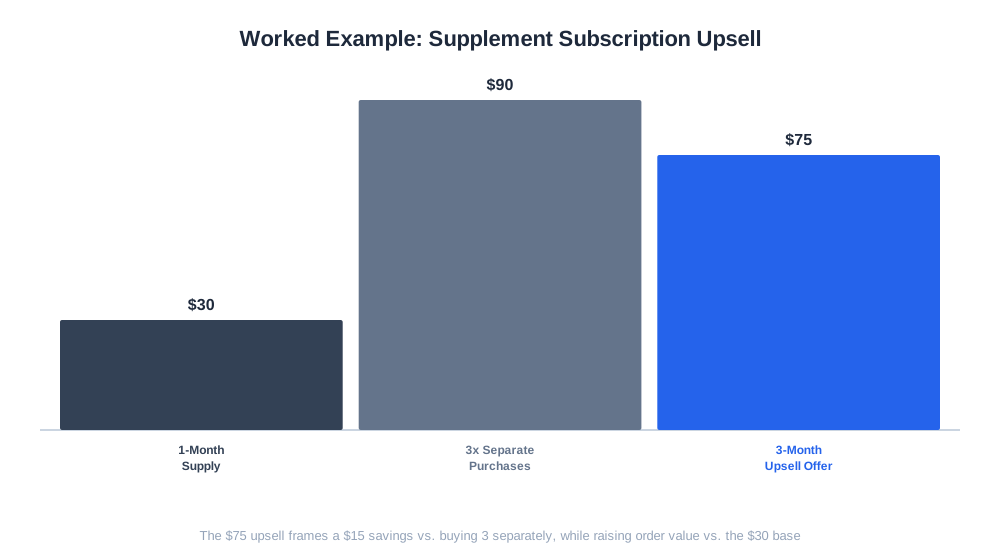
A simple worked example: a supplement brand sells a one-month supply for 30 dollars. At checkout, the store offers a three-month supply for 75 dollars instead of the 90 dollars three separate purchases would cost, framed as “save 15 dollars.” If 20 percent of customers who would have bought the one-month supply take that upsell instead, average order value rises meaningfully even though the effective unit price is lower, because total revenue per transaction and total margin per customer both increase compared to the single-month purchase.

Ready to Monitor Your AI Visibility?
Track how AI chatbots mention your brand across ChatGPT, Perplexity, and other platforms.
Why Upselling Matters for E-commerce Brands
Upselling is one of the most efficient levers available for improving profitability, because it doesn’t require acquiring a new customer — the marketing and acquisition cost for that order has already been spent. Raising average order value even modestly through upsells directly improves the ratio between customer acquisition cost and revenue per order, which is often the deciding factor in whether a paid acquisition channel is profitable at all. Upselling also tends to have a favorable margin profile compared to acquiring new customers through advertising, since the incremental cost of fulfilling a larger order or a bundled upgrade is usually much lower than the cost of winning a first-time buyer. Done well, upselling can also improve customer satisfaction rather than detract from it, since a genuinely useful upgrade — more product, a longer warranty, a better material — gives the customer more value for a proportionally smaller price increase.
Upsell vs. Cross-Sell vs. Bundle
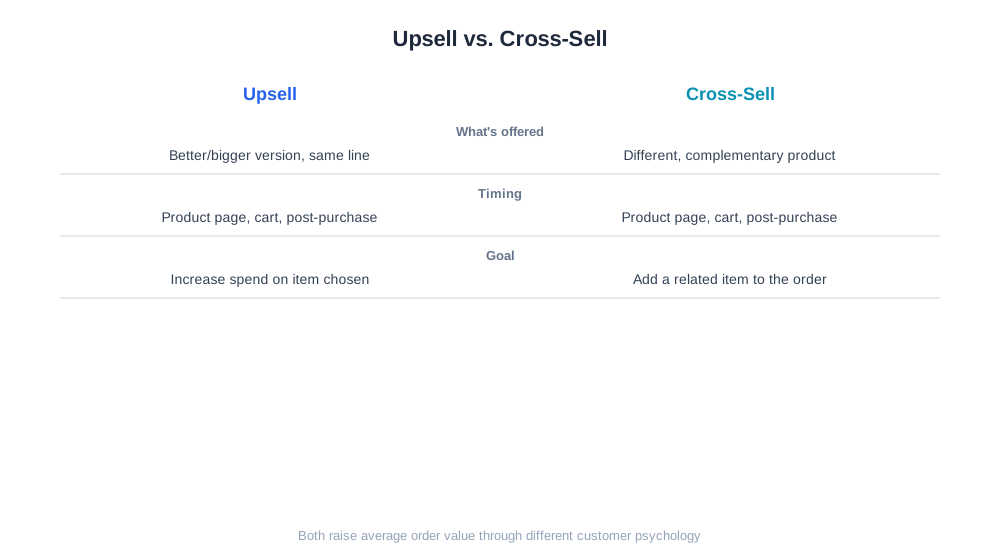
| Technique | What’s Offered | Timing | Goal |
|---|---|---|---|
| Upsell | A better or bigger version of the same product | Product page, cart, post-purchase | Increase spend on the item already chosen |
| Cross-Sell | A different, complementary product | Product page, cart, post-purchase | Add a related item to the order |
| Bundle | A fixed group of items sold together | Product page, landing page | Increase basket size with a packaged offer |
| Quantity Upsell | More units of the same item | Product page, cart | Increase order size through volume discount |
Stay Updated on AI Visibility Trends
Get the latest insights on AI mentions, brand monitoring, and optimization strategies.
Upselling and AI-Driven Commerce
As AI shopping assistants like ChatGPT Shopping, Perplexity Shopping, and Amazon’s Rufus take on more of the product research and comparison work customers used to do themselves, the traditional on-site upsell prompt — a banner or pop-up suggesting an upgrade — has less opportunity to influence a purchase that’s being finalized somewhere else. This shifts part of the upselling opportunity earlier, into how a brand structures its product data and content: if an AI assistant is comparing a base model against a premium model on a customer’s behalf, the brand’s own product descriptions, specifications, and pricing structure need to make the value of the upgrade clear without a human salesperson or on-site prompt doing the persuading. On the analytics side, identifying which upsell offers actually work requires the same kind of co-purchase evidence used in market basket analysis. AmICited’s eshop_get_product_bundles tool surfaces which product pairings and upgrade paths customers respond to based on real order history, which helps a merchant design upsell offers around patterns that are already proven rather than assumptions about what customers might want.
Best Practices for Upselling
- Keep the upsell relevant and proportional — an upgrade offer priced at several times the base product’s cost tends to feel like a bait-and-switch rather than a genuine option.
- Place post-purchase upsells after payment is confirmed, not before, so the offer doesn’t introduce friction into the primary checkout flow.
- Use real purchase data to decide which upsells to show rather than guessing; a bundle or upgrade with no historical demand is unlikely to convert regardless of how it’s presented.
- Limit the number of upsell prompts a customer sees in a single session — stacking multiple upsell and cross-sell offers back to back tends to reduce acceptance of all of them.
- Track upsell acceptance rate and incremental margin separately from raw revenue lift, since a heavily discounted upsell can raise average order value while barely improving profit.
Common Upsell Mistakes
A common mistake is presenting the upsell before the customer has committed to the base purchase, which can distract from or delay the original conversion instead of adding to it — an upgrade offer inserted too early in the funnel competes with the primary decision rather than building on it. Another frequent problem is offering an upsell that is priced or positioned so far above the original item that it reads as an attempt to upsell for its own sake rather than a genuinely useful option, which damages trust more than it grows revenue. Some stores also stack too many upsell and cross-sell prompts into a single checkout flow, overwhelming the customer with decisions and increasing the odds they abandon the process altogether rather than accept any offer. It’s also common to set the upsell discount too shallow to feel worthwhile or too deep to protect margin, without testing where the actual balance point is for a given product and customer base. Finally, many stores never revisit their upsell offers after initial setup, missing the fact that customer preferences and product assortments change over time — an upsell built around a product that’s since been discontinued or repriced can quietly stop converting without anyone noticing until average order value has already declined.