


Gateway Product
A gateway product is a low-priced, low-commitment item that introduces new customers to a brand, often serving as their first purchase before they buy higher-value products. It's essentially synonymous with an entry product, and the two terms are frequently used interchangeably in e-commerce.
Definition of Gateway Product
A gateway product is a low-priced, low-commitment item designed to serve as a customer’s first purchase from a brand, opening the door to a longer-term buying relationship. The term is functionally interchangeable with entry product — both describe the same strategic role in a catalog, and the choice between the two names is largely a matter of preference rather than a meaningful distinction. A gateway product typically sits at the lower end of a brand’s price range, is easy for a new customer to say yes to without much deliberation, and gives an accurate first impression of the brand’s quality, so that a satisfied first-time buyer feels confident moving on to higher-priced items.
How a Gateway Product Works
The logic behind a gateway product is straightforward: acquiring a first-time customer is expensive, and the size of that first order rarely covers the full cost of acquisition on its own. A well-chosen gateway product lowers the barrier to that first purchase as much as possible, accepting a thin or even negative margin on the initial sale in exchange for the chance to build a relationship that pays off through repeat purchases.
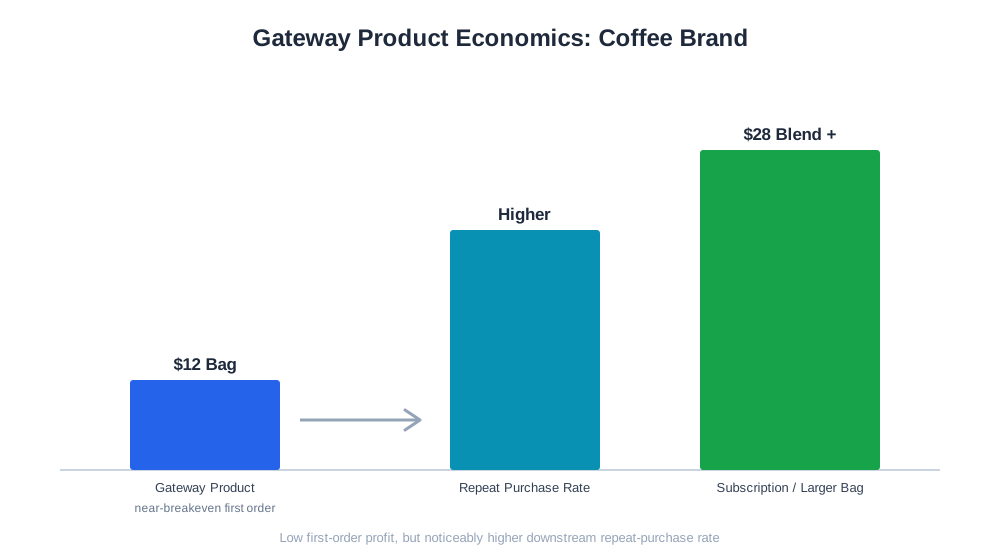
A worked example: a specialty coffee brand sells a $12 introductory bag of coffee as its gateway product, priced near breakeven after shipping and packaging. Customers who buy the $12 bag convert to a repeat purchase — typically a larger bag or a subscription — at a noticeably higher rate than customers who first buy directly into the brand’s $28 premium blend. Even though the gateway product itself contributes little or no profit on the first order, the higher downstream repeat-purchase rate makes the overall customer relationship more valuable than one that started with a pricier, higher-friction first purchase.

Ready to Monitor Your AI Visibility?
Track how AI chatbots mention your brand across ChatGPT, Perplexity, and other platforms.
Why Gateway Products Matter for E-commerce Brands
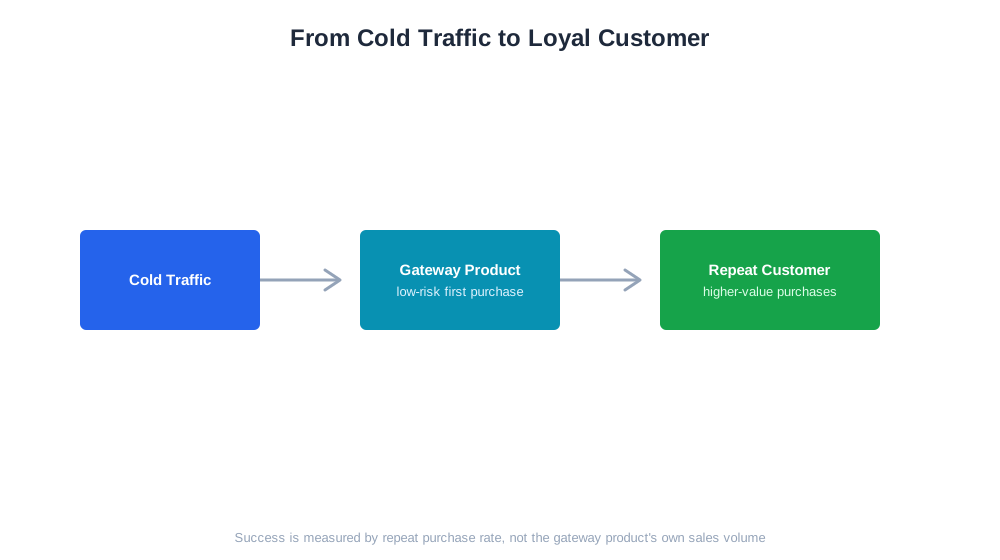
Gateway products give a brand a deliberate, low-risk way to convert cold traffic into paying customers, which matters most when acquisition costs are high relative to average order value. Rather than asking a brand-new visitor to commit to a full-priced item on their first visit, a gateway product asks for a smaller commitment while still delivering enough of a genuine product experience to build trust.
The strategy only works, however, if the gateway product is genuinely representative of the brand’s quality and naturally connects to the rest of the catalog. A gateway product that’s disconnected from the core product line, or that undersells the brand’s actual quality, risks attracting one-time bargain shoppers who never return — turning a customer-acquisition tool into a pure discount magnet instead.
Gateway Products and AI-Driven Commerce
As AI shopping assistants increasingly help new customers discover unfamiliar brands, a well-positioned gateway product gives an AI assistant an easy, low-risk recommendation to make on a brand’s behalf — a $12 trial item is a far easier suggestion for an assistant to surface to a first-time shopper than a $150 flagship product. Brands that clearly signal their gateway product in structured product data give these assistants a natural entry point to recommend.
AmICited’s eshop_get_entry_products tool identifies which products most frequently serve as a customer’s actual first purchase and tracks how those customers behave afterward, letting merchants confirm empirically whether their intended gateway product is genuinely driving repeat business, or whether a different, unplanned product is quietly playing that role instead.
Stay Updated on AI Visibility Trends
Get the latest insights on AI mentions, brand monitoring, and optimization strategies.
Best Practices and Common Mistakes
Choose a gateway product that’s genuinely representative of brand quality rather than a stripped-down or lower-quality item — a poor first impression is worse than no gateway product at all. Make sure it connects naturally to higher-priced products in the catalog so the next purchase feels like an obvious step rather than a cold start. And measure its performance the same way as any other acquisition tool: by tracking the repeat purchase rate of customers who entered through it, not just its own standalone sales volume — a gateway product that sells well but never leads to a second purchase isn’t fulfilling its actual purpose.