



What is Semantic Search for AI? How It Works and Why It Matters
Learn how semantic search uses AI to understand user intent and context. Discover how it differs from keyword search and why it's essential for modern AI system...
12 min read
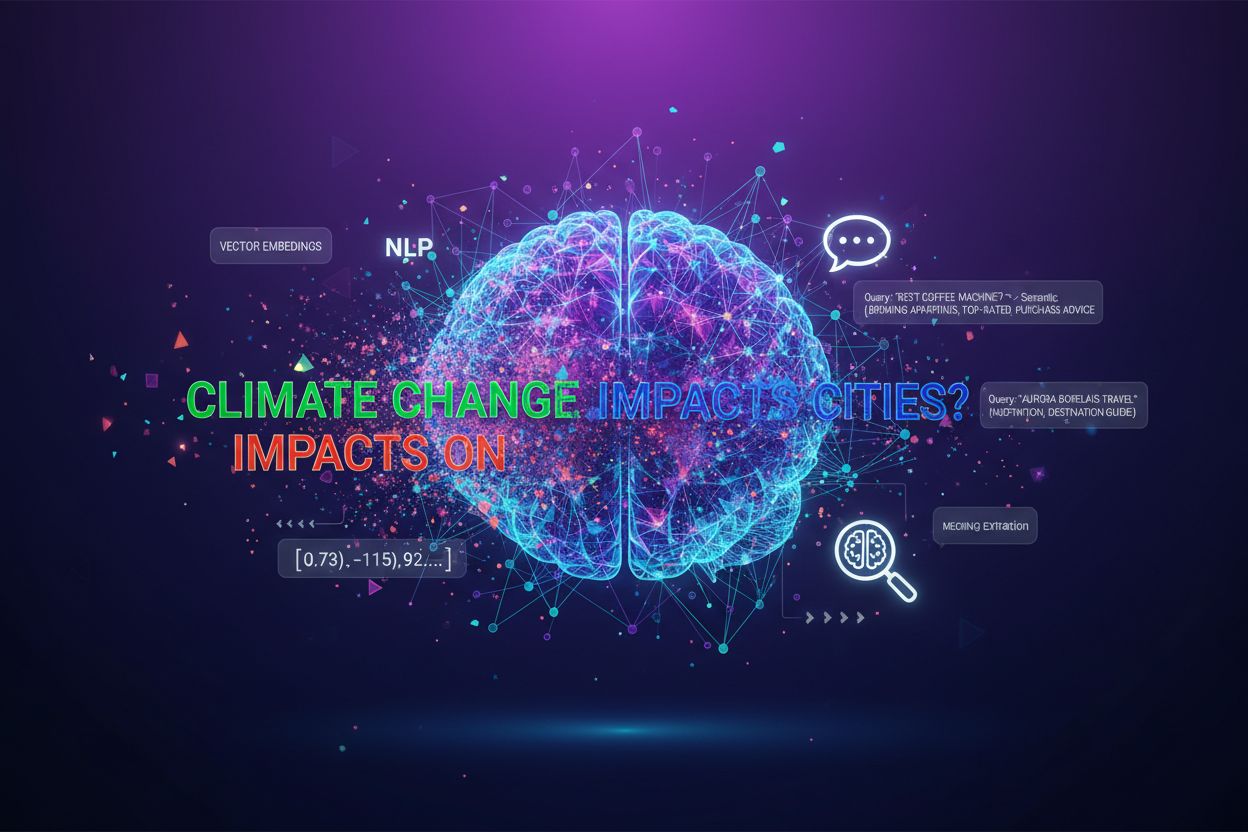
Semantic query matching is an AI-powered technique that understands user intent and meaning behind search queries, delivering relevant results even when exact keywords don’t match. It uses natural language processing and machine learning to interpret context, synonyms, and relationships between concepts, enabling more accurate and intuitive search experiences across AI systems like GPTs, Perplexity, and Google AI Overviews.
Semantic query matching is an AI-powered technique that understands user intent and meaning behind search queries, delivering relevant results even when exact keywords don't match. It uses natural language processing and machine learning to interpret context, synonyms, and relationships between concepts, enabling more accurate and intuitive search experiences across AI systems like GPTs, Perplexity, and Google AI Overviews.
Semantic query matching is a sophisticated search technology that understands the meaning and intent behind user queries rather than simply matching individual keywords. Unlike traditional keyword matching, which looks for exact word matches or simple variations, semantic query matching analyzes the contextual meaning of search terms to deliver more relevant results. For example, a semantic system would recognize that “How do I fix my broken phone screen?” and “My device display is cracked” are essentially the same query, even though they use completely different words, whereas a keyword-based system would treat them as separate searches.
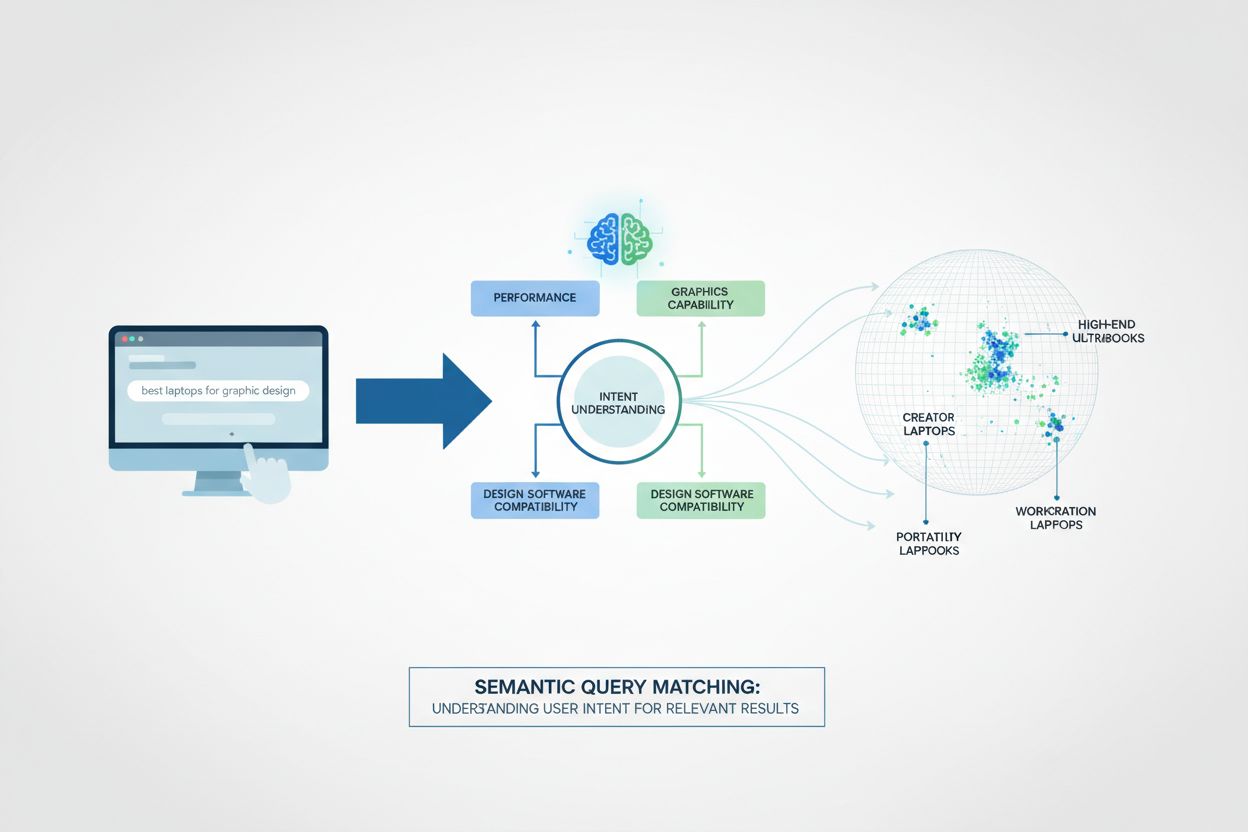
Semantic query matching operates through a multi-layered technical process that transforms both queries and documents into mathematical representations called embeddings. The system first processes natural language through NLP algorithms to extract meaning, then converts this understanding into high-dimensional vectors that capture semantic relationships. A similarity scoring mechanism compares the query vector against document vectors to rank results by relevance rather than keyword frequency. This approach enables the system to understand synonyms, context, and user intent without explicit programming for each variation.
| Aspect | Traditional Keyword Search | Semantic Query Matching |
|---|---|---|
| Matching Method | Exact or partial word matching | Meaning-based similarity scoring |
| Intent Understanding | Limited; relies on keyword presence | Deep contextual analysis of user intent |
| Synonym Handling | Requires manual synonym lists | Automatically recognizes semantic equivalents |
| Context Awareness | Minimal; treats words independently | Comprehensive; analyzes relationships between terms |
| Learning Capability | Static; doesn’t improve from usage | Dynamic; improves through model updates and feedback |
The technological foundation of semantic query matching rests on several interconnected components working in concert:
Semantic query matching has become indispensable across numerous industries and applications. In e-commerce, it helps customers find products using natural language descriptions rather than exact product names—searching “comfortable shoes for running” returns relevant athletic footwear even without those exact keywords. Customer support systems use semantic matching to route inquiries to appropriate departments by understanding the underlying issue rather than keyword triggers. Enterprise search platforms enable employees to find internal documents using conceptual queries. Modern AI systems like ChatGPT, Perplexity, and Google AI Overviews rely heavily on semantic query matching to understand user intent and retrieve relevant training data. Content recommendation engines use semantic matching to suggest articles, videos, and products based on meaning rather than explicit tags.
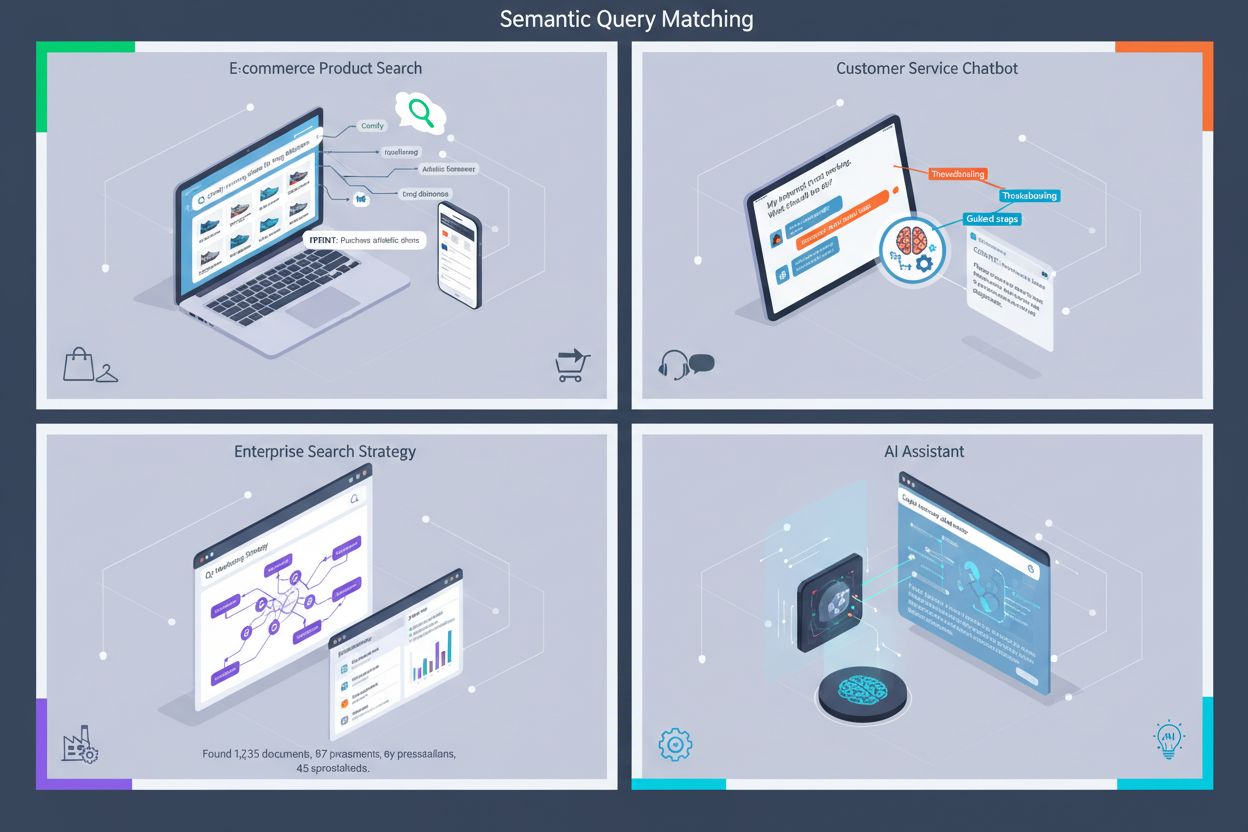
The advantages of semantic query matching significantly enhance user experience and system effectiveness. Improved relevance means users find what they’re actually looking for on the first try, reducing frustration and search iterations. The technology excels at handling ambiguous or poorly-phrased queries, understanding intent even when users struggle to articulate their needs precisely. Synonym understanding eliminates the need for users to guess exact terminology—whether you search for “automobile,” “car,” or “vehicle,” semantic systems recognize these as equivalent. This capability drives increased engagement as users discover more relevant content, leading to higher satisfaction and conversion rates. The superior user experience created by semantic matching has become a competitive necessity in modern digital products.
Despite its advantages, semantic query matching faces significant technical and practical challenges. Computational complexity remains substantial; processing high-dimensional vectors and calculating similarities across millions of documents requires substantial processing power and infrastructure investment. Data privacy concerns arise because semantic systems must process and analyze user queries in detail, raising questions about data retention and security. Model training demands large, high-quality datasets and significant computational resources, creating barriers for smaller organizations. The technology carries misinterpretation risk—semantic models can confidently return irrelevant results when they misunderstand context or encounter out-of-domain queries. The classic latency versus accuracy tradeoff means that more sophisticated semantic analysis takes longer, potentially degrading real-time search performance.
AmICited.com leverages semantic query matching to revolutionize how brands monitor their presence in AI-generated content and responses. Rather than simply tracking exact brand name mentions, AmICited.com’s platform understands the intent and context of how AI systems reference brands, products, and companies across ChatGPT, Perplexity, Google AI Overviews, and other major AI platforms. The semantic approach enables detection of indirect references, comparative mentions, and contextual citations that keyword-based monitoring would miss entirely. This deeper understanding provides brands with comprehensive visibility into how AI systems present their offerings to users—critical intelligence for maintaining brand reputation and market positioning. AmICited.com’s semantic capabilities work seamlessly with complementary tools like FlowHunt.io, which specializes in workflow optimization, creating a comprehensive ecosystem for AI monitoring and brand intelligence. By understanding the semantic meaning behind AI-generated responses, AmICited.com helps brands identify opportunities, address misrepresentations, and optimize their presence in the AI-driven information landscape.
Assuming semantic matching alone is sufficient and dropping keyword-based fallbacks entirely. As the FAQ on this page notes, most mature systems use a hybrid approach rather than pure semantic matching, because semantic models can confidently return irrelevant results when they misinterpret context or encounter out-of-domain queries. Removing exact-match capability entirely leaves no fallback when the semantic model gets it wrong.
Underestimating the computational cost until it’s in production. Processing high-dimensional vectors and calculating similarity across large document sets requires meaningfully more infrastructure than keyword indexing—teams that prototype semantic matching on a small dataset and don’t budget for the cost curve at production scale often hit performance or cost walls after launch.
Treating a single embedding model as permanently sufficient. Because embedding models are trained on specific data and periods, a model that performs well at launch can drift in relevance as language use and the underlying content corpus evolve; not budgeting for periodic re-evaluation or retraining leads to gradually degrading match quality that’s easy to miss without explicit monitoring.
Ignoring the latency-versus-accuracy tradeoff during design rather than after complaints arrive. More sophisticated semantic analysis takes longer to compute, and if this tradeoff isn’t explicitly decided upfront—choosing where on the spectrum a given use case should sit—the default tends to drift toward maximum accuracy at the expense of response time, only surfacing as a problem once users notice the lag.
Overlooking data privacy implications of processing full query text. Because semantic systems need to analyze the meaning of queries in detail rather than just matching tokens, they inherently process more of the user’s raw input than keyword systems do—teams that don’t explicitly address retention and anonymization policies for this data can create compliance exposure that wasn’t a concern under the previous keyword-based system.
AmICited.com uses semantic query matching to track your brand mentions across ChatGPT, Perplexity, and Google AI Overviews—understanding not just what's said, but the intent behind it.
Learn how semantic search uses AI to understand user intent and context. Discover how it differs from keyword search and why it's essential for modern AI system...
Semantic search interprets query meaning and context using NLP and machine learning. Learn how it differs from keyword search, powers AI systems, and improves s...
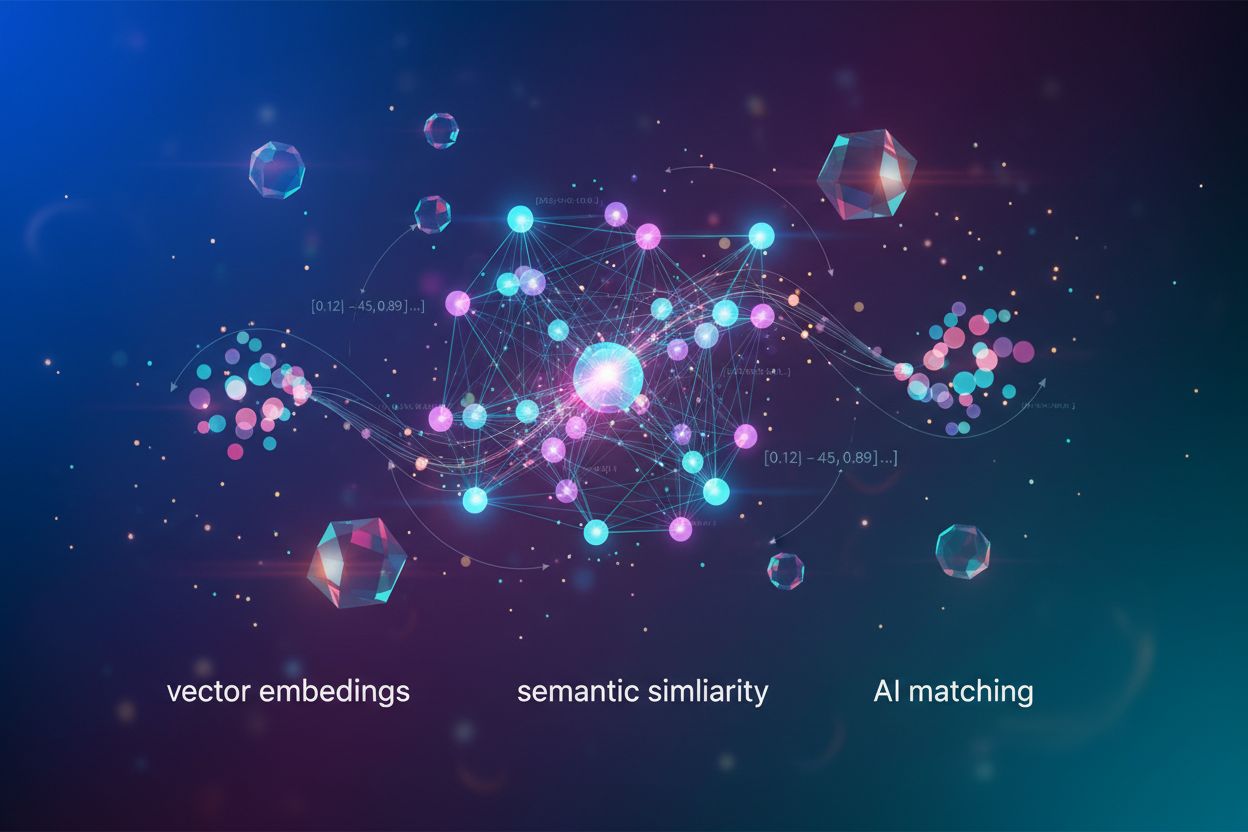
Learn how vector embeddings enable AI systems to understand semantic meaning and match content to queries. Explore the technology behind semantic search and AI ...
Cookie Consent
We use cookies to enhance your browsing experience and analyze our traffic. See our privacy policy.