


- SEO metrics measure how a site performs in organic search, from impressions and clicks to sessions, conversions and revenue.
- They form a chain: CTR is clicks divided by impressions, conversion rate is conversions divided by sessions. Each weak ratio points to a different fix.
- Pick two or three KPIs tied to revenue or leads and treat the rest as diagnostics that explain why a KPI moved.
- Average position is an average over every query and impression, so it can drop while traffic grows. Don’t read it as a ranking.
Where AmICited fits
AmICited’s SEO dashboard reads Google Search Console and Bing Webmaster Tools for clicks, impressions and keywords in the top 10, and its AEO tab adds share of voice and citations in the AI engines you track.
See the Search Console reports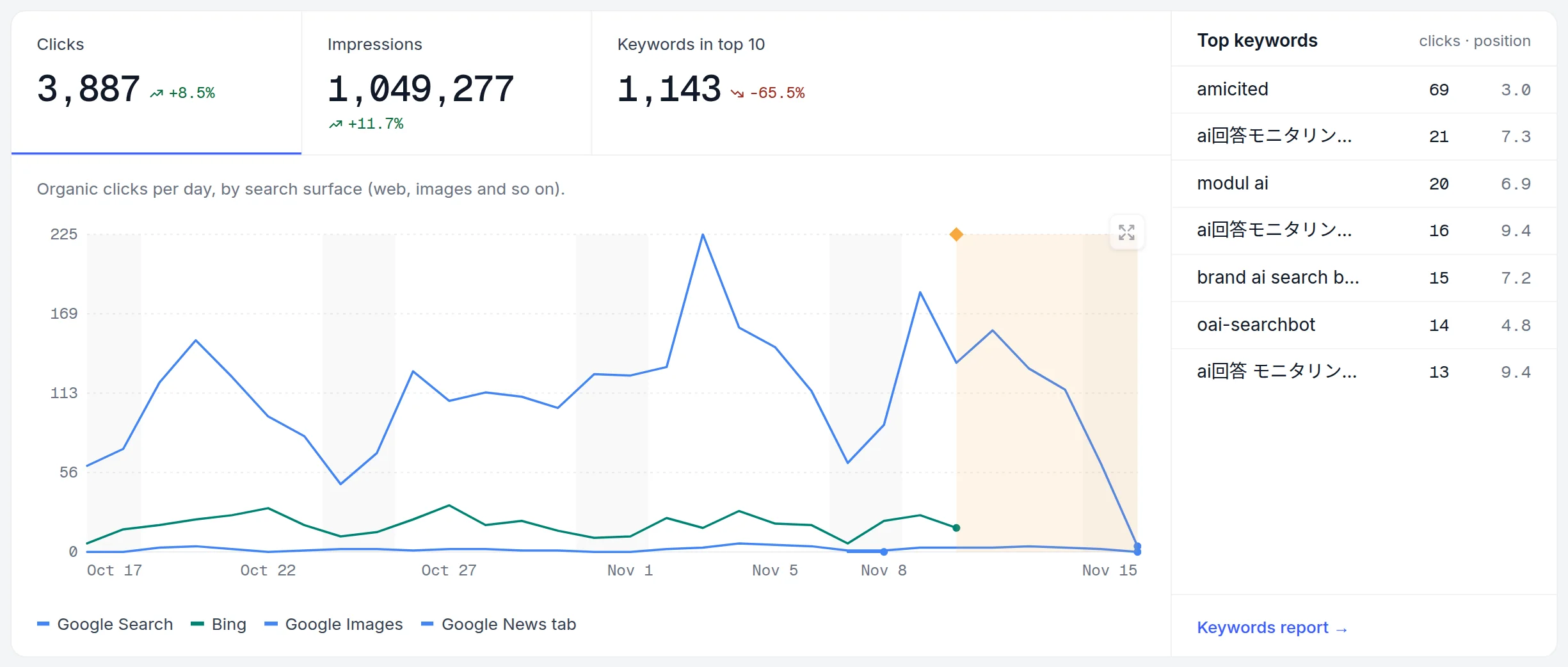
What Are SEO Metrics?
SEO metrics are the numbers you use to judge how a website performs in organic search. They cover visibility (are your pages shown?), engagement (do people click and stay?), outcomes (do they convert?) and the inputs that drive rankings (technical health, links and content). No single metric tells the whole story, so teams track a small set that connects to business results.
The main sources are free. Google Search Console provides impressions, clicks, CTR and average position. Google Analytics 4 provides sessions and conversions from organic search. Bing Webmaster Tools does the same for Bing. Paid SEO tools add estimates such as keyword rankings at scale, backlinks and authority scores.
How SEO Metrics Fit Together
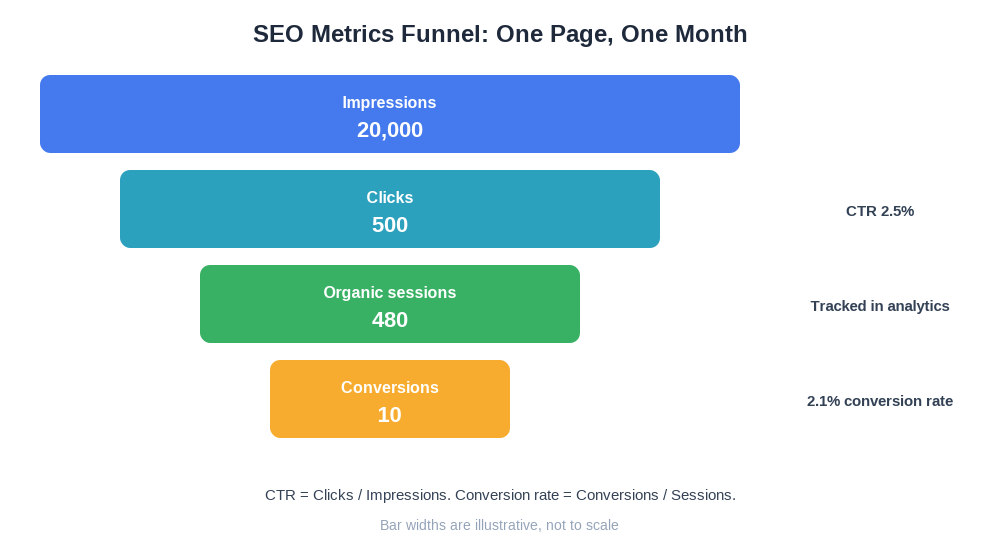
SEO metrics form a chain from being seen to earning money. Each step can be calculated from the one before:
- Impressions: how often your pages appear in search results.
- Clicks: how often searchers click through.
- Click-through rate (CTR): clicks ÷ impressions × 100.
- Sessions: visits recorded by analytics from organic search.
- Conversions: purchases, sign-ups or leads from those sessions.
- Conversion rate: conversions ÷ sessions × 100.
Here is a worked example for one page in a month. It earns 20,000 impressions and 500 clicks, so CTR is 500 ÷ 20,000 = 2.5%. Analytics records 480 organic sessions on the page (a little lower than clicks, which is normal because of consent and tracking differences). Of those, 10 convert, a 10 ÷ 480 ≈ 2.1% conversion rate.
Each ratio points to a different fix. Low impressions mean a ranking or indexing problem. Low CTR at a good position suggests the title or a SERP feature is the issue. Low conversion rate points to the page itself.
Types of SEO Metrics
The table groups the common SEO metrics by what they tell you.
| Group | Metric | What it shows | Where to find it |
|---|---|---|---|
| Visibility | Impressions | How often you appear in results | Search Console |
| Visibility | Average position | Mean rank across impressions | Search Console |
| Engagement | Clicks and CTR | How often searchers choose you | Search Console |
| Engagement | Engagement rate | Share of sessions that are engaged | GA4 |
| Outcomes | Organic conversions and revenue | Business results from SEO | GA4, ecommerce platform |
| Technical | Indexed pages | Pages eligible to rank | Search Console page indexing report |
| Technical | Core Web Vitals | Loading, responsiveness, visual stability | Search Console, PageSpeed Insights |
| Authority | Referring domains | Unique sites linking to you | Backlink tools |
| AI search | Mentions, citations, share of voice | Presence in AI answers | AI visibility tracker |
SEO Metrics vs SEO KPIs
You can track dozens of metrics, but only a few should be KPIs, the numbers that decide whether SEO is working. For an online store, the KPIs might be non-branded organic revenue and organic conversion rate. For a publisher, organic sessions and ad revenue per session. For a B2B company, organic demo requests.
The other metrics are diagnostic. They explain why a KPI moved. If organic revenue falls, you check clicks, then positions, then indexing, then the pages that lost traffic. Keeping that order in your SEO reporting stops teams from celebrating more impressions while revenue drops.
Choosing the Right Time Window
The window you pick changes what the numbers say. Daily data in Search Console is noisy, because a few clicks either way can swing CTR and position. Weekly views smooth that noise but still catch sudden drops after a release or an algorithm update. Monthly and quarterly views show the trend that matters for planning. For seasonal businesses, year-over-year is the only fair comparison: comparing December with November tells you about the holidays, not about SEO. Search Console keeps 16 months of performance data, so export it regularly if you want longer history.

Stay Updated on AI Visibility Trends
Get the latest insights on AI mentions, brand monitoring, and optimization strategies.
SEO Metrics and AI Search
Traditional SEO metrics miss most of what happens in AI answers. A ChatGPT or Perplexity answer may mention your brand without a click, and Google AI Overviews can answer a query above your organic result. Google counts AI Overview and AI Mode activity inside Search Console’s web search totals, which makes it hard to separate from classic results.
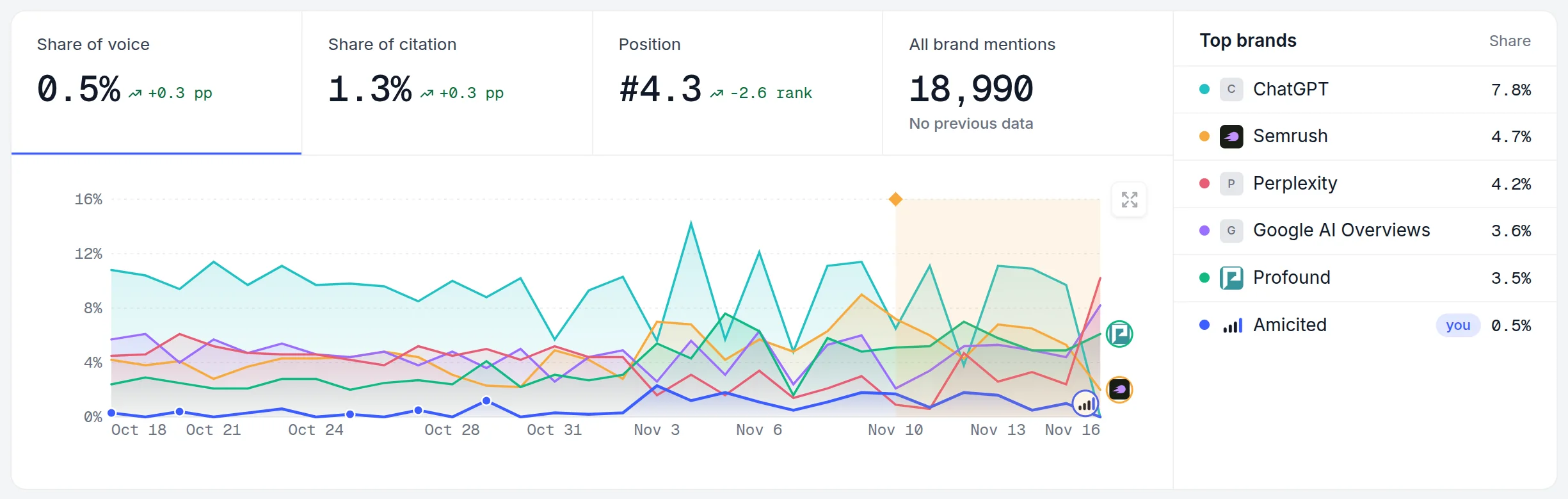
That is why many teams add AI metrics such as citation frequency, share of voice and the AI visibility score. AI visibility tracking reports those per engine, daily.
Best Practices for SEO Metrics
- Pick two or three KPIs tied to revenue or leads, and treat everything else as diagnostic.
- Split branded and non-branded queries. Branded traffic reflects awareness, not SEO work.
- Look at metrics per page type (product, category, blog) rather than only sitewide.
- Compare year over year as well as month over month to account for seasonality.
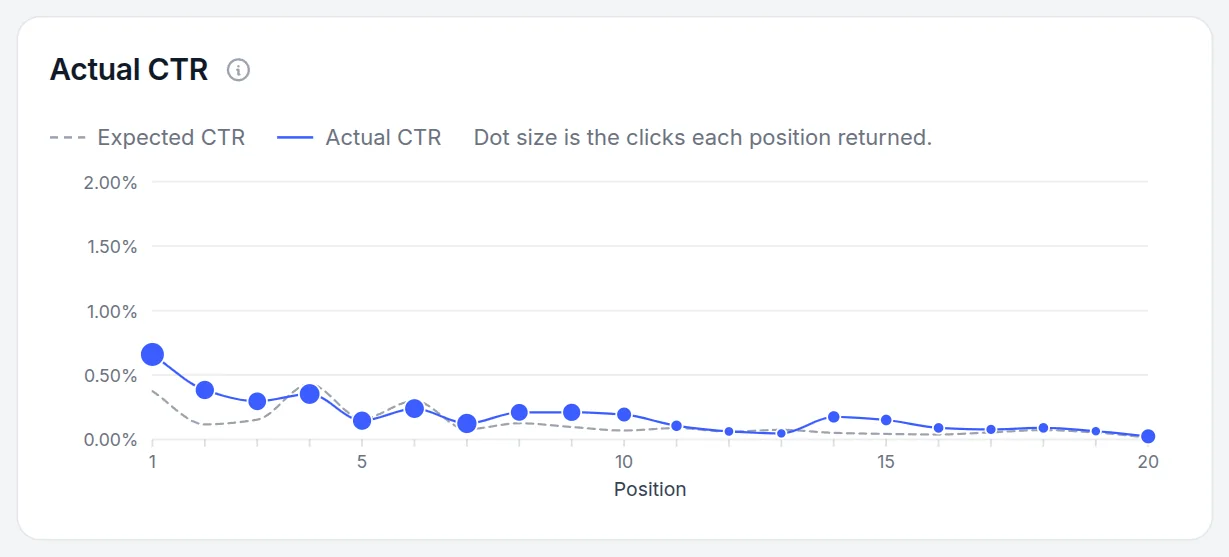
- Watch CTR at a stable position. A drop often means a new SERP feature or a weaker title.
- Track AI mentions and citations as separate metrics instead of mixing them into organic traffic.
Common SEO Metrics Mistakes
Treating average position as a ranking is a classic error. It is an average across every query and impression, so a page can gain new low-ranking queries and see its average position “drop” while traffic grows. Another mistake is setting goals on tool-made scores such as Domain Rating, which Google does not use.
Teams also compare clicks from Search Console with sessions from GA4 and expect them to match. They will not, because the tools count differently. And many measure traffic but not conversions, so they cannot tell whether the visitors SEO brings are the ones the business needs.