


White Label
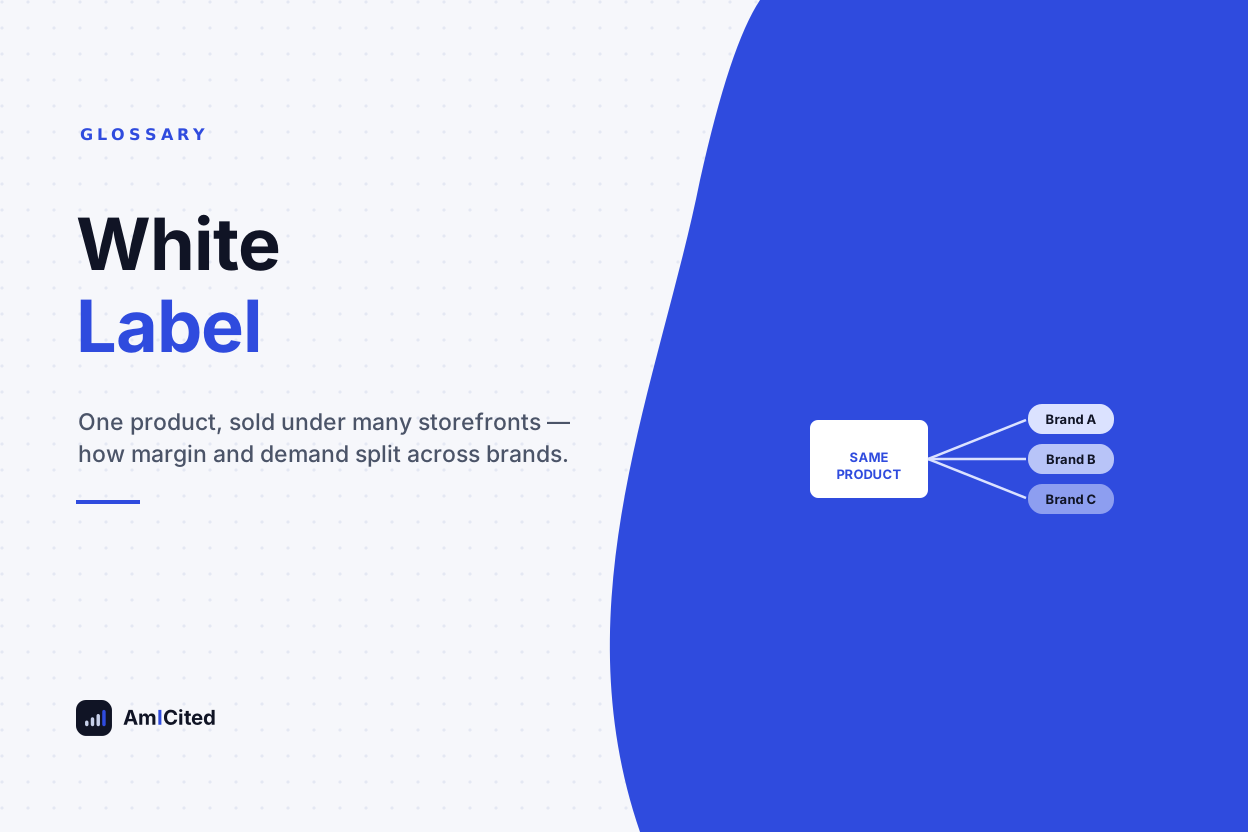
White label refers to a product manufactured by one company and sold by another company under its own brand name, packaging, and identity. The manufacturer handles production while the seller controls branding, marketing, and the customer relationship, allowing brands to launch products quickly without operating a factory.
Definition of White Label
White label describes a product made by one manufacturer and sold under many different sellers’ own brand names, with each seller applying its own packaging, logo, and marketing on top of an otherwise identical item. The term originated from the practice of shipping a product with a blank white label so a retailer could stick on its own branding before the item ever reached a shelf. Today, white labeling spans nearly every product category sold online: skincare, supplements, apparel, electronics accessories, and software tools are all commonly sourced this way. The manufacturer’s business is production and supply; the seller’s business is brand building, marketing, and the customer relationship. Because the underlying product is not exclusive to any one seller, white labeling is best understood as a fast, low-investment way to enter a market rather than a strategy for building a defensible, differentiated product.
How White Labeling Works
A white label arrangement typically starts with a manufacturer that already produces a standard version of a product, whether that is a phone case, a protein powder blend, or a skincare serum. A seller selects that base product from a catalog, often adjusting only cosmetic details like color, scent, or packaging design, and places an order under minimum quantity terms set by the manufacturer. The manufacturer produces and ships the goods, either to the seller’s own warehouse or, in a dropshipping arrangement, directly to the end customer. The seller applies its brand name, logo, and packaging, then markets and sells the item through its own storefront, marketplace listings, or retail channels.
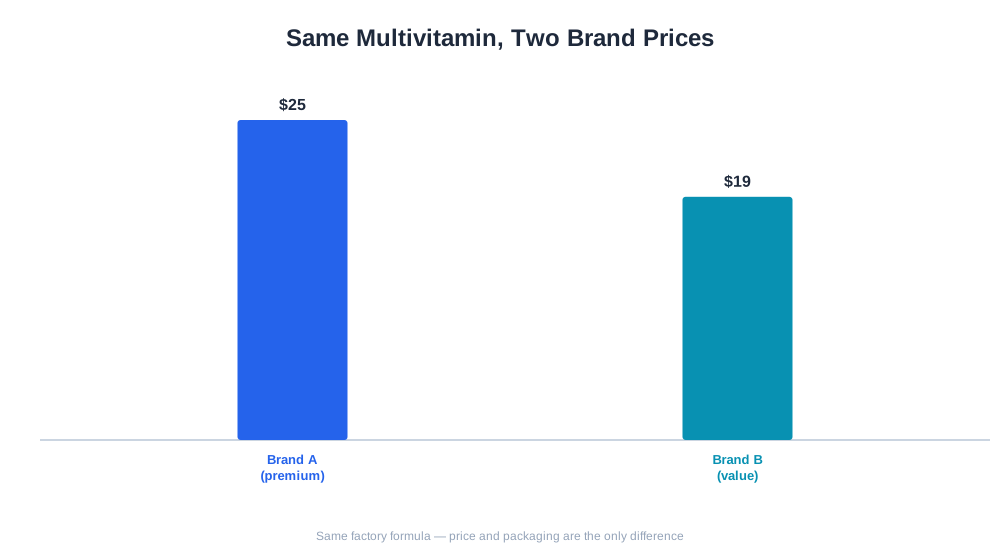
A worked example: a supplement manufacturer produces a standard multivitamin formula that a dozen different brands white label under their own names. Brand A sells it as a $25 daily vitamin with minimalist packaging targeting a wellness audience; Brand B sells the same formula as a $19 value multivitamin with bright, budget-oriented packaging. Both brands are selling essentially the same capsules from the same factory; the difference to the customer is entirely presentation, pricing, and brand trust.

Ready to Monitor Your AI Visibility?
Track how AI chatbots mention your brand across ChatGPT, Perplexity, and other platforms.
Why White Label Matters for E-commerce Brands
White labeling lowers the barrier to launching a new product line. A brand can test a category, gauge demand, and start generating revenue without the capital outlay, lead time, or minimum order complexity of developing a custom formulation or tooling a unique product from scratch. For new or smaller brands, this can mean the difference between entering a market this quarter versus waiting a year for custom development. It also allows rapid expansion into adjacent categories: a skincare brand that has built an audience can white label a haircare line to sell to the same customers without building new manufacturing relationships from zero.
The tradeoff is competitive vulnerability. Because the same base product is typically available to any seller willing to place a similar order, price competition tends to be sharper in white label categories, and customers who discover an identical product elsewhere at a lower price have little reason for brand loyalty. Margins in white label businesses tend to run thinner than in private label or fully custom product lines, where the seller controls the formulation or design and no direct substitute exists elsewhere.
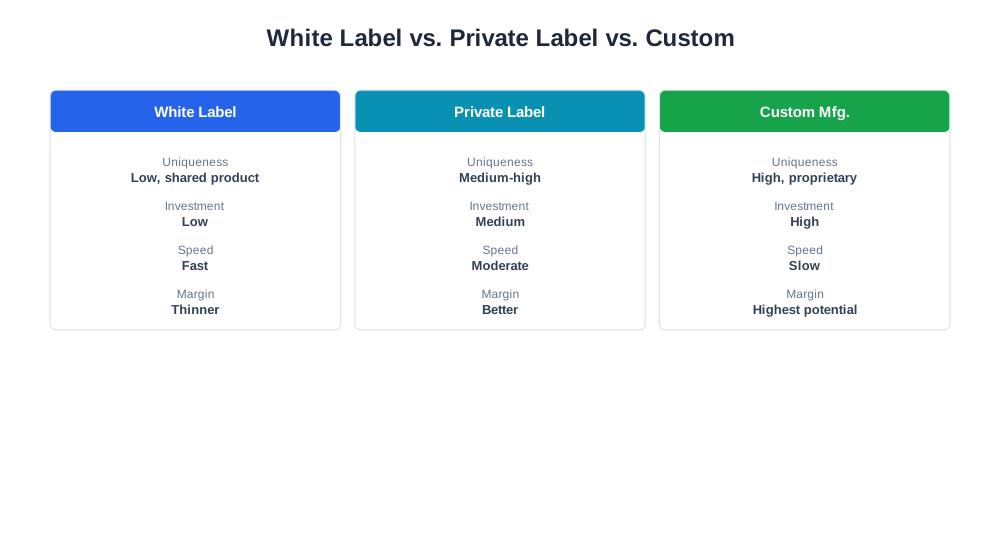
Comparison Table: White Label vs. Private Label vs. Custom Manufacturing
| Model | Product Uniqueness | Upfront Investment | Speed to Market | Typical Margin |
|---|---|---|---|---|
| White Label | Low — same product sold by many brands | Low | Fast | Thinner, price-competitive |
| Private Label | Medium to high — brand-specific formulation or spec | Medium | Moderate | Better than white label |
| Custom Manufacturing | High — fully proprietary design or formula | High | Slow | Highest potential, but capital-intensive |
Stay Updated on AI Visibility Trends
Get the latest insights on AI mentions, brand monitoring, and optimization strategies.
White Label and AI-Driven Commerce
As AI shopping assistants like ChatGPT Shopping, Perplexity Shopping, and Amazon Rufus compare products across sellers, white label brands face a distinct exposure: if an AI assistant recognizes that several listings describe the same underlying product, it may surface price as the deciding factor rather than brand-specific attributes, since there is genuinely little else to differentiate on. This makes clear, accurate product data and pricing especially important for white label sellers, since an AI system comparing near-identical listings has fewer signals to work with beyond price, shipping terms, and reviews.
On the analytics side, distinguishing which product lines are white label versus private label matters for margin visibility. AmICited’s eshop reporting can break down revenue and gross margin by product and category, making it possible to see whether a white label line is actually profitable once true landed cost and competitive pricing pressure are accounted for, versus a private label line with more pricing headroom. That comparison often informs the decision about which white label products are worth eventually converting into a private label formulation.
Best Practices for White Label Products
- Treat white label products as a fast way to validate category demand, not as a long-term differentiation strategy
- Invest disproportionately in packaging, brand story, and customer experience, since the product itself will not be the differentiator
- Monitor competitor pricing closely on the same or similar underlying product, since undifferentiated goods compete primarily on price
- Track true margin including manufacturer minimums, shipping, and returns before assuming a white label line is profitable at scale
- Use successful white label products as a signal for which categories are worth investing in a private label or custom version of later
Common White Label Mistakes
A frequent mistake is treating a white label product as if it were proprietary, investing heavily in brand marketing around functional claims that any competitor selling the same base product can make equally credibly, which wastes marketing spend building a moat that does not actually exist. Another common issue is underestimating price competition; because the same item is available to other sellers, a white label brand that prices without checking the wider market can find its margin eroded by a competitor selling the identical product for less. Some brands also fail to read manufacturer contracts carefully and are surprised to find the same formulation or product is licensed to direct competitors, undermining an assumed exclusivity that was never actually granted. A further pitfall is confusing white label with private label internally, leading a brand to under-invest in the differentiation that private label would have provided, or conversely to over-promise “exclusive formula” language for a product that is not actually exclusive. Finally, some sellers neglect quality control on white label goods, assuming the manufacturer’s standard product will always match the sample first approved, when batch-to-batch consistency issues are common with shared manufacturing lines serving many brands at once.