Quick Overview
| AmICited | Triple Whale | |
|---|---|---|
| What it measures | Which AI answers cite and recommend your products | Which paid ads and channels actually drove revenue |
| Core data source | ChatGPT, Perplexity, Gemini, Google AI Overviews + your store | Meta, Google, TikTok ad platforms + your store |
| Content | Drafts product pages, comparisons and buying guides for losing prompts | No content generation |
| AI agent | MCP server plugs into Claude, ChatGPT, Cursor, VS Code | Moby: built-in chat agent + ad/creative automations |
| Starting price (checked Oct 2026) | €50/month flat | From about $149/month, scaling with GMV (third-party estimates) |
| Best for | Brands losing AI-answer visibility who want it measured and fixed | Brands spending heavily on paid ads who need attribution truth |
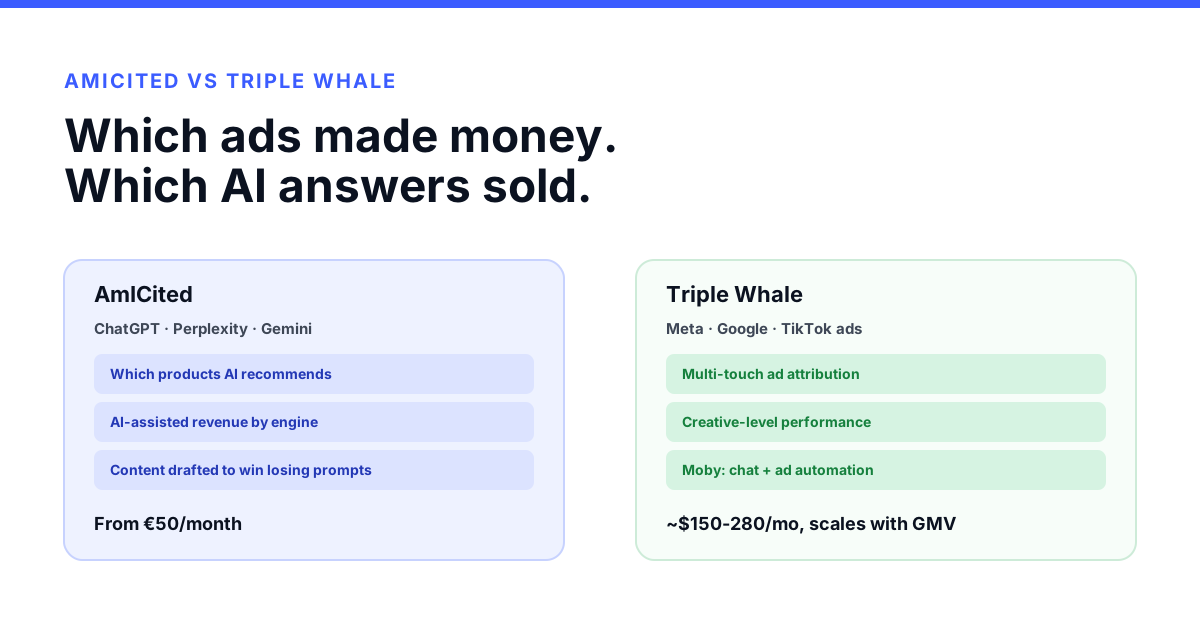
Quick takeaway: these tools answer different questions. Triple Whale tells you which ad dollar made money. AmICited tells you which AI answer sold your product, and writes the page that wins the next one. If you only run one, pick the problem you actually have.
Why This Comparison Exists
Triple Whale built its name solving a real, painful problem: iOS 14.5 broke ad attribution, and Shopify brands needed a single source of truth for which channel actually drove a sale. It did that well, and it has since expanded into creative analytics and, with Moby, into an AI layer that can queue actions on your ad accounts for approval. None of that touches a newer problem the same brands now have: shoppers increasingly ask ChatGPT or Perplexity what to buy before they ever see an ad, and neither Triple Whale nor traditional analytics tools see that channel at all. AmICited exists specifically to close that gap, and this comparison is as honest about where Triple Whale remains the better tool as it is about where it has no answer.

Ready to Monitor Your AI Visibility?
Track how AI chatbots mention your brand across ChatGPT, Perplexity, and other platforms.
What Triple Whale Actually Does
Triple Whale is an ecommerce analytics and attribution platform built around pulling your ad spend, store orders, and customer data into one dashboard so you can see blended ROAS, multi-touch attribution across Meta, Google, and TikTok, and creative-level performance down to which ad variant is fatiguing. Its Moby agent, rebuilt and relaunched through 2026, layers a conversational interface on top: Moby Chat answers questions about your business using context from advertising, sales, customer, creative, and attribution data, while Moby Agents run proactive, scheduled analysis, anomaly detection on spend and revenue, recurring leadership reports, inventory checks, and (since the June 2026 Moby Automations release) queues recommended actions across advertising and creative workflows for your approval rather than just reporting on them. This is a mature, deep product for one specific job: understanding and acting on paid-media performance.
What Triple Whale Doesn’t Do
None of that touches AI-answer visibility. Triple Whale has no mechanism for tracking whether ChatGPT Shopping, Perplexity, Gemini, or Google AI Overviews mention your brand or products, no prompt-level tracking of buying-intent questions, and no content generation aimed at winning those answers. If a competitor’s product is the one ChatGPT recommends for “best running shoes for flat feet under $150” and yours never comes up, Triple Whale’s dashboard will not tell you, because that channel sits entirely outside what it measures.
Stay Updated on AI Visibility Trends
Get the latest insights on AI mentions, brand monitoring, and optimization strategies.
Where AmICited Fills the Gap
AmICited tracks the buying-intent prompts your shoppers actually ask across ChatGPT, Perplexity, Gemini, and Google AI Overviews, showing which products and brands get cited for each one and how that compares to named competitors. Connect Shopify or WooCommerce and Cross-source Revenue Attribution ties those AI-assisted sessions to real orders, keeping measured delivery and estimated outcomes visibly separate rather than blending them into one falsely precise number. When a prompt shows you’re losing, AI Content Generation drafts a product page, comparison, listicle, or how-to buying guide aimed directly at that prompt, scored live with a GEO score as you write, reviewed by you before anything publishes.
MCP Agents vs. Moby
Both platforms now ship an AI agent, but they’re built for different relationships with your workflow. Moby lives inside Triple Whale: you ask it questions or let its automations run inside Triple Whale’s own interface, and its June 2026 update extended it from reporting into queuing changes to your ad accounts and creative for your approval. It’s an in-product agent, powerful for the ad-spend problem Triple Whale already owns.
AmICited’s MCP server takes the opposite approach: instead of building its own chat interface, it exposes every dashboard feature as a tool over the Model Context Protocol, so whichever AI assistant you already use, Claude, ChatGPT, Cursor, VS Code, can read your visibility data, run reports, add tracked prompts, or generate content drafts from inside a normal conversation, with read access free and write access gated by plan and workspace role. Neither approach is strictly better: Moby is deeper for the one product it’s built into, MCP is more flexible across whatever AI tool you’re already using for everything else.
Pricing, Checked October 2026
Triple Whale’s pricing has changed more than once during 2026, and every published tier scales with your store’s trailing-12-month GMV, so the headline price is a floor, not your actual bill. As of this check, third-party estimates put pricing from about $149/month, scaling with GMV, with higher usage and custom enterprise tiers well above that; a free plan with core integrations and first/last-click attribution is also available. Because GMV scaling means two stores on the same nominal plan can pay very different amounts, confirm current numbers directly on Triple Whale’s pricing page rather than trusting any fixed figure, including this one, as permanent.
AmICited’s pricing is flat regardless of store size: €50/month Starter, €120/month Pro, €500/month Premium, €1,500/month Enterprise, with a 7-day free trial. For a growing Shopify or WooCommerce store, that’s a materially smaller commitment for a channel Triple Whale doesn’t cover at all.
Who Should Pick Which
Pick Triple Whale if paid media is your primary acquisition channel, you need multi-touch attribution across Meta, Google, and TikTok, and creative-level performance data to decide which ad variants to kill or scale. Its depth here, backed by Moby’s automation layer, is a genuine strength AmICited doesn’t try to replicate.
Pick AmICited if you’re increasingly aware that shoppers are asking AI assistants what to buy before they see an ad at all, and you have no visibility into whether your products come up in those answers, or content built to win them when they don’t. For stores already running Shopify or WooCommerce, connecting either platform is a matter of minutes, and the two tools’ revenue attribution work from the same order data without conflicting.
Running both is common among brands serious about both channels: Triple Whale to prove which ads make money, AmICited to prove which AI answers do, and to write the content that wins more of them.