


How Often Do AI Engines Name Brands Without Linking Them?
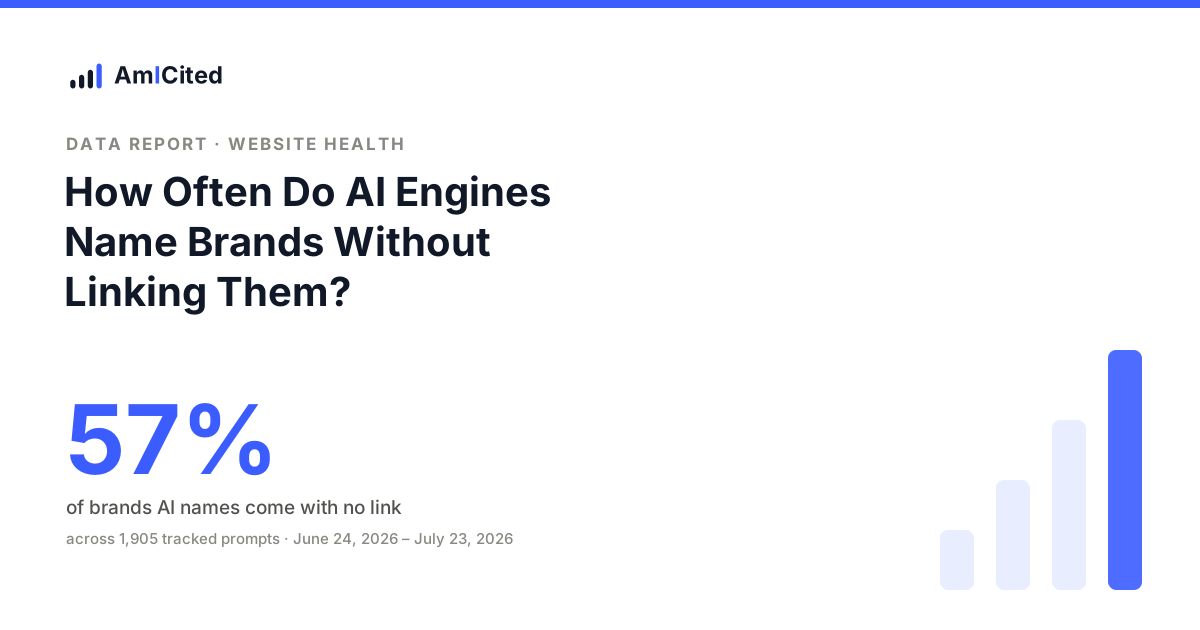
AI engines name brands far more than they link them: 57% of brand mentions carry no citation link at all.
6 min read
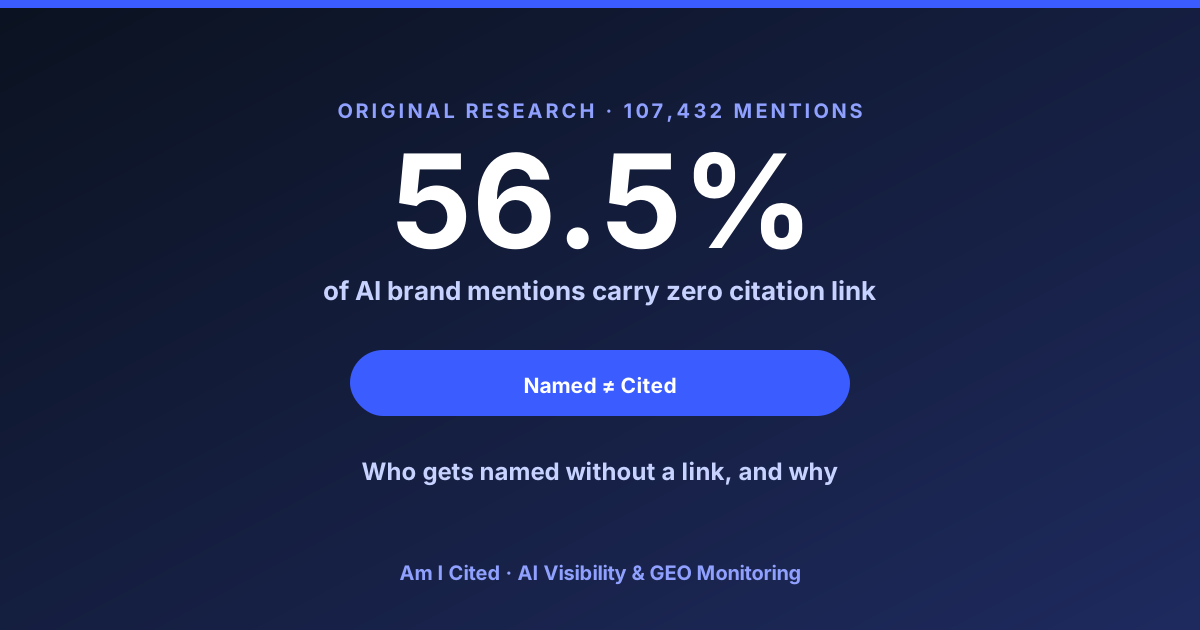
We analyzed 107,432 brand mentions across ChatGPT, Google AI Mode, Google AI Overviews, Gemini, and Perplexity. 56.5% carried no citation link at all. Here’s which brands get named without one, and why.
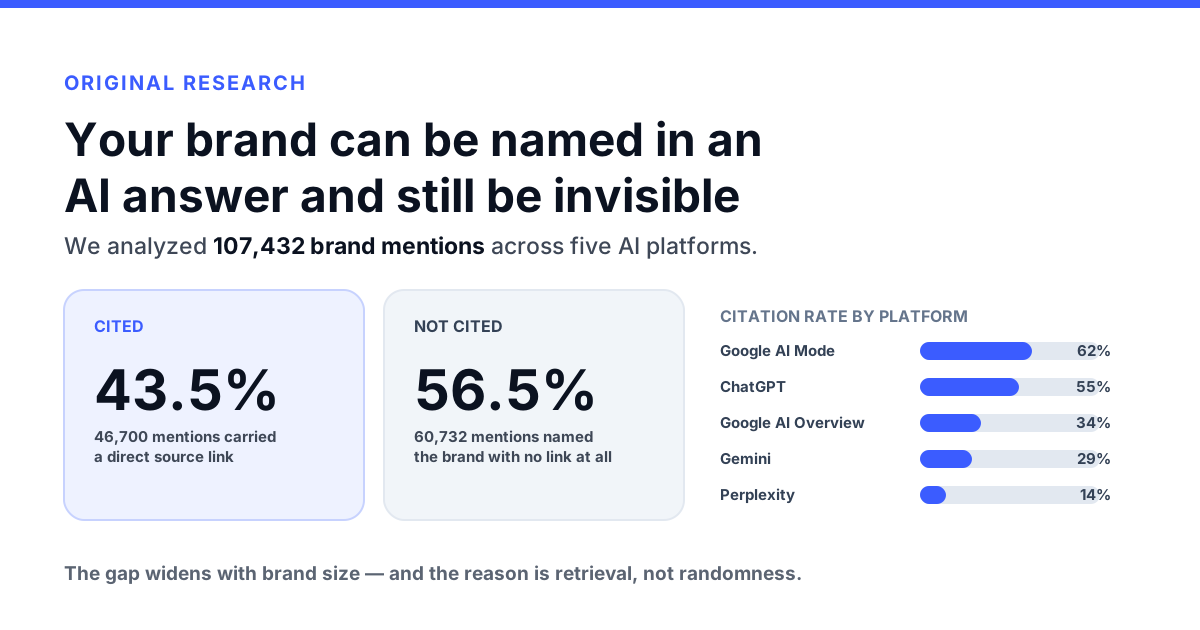
Most AI visibility tracking starts and ends with one question: did the AI mention my brand? It’s the wrong question to stop at. We pulled 107,432 brand-mention records from real AI responses across ChatGPT, Google AI Mode, Google AI Overviews, Gemini, and Perplexity, and the split was stark: 43.5% of mentions carried a direct citation link, and 56.5% named the brand with no link at all.
That’s not a rounding error, and it isn’t evenly distributed. Some of the biggest, most recognizable brand names in software get named constantly and linked rarely, while smaller, more specific competitors capture the actual citation slot far more often than their size would suggest. This has a real answer, grounded in how retrieval works, and it changes what “getting mentioned” should actually mean to your GEO strategy.

Track how AI chatbots mention your brand across ChatGPT, Perplexity, and other platforms.
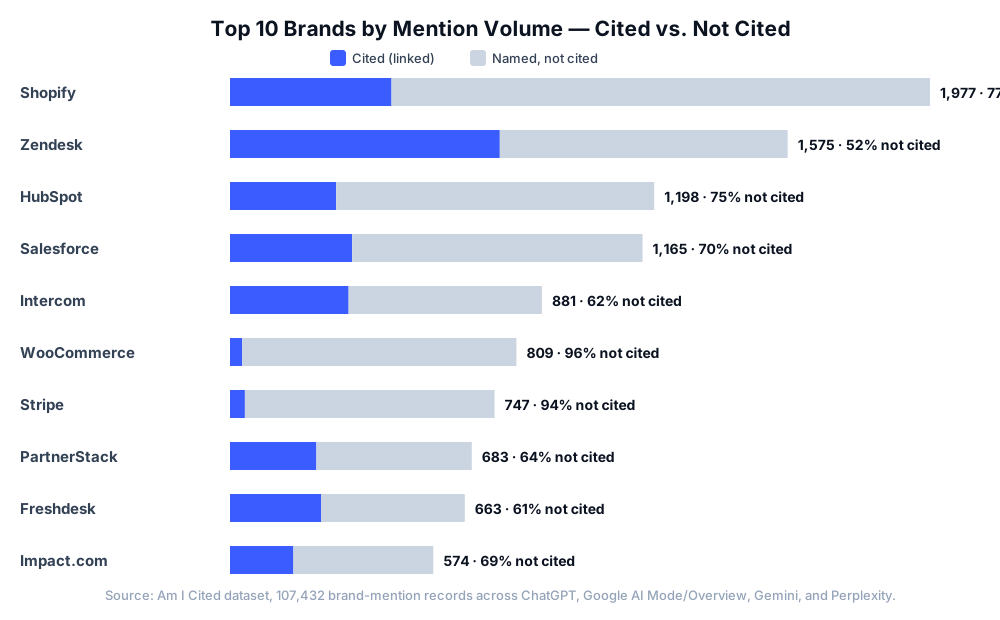
Ranked by raw mention volume, a clear pattern emerges. Category-defining platforms dominate the mention count, but not the citation count:
WooCommerce and Stripe stand out even within this group: both sit above 94% not-cited despite being named hundreds of times. Both are also the kind of brand a model can reference confidently from memory (“built on WooCommerce,” “processed via Stripe”) without needing to fetch a live page to justify saying so.
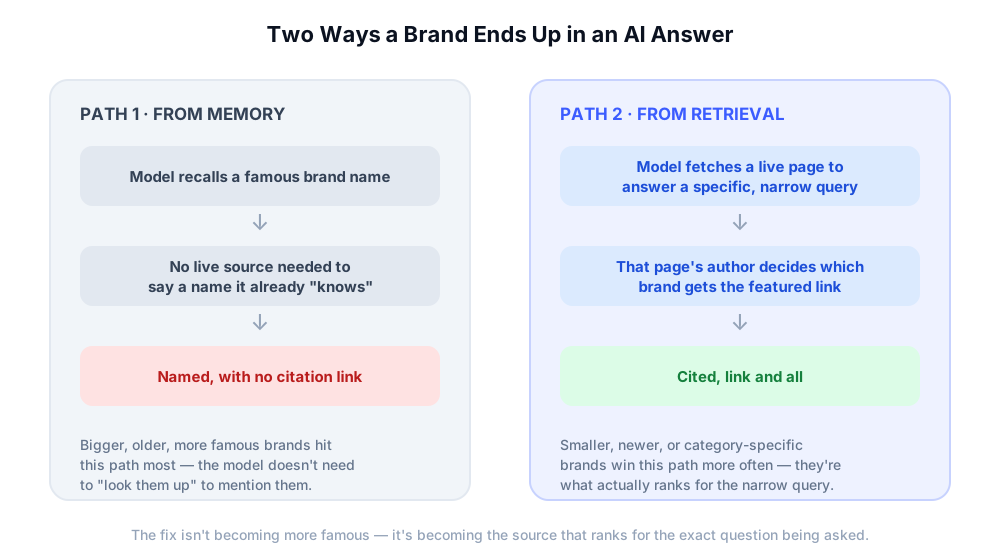
A brand ends up in an AI response one of two ways, and they produce opposite outcomes:
Path 1: recalled from memory. The model already “knows” Shopify, Stripe, and Salesforce from training data. When a query touches e-commerce or CRM generally, it can drop the name in as context or comparison without retrieving anything live, so there’s nothing to cite because nothing was fetched. This is the path large, long-established brands take most often, and it’s exactly why their not-cited rates run so high despite massive mention volume.
Path 2: pulled from retrieval. For narrower, more specific queries, the model fetches a live page and grounds its answer in it. The citation then goes to whatever that specific page linked to, and the author of that page, not the AI, decided which brand earned the featured spot. This is the path where smaller and more specialized brands actually win visibility, because they’re what shows up when someone else writes a focused “best tools for X” comparison that ranks and gets pulled in.
We saw this pattern directly in the raw data. For the query “best live chat software” on Google AI Mode, LiveChat, Intercom, and tawk.to all carried citation links, while Shopify and Salesforce were named further down the list with none. For “ai customer service agent” on Gemini, three much smaller, AI-native tools (Gumloop, Kore.ai, Botpress) were cited directly, while Salesforce and HubSpot were mentioned by name with no source at all. The incumbents weren’t missing from the answer. They just weren’t the ones a specific, retrieved source actually recommended.
Get the latest insights on AI mentions, brand monitoring, and optimization strategies.
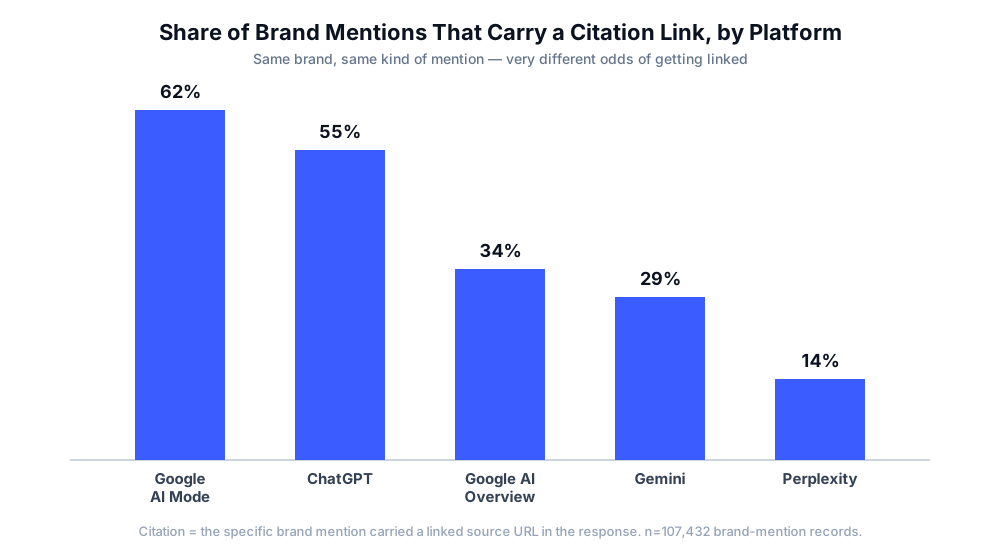
The same brand, mentioned the same way, has very different odds of getting a clickable citation depending purely on which platform answered:
The Perplexity number is the most counterintuitive, since Perplexity has a reputation as the most citation-heavy platform. What we found in the raw response text explains the gap: Perplexity frequently cites the source describing a brand (a Bloomreach product page, a Businesswire release, a Zapier comparison) rather than the brand’s own domain, so a brand can be mentioned repeatedly in a Perplexity answer while every citation link in that same paragraph points somewhere else entirely. This is exactly the unlinked-mention dynamic that makes tracking citations separately from mentions non-negotiable: a high mention count on Perplexity specifically can mask a very low direct-citation rate.
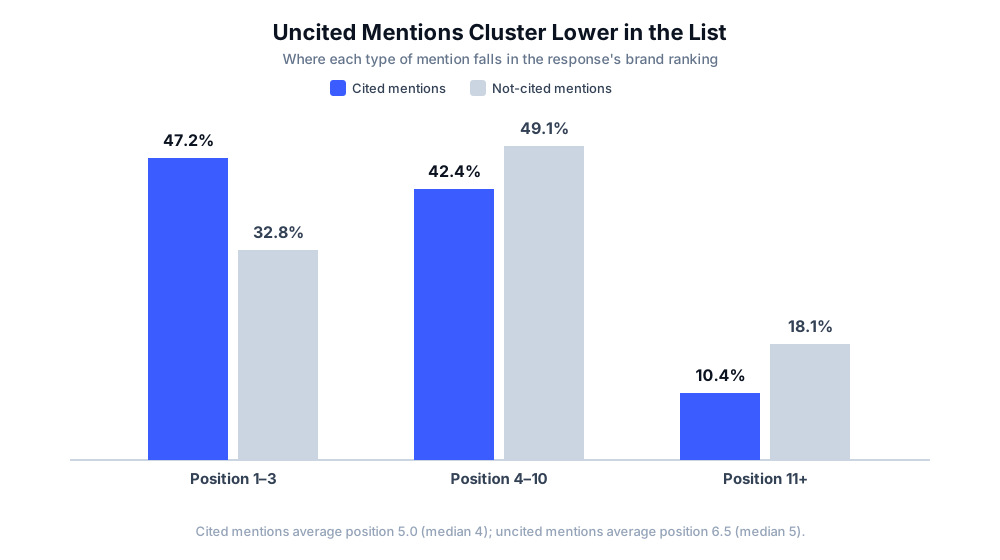
Citation position and citation likelihood move together. Cited mentions average position 5.0 in a response (median 4) and land in the top 3 spots 47.2% of the time. Uncited mentions average position 6.5 (median 5), land in the top 3 only 32.8% of the time, and are nearly twice as likely to fall past position 10 (18.1% versus 10.4%).
The pattern reads as exactly what it looks like: cited mentions tend to be the primary, retrieved recommendation the model is actively building its answer around, using whatever citation selection algorithm that platform applies to rank sources. Uncited mentions behave more like supplementary context the model adds from its own knowledge, along the lines of “you might also consider X,” bolted onto the end of an answer that was really built around something else.
If your brand is well-established, this data cuts against the instinct to relax. Being famous enough that a model mentions you from memory feels like a win, but it’s the exact mechanism producing the highest not-cited rates in this entire dataset. A mention with no citation carries some brand-perception value, but it sends no traffic, offers no click-through path, and is a measurably weaker trust signal than an explicit source link.
The practical shift is to stop treating “getting mentioned” as the finish line and start measuring citation rate as its own metric , separate from raw mention volume, because as this data shows, the two can move in completely opposite directions for the same brand. Then close the gap the way the data suggests it actually closes: publish the specific, narrow, well-structured content (direct comparisons, pricing breakdowns, feature-by-feature pages) that a model is likely to retrieve and cite for the exact question your buyers are asking, rather than relying on general brand recognition to carry the mention.
More than half of all brand mentions in AI answers, across every major platform, carry zero citation link. The brands hit hardest by this aren’t unknown ones: they’re some of the largest, most recognized names in software, mentioned constantly and cited rarely, while smaller, sharper competitors quietly capture the actual link. Original data like this is the only way to know which side of that split your own brand is on, and it’s exactly what Am I Cited is built to show you, mention by mention.
Viktor Zeman is a co-owner of QualityUnit. Even after 20 years of leading the company, he remains primarily a software engineer, specializing in AI, programmatic SEO, and backend development. He has contributed to numerous projects, including LiveAgent, PostAffiliatePro, FlowHunt, UrlsLab, and many others.

Am I Cited tracks not just whether your brand is mentioned across ChatGPT, Perplexity, Gemini, and Google AI Overviews, but whether that mention actually carries a citation back to you.
AI engines name brands far more than they link them: 57% of brand mentions carry no citation link at all.
Learn how to monitor AI brand mentions and citations across ChatGPT, Gemini, and Perplexity. Discover why AI visibility matters more than traditional rankings a...
Learn the critical difference between AI citations and mentions. Discover how to optimize for both signals to boost your brand's visibility in ChatGPT, Perplexi...
Cookie Consent
We use cookies to enhance your browsing experience and analyze our traffic. See our privacy policy.