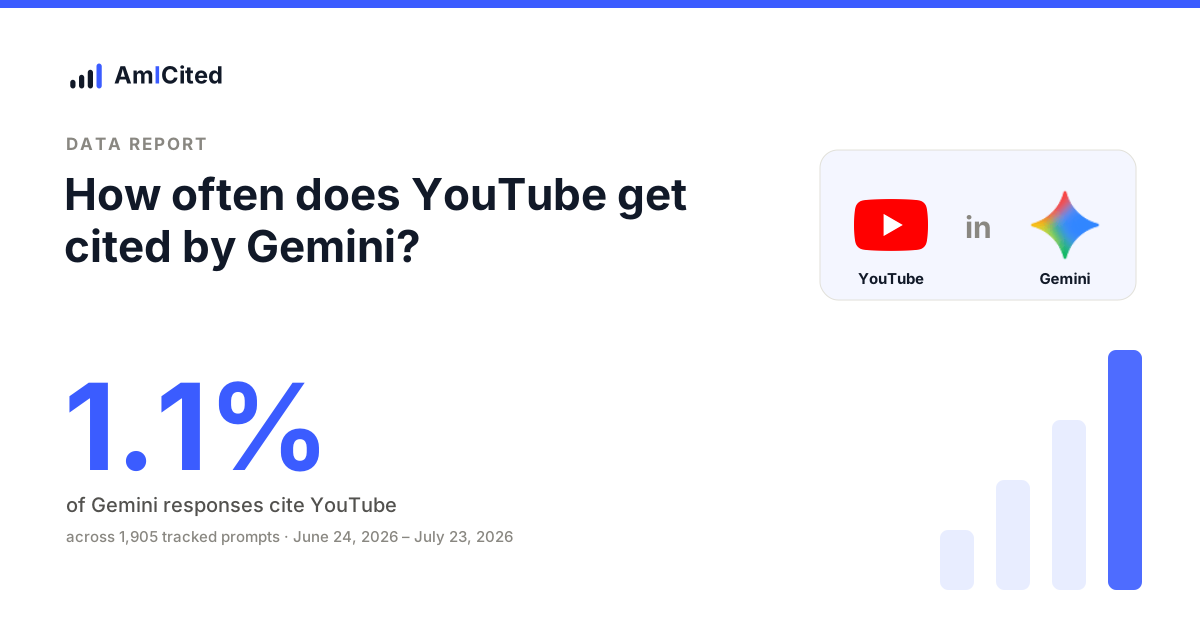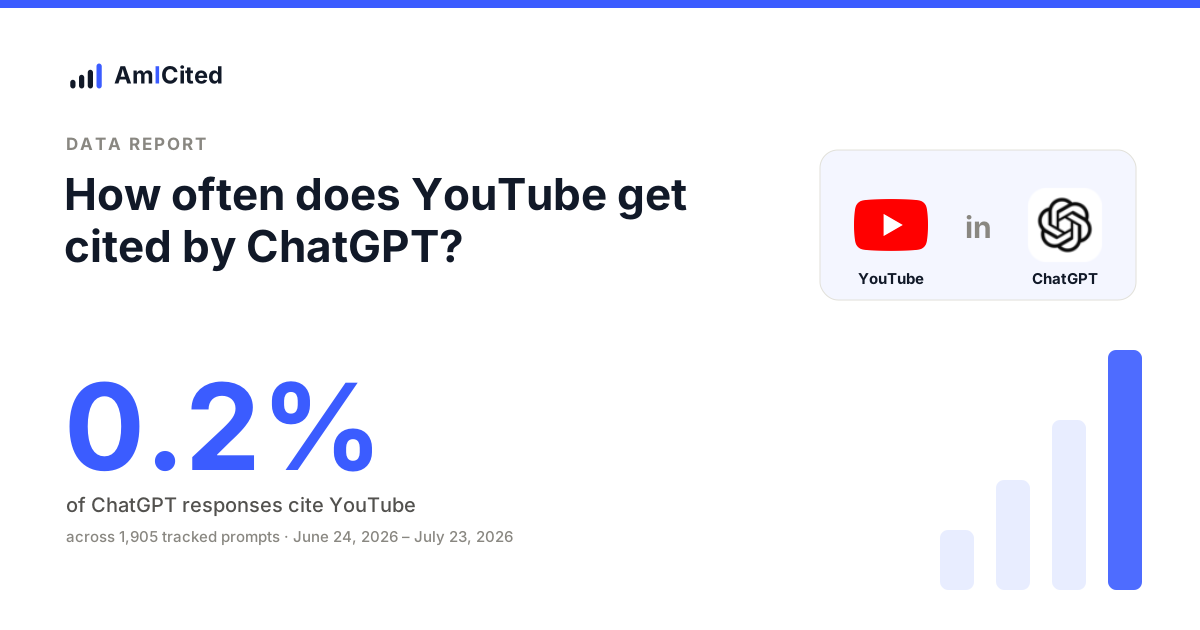
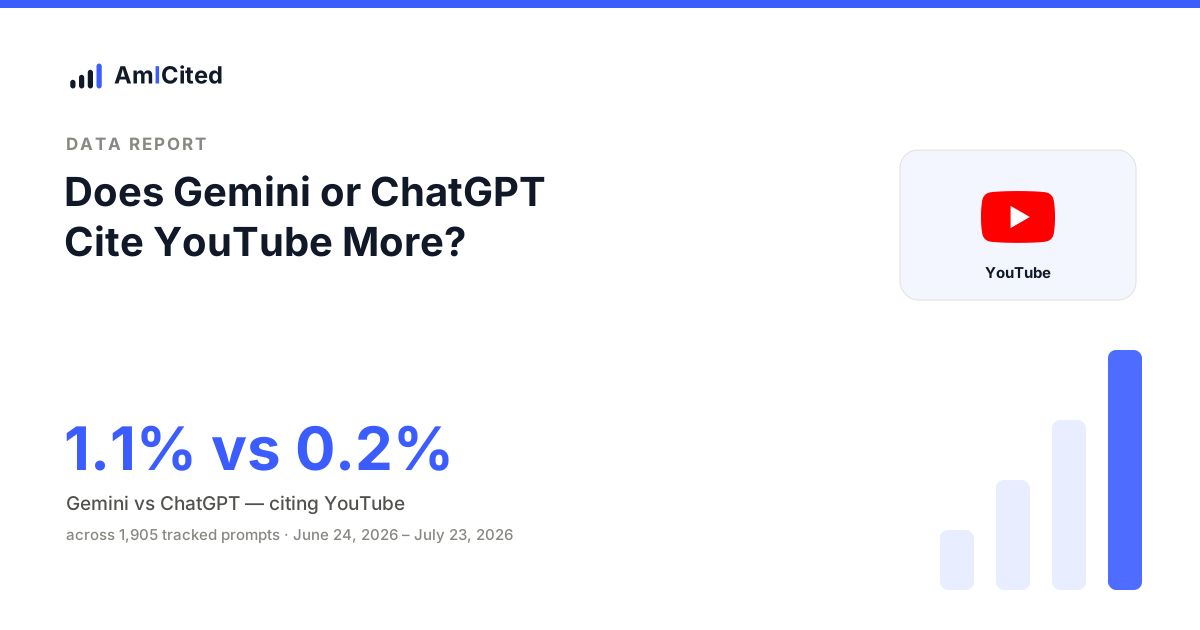
Gemini cites YouTube more than ChatGPT: 1.1% vs 0.2% of responses across 1,905 tracked prompts, roughly 5x more often.
Head-to-head on YouTube: Gemini cites it in 1.1% of its responses (55/5,123) versus ChatGPT at 0.2% (11/5,119). Gemini is the heavier citer, referencing YouTube about 5x more often than ChatGPT, a real, sizeable difference in how the two engines source the same content.
Key Takeaways
- Gemini cites YouTube roughly 5x more often than ChatGPT (1.1% vs. 0.2%), and YouTube ranks far higher among Gemini’s cited domains (#12 vs. #178).
- The gap comes from Google’s ownership of both products: Gemini gets direct access to YouTube’s transcript and metadata infrastructure that ChatGPT lacks.
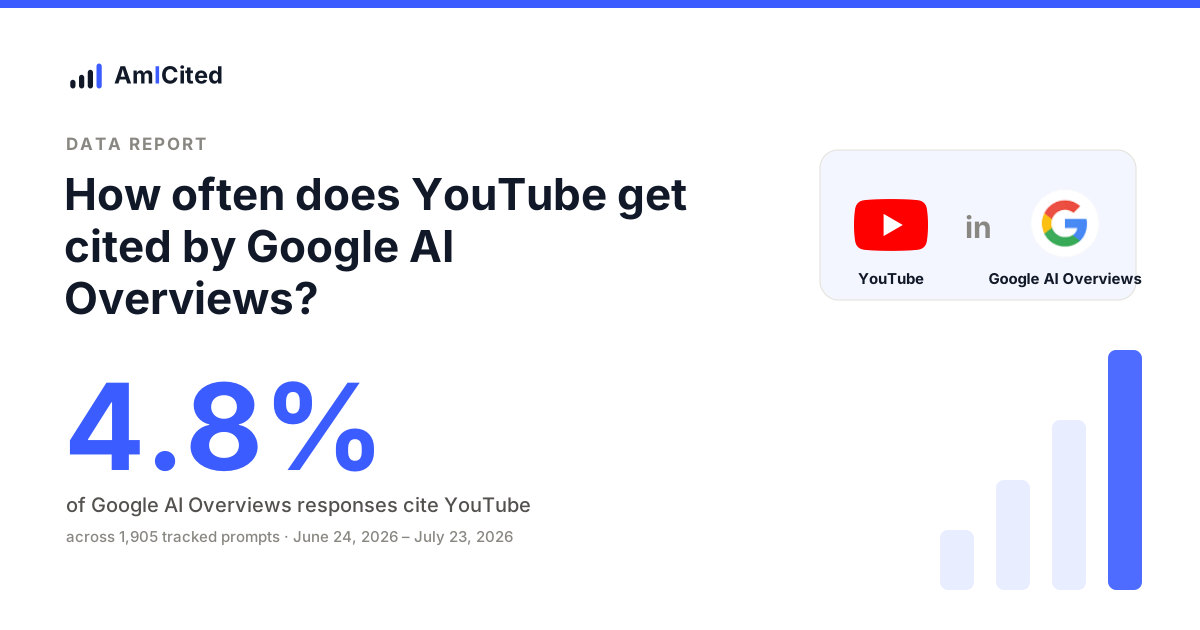
- Google’s own AI surfaces cite YouTube even more heavily than Gemini: Google AI Mode at 8.1% and Google AI Overviews at 4.8%.
- The advantage is structural and stable over the tracking window, not a temporary spike, so it is unlikely to close without a comparable OpenAI-YouTube partnership.
- Bottom line: if YouTube is central to your content strategy, prioritize Google AI Mode and pair every video with a written companion page; AmICited’s citation tracking can show you which engines actually surface your video content.
Gemini vs ChatGPT: YouTube citation rate
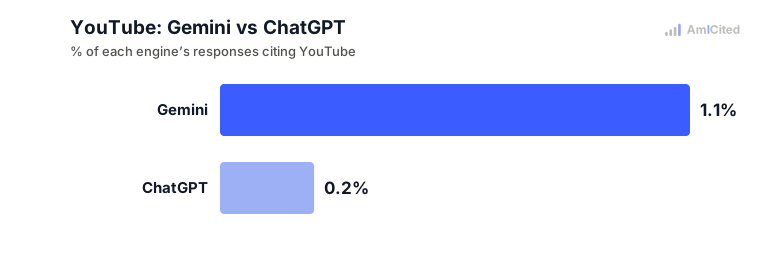
The gap is not just a rate difference: it shows up in rank too. In Gemini, YouTube ranks #12 among all cited domains; in ChatGPT it is #178. So YouTube is not merely cited more often in Gemini; it occupies a more prominent place in that engine’s overall source hierarchy. For the same YouTube page, the odds of surfacing are structurally better in Gemini.

Ready to Monitor Your AI Visibility?
Track how AI chatbots mention your brand across ChatGPT, Perplexity, and other platforms.
Every engine, for context
| AI engine | Responses | Citing YouTube | Rate |
|---|---|---|---|
| Google AI Mode | 3,975 | 321 | 8.1% |
| Google AI Overviews | 2,010 | 97 | 4.8% |
| Gemini (compared) | 5,123 | 55 | 1.1% |
| Perplexity | 3,052 | 26 | 0.9% |
| ChatGPT (compared) | 5,119 | 11 | 0.2% |
Seen across all five engines, Gemini’s appetite for YouTube stands out. This is a two-way comparison, but the full table shows whether the winner is an outlier or simply the higher of two similar engines.
Which prompts drive YouTube into Gemini
Gemini’s YouTube citations concentrate in specific queries: 41 of 1,746 tracked prompts (2%) produced at least one. Representative examples:
- “What is Flowhunt?”
- “post affiliate pro”
- “sushi fusion co to”
- “Bloomreach Engagement”
- “Is Openrouter worth it?”
- “filmy zo série mike myers”
Stay Updated on AI Visibility Trends
Get the latest insights on AI mentions, brand monitoring, and optimization strategies.
YouTube in Gemini over time
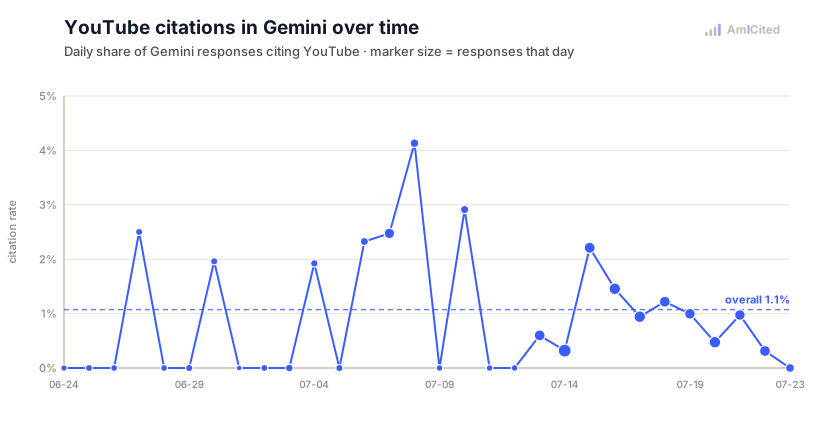
Tracked day by day, YouTube’s rate in Gemini moves around its 1.1% average with daily prompt volume rather than trending. The takeaway is that the Gemini-over-ChatGPT advantage is stable across the window, not a one-off spike.
What this means for your strategy
If YouTube is part of your plan, the payoff is concentrated: Gemini is where YouTube presence converts into citations, about 5× more often more than ChatGPT. Optimising YouTube content mainly moves the needle in Gemini for the SaaS/ e-commerce/support-style queries in this set. The broader lesson is that AI-search visibility is per-engine: a source can be a front-page citation in one assistant and a rarity in another, so track and optimise each engine separately rather than assuming one number describes “AI.”
The Google ecosystem advantage
The 5× gap between Gemini (1.1%) and ChatGPT (0.2%) on YouTube citations is another example of how corporate ownership shapes AI citation patterns. Google owns both YouTube and Gemini. This means Gemini has:
- Direct access to YouTube’s transcript infrastructure
- Structured metadata about every YouTube video (title, description, tags, captions)
- The ability to search YouTube content without relying on web crawling
ChatGPT has none of these advantages. It can only discover YouTube content through web crawling, which is less efficient and less comprehensive. The result is a structural gap that is unlikely to close, unless OpenAI establishes its own partnership with YouTube or builds equivalent infrastructure.
But the real story is not Gemini vs. ChatGPT: it is that Google AI Mode (8.1%) and Google AI Overviews (4.8%) both cite YouTube far more than either Gemini or ChatGPT. The Google ecosystem advantage is strongest in Google’s own AI products. If your YouTube content strategy is aimed at AI citations, Google AI Mode is the engine to target.
The YouTube citation hierarchy
The data reveals a clear hierarchy of YouTube citation likelihood across engines:
- Google AI Mode (8.1%): The heavy citer. YouTube is a core source for this product.
- Google AI Overviews (4.8%): A moderate citer. YouTube is used but not dominant.
- Gemini (1.1%): A light citer. YouTube is present but peripheral.
- Perplexity (0.9%): A very light citer.
- ChatGPT (0.2%): Effectively does not cite YouTube.
This hierarchy is almost entirely explained by corporate relationships: Google products (AI Mode, Overviews, Gemini) dominate the top of the list, while non-Google products (Perplexity, ChatGPT) sit at the bottom. If you are not optimizing for Google’s AI products, YouTube is not a meaningful citation channel.
Practical recommendations
Target Google AI Mode for YouTube visibility. At 8.1%, it is the only engine where YouTube citations are frequent enough to be worth deliberate optimization.
Optimize YouTube transcripts. AI engines cite YouTube by extracting content from transcripts. Ensure your videos have accurate, manually reviewed transcripts, not just auto-generated captions.
Create written companions. Even for YouTube-optimized content, publish a written summary or companion article. The written page can be cited by engines that don’t cite YouTube (ChatGPT, Perplexity), while the YouTube video covers the Google ecosystem.
Methodology
Computed from AmICited’s 1,905 tracked prompts (June 24, 2026 – July 23, 2026, 2026). A response counts as citing YouTube when a cited source URL resolves to youtube.com or a
subdomain; rates are citing-responses over total responses for each engine, and rank is that domain’s position among all domains the engine cited. The prompt mix skews toward SaaS, e-commerce and support topics. Copilot is tracked but returned no citation data in this window; no external links appear in this report.
 LinkedIn