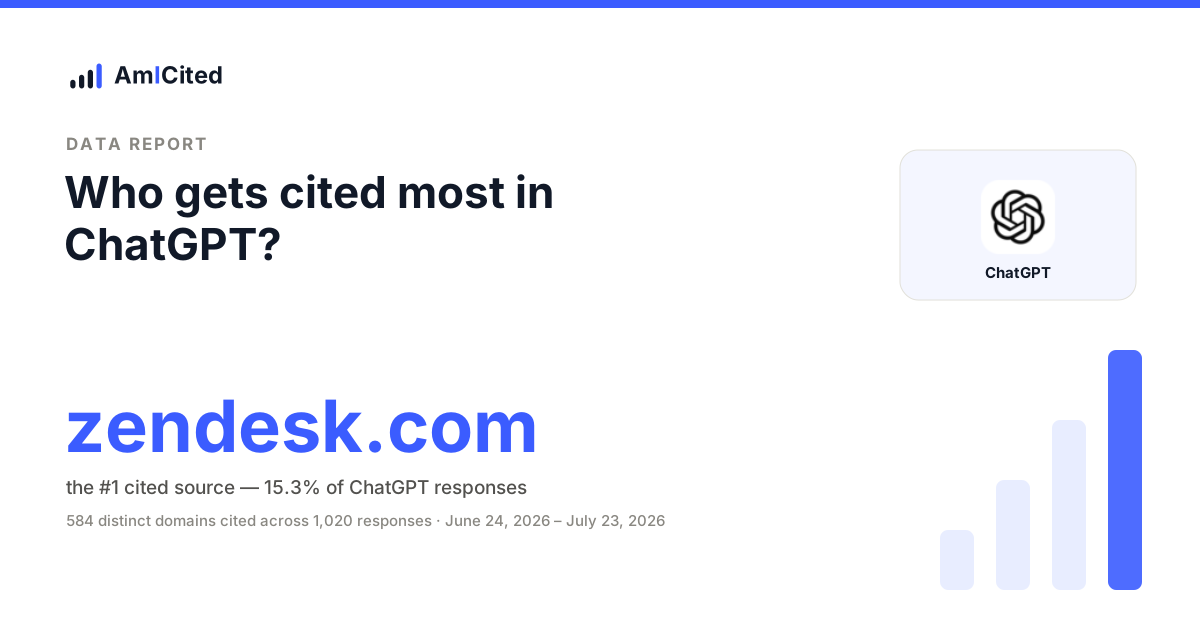
Among ChatGPT’s answers to AmICited’s 203 saas & marketing tools prompts (1,020 responses), zendesk.com is the most-cited domain (15.3%), ahead of techradar.com and reddit.com.
Narrowing to saas & marketing tools queries (the 203 tracked prompts whose text matches saas & marketing tools terms), ChatGPT produced 1,020 responses citing 584 distinct domains. The most-cited was zendesk.com in 156 responses (15.3%), followed by techradar.com and reddit.com. This is ChatGPT’s go-to source set when the question is specifically about saas & marketing tools.
Key Takeaways
- zendesk.com leads ChatGPT’s SaaS/marketing-tool citations at 15.3%, ahead of techradar.com and reddit.com.
- The vertical is less concentrated than e-commerce: the top 3 domains take 11% of citations and the top 10 take 26%, across 584 distinct domains.
- This vertical largely mirrors ChatGPT’s overall leaderboard, unlike e-commerce, so winning general ChatGPT visibility carries over to SaaS queries too.
- Vendor-produced comparison content and review sites (G2, Capterra) both earn citations, with vendor content as the primary driver.
Bottom line: SaaS and marketing-tool brands should prioritize detailed, fair comparison content on their own domain, and use AmICited’s own tracking data to monitor how that content performs against category incumbents over time.
ChatGPT’s most-cited domains for saas & marketing tools queries
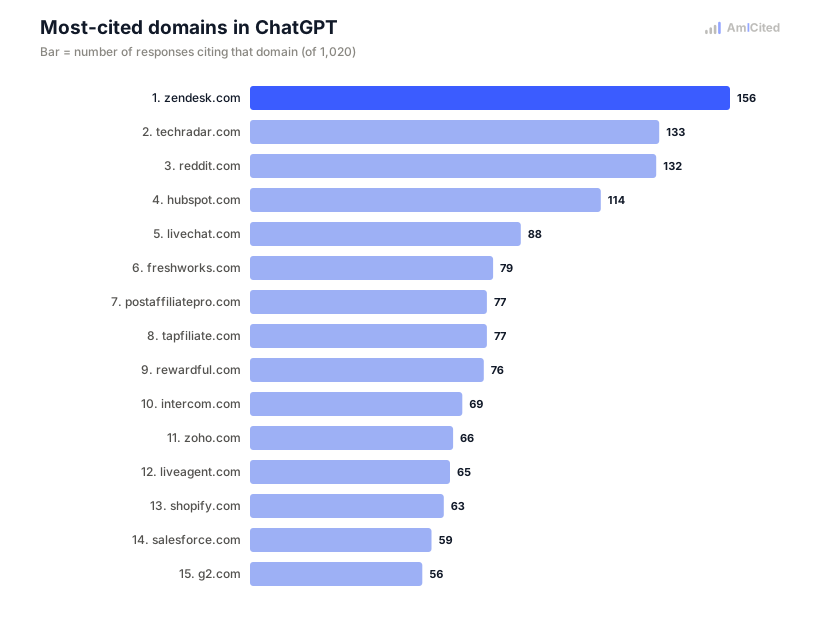
The vertical is moderately concentrated: the top three domains alone take 11% of all citations, and the top ten 26%, with 244 domains cited only once. In a focused vertical like this, a few authoritative sources dominate the answers, which is exactly why breaking into the leading group is the whole game for a saas & marketing tools brand.

Ready to Monitor Your AI Visibility?
Track how AI chatbots mention your brand across ChatGPT, Perplexity, and other platforms.
The leaderboard data
| Rank | Domain | Responses | % |
|---|---|---|---|
| 1 | zendesk.com | 156 | 15.3% |
| 2 | techradar.com | 133 | 13.0% |
| 3 | reddit.com | 132 | 12.9% |
| 4 | hubspot.com | 114 | 11.2% |
| 5 | livechat.com | 88 | 8.6% |
| 6 | freshworks.com | 79 | 7.7% |
| 7 | postaffiliatepro.com | 77 | 7.5% |
| 8 | tapfiliate.com | 77 | 7.5% |
| 9 | rewardful.com | 76 | 7.5% |
| 10 | intercom.com | 69 | 6.8% |
| 11 | zoho.com | 66 | 6.5% |
| 12 | liveagent.com | 65 | 6.4% |
| 13 | shopify.com | 63 | 6.2% |
| 14 | salesforce.com | 59 | 5.8% |
| 15 | g2.com | 56 | 5.5% |
How this differs from ChatGPT’s overall leaderboard
The saas & marketing tools leaders largely mirror ChatGPT’s overall most-cited set: the same broad authorities dominate here too, with little vertical-specific substitution in this prompt group.
Stay Updated on AI Visibility Trends
Get the latest insights on AI mentions, brand monitoring, and optimization strategies.
What this means for saas & marketing tools brands
For saas & marketing tools topics specifically, these domains are your citation benchmarks in ChatGPT. To gain ground, you need to become a source ChatGPT treats as authoritative for this vertical, through consistent, on-topic coverage that the engine can quote. Because this is a per-engine, per-vertical view, don’t assume a source that wins here also wins in other engines or adjacent topics; track them separately.
The SaaS citation profile: vendor content and review sites
ChatGPT’s SaaS citation patterns are shaped by the nature of SaaS queries, typically comparison, evaluation, and how-to questions that require specific, authoritative answers:
SaaS vendors’ own content is the primary source. HubSpot, Salesforce, Zendesk, and other SaaS platforms dominate because they produce the most comprehensive content about their own products and the broader SaaS landscape.
Software review sites are important secondary sources. G2, Capterra, and similar review platforms appear in SaaS citations because they aggregate user experiences and provide structured comparison data.
Integration and ecosystem content is highly citeable. SaaS tools exist in ecosystems. Content about how tools integrate, compare, and complement each other is frequently cited.
What this means for SaaS AI visibility
If you are a SaaS company, AI visibility requires a content strategy that serves both your prospects and AI engines:
Your own content is your best asset. ChatGPT cites SaaS vendors’ own documentation, blogs, and comparison pages more than any other source type. Invest in comprehensive, well-structured content on your own domain.
Comparison content is the highest-value format. SaaS buyers use AI search to compare tools. Content that compares your product to competitors (fairly and thoroughly) is the most likely to earn citations.
Review site presence matters but is secondary. While review sites like G2 and Capterra are cited, they are cited less often than vendor-produced content. Maintain a presence on review sites, but prioritize your own content.
Practical recommendations
Create comprehensive comparison content. For each of your main competitors, create a detailed comparison page that covers features, pricing, use cases, and trade-offs. Make it objective and useful.
Document your integrations. Create detailed content about how your product integrates with other tools in your ecosystem. Integration content is highly citeable and drives qualified traffic.
Structure content for AI extraction. Use clear headings, direct answers near the top, and structured data to help AI engines identify and extract your content.
Methodology
The saas & marketing tools vertical is defined entirely from the prompt text in AmICited’s own data by matching these terms: \b(saas|crm|affiliate|help ?desk|helpdesk|live ?chat|livechat|customer support|support software|marketing automation|onboarding|churn|lead|ticketing|chatbot)\b, a keyword heuristic over the 203 matching prompts, with no external classification and no brand names in the filter (so the leaderboard isn’t circular). Among ChatGPT responses to those prompts (June 24, 2026 – July 23, 2026, 2026), domains are counted by how many responses cited them, rolled up to the registrable domain. With 203 matching prompts the sample is reasonably robust for this vertical. No external links appear in this report.
 LinkedIn