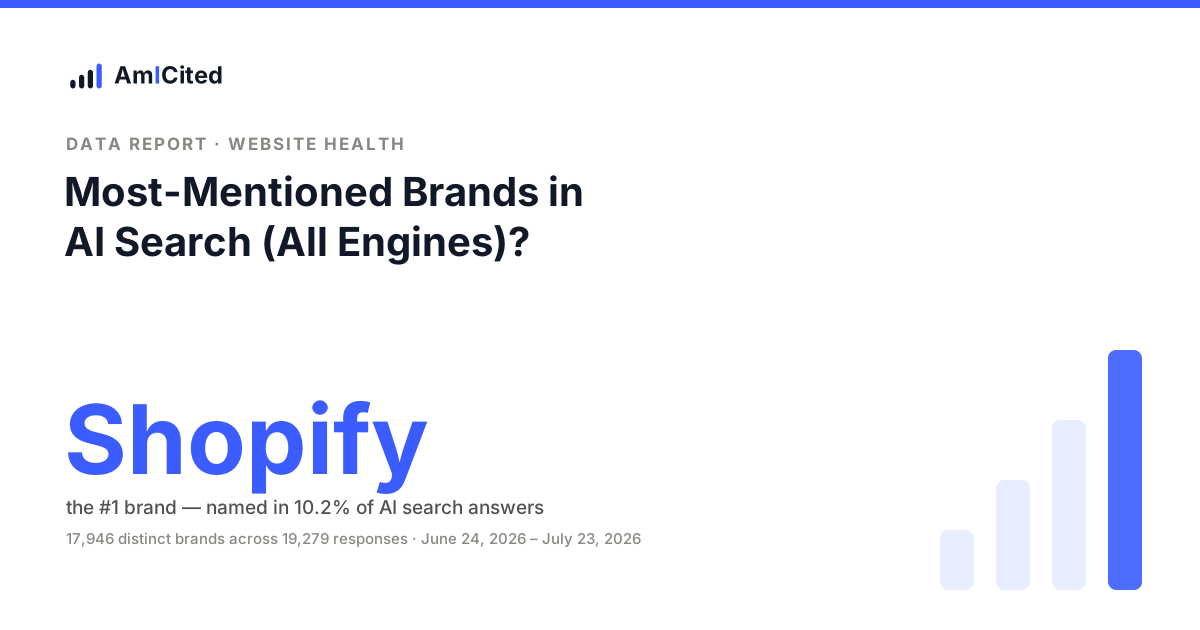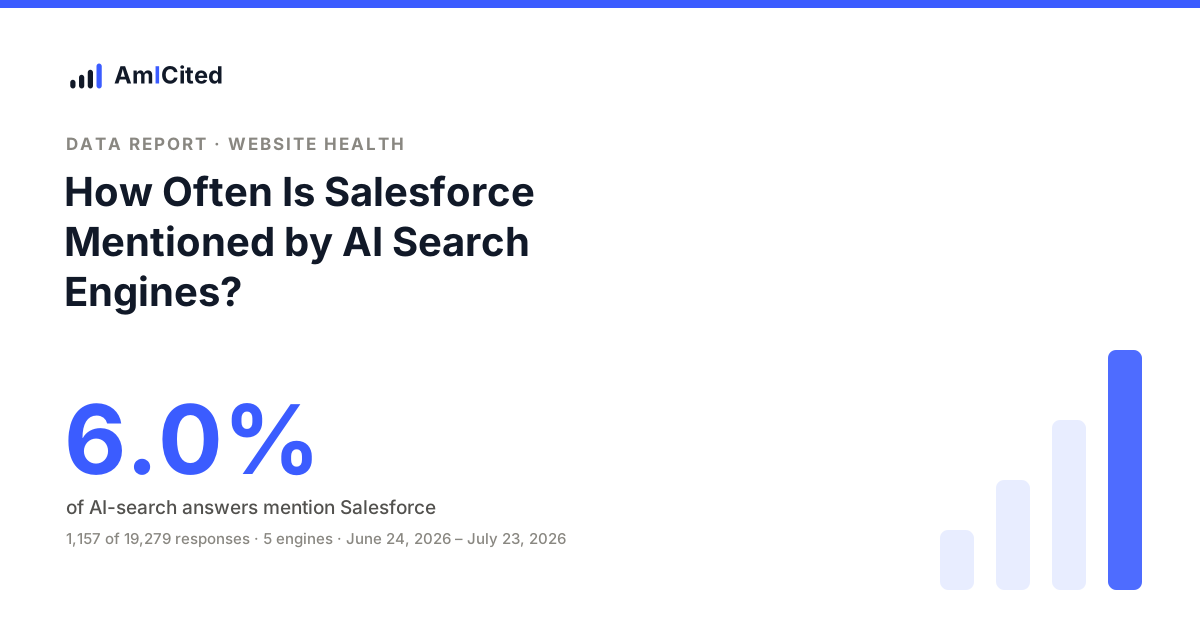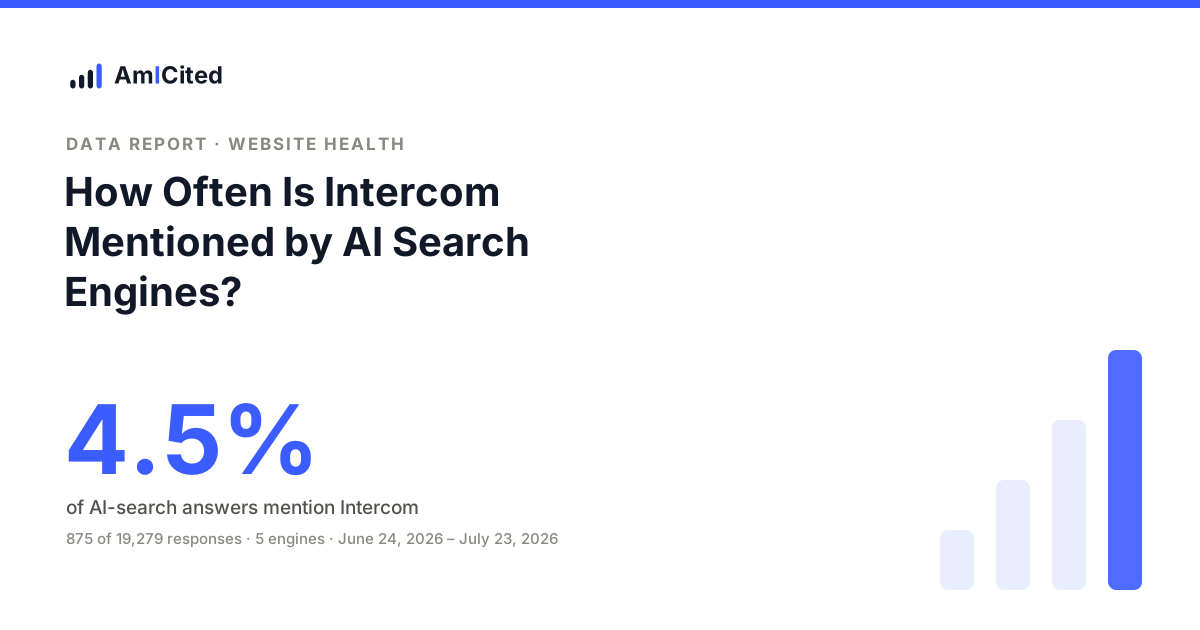
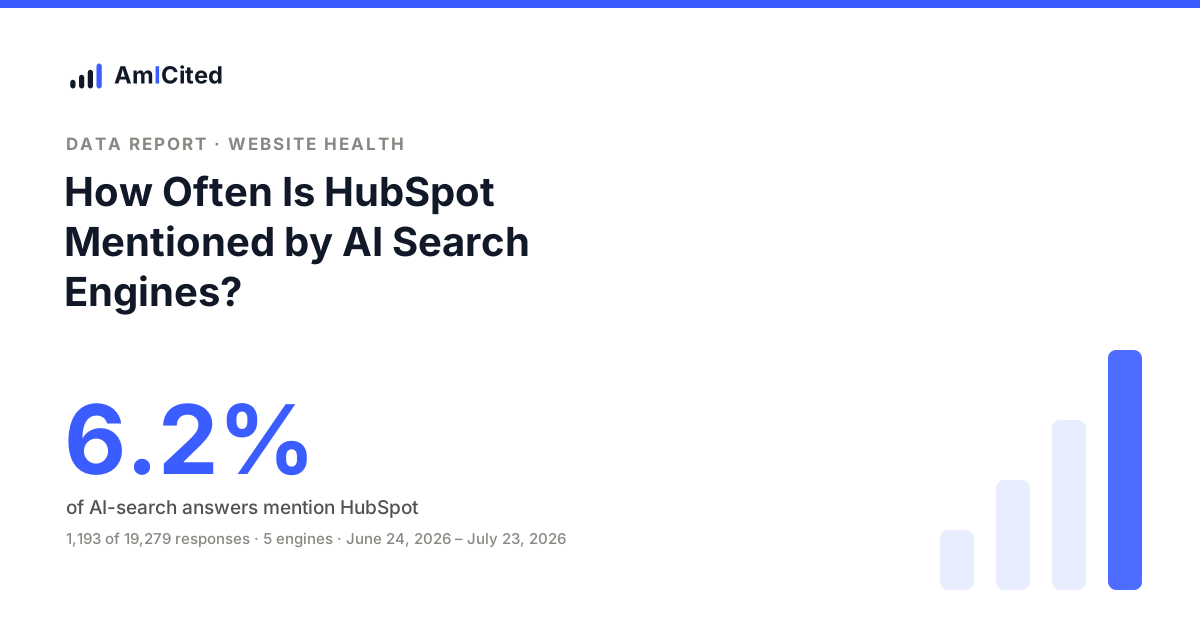
AI search engines mention HubSpot in 6.2% of their answers to AmICited’s 1,905 tracked prompts: most in Gemini (7.9%), least in Google AI Overviews (2.0%), and it is the #3 most-mentioned brand of 17,946.
Between June 24, 2026 and July 23, 2026, AmICited ran 1,905 tracked prompts through five AI search engines and recorded every brand each answer named. HubSpot was mentioned in 1,193 of 19,279 responses, a 6.2% mention rate, making it the #3 most-mentioned brand of 17,946 across the whole tracked set. A “mention” counts whether or not the answer linked to HubSpot: in AI search, being named is a distinct and often larger prize than being linked. The sections below break HubSpot’s presence down by engine, by query, by link status, and over time.
Key Takeaways
- AI search engines mention HubSpot in 6.2% of answers to AmICited’s tracked prompts, making it the #3 most-mentioned brand of 17,946 detected.
- Visibility is highly engine-dependent: Gemini names HubSpot most (7.9%), Google AI Overviews least (2.0%), a 4x gap between best and worst engine.
- 75% of HubSpot references are name-only, with no link, so most of its AI presence is influence without a click.
- HubSpot mentions concentrate in CRM, marketing-automation and customer-support queries, appearing in 14% of tracked prompts.
- Bottom line: HubSpot’s AI share of voice is strong but mostly unlinked, so the opportunity, for HubSpot and its competitors alike, is converting name recognition into citations; AmICited’s own tracking data can show you where your brand stands on the same measure.
HubSpot mention rate by AI engine
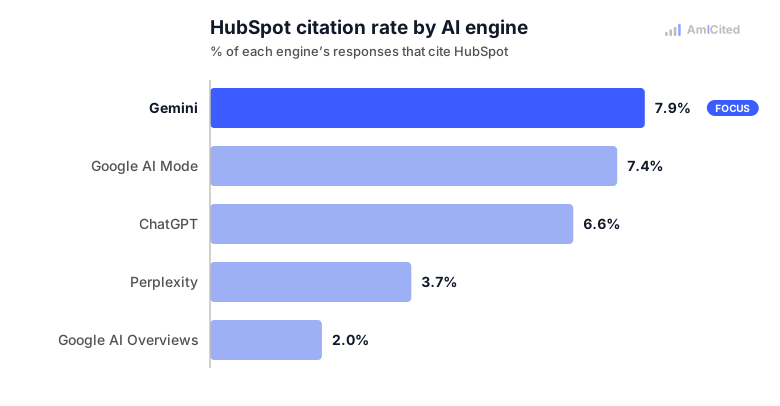
HubSpot’s AI visibility is strongly engine-dependent. Gemini names it most, in 7.9% of its answers, while Google AI Overviews trails at 2.0%, a 4× gap between the same brand’s best and worst engine. The other engines average 4.9%. That spread matters practically: a brand can lead in one assistant and be nearly invisible in another, so “AI visibility” is never a single number: it is a per-engine scorecard, and HubSpot sits above the cross-engine norm here.

Ready to Monitor Your AI Visibility?
Track how AI chatbots mention your brand across ChatGPT, Perplexity, and other platforms.
The underlying numbers
| AI engine | Responses analyzed | Mentioning HubSpot | Mention rate |
|---|---|---|---|
| Gemini | 5,123 | 406 | 7.9% |
| Google AI Mode | 3,975 | 295 | 7.4% |
| ChatGPT | 5,119 | 339 | 6.6% |
| Perplexity | 3,052 | 112 | 3.7% |
| Google AI Overviews | 2,010 | 41 | 2.0% |
The questions that surface HubSpot
HubSpot mentions concentrate in specific queries: 259 of 1,898 tracked prompts (14%) produced at least one HubSpot mention. These are the kinds of questions that pull HubSpot into AI answers:
- “List the key steps to optimize a brand for Meta AI discovery, from profile setup to content strategy”
- “What omnichannel customer service tool handles email, chat, phone, and social messages in one inbox?”
- “Best help desk software with live chat, ticketing, and call center for a small support team?”
- “Best CRM platform for small businesses to manage marketing, sales, and support in one place?”
- “HubSpot alternatives for an all-in-one marketing automation, CRM, and service platform?”
- “Recommend a service to track my company’s presence in AI chatbot answers in real time”
- “Which customer service platform can use AI to resolve tickets and improve retention?”
That is where HubSpot already owns share of voice, and the query themes a competitor would have to contest to displace it.
Stay Updated on AI Visibility Trends
Get the latest insights on AI mentions, brand monitoring, and optimization strategies.
Is HubSpot linked, or just named?
Of the times HubSpot is referenced, 25% include a link and 75% are name-only (no citation). That heavy name-only share is typical: assistants routinely recommend a brand by name without offering a click, which is exactly the visibility that link-only citation tracking misses. For HubSpot, the practical read is that most of its AI visibility is influence without a click.
HubSpot mentions over time
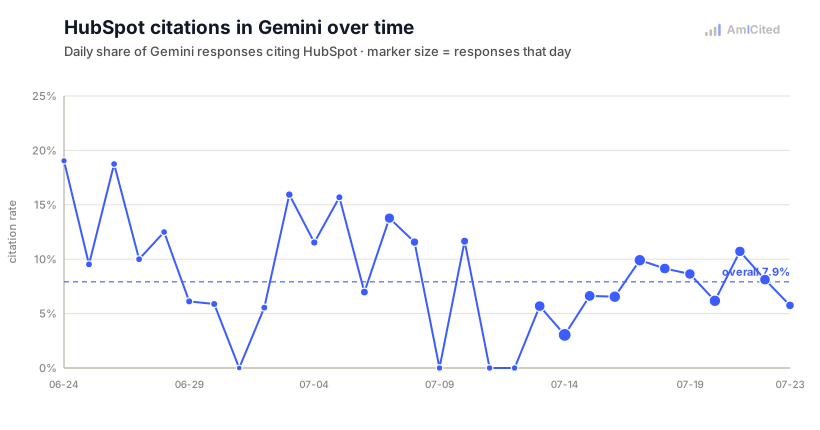
Tracked day by day in Gemini (its strongest engine), HubSpot’s mention rate moves around its 7.9% average with daily prompt volume rather than showing a clear trend across this window. A month is too short to call a durable direction, but this is the baseline series you would watch to catch a real gain or slide in HubSpot’s AI share of voice.
What this means for AI-search visibility
If HubSpot is your brand, this is your AI share-of-voice baseline: 6.2% overall, strongest in Gemini, and mostly name-only. If HubSpot is a competitor you track, it is the number to beat. Either way, moving it means becoming part of the sources and discussions these engines draw on for the query themes above: mentions are the leading indicator of AI visibility and links tend to follow. Because these figures come from AmICited’s tracked prompts (weighted toward SaaS, e-commerce and support topics), they describe HubSpot’s standing for that kind of question; a different audience’s prompt mix could shift the numbers, which is why tracking your own prompts is the only way to know your true position.
Competitive context: where this brand stands
Understanding how often a specific brand is mentioned by AI search engines provides valuable competitive intelligence. If this brand is your competitor, its mention rate is your benchmark. If it is your partner, its mention rate indicates the AI visibility of your ecosystem. If it is an aspirational brand, its mention rate shows what is possible with sustained AI visibility investment.
The mention rate should be read in context: a brand with a 10% mention rate is named in one out of every ten AI responses to relevant prompts. This is a significant level of AI mindshare. A brand with a 1% mention rate is visible but not dominant. A brand with a 0.1% mention rate is essentially invisible to AI search.
What this means for competitors
If you compete with this brand, the gap between its mention rate and yours is your AI visibility deficit. Closing that gap requires:
Content parity: Produce content that is at least as comprehensive, current, and authoritative as the content this brand produces on the topics where it is mentioned.
Source presence: Be present in the same sources (domains, platforms) that AI engines cite when mentioning this brand. If this brand is cited because of its Reddit presence, invest in Reddit. If it is cited because of its documentation, invest in documentation.
Query coverage: Identify the specific prompts where this brand is mentioned and ensure your brand is also a credible answer to those prompts.
Practical recommendations
Audit the competitor’s AI visibility. Use AmICited to see which prompts trigger mentions of this brand, which AI engines mention it, and how often. This is your competitive intelligence baseline.
Identify the competitor’s content advantage. For the prompts where this brand is mentioned, analyze the content that earns it citations. Is it product documentation? Blog posts? Community discussions? Replicate and improve on that content.
Track your progress. Monitor your brand’s mention rate relative to this brand over time. A narrowing gap is progress; a widening gap is a warning sign.
Methodology
Computed from AmICited’s 1,905 tracked prompts (June 24, 2026 – July 23, 2026, 2026) across ChatGPT, Perplexity, Google AI Overviews, Google AI Mode and Gemini. A response “mentions HubSpot” when AmICited’s brand detection identifies the brand in the answer text, whether or not a link is present; each response is counted once. The per-engine rate is mentioning-responses over that engine’s total responses; the overall figure pools all five. The link-vs-name-only split counts individual brand references. Microsoft Copilot is tracked but returned no citation data in this window. No external links appear in this report.
 LinkedIn