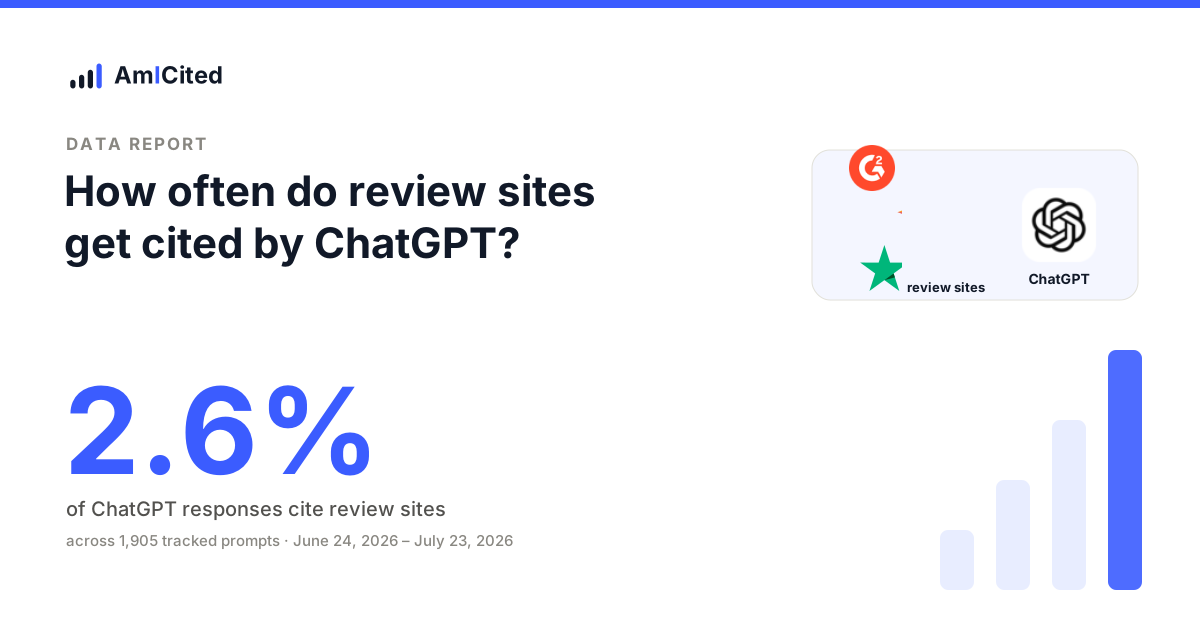
ChatGPT cited review sites in 2.6% of its responses across 1,905 AmICited tracked prompts (June 24, 2026–July 23, 2026, 2026): full breakdown by engine, by site, and over time.
Between June 24, 2026 and July 23, 2026, AmICited ran 1,905 tracked prompts through ChatGPT and logged every source it cited. Grouping those sources into the review sites category, 133 of the 5,119 ChatGPT responses cited one, a rate of 2.6%. For this report, a response is counted when it cites at least one of the named review-site domains (g2.com, capterra.com or trustpilot.com); each response is counted once no matter how many such links it contains. The sections below break that down against the other AI engines, show which review sites are cited most, and track the rate over time.
Key Takeaways
- ChatGPT cited review sites in 2.6% of its responses, the highest rate of any AI engine AmICited tracks for this category.
- g2.com dominates within the category, appearing in 79 of the 133 citing responses, well ahead of capterra.com (55) and trustpilot.com (5).
- The citation rate is trending down over the tracked window, from 4.2% in the first half to 2.2% in the second.
- Review-site citations cluster in specific query themes, such as help-desk, omnichannel support, and affiliate-software comparisons, rather than appearing evenly across all prompts.
- Bottom line: review sites are a genuine but engine-specific citation channel for ChatGPT, so brands should maintain a strong G2 and Capterra presence while prioritizing their own content; AmICited’s tracking data lets you monitor your own citation rate on these same sources.
Review Sites citation rate in ChatGPT vs. other AI search engines
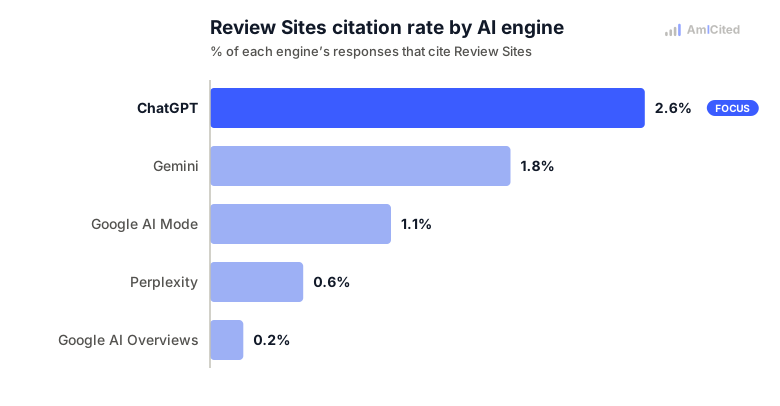
Review Sites’s 2.6% citation rate in ChatGPT looks very different next to the other AI engines AmICited tracks. ChatGPT cites Review Sites more heavily than any other engine in the set; the next-closest, Gemini, sits at 1.8%, and the lowest, Google AI Overviews, at 0.2%. Across the four other engines the average Review Sites citation rate is 0.9%, so ChatGPT runs above the cross-engine norm for this prompt set. That spread matters: it means whether Review Sites shows up as a source depends heavily on which AI engine a user asks, not just on Review Sites’s own content.

Ready to Monitor Your AI Visibility?
Track how AI chatbots mention your brand across ChatGPT, Perplexity, and other platforms.
The raw ChatGPT citation data for review sites
The table below is the exact data behind the chart: responses analyzed per engine, how many cited review sites, and the rate.
| AI engine | Responses analyzed | Responses citing Review Sites | Citation rate |
|---|---|---|---|
| ChatGPT (this page) | 5,119 | 133 | 2.6% |
| Gemini | 5,123 | 92 | 1.8% |
| Google AI Mode | 3,975 | 43 | 1.1% |
| Perplexity | 3,052 | 17 | 0.6% |
| Google AI Overviews | 2,010 | 4 | 0.2% |
Which review sites ChatGPT cites most
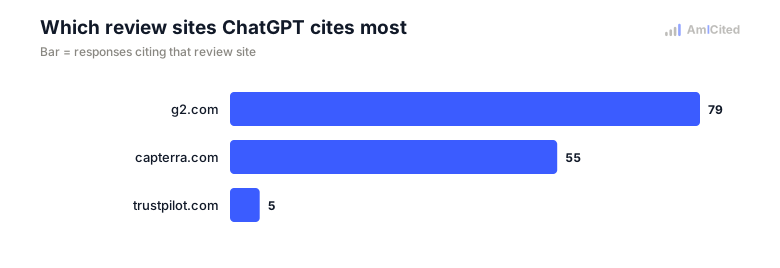
Within the category, the review sites are not cited equally by ChatGPT. g2.com leads with 79 citing responses, ahead of capterra.com (55), trustpilot.com (5). So ChatGPT’s use of review sites is concentrated in g2.com rather than spread evenly across the category.
Stay Updated on AI Visibility Trends
Get the latest insights on AI mentions, brand monitoring, and optimization strategies.
Review Sites citations in ChatGPT over time
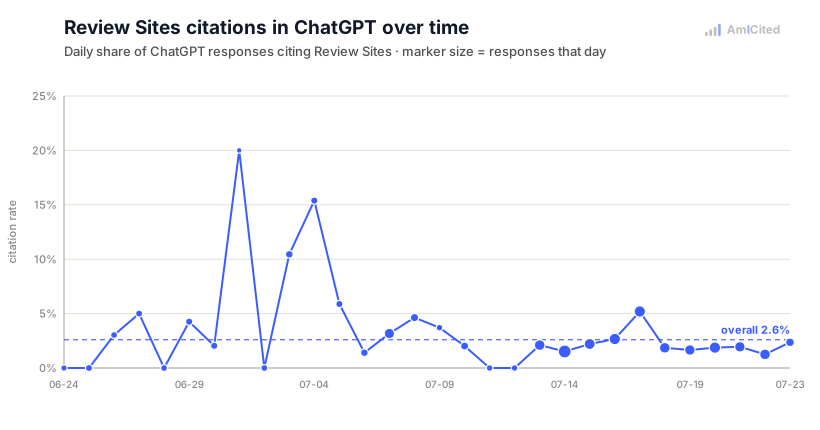
Day by day, Review Sites’s citation rate in ChatGPT averages 2.6% but moves around that line as daily sample sizes shift (smaller markers are lower-volume days, where a single citation swings the percentage). Its strongest well-sampled day was July 4, 2026 at 15.4% (8 of 52 responses). The rate is falling over the window, moving from 4.2% in the first half to 2.2% in the second, worth watching, though a month is too short to call it a durable shift.
The prompts that make ChatGPT cite review sites
Review Sites citations in ChatGPT are concentrated in specific queries: 61 of the 1,771 tracked prompts (3%) surfaced a Review Sites link at least once. These are the kinds of questions that pulled Review Sites into ChatGPT’s answers:
- “What’s the best omnichannel customer service platform for email, chat, and social?”
- “Best tool to create an AI sales assistant that enriches leads and books meetings?”
- “Best omnichannel help desk software for live chat, ticketing, and call center?”
- “Best software to manage multi-tier affiliate programs and automate payouts?”
- “Best help desk software with live chat, ticketing, and call center in one?”
- “What is the best AI virtual receptionist for customer service calls ?”
- “Best AI search tools for an e-commerce store with lots of products?”
The pattern is worth noting: Review Sites’s visibility in ChatGPT is driven by these query themes rather than spread evenly across every prompt, so the source matters most when users ask questions like the ones above.
What this means for AI search visibility
For teams working on AI-search visibility, Review Sites is a channel worth prioritizing for ChatGPT: at 2.6% it is cited more often than the typical source across engines, so presence and quality on Review Sites can plausibly translate into ChatGPT citations. The broader lesson from the by-engine spread is that AI-search visibility is engine-specific: a source that ChatGPT leans on (2.6%) can be nearly invisible in Google AI Overviews (0.2%). Because these numbers come from AmICited’s tracked prompts (weighted toward SaaS, e-commerce and customer-support questions), they describe Review Sites’s pull for that kind of query, and your own prompt mix may differ. The reliable way to know your own numbers is to track the exact prompts your audience asks and watch which sources each engine cites back.
Strategic implications for content format decisions
The low citation rates for PDFs and the moderate rates for review sites have clear implications for content format strategy. If AI citations are a priority, the format of your content matters nearly as much as the content itself:
HTML is the default format for AI citations. Across all engines, written HTML pages are cited far more than any other format. If your content can live as an HTML page, that is the version that will earn citations.
PDFs are a niche citation format. Only 0.4% of AI responses cite PDFs. Use PDFs for formal documents where the format adds credibility, but always publish an HTML companion page.
Review sites are a secondary citation source. AI engines cite review sites at moderate rates, but vendor-produced content is cited more often. Maintain a presence on review sites, but prioritize your own content.
Practical recommendations
Default to HTML for all content. Unless there is a specific reason to use another format, publish content as HTML pages. This is the format AI engines cite.
Create HTML companions for existing PDFs and other formats. If you have valuable content in non-HTML formats, create HTML summary pages that capture the key points and link to the full document.
Monitor your format-specific citation rates. Use AmICited to track which formats are earning citations for your brand. If you are producing a lot of PDFs but earning few citations, consider switching to HTML.
Don’t abandon PDFs and review sites entirely. They serve purposes beyond AI citations (user trust, lead generation, SEO). But weight your investment toward HTML if AI citations are a priority.
Methodology
This report is built from AmICited’s own tracking data, not third-party estimates. AmICited runs 1,905 tracked prompts through each AI engine on a recurring schedule and stores every answer with the source URLs it cited. For this page we examined the 5,119 ChatGPT responses collected between June 24, 2026 and July 23, 2026, 2026. A response counts toward Review Sites when it cites at least one of the named review-site domains (g2.com, capterra.com or trustpilot.com); it is counted once regardless of how many qualifying links it holds, and the rate is that count over all ChatGPT responses. The category is defined entirely from the data in these exports: the specific named review-site domains, matched at the registrable-domain level, with no external classification applied. Two caveats: the tracked prompts skew toward SaaS, e-commerce and customer-support topics, so these figures describe review sites within that prompt set rather than the whole web; and the engines compared are ChatGPT, Perplexity, Google AI Overviews, Google AI Mode and Gemini (Microsoft Copilot is tracked but returned no citation data in this window).
 LinkedIn