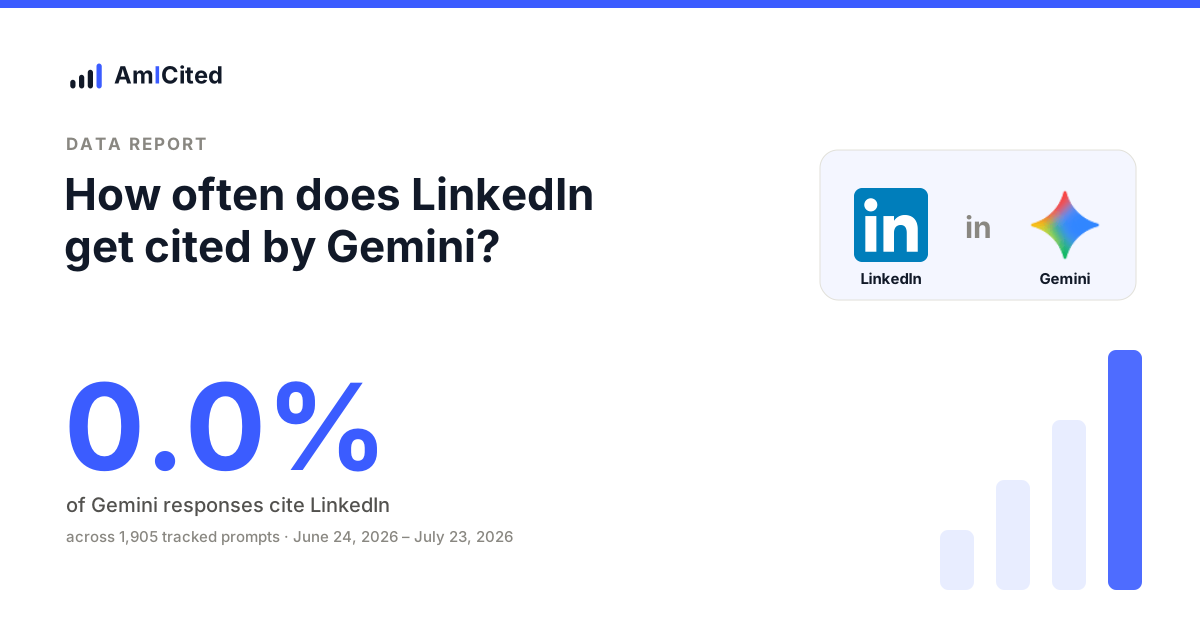
Gemini cited LinkedIn in 0.0% of its responses across 1,905 AmICited tracked prompts (June 24, 2026–July 23, 2026, 2026). Here is the full breakdown, by engine, by rank, and over time, with the raw numbers behind every figure.
Between June 24, 2026 and July 23, 2026, AmICited ran 1,905 tracked prompts through Gemini and recorded every source it cited. Of the 5,123 Gemini responses in that window, 0 included at least one link to LinkedIn, a citation rate of 0.0%. In other words, not a single one of Gemini’s answers to these prompts pointed readers to LinkedIn. A response is counted as citing LinkedIn whenever any of the source URLs Gemini attached resolves to linkedin.com (including subdomains); the figures below break that number down by engine, by rank, and over time.
Key Takeaways
- Gemini cited LinkedIn zero times across 5,123 tracked responses, the lowest of any engine tracked and well below the 1.3% cross-engine average.
- LinkedIn does not even appear among the 2,635 distinct domains Gemini cited in this window, and the zero rate held every single day of the 30-day tracking period.
- No subset of prompts breaks through: the absence is broad, not confined to one narrow topic area.
- By contrast, Google AI Mode cites LinkedIn in 3.3% of its responses, showing this is a Gemini-specific gap, not a LinkedIn-wide problem.
- Bottom line: LinkedIn is not a working citation channel in Gemini today; redirect LinkedIn-focused effort toward Google AI Mode or Google AI Overviews, and use AmICited to confirm which engines actually surface your content.
LinkedIn citation rate in Gemini vs. other AI search engines
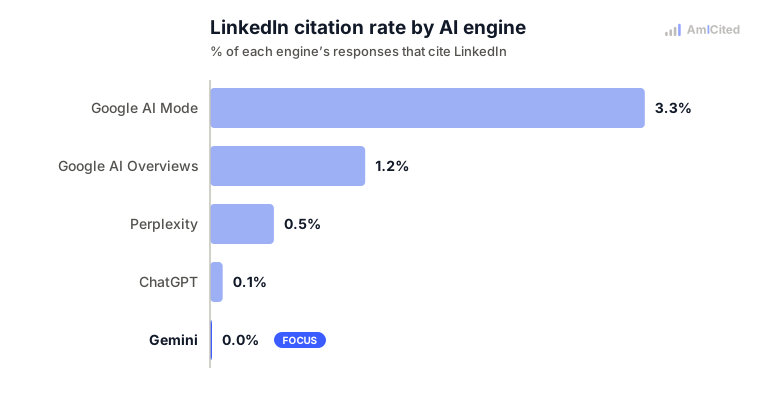
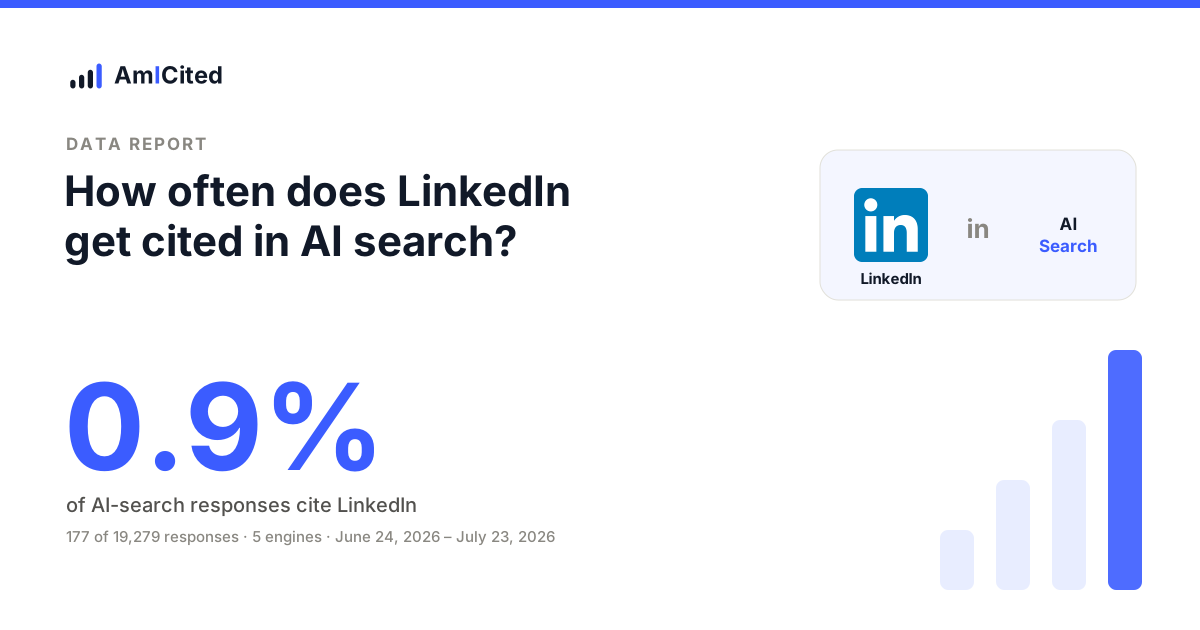
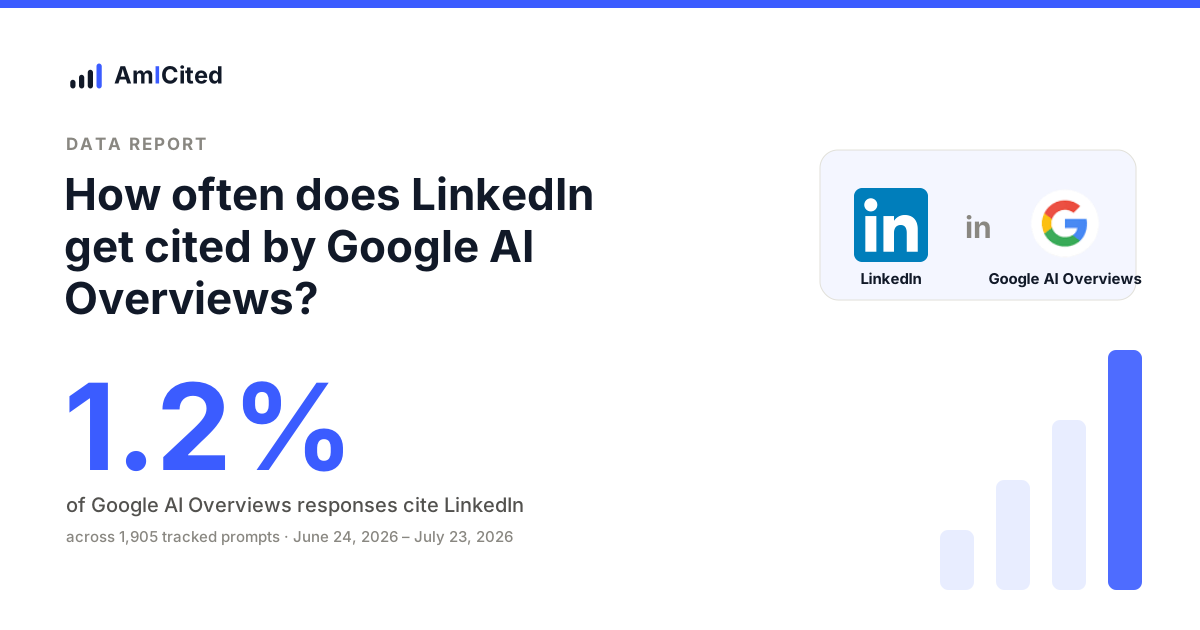
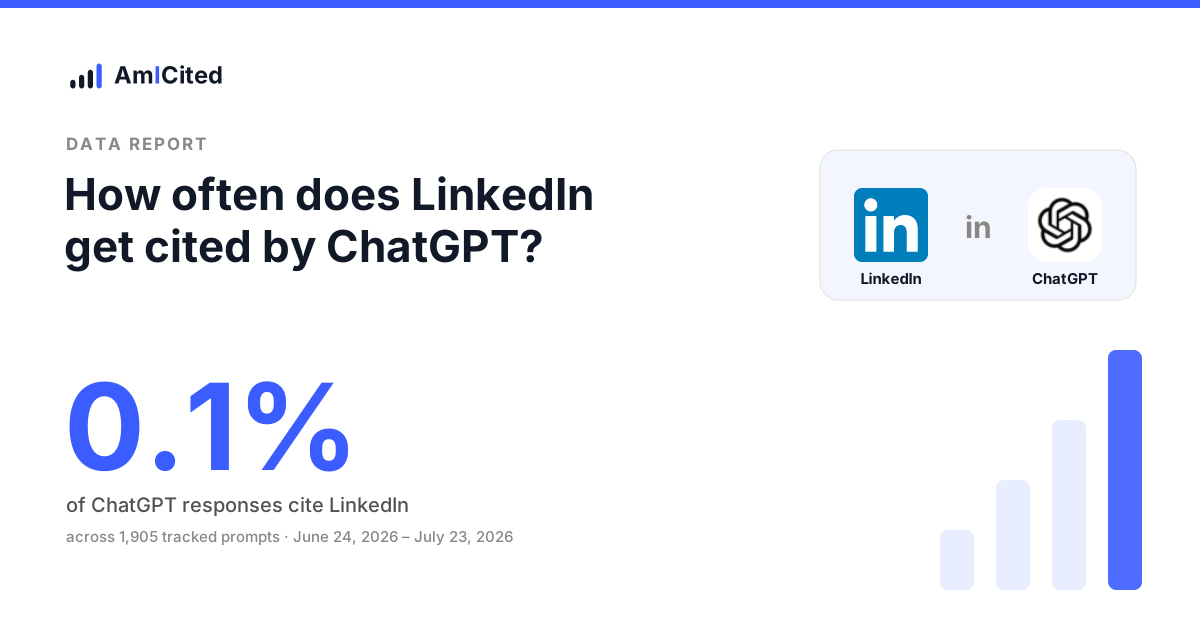
LinkedIn’s 0.0% citation rate in Gemini looks very different next to the other AI engines AmICited tracks. Gemini cites LinkedIn less than any other engine here: Google AI Mode leads at 3.3%, and even the mid-pack engines clear Gemini. Across the four other engines the average LinkedIn citation rate is 1.3%, so Gemini runs below the cross-engine norm for this prompt set. That spread matters: it means whether LinkedIn shows up as a source depends heavily on which AI engine a user asks, not just on LinkedIn’s own content.

Ready to Monitor Your AI Visibility?
Track how AI chatbots mention your brand across ChatGPT, Perplexity, and other platforms.
The raw Gemini citation data for LinkedIn
The table below is the exact data behind the chart: the number of responses analyzed for each engine, how many cited LinkedIn, and the resulting rate. Every percentage on this page is computed from these counts.
| AI engine | Responses analyzed | Responses citing LinkedIn | Citation rate |
|---|---|---|---|
| Google AI Mode | 3,975 | 133 | 3.3% |
| Google AI Overviews | 2,010 | 24 | 1.2% |
| Perplexity | 3,052 | 15 | 0.5% |
| ChatGPT | 5,119 | 5 | 0.1% |
| Gemini (this page) | 5,123 | 0 | 0.0% |
Where LinkedIn ranks among Gemini’s most-cited sources
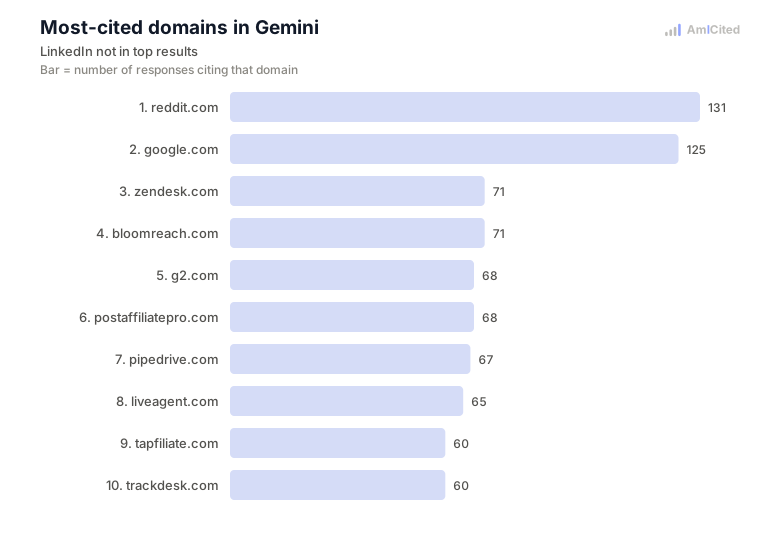
LinkedIn does not appear among the domains Gemini cited for these prompts at all: it ranks nowhere in the 2,635 distinct domains Gemini pulled from. For a platform often assumed to be a heavy AI-search source, that absence is itself the story: in this dataset, Gemini simply routed its citations elsewhere.
Stay Updated on AI Visibility Trends
Get the latest insights on AI mentions, brand monitoring, and optimization strategies.
LinkedIn citations in Gemini over time
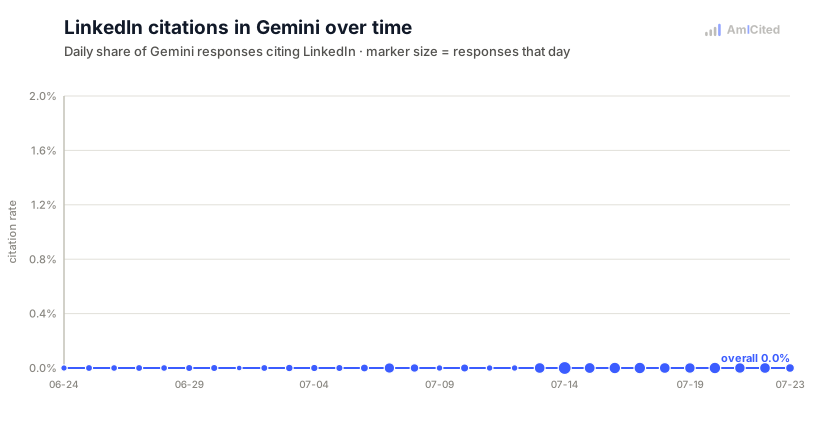
The trend line is flat on zero: across all 30 days in the window, Gemini never once cited LinkedIn. This was not a one-day gap or a sampling fluke: it held every day we collected data.
The prompts that make Gemini cite LinkedIn
Not one of the 1,746 prompts AmICited tracks caused Gemini to cite LinkedIn in this window. There is, in other words, no subset of these queries where LinkedIn breaks through in Gemini: the zero is broad, not the result of one narrow topic.
What LinkedIn’s Gemini citation rate means for AI search visibility
For anyone trying to earn visibility in Gemini, the practical read is blunt: LinkedIn is not a working channel here. Effort spent expecting Gemini to surface LinkedIn content would, on this evidence, go unrewarded. The broader lesson from the by-engine spread is that AI-search visibility is engine-specific: a source that Google AI Mode leans on (3.3%) can be nearly invisible in Gemini (0.0%). Because these numbers come from AmICited’s tracked prompts (weighted toward SaaS, e-commerce and customer-support questions), they describe LinkedIn’s pull for that kind of query, and your own prompt mix may differ. The reliable way to know your own numbers is to track the exact prompts your audience asks and watch which sources each engine cites back.
What this means for content strategy on this platform
The citation rate data has direct implications for how you should invest in content on this platform. If the platform is cited at a meaningful rate by a specific AI engine, creating content on that platform can contribute to AI visibility. If the platform is rarely cited, content creation there is unlikely to translate into AI citations.
The key question is: at what citation rate does platform investment become worthwhile? There is no single answer, but a useful framework is:
- Above 5% citation rate: The platform is a significant AI citation source. Content investment here is likely to contribute to AI visibility.
- 1-5% citation rate: The platform is a secondary AI citation source. Content investment here may contribute to AI visibility, but should not be your primary strategy.
- Below 1% citation rate: The platform is a marginal AI citation source. Content investment here is unlikely to translate into AI citations. Focus on other channels.
Cross-engine comparison: where to focus
The by-engine breakdown reveals that no platform is cited equally across all AI engines. A platform that is heavily cited by ChatGPT may be nearly invisible to Perplexity, and vice versa. This means your platform strategy should be engine-specific:
Identify which AI engine matters most for your audience. If your target users are primarily on ChatGPT, optimize for ChatGPT’s preferred platforms. If they are on Google AI products, optimize for Google’s preferred platforms.
Don’t optimize for all engines at once. The platforms that work for ChatGPT ( Reddit, community discussions) are different from the platforms that work for Google AI Overviews (institutional sources, YouTube). Choose your primary engine and optimize accordingly.
Monitor engine shifts. AI engines are evolving, and their platform preferences may change. Track your citation rates by engine over time to detect shifts early.
Practical recommendations
Audit your current platform presence. Which platforms are you active on? Which AI engines cite those platforms? If your platform investment does not align with your target AI engines, consider reallocating.
Create engine-specific content strategies. For ChatGPT, invest in Reddit and community platforms. For Google AI products, invest in YouTube and institutional content. For Perplexity, invest in your own website content.
Track platform-specific citation rates. Use AmICited to monitor which of your content on which platforms is being cited by which AI engines. This data will tell you whether your platform investment is paying off.
Methodology
This report is built from AmICited’s own tracking data, not third-party estimates. AmICited runs a fixed set of 1,905 tracked prompts through each AI engine on a recurring schedule and stores every answer together with the source URLs the engine cited. For this page we looked at the 5,123 Gemini responses collected between June 24, 2026 and July 23, 2026, 2026.
A response counts as citing LinkedIn when at least one of its cited source URLs resolves to linkedin.com or any subdomain of it (for example www.linkedin.com or other linkedin.com hosts); each response is counted once regardless of how many LinkedIn links it contains. Domains are compared at the registrable level, so all linkedin.com addresses roll up together. The citation rate is simply that count divided by the total Gemini responses. Citation position is the rank of a LinkedIn link within a response’s source list (1 = first source cited), and the triggering prompts are the distinct tracked prompts for which at least one Gemini response cited LinkedIn.
Two caveats worth stating plainly. First, the tracked prompts skew toward SaaS, e-commerce, customer-support and related B2B topics, so these figures describe LinkedIn’s pull within that prompt set, not a random sample of the whole web. Second, the five engines compared are ChatGPT, Perplexity, Google AI Overviews, Google AI Mode and Gemini; Microsoft Copilot is tracked by AmICited but returned no citation data in this window, so it is excluded here.
 LinkedIn