Ask ten ecommerce operators what “AI visibility” means and half will describe their site’s AI-powered search box. That’s not it. AI visibility is whether ChatGPT, Perplexity, Google AI Mode, and Claude mention your products at all when someone else — a shopper who never opens your site — asks an AI assistant what to buy. In 2026, that question increasingly happens before a single click reaches your domain, which means the old scoreboard (rankings, sessions, clicks) is measuring less and less of what actually decides the sale.
This is the complete playbook: how AI shopping engines actually pick what to recommend, the six pillars that move the needle, a platform-by-platform breakdown, the mistakes that quietly kill visibility, how to measure it, and a 90-day plan to act on all of it.
Key Takeaways
- AI visibility for ecommerce means being cited or recommended by AI answer engines, not just ranking well in your own site search or Google’s blue links.
- AI shopping engines follow a five-stage pipeline — crawl, parse structured data, corroborate with third-party sources, retrieve and rank, then cite — and most brands only invest in the first two stages.
- Six pillars determine outcomes: product schema and feeds, third-party trust signals, answer-ready content, technical agent access, agentic commerce readiness, and continuous measurement.
- ChatGPT, Perplexity, Google AI Mode, and Claude weigh these signals differently, so a single generic optimization pass under-serves at least one platform.
- Agentic checkout (ChatGPT Instant Checkout, Perplexity Buy with Pro, Shopify WebMCP) has moved from experimental to live in 2026 — if your product data isn’t machine-readable, you’re invisible to that transaction path.
- Bottom line: treat AI visibility as its own measurable discipline sitting alongside SEO, not a side effect of it — run the 90-day plan below, then keep measuring with a tool built for it, like AmICited.
What Is AI Visibility for Ecommerce?
Three things get conflated constantly, and the difference matters for where you spend effort:
AI-powered site search is a feature inside your own store — a chatbot or smart search box that helps a visitor who already arrived find the right product. It’s a UX investment. It does nothing for shoppers who never land on your domain.
Traditional SEO gets you ranked in Google’s organic results, which AI Overviews and AI Mode partly draw from, but ranking well doesn’t guarantee a citation — Google’s AI surfaces synthesize an answer and choose which sources to name, and that selection follows different rules than the ten blue links.
AI visibility (the subject of this guide) is about being the product an AI system independently recommends, compares, or links to when a shopper asks a question in ChatGPT, Perplexity, Google AI Mode, or Claude — often with no prior relationship to your site at all. That’s the traffic and influence source that doesn’t show up as a click until, sometimes, it never does and simply shows up as a sale with “direct” as the referrer. See the revenue impact of AI search visibility for how that attribution gap actually plays out in ecommerce analytics.

Ready to Monitor Your AI Visibility?
Track how AI chatbots mention your brand across ChatGPT, Perplexity, and other platforms.
Why 2026 Is the Inflection Point
A few things converged this year that make AI visibility unavoidable rather than experimental:
Shopping inside the conversation is now normal, not novel. ChatGPT Instant Checkout, Perplexity’s Buy with Pro, and Google’s AI Mode shopping graph all let a user go from question to purchase-adjacent action without a traditional search results page in between.
Agentic commerce protocols shipped to real merchants. Shopify’s WebMCP rollout put agent-callable tools (search, add to cart, check price) live on thousands of storefronts practically overnight. Protocols like ACP and UCP are turning “can an AI agent transact on my site” into a yes/no technical fact, not a roadmap item.
Reviews and third-party discussion carry more weight than brand copy. AI systems are visibly hesitant to recommend a product based only on what the brand says about itself — they look for it corroborated elsewhere, which is a structurally different requirement than ranking a well-optimized product page.
The category is still wide open. Search interest in “AI visibility for ecommerce” and “generative engine optimization for ecommerce” is real but early — the SERPs for these terms are dominated by thin blog posts from a handful of martech vendors, not comprehensive guides. That’s a genuine opportunity for any brand willing to actually do the work below before it becomes crowded.
How AI Engines Choose What to Recommend
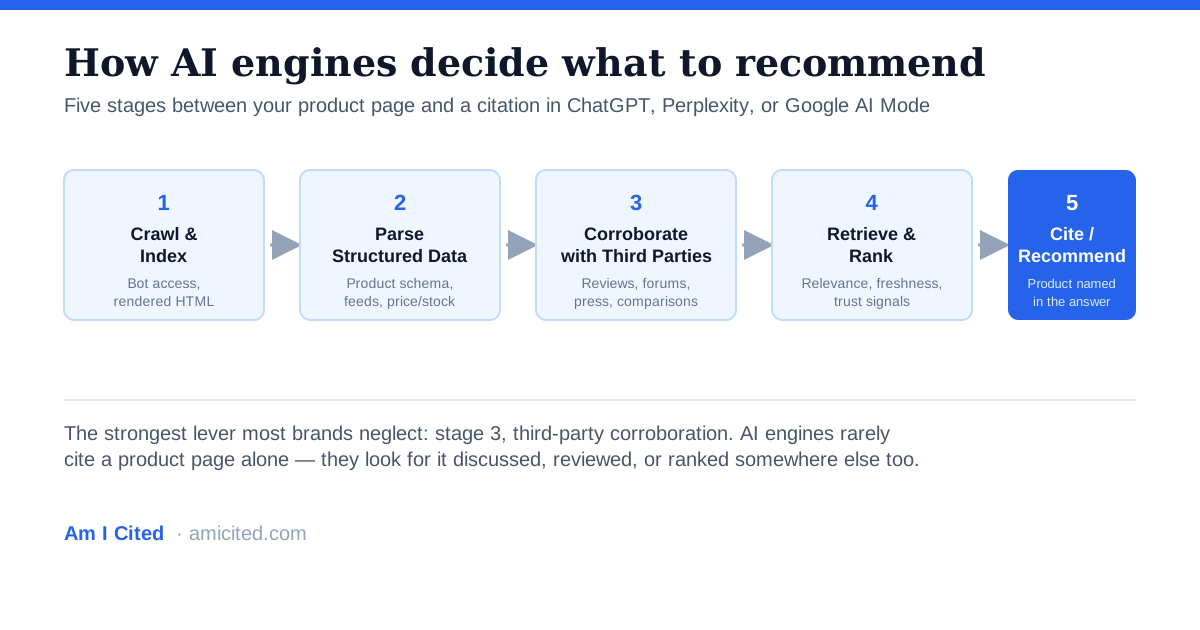
It helps to stop thinking in SEO terms (rank, position, click-through rate) and think in retrieval terms instead. Every major AI shopping surface runs roughly the same pipeline:
1. Crawl and index. The engine’s bot has to be able to reach your pages at all. AI crawlers generally don’t execute JavaScript the way a browser does, so client-side-rendered product pages are frequently invisible even when a human sees them fine.
2. Parse structured data. Product schema and a well-formed product feed are how an AI system extracts price, availability, specs, and identifiers without having to guess from prose.
3. Corroborate with third-party sources. This is the stage most brands skip. Before naming a product, AI systems tend to look for it discussed somewhere they didn’t control — reviews, forum threads, comparison articles, press coverage. A product page alone, however well-optimized, rarely clears this bar by itself.
4. Retrieve and rank candidates. Relevance to the query, freshness of the data, and accumulated trust signals combine to decide which handful of products actually make it into a shortlist for the answer.
5. Cite or recommend. The product gets named, linked, or added to a comparison — and depending on the platform, a checkout flow can start right there.
The practical implication: optimizing only stage 1 and 2 (which is what most “AI SEO for ecommerce” advice covers) leaves stage 3 — the third-party corroboration most engines actually gate on — completely untouched.
Stay Updated on AI Visibility Trends
Get the latest insights on AI mentions, brand monitoring, and optimization strategies.
The Six Pillars of Ecommerce AI Visibility
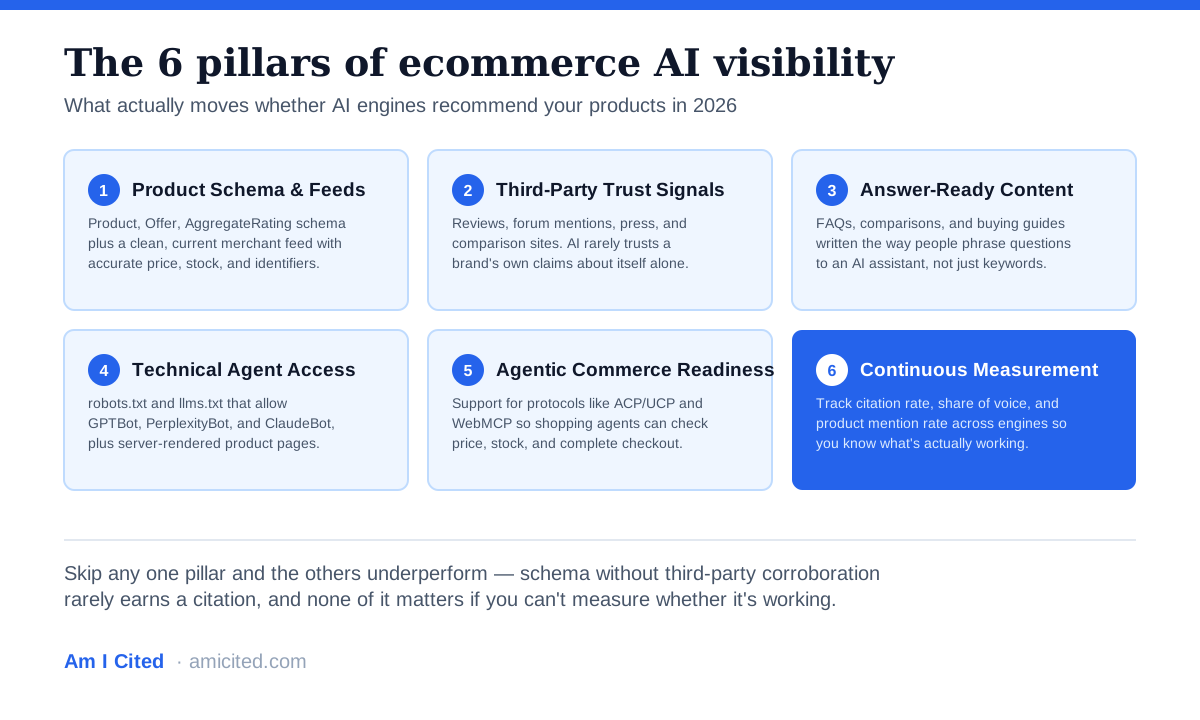
1. Product schema and feeds. Product, Offer, and AggregateRating schema on every product page, plus a merchant feed that’s accurate and refreshed frequently, not quarterly. Treat stale price or stock data in your feed as a trust-destroying bug, not a minor data-hygiene issue — an agent that transacts on wrong data creates a support ticket and a reason never to trust your data again.
2. Third-party trust signals. A steady flow of genuine customer reviews , presence in category comparison content, and forum or community discussion. If your category has an active subreddit or forum, that’s frequently a heavier input to Perplexity’s answers than your own site.
3. Answer-ready content. FAQs, honest comparison pages, and buying guides written the way people actually phrase questions to an assistant (“what’s the best X for Y”) rather than the way they’d type a keyword into Google. Structure matters here as much as substance — short, direct, well-labeled sections extract more cleanly than long unstructured paragraphs.
4. Technical agent access. robots.txt and llms.txt configured to allow GPTBot, PerplexityBot, ClaudeBot, and similar crawlers; server-rendered (not JS-only) product pages; and a site architecture that doesn’t bury key product data behind interactions a bot can’t perform.
5. Agentic commerce readiness. Exposing a protocol like ACP, UCP, or WebMCP so an agent can programmatically check price, availability, shipping, and return terms — and, increasingly, complete the purchase. Preparing for agentic commerce is no longer a forward-looking exercise; for platforms that support it today, it’s a live gap or a live capability.
6. Continuous measurement. None of the above is verifiable without tracking AI share of voice , citation rate, and product-level mention rate over time, across engines, on a recurring schedule rather than a one-time audit.
AI Shopping Platforms Compared
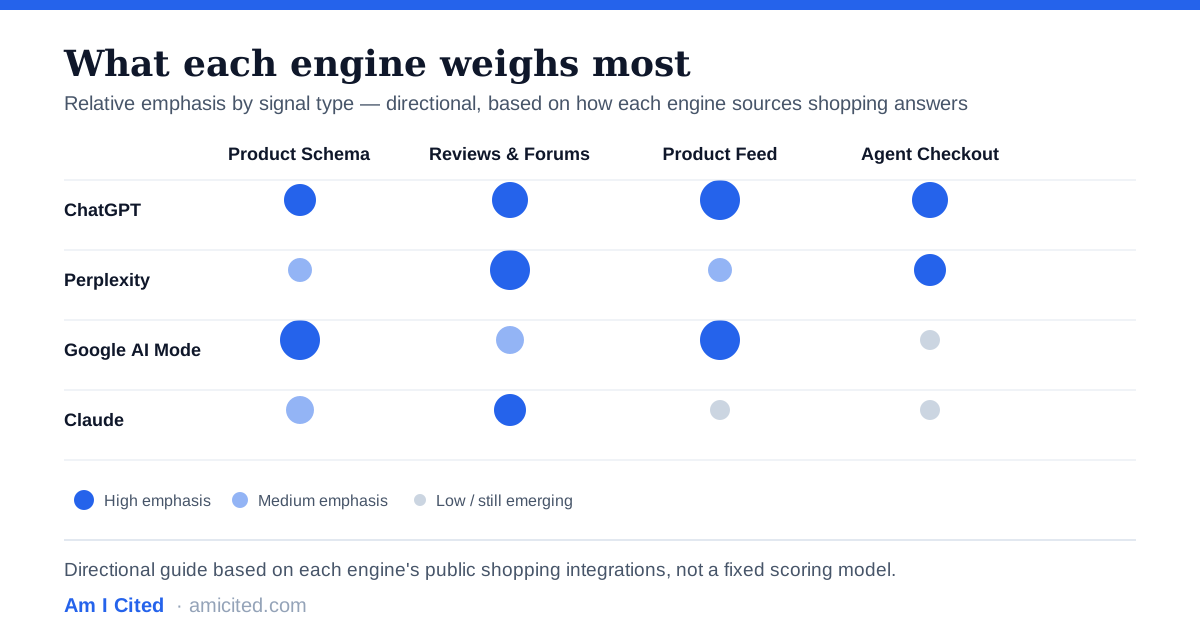
ChatGPT Shopping. Broad consumer reach, strong reliance on structured product feeds, and increasingly on reviews as a trust filter. Instant Checkout means the recommendation and the transaction can happen in the same conversation, so feed accuracy directly gates revenue, not just visibility.
Perplexity. Leans harder on reviews, forum discussion, and independent comparison content than on your own product copy. Shop Like a Pro and Buy with Pro add a checkout layer for Pro subscribers, making this platform disproportionately important for higher-consideration categories where research depth matters.
Google AI Mode / AI Overviews. Draws directly from Merchant Center feeds and schema, so of the four platforms, it rewards clean technical fundamentals fastest — but it also folds shopping citations into the same synthesis logic as its broader AI Overviews, so generic content quality still matters.
Claude. Currently cites independent editorial, documentation, and long-form analysis more than commerce-specific integrations. Lower near-term priority for pure product citations, but a real factor for B2B ecommerce research and technical purchase decisions.
Common Ecommerce AI Visibility Mistakes
Optimizing the product page and stopping there. Schema and copy on your own domain is necessary but not sufficient — without third-party corroboration, most engines simply won’t cite a product based on brand-authored content alone.
Treating the feed as a launch-day task. A feed that goes stale within weeks of going live is worse than no feed, because it teaches the platform your data can’t be trusted, which is a harder problem to undo than never having submitted one.
JavaScript-only product rendering. If your product details, price, and availability only appear after client-side JavaScript runs, most AI crawlers simply never see them — this is one of the single most common and most fixable gaps.
Ignoring reviews as an AI visibility lever, not just a conversion lever. Review volume and recency function as a trust signal to AI systems independently of what they do for on-page conversion rate.
No agent-readable checkout path. As agentic commerce protocols spread, a store with no ACP/UCP/WebMCP exposure isn’t just less optimized — it’s structurally excluded from an entire and growing transaction path.
Measuring once and calling it done. AI models, their retrieval behavior, and competitor content all shift continuously. A single audit tells you where you stood on the day you ran it, not where you stand now.
How to Measure AI Visibility for Ecommerce
Four metrics, tracked on a recurring cadence rather than a one-time snapshot:
- Citation rate — across a representative set of category and comparison prompts, how often your brand or products are named at all.
- AI share of voice — your citation rate relative to named competitors, which tells you whether you’re gaining or losing ground, not just whether you exist.
- Product mention rate — citation rate at the individual SKU or product-line level, since aggregate brand visibility can hide specific products that never get recommended.
- Sentiment and accuracy — whether AI systems describe your pricing, availability, and features correctly, since a wrong claim (out of stock when it isn’t, wrong price) actively damages trust once a shopper acts on it.
Pair these with a technical agent-accessibility audit — robots.txt rules, llms.txt presence, and a spot check for JavaScript-only rendering on your top product pages — so you can tell whether a visibility gap is a content problem or a crawling problem before you spend a quarter fixing the wrong one. Getting products recommended by AI breaks down the mechanics further, and how ecommerce sites optimize for AI search covers the adjacent SEO-side checklist.
90-Day Action Plan
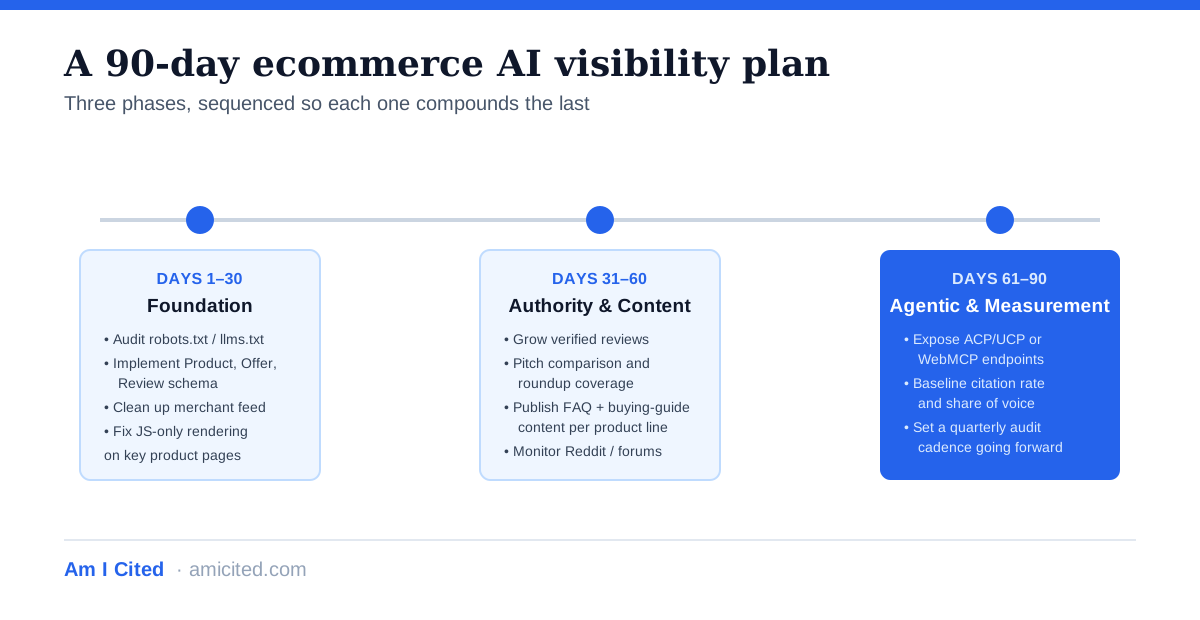
Days 1–30: Foundation. Audit robots.txt and llms.txt for AI bot access, implement Product/Offer/Review schema across your catalog, clean up your merchant feed, and fix JavaScript-only rendering on your highest-revenue product pages.
Days 31–60: Authority and content. Actively grow verified reviews, pitch inclusion in relevant comparison and roundup content, publish FAQ and buying-guide content per product line, and start monitoring where your category is discussed on Reddit and niche forums.
Days 61–90: Agentic readiness and measurement. Evaluate and expose an agent-readable protocol (ACP, UCP, or WebMCP) where your platform supports it, establish a baseline citation rate and share of voice across ChatGPT, Perplexity, Google AI Mode, and Claude, and set a quarterly audit cadence going forward rather than treating this as a one-time project.
AI visibility for ecommerce isn’t a rebrand of SEO, and it isn’t the same thing as a smarter search box on your own site — it’s a distinct, measurable discipline built around whether AI systems independently vouch for your products to people who never asked you directly. The brands treating it that way now, with real structured data, real third-party corroboration, and real measurement, are the ones that will still be getting cited once the rest of the category catches up.