


How to Implement LLMs.txt: A Technical Guide
Learn how to implement LLMs.txt on your website to help AI systems understand your content better.
10 min read
Does LLMs.txt actually work? A skeptic’s look at the adoption numbers, the platforms that still won’t confirm using it, and what the evidence says about whether it’s worth your time.
LLMs.txt is a plain text file placed at domain.com/llms.txt, and by adoption numbers alone it looks like a runaway success — hundreds of thousands of sites have added one in barely two years. But adoption isn’t proof, and this piece is the evidence check: what data actually exists, what platforms have confirmed (and haven’t), and whether the whole thing is a smart hedge or hype dressed up as infrastructure. If you want the mechanics first — the exact spec, syntax, and how to write one — read our companion guide, LLMs.txt: What It Is, Does It Work, and Should You Use It? . Here we’re asking a sharper question: is there proof this file changes what AI systems cite, and should you trust a format that could list content than what actually appears on your live pages?
The numbers suggest genuine traction: 844,000+ websites have implemented LLMs.txt as of October 2025, with adoption concentrated among companies that understand AI’s role in their future. Major players including Anthropic, Cloudflare, Stripe, Vercel, and Supabase have all implemented the standard, signaling that serious infrastructure companies see value in the experiment. Mintlify’s decision to enable automatic generation for thousands of documentation sites in November 2024 created a significant adoption spike, demonstrating that tooling support can accelerate implementation. Three community directories now track implementations, with 788+ verified sites documented across them. However, the adoption pattern reveals something important: implementation is heavily concentrated in developer tools and documentation platforms—the exact sectors most likely to benefit from AI visibility. Here’s what the adoption landscape actually looks like:
| Company/Platform | Implementation | Token Count | Status |
|---|---|---|---|
| Anthropic | Yes | ~2,000 | Active |
| Cloudflare | Yes | ~5,000 | Active |
| Stripe | Yes | ~8,000 | Active |
| Vercel | Yes | ~3,500 | Active |
| Supabase | Yes | ~4,200 | Active |
| Mintlify (auto-generated) | Yes | Varies | Active |
Here’s where the skepticism becomes justified: ZERO major AI platforms have officially confirmed using LLMs.txt in their retrieval systems. Google’s John Mueller stated plainly, “No AI system currently uses llms.txt,” a comment that should have ended the conversation but somehow didn’t. OpenAI, Anthropic, Google, Microsoft, and Perplexity have all maintained strategic silence on the topic—no official documentation, no confirmation of usage, no public roadmaps. There’s evidence that some platforms crawl the files (Microsoft and OpenAI bots have been observed fetching LLMs.txt files), but crawling and actual usage are entirely different things. The optimistic interpretation suggests platforms are quietly testing before making public commitments; the skeptical interpretation suggests they’ll never adopt it because it doesn’t solve a problem they actually have. This silence is the core of the “overhyped” argument: 18 months after the proposal gained traction, we have widespread implementation but zero official platform adoption. That’s not a standard—that’s a hope.

Track how AI chatbots mention your brand across ChatGPT, Perplexity, and other platforms.
The skeptical position rests on a simple foundation: there is no proven evidence that LLMs.txt improves AI retrieval, increases traffic, or enhances content visibility. The trust problem cuts deeper—by creating a separate file that can contain wording nobody double-checks against the live page, you’re essentially enabling manipulation. Research on LLM behavior shows they’re 2.5x more likely to recommend content that’s been specifically highlighted or targeted, which creates obvious gaming incentives. An organization could theoretically populate LLMs.txt with descriptions of their best-performing content while quietly omitting weaker pages, or worse, describe content that doesn’t actually reflect what’s on the page. SEO tool vendors have amplified the pressure by flagging missing LLMs.txt files as optimization opportunities—Rank Math, SEMrush, and others have created a self-fulfilling cycle where sites implement the standard not because it works, but because tools tell them they’re missing something. This is the real problem: 18 months of implementation pressure without a single documented case of measurable value. It’s the digital equivalent of everyone buying a lottery ticket because the lottery company keeps advertising.
The pro-LLMs.txt camp makes a different argument entirely, one rooted in inevitable change rather than current proof. Carolyn Shelby from Yoast articulated it perfectly: “Ranking is no longer the prize—inclusion is.” Windsurf, an AI code editor, reported that LLMs.txt saves meaningful time and tokens when parsing documentation, suggesting real efficiency gains for AI systems that do use it. Anthropic specifically requested that Mintlify implement LLMs.txt for their documentation, implying internal value even if they won’t publicly confirm it. Google included LLMs.txt in their A2A (Agents to Agents) protocol, suggesting the company sees it as part of the future infrastructure for AI-to-AI communication. Jeremy Howard’s observation cuts to the heart of the supporters’ logic: “99.9% of attention is about to be LLM attention, not human attention,” which means optimizing for AI systems isn’t optional, it’s inevitable. Springs Apps reported a 20% increase in search visibility after implementation, though this remains unverified and could reflect correlation rather than causation.
Get the latest insights on AI mentions, brand monitoring, and optimization strategies.
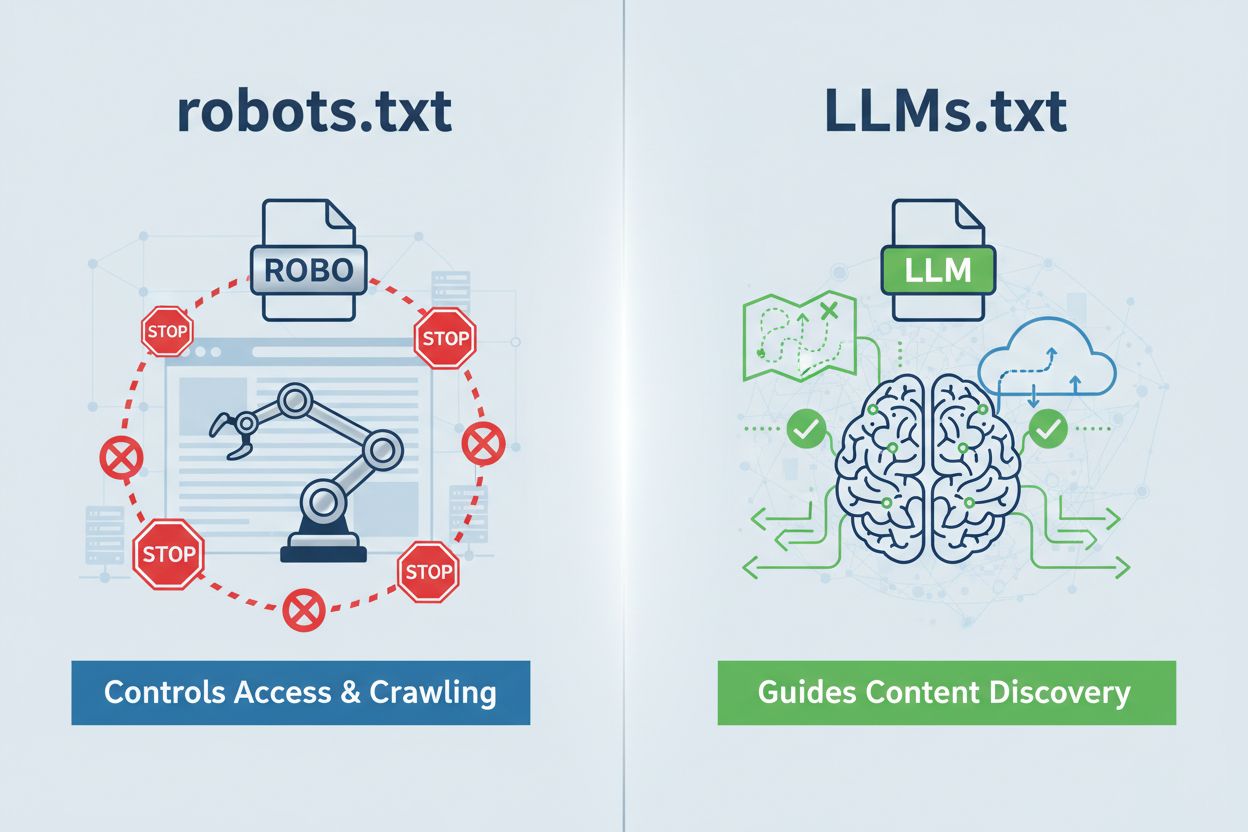
Understanding why LLMs.txt might fail requires examining why other standards succeeded. Robots.txt worked because it created mutual benefit with minimal cost and received official RFC support (RFC 9309)—search engines wanted to crawl efficiently, sites wanted to control crawling, and the solution was simple enough that adoption was frictionless. Schema.org succeeded through multi-stakeholder development involving Google, Microsoft, Yahoo, and Yandex from the beginning—no single company could claim ownership, which built trust. Sitemap.xml achieved broad platform support before widespread adoption, not after. LLMs.txt lacks all three of these success factors: no W3C involvement, no consortium backing, no official platform support, and no demonstrated value in traffic improvements, ranking benefits, or accuracy gains. What makes standards actually work is multi-stakeholder buy-in, clear and measurable benefits, and low gaming potential. LLMs.txt has hope. It has adoption among early believers. It has tooling support. But it doesn’t have the foundational elements that transformed previous standards from experiments into infrastructure.
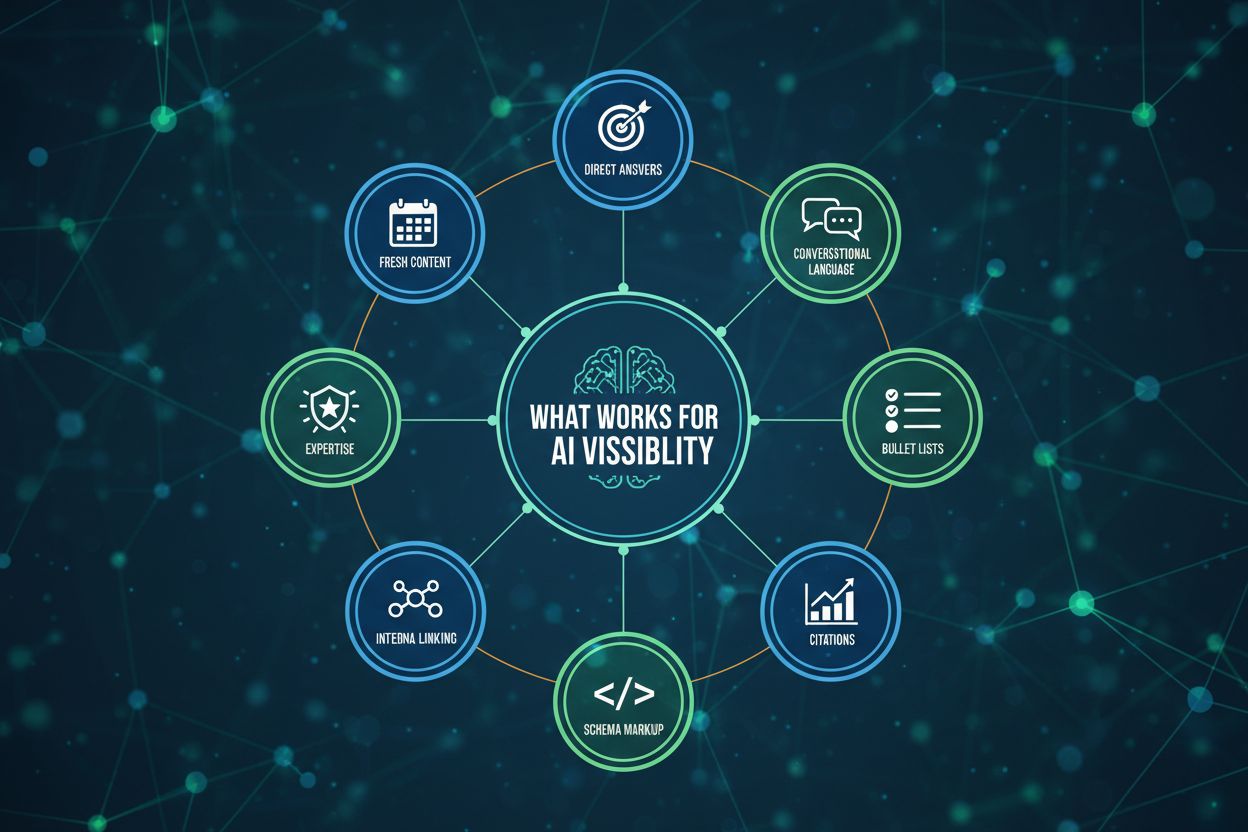
If LLMs.txt remains unproven, what actually drives AI visibility and AI citations? The answer is less exotic than a new file format:
These tactics work because they align with how AI systems actually process information, not because they’re optimized for a specific file format.
The conversation around LLMs.txt reflects a deeper shift in how content succeeds online: the convergence of human UX and AI optimization. Research on Generative Engine Optimization (GEO) shows that the content winning in AI-generated answers shares specific characteristics—clarity, structure, authority, and specificity. Vercel reported that 10% of their signups now come directly from ChatGPT mentions rather than traditional organic search, a metric that would have been impossible five years ago. Success increasingly means appearing in AI-generated answers, not just ranking in organic results—these are different optimization targets with different requirements. The tooling landscape has evolved to track this shift: SEMrush AIO, Profound’s GEO tracking, and Ahrefs Brand Radar now monitor AI visibility alongside traditional rankings. The fundamental reframe is this: being cited matters more than being ranked, and being referenced matters more than being indexed. This shift explains why LLMs.txt gained traction despite lacking official support—it represents an attempt to optimize for a new attention economy where AI systems are the primary distribution channel.
Yes, on balance — but not because it’s proven to work. The downside is close to zero: implementation takes roughly 10 minutes for a small site and perhaps an hour for larger properties, and if AI platforms never officially adopt it, the file simply sits on your server harmlessly. Whatever you decide, the file must at least be syntactically valid to have any chance of mattering — AmICited’s Agent Accessibility audit will check that automatically rather than leaving you to guess. Traffic is fragmenting across multiple AI systems: ChatGPT, Perplexity, Claude, and emerging competitors collectively handle hundreds of millions of queries monthly, and you’re already visible to them whether or not you have this file. The honest framing is a hedge, not a strategy: implement it if you have ten spare minutes, put your real effort into the content tactics above, and treat LLMs.txt as one small, free bet rather than the centerpiece of your AI visibility plan. For the actual spec and step-by-step build instructions, our companion guide, LLMs.txt: What It Is, Does It Work, and Should You Use It? , walks through it in full.
Yasha is a talented software developer specializing in Python, Java, and machine learning. Yasha writes technical articles on AI, prompt engineering, and chatbot development.

Track how AI systems like ChatGPT, Claude, and Perplexity reference your content. Get real-time insights into your AI citations and visibility across AI platforms.
Learn how to implement LLMs.txt on your website to help AI systems understand your content better.
A step-by-step guide to writing, formatting, and deploying an LLMs.txt file: the spec, the syntax, generator tools, and the mistakes that make sites get it wron...
Learn what LLMs.txt files are, how they differ from robots.txt, and why they're essential for AI visibility and citations in ChatGPT, Perplexity, and Google AI ...
Cookie Consent
We use cookies to enhance your browsing experience and analyze our traffic. See our privacy policy.