


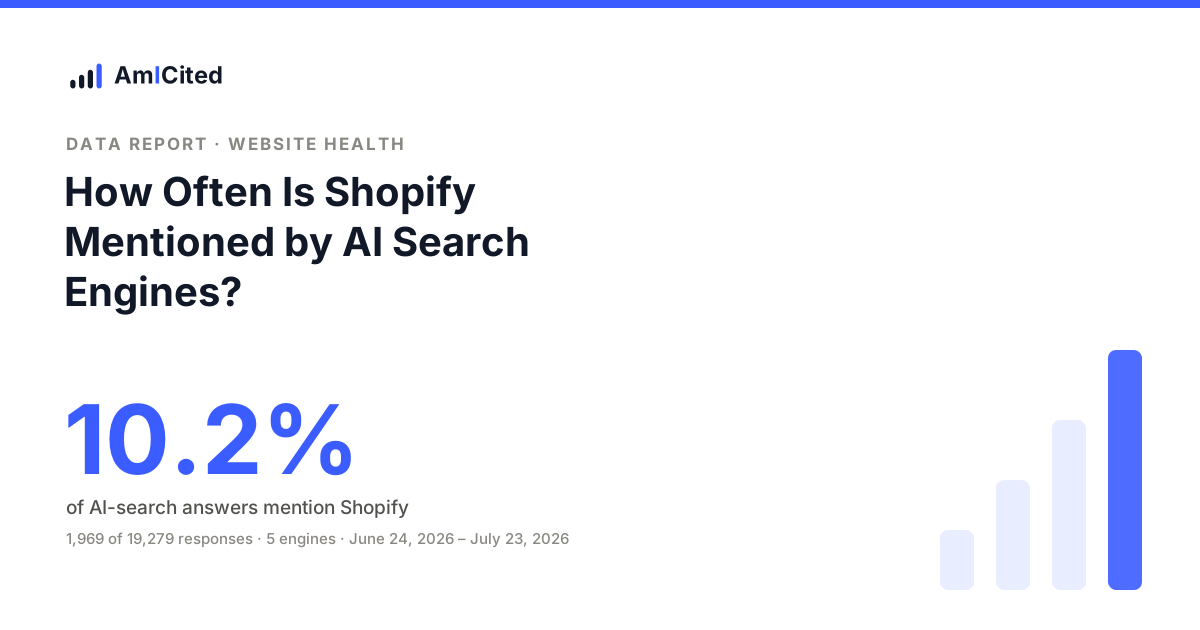
How Often Is Shopify Mentioned by AI Search Engines?
AI search engines mention Shopify in 10.2% of their answers to AmICited’s 1,905 tracked prompts — most in ChatGPT (11.7%), least in Google AI Overviews (2.9%)...
6 min read
AI search engines mention Bloomreach in 2.5% of their answers to AmICited’s 1,905 tracked prompts — most in Google AI Mode (3.8%), least in ChatGPT (2.0%), an
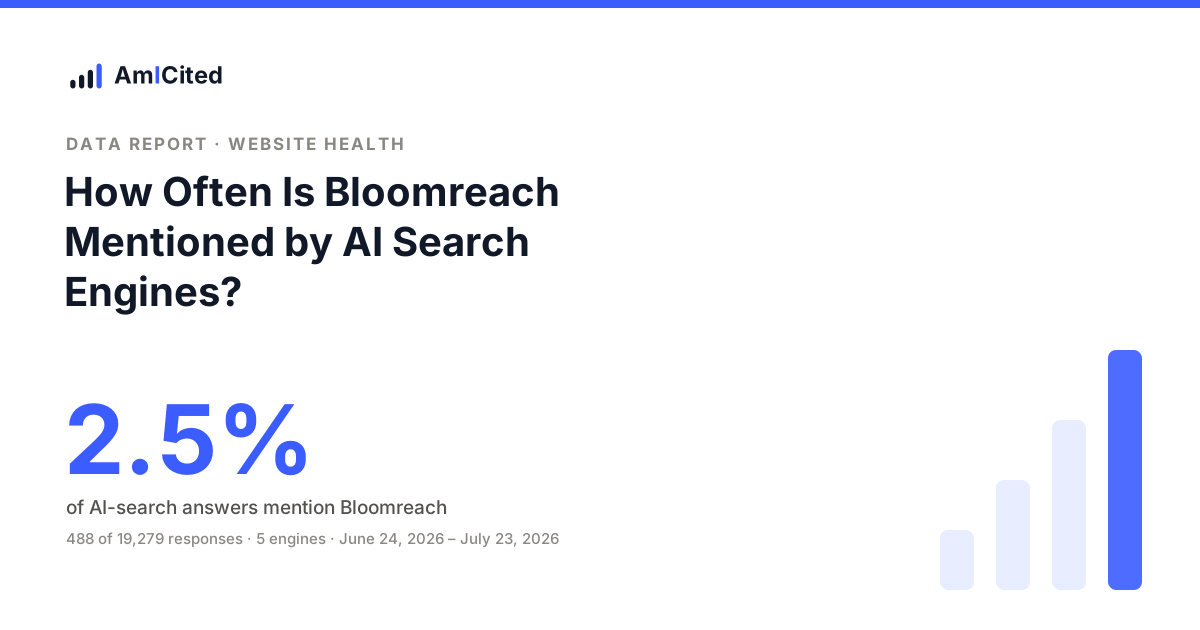
AI search engines mention Bloomreach in 2.5% of their answers to AmICited’s 1,905 tracked prompts — most in Google AI Mode (3.8%), least in ChatGPT (2.0%), and it is the #23 most-mentioned brand of 17,946.
Between June 24, 2026 and July 23, 2026, AmICited ran 1,905 tracked prompts through five AI search engines and recorded every AI brand mention each answer named. Bloomreach was mentioned in 488 of 19,279 responses — a 2.5% mention rate — making it the #23 most-mentioned brand of 17,946 across the whole tracked set. A “mention” counts whether or not the answer linked to Bloomreach: in AI search, being named is a distinct and often larger prize than being linked. The sections below break Bloomreach’s presence down by engine, by query, by link status, and over time.
Bloomreach positions itself as a “commerce experience” platform — a combination of a customer data platform (CDP), product discovery/search, and marketing automation aimed squarely at mid-market and enterprise e-commerce brands. That’s a broader pitch than a single-purpose tool, and it shows in the query list below: Bloomreach shows up for personalization questions, conversion-rate questions, and email/CRM campaign questions, not just one narrow niche.
For scale, it’s worth putting Bloomreach’s 2.5% mention rate next to some reference points already in this data set. It’s well behind category-agnostic giants like Shopify (10.2%) — but that’s an unfair fight, since Shopify is a platform-of-record that gets named for almost any e-commerce question (see who ChatGPT cites most for e-commerce queries ), while Bloomreach is invoked specifically for personalization and CDP-flavored questions. A fairer comparison — the kind of AI competitive intelligence a specialist vendor actually needs, rather than a blanket category ranking — is against other tools competing for the same specialist queries: across AmICited’s full brand-mention data, Klaviyo shows up 318 times, Algolia 53, Nosto 41, and Segment 32 — Bloomreach’s 489 raw mentions actually lead this specific cluster, even though all of them trail the broad e-commerce platforms by an order of magnitude. That’s a useful reframe: Bloomreach isn’t a minor player that happens to place #23 overall — it’s arguably the most-mentioned specialist in its own personalization/CDP niche.
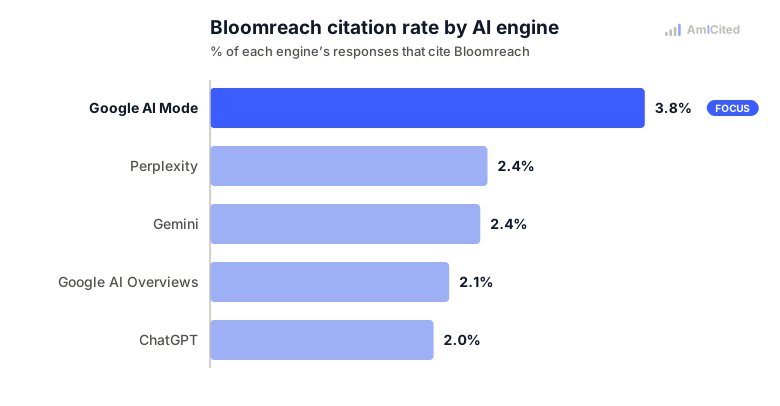
Bloomreach’s AI visibility is strongly engine-dependent. Google AI Mode names it most, in 3.8% of its answers, while ChatGPT trails at 2.0% — a 2× gap between the same brand’s best and worst engine. The other engines average 2.2%. That spread matters practically: a brand can lead in one assistant and be nearly invisible in another, so “AI visibility” is never a single number — it is a per-engine scorecard, and Bloomreach sits above the cross-engine norm here.

Track how AI chatbots mention your brand across ChatGPT, Perplexity, and other platforms.
| AI engine | Responses analyzed | Mentioning Bloomreach | Mention rate |
|---|---|---|---|
| Google AI Mode | 3,975 | 151 | 3.8% |
| Perplexity | 3,052 | 74 | 2.4% |
| Gemini | 5,123 | 121 | 2.4% |
| Google AI Overviews | 2,010 | 42 | 2.1% |
| ChatGPT | 5,119 | 100 | 2.0% |
Bloomreach mentions concentrate in specific queries: 43 of 1,898 tracked prompts (2%) produced at least one Bloomreach mention. These are the kinds of questions that pull Bloomreach into AI answers:
That is where Bloomreach already owns share of voice — and the query themes a competitor would have to contest to displace it. Most of the list is squarely on-topic (personalization, conversion, CRM/email performance), though one outlier — a query about software development studios in Slovakia — is a reminder that brand-detection over open-ended AI answers occasionally catches a passing mention rather than a genuine recommendation. Treat the on-topic cluster as the signal and the occasional outlier as noise rather than a new use case.
Get the latest insights on AI mentions, brand monitoring, and optimization strategies.
Of the times Bloomreach is referenced, 78% include a link and 22% are name-only (no citation). A relatively high linked share means Bloomreach tends to be cited, not merely named, so its mentions can drive referral clicks as well as influence. For Bloomreach, the practical read is that its mentions frequently convert into actual links.
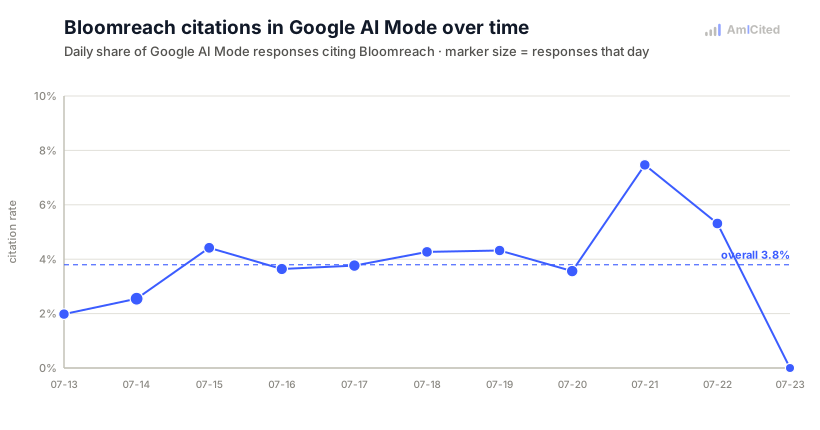
Tracked day by day in Google AI Mode (its strongest engine), Bloomreach’s mention rate moves around its 3.8% average with daily prompt volume rather than showing a clear trend across this window. A month is too short to call a durable direction, but this is the baseline series you would watch to catch a real gain or slide in Bloomreach’s AI share of voice.
If Bloomreach is your brand, this is your AI share-of-voice baseline: 2.5% overall, strongest in Google AI Mode, and mostly linked. If Bloomreach is a competitor you track — whether you’re Klaviyo, Algolia, Nosto, or another commerce-experience vendor — it is the number to beat within this specific niche, not the number to beat against Shopify-scale platforms.
The 78% linked share is the more interesting number here, and it cuts against the general pattern this data series keeps finding (that AI engines mostly name brands without linking them). Bloomreach being cited, not just namechecked, three times out of four suggests its content — likely blog posts and case studies making specific, quotable claims about personalization and conversion lift — is the kind of material these engines prefer to attribute directly rather than paraphrase anonymously. That’s a repeatable playbook for any brand in a similar specialist niche: publish content with concrete, citable numbers, and AI engines are more likely to link back to it instead of just mentioning the brand name in passing — the same logic behind how ecommerce sites optimize for AI search more broadly.
Because these figures come from AmICited’s tracked prompts (weighted toward SaaS, e-commerce and support topics), they describe Bloomreach’s standing for that kind of question; a different audience’s prompt mix could shift the numbers, which is why tracking your own AI brand mentions is the only way to know your true position.
Computed from AmICited’s 1,905 tracked prompts (June 24, 2026 – July 23, 2026, 2026) across ChatGPT, Perplexity, Google AI Overviews, Google AI Mode and Gemini. A response “mentions Bloomreach” when AmICited’s brand detection identifies the brand in the answer text, whether or not a link is present; each response is counted once. The per-engine rate is mentioning-responses over that engine’s total responses; the overall figure pools all five. The link-vs-name-only split counts individual brand references. Microsoft Copilot is tracked but returned no citation data in this window. No external links appear in this report.
Arshia is an AI Workflow Engineer at FlowHunt. With a background in computer science and a passion for AI, he specializes in creating efficient workflows that integrate AI tools into everyday tasks, enhancing productivity and creativity.

See which AI engines cite your brand — across ChatGPT, Perplexity, Gemini and more.
AI search engines mention Shopify in 10.2% of their answers to AmICited’s 1,905 tracked prompts — most in ChatGPT (11.7%), least in Google AI Overviews (2.9%)...
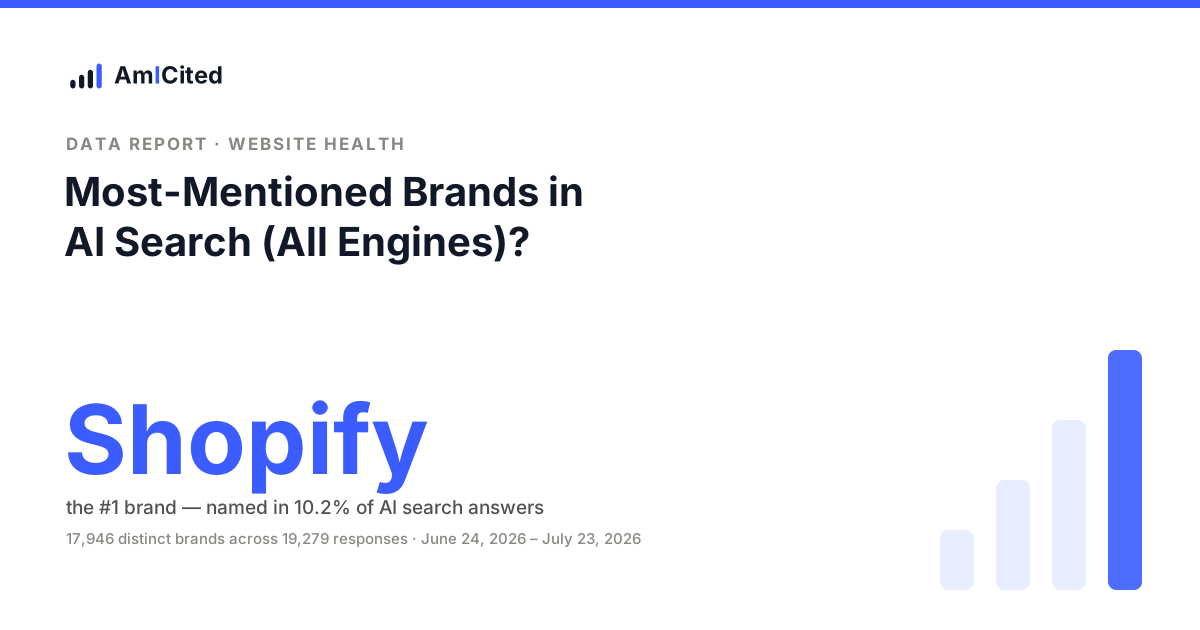
Across 19,279 AI search responses to AmICited’s 1,905 tracked prompts, Shopify is the most-mentioned brand (10.2%), ahead of Zendesk and HubSpot. Full top-20
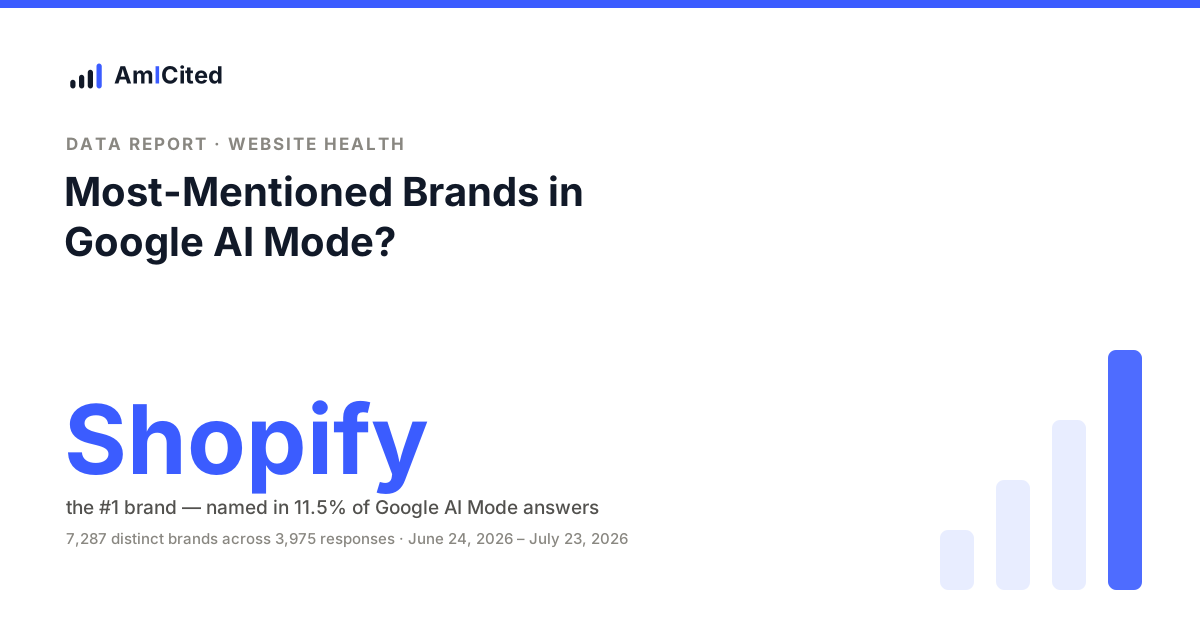
Across 3,975 Google AI Mode responses to AmICited’s 1,905 tracked prompts, Shopify is the most-mentioned brand (11.5%), ahead of Zendesk and Salesforce. Full
Cookie Consent
We use cookies to enhance your browsing experience and analyze our traffic. See our privacy policy.