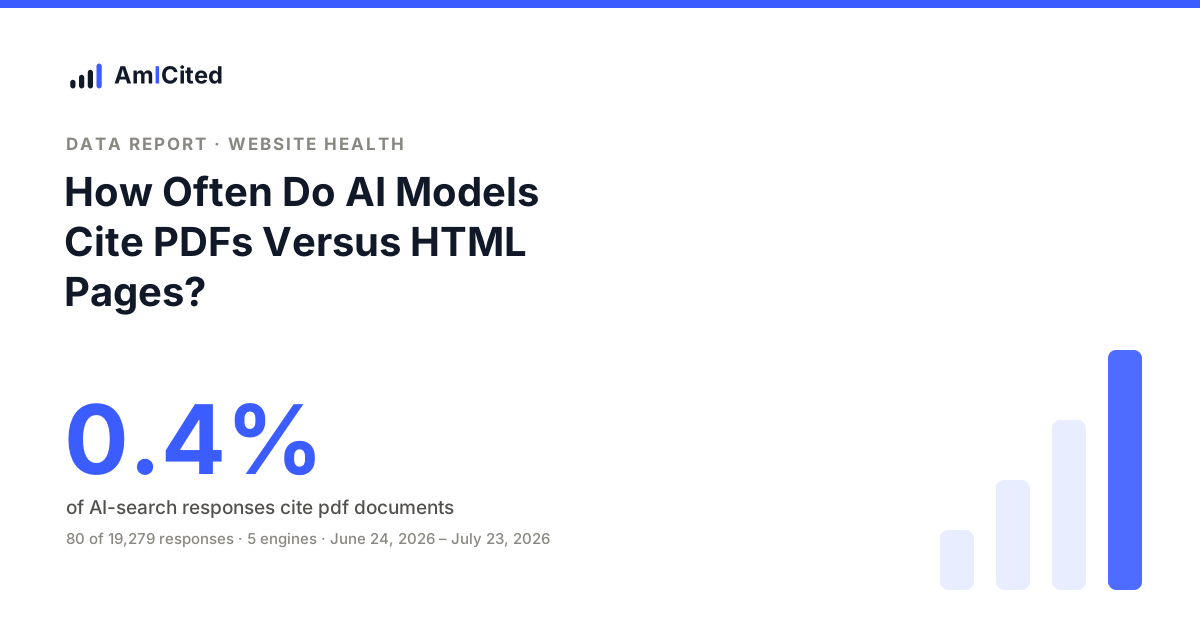
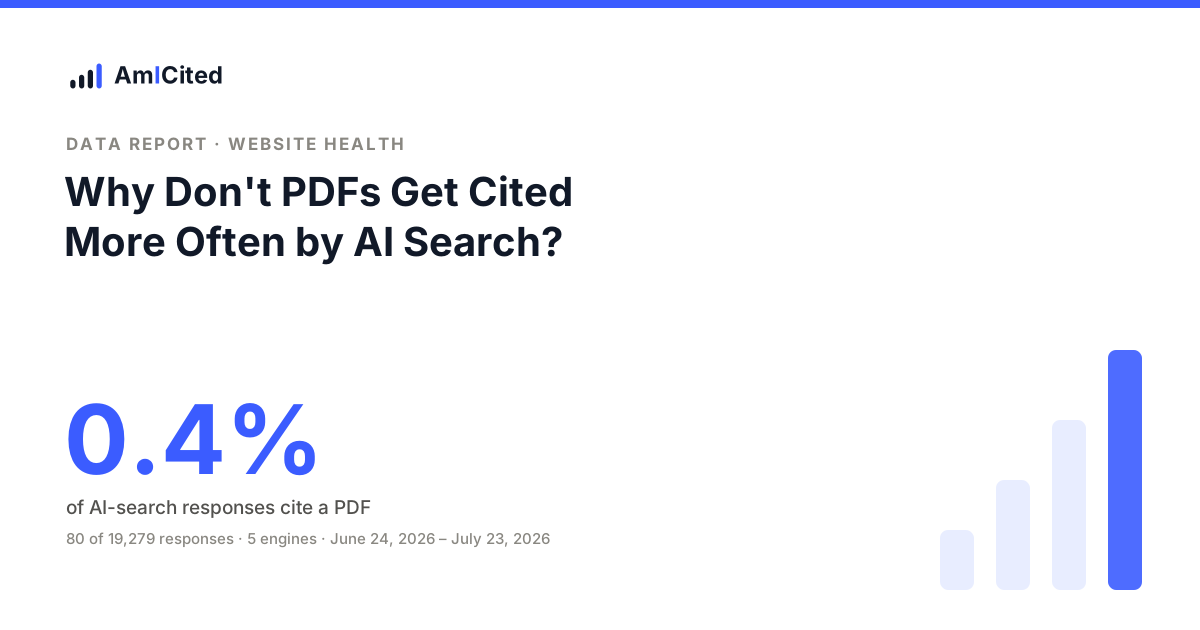
Only 0.4% of AI-search responses cite a PDF. The ones that do skew toward official, institutional documents; here is the data and a grounded read of why PDFs stay niche.
Across the five tracked AI engines, just 80 of 19,279 responses (0.4%) cite a PDF. PDFs are a real but minor citation source, and looking at which PDFs get cited is the most revealing part.
Key Takeaways
- PDFs are cited in only 0.4% of AI-search responses (80 of 19,279), making them a minor but real citation format.
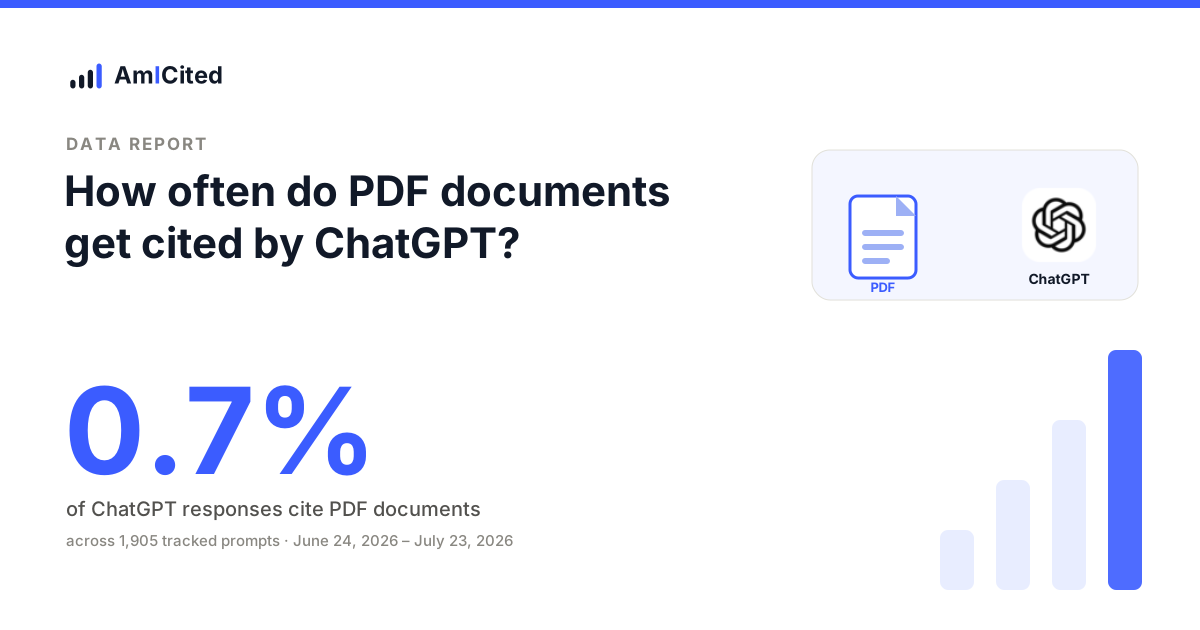
- Google AI Mode and ChatGPT cite PDFs most often (0.8% and 0.7%), while Google AI Overviews and Perplexity barely cite them at all (0.1% each).
- The PDFs that do get cited are overwhelmingly official or institutional documents (government bodies, standards organizations, large consultancies), not marketing content.
- HTML remains the dominant citation format across every engine; PDFs surface mainly when they are the primary format of an authoritative source.
- Bottom line: publish an HTML version of anything you want AI engines to cite, and reserve PDFs for formal documents where the format itself adds credibility; AmICited’s tracking data can show which of your formats are actually earning citations.
PDF citation rate by engine
| AI engine | Responses | Citing a PDF | Rate |
|---|---|---|---|
| Google AI Mode | 3,975 | 31 | 0.8% |
| ChatGPT | 5,119 | 35 | 0.7% |
| Gemini | 5,123 | 10 | 0.2% |
| Google AI Overviews | 2,010 | 2 | 0.1% |
| Perplexity | 3,052 | 2 | 0.1% |

Ready to Monitor Your AI Visibility?
Track how AI chatbots mention your brand across ChatGPT, Perplexity, and other platforms.
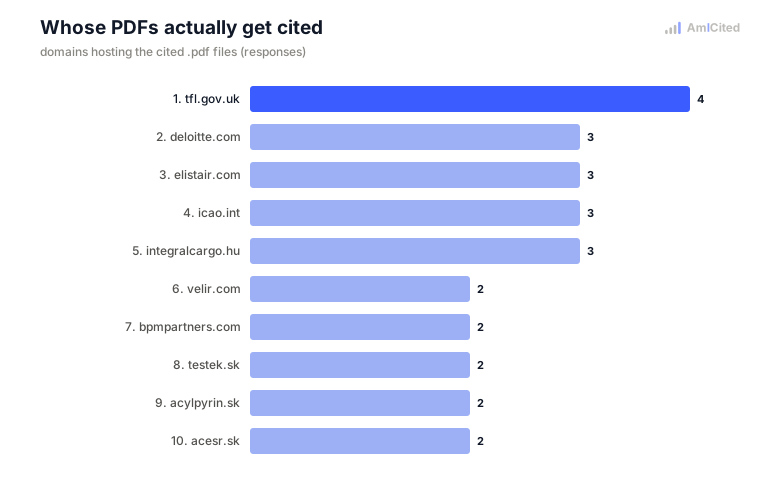
Whose PDFs actually get cited
| Rank | Domain hosting cited PDFs | Responses |
|---|---|---|
| 1 | tfl.gov.uk | 4 |
| 2 | deloitte.com | 3 |
| 3 | elistair.com | 3 |
| 4 | icao.int | 3 |
| 5 | integralcargo.hu | 3 |
| 6 | velir.com | 2 |
| 7 | bpmpartners.com | 2 |
| 8 | testek.sk | 2 |
| 9 | acylpyrin.sk | 2 |
| 10 | acesr.sk | 2 |
The hosts above are dominated by official and institutional publishers (government bodies, standards organisations and large consultancies) rather than ordinary marketing content. That is the clearest signal in the data: when an AI engine reaches for a PDF, it is usually an authoritative document that exists mainly in PDF form.
Why PDFs aren’t cited more (a careful read)
The data shows the pattern, not the cause, but a few things are consistent with it. PDFs are heavier and slower to parse than HTML, they are frequently gated or buried, and most web content that could be a PDF is also published as an HTML page, which engines cite far more often (see our PDFs vs HTML report). So PDFs surface mainly where they are the primary format of an authoritative source. The practical takeaway: publish an HTML version of anything you want cited, and reserve PDFs for formal documents where they add credibility.
Stay Updated on AI Visibility Trends
Get the latest insights on AI mentions, brand monitoring, and optimization strategies.
Strategic implications for content format decisions
The low citation rates for PDFs and the moderate rates for review sites have clear implications for content format strategy. If AI citations are a priority, the format of your content matters nearly as much as the content itself:
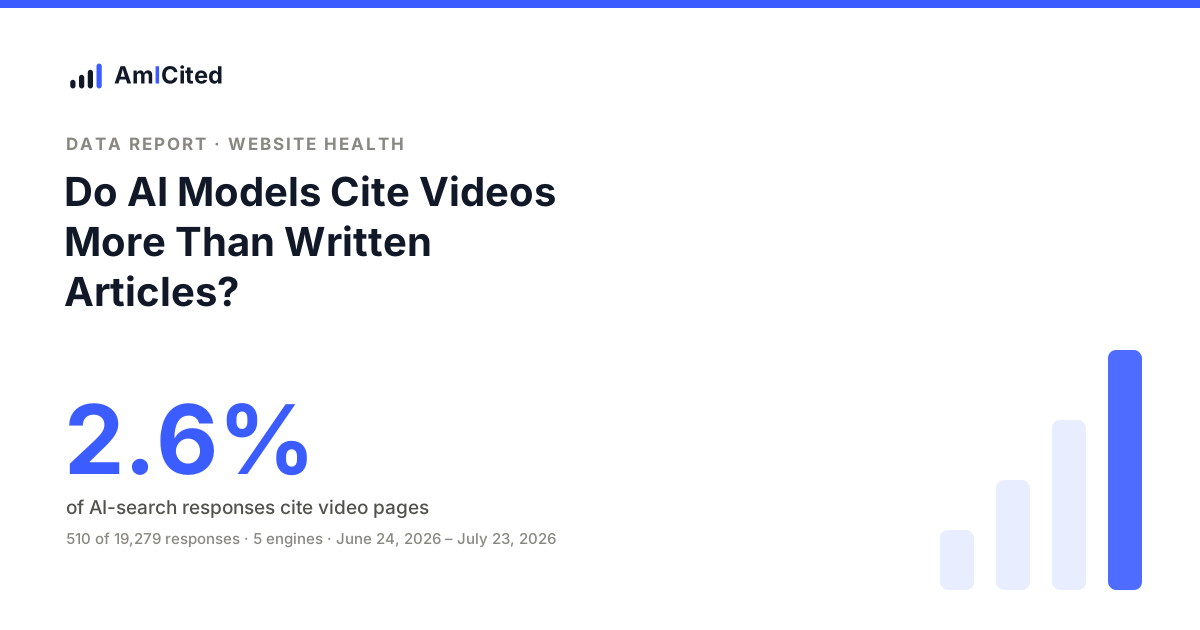
HTML is the default format for AI citations. Across all engines, written HTML pages are cited far more than any other format. If your content can live as an HTML page, that is the version that will earn citations.
PDFs are a niche citation format. Only 0.4% of AI responses cite PDFs. Use PDFs for formal documents where the format adds credibility, but always publish an HTML companion page.
Review sites are a secondary citation source. AI engines cite review sites at moderate rates, but vendor-produced content is cited more often. Maintain a presence on review sites, but prioritize your own content.
Practical recommendations
Default to HTML for all content. Unless there is a specific reason to use another format, publish content as HTML pages. This is the format AI engines cite.
Create HTML companions for existing PDFs and other formats. If you have valuable content in non-HTML formats, create HTML summary pages that capture the key points and link to the full document.
Monitor your format-specific citation rates. Use AmICited to track which formats are earning citations for your brand. If you are producing a lot of PDFs but earning few citations, consider switching to HTML.
Don’t abandon PDFs and review sites entirely. They serve purposes beyond AI citations (user trust, lead generation, SEO). But weight your investment toward HTML if AI citations are a priority.
Methodology
Computed from AmICited’s 1,905 tracked prompts (June 24, 2026 – July 23, 2026, 2026). A response counts as citing a PDF when a cited source URL’s path ends in .pdf; host domains are rolled up to the registrable level. The “why” section is interpretation, flagged as such: the dataset captures citation behaviour, not model reasoning.
 LinkedIn