


- Conversion rate optimization (CRO) is the work of getting a bigger share of the visitors you already have to buy, sign up or request a quote, instead of buying more traffic.
- It runs in a loop: research, hypothesis, prioritize, test, analyze, implement. Set the sample size before an A/B test starts and don’t stop it early.
- Watch revenue per visitor and average order value next to conversion rate. A change that adds orders but shrinks basket size is not always a win.
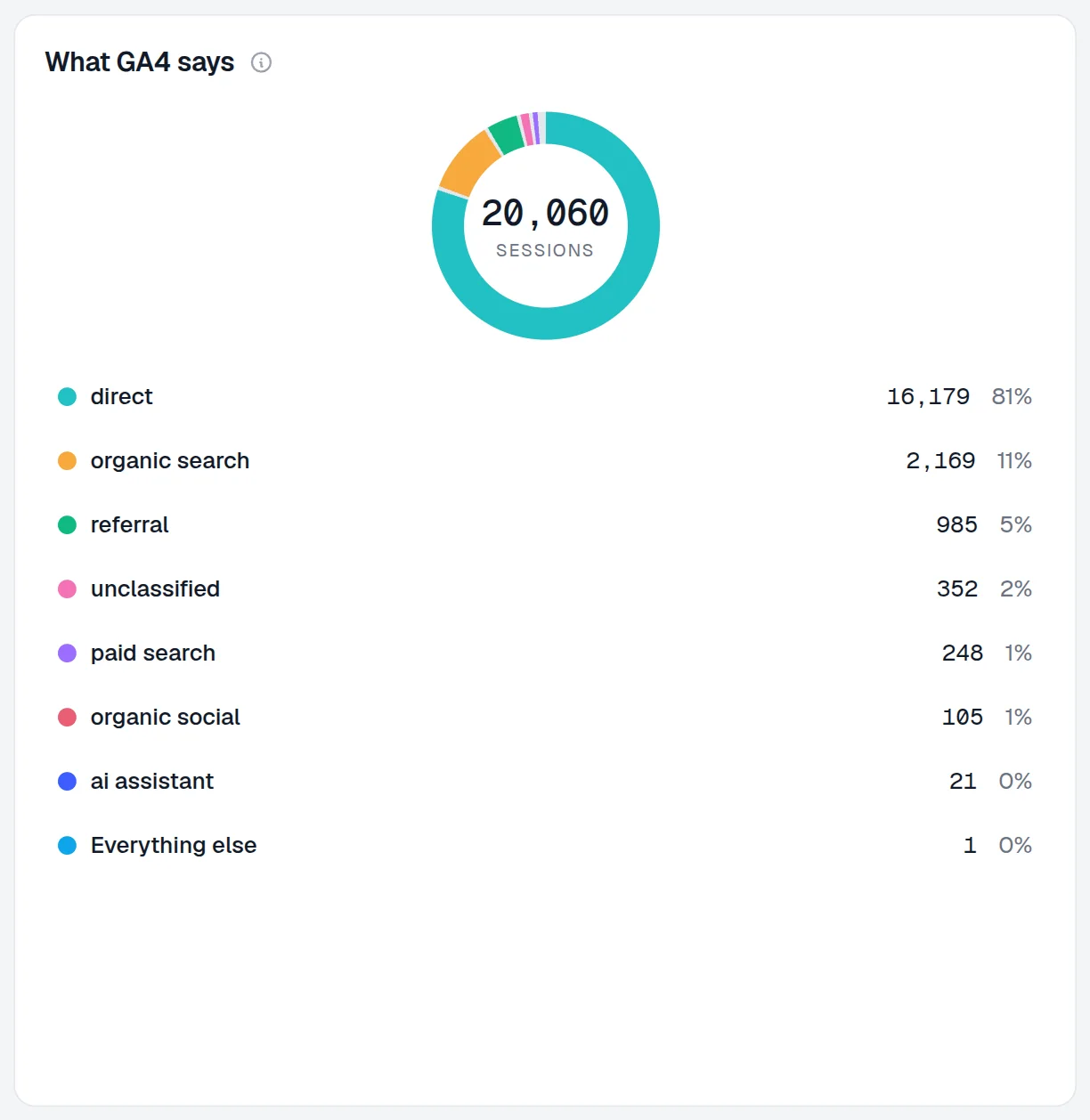
- Visitors from AI answers often land deep in the site with their mind half made up, so track AI traffic as its own segment.
Where AmICited fits
With a shop connected, AmICited’s Order mix report splits orders, revenue and average order value by status, B2B vs B2C, first vs repeat order, payment and carrier, so you can see whether a CRO change raised orders at the cost of order size.
See the Order mix report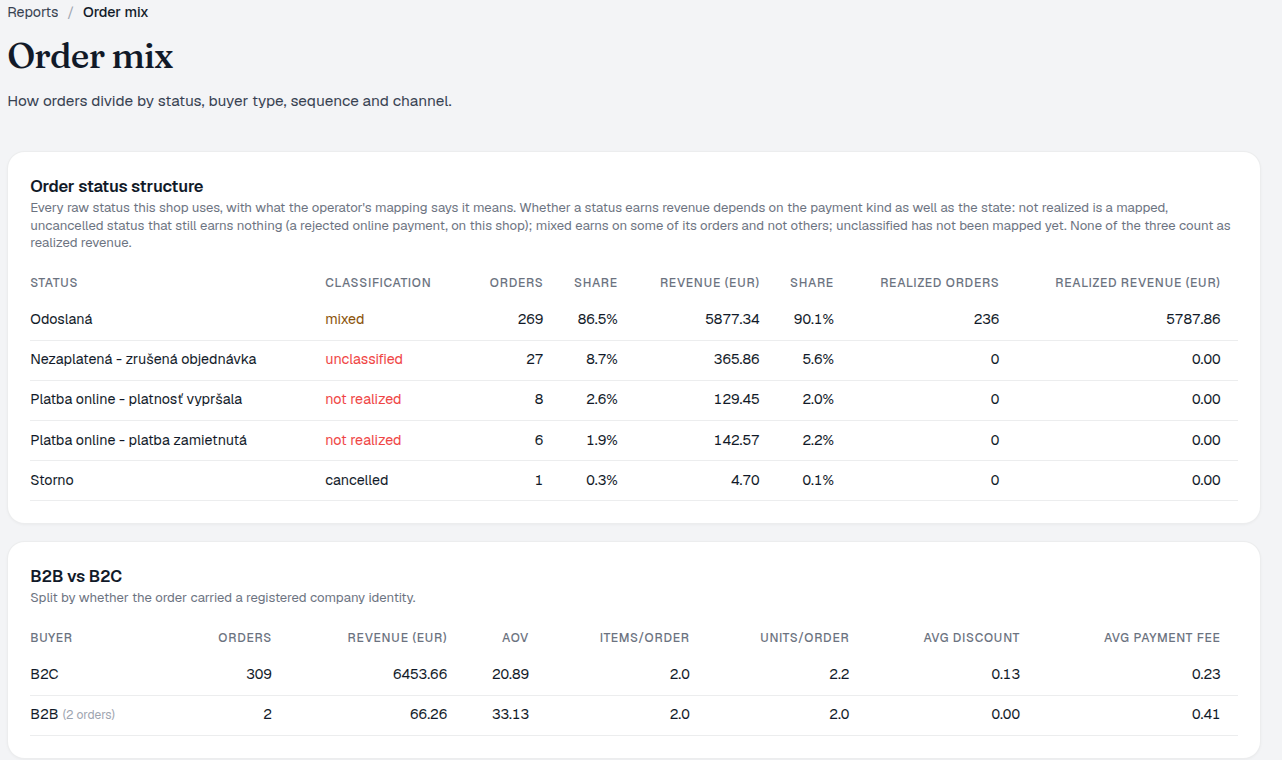
What Is Conversion Rate Optimization?
Conversion rate optimization (CRO) is the work of getting a bigger share of your visitors to do what you want them to do: buy, sign up, start a trial, request a quote. Instead of buying more traffic, you improve what happens after people arrive.
Ecommerce teams, SaaS marketers and lead-generation sites all practice CRO. It draws on data from Google Analytics 4 or similar tools, heatmaps, session recordings, customer surveys and usability tests, and it uses testing tools to compare versions of pages. The goal metric is conversion rate, but good CRO also keeps an eye on revenue per visitor and average order value, because a change that raises conversion rate by lowering order size isn’t always a win.
How Conversion Rate Optimization Works
Conversion rate = Conversions ÷ Sessions × 100
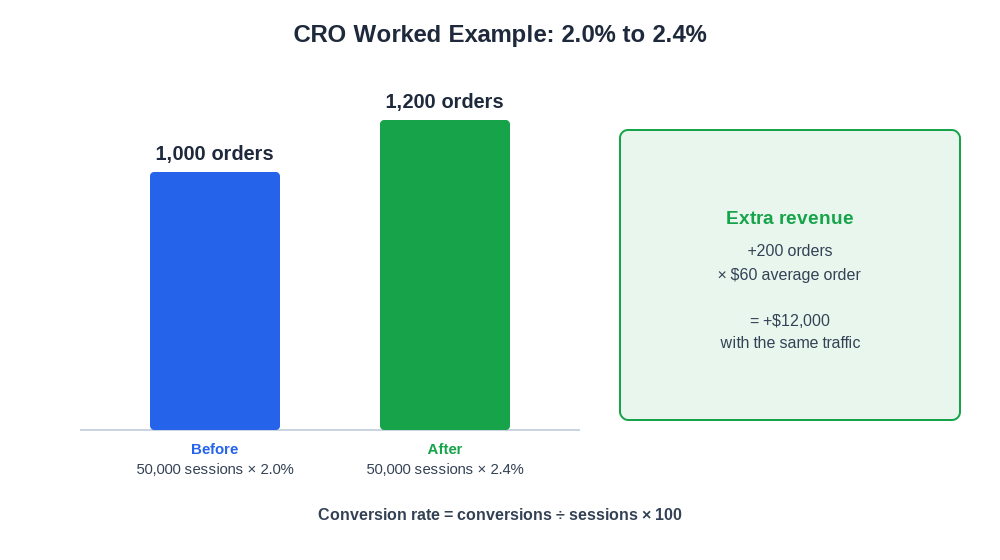
Here’s why small changes matter. A store with 50,000 sessions a month and 1,000 orders converts at 2.0%. If CRO work lifts that to 2.4% with the same traffic, the store gets 1,200 orders. At a $60 average order value, those 200 extra orders are worth:
200 × $60 = $12,000 in extra monthly revenue, without spending more on ads.
A typical CRO process runs in a loop:
- Research. Find where visitors drop off using funnel reports, such as the checkout funnel, and find out why with recordings, surveys and user tests.
- Hypothesis. Write a specific, testable statement: “Showing delivery dates on product pages will raise add-to-cart rate, because survey responses say shipping time is the top concern.”
- Prioritize. Score ideas by expected impact, confidence and effort. Frameworks like ICE or PIE help teams agree.
- Test. Run an A/B test or another controlled experiment, with the sample size set before launch.
- Analyze. Check the result for statistical significance, and look at segments (mobile vs desktop, new vs returning) before deciding.
- Implement and learn. Ship winners, record what you learned from losers, and feed it back into research.
CRO Testing Methods
| Method | What it compares | Traffic needed | Best for |
|---|---|---|---|
| A/B test | Two versions of one page or element | Moderate | Most changes: headlines, layouts, offers |
| A/B/n test | Three or more versions | Higher | Choosing between several ideas at once |
| Multivariate test | Combinations of several elements | High | High-traffic pages, interaction effects |
| Split URL test | Two different page URLs | Moderate | Full redesigns or new templates |
| Usability testing | How real people use the site | Low (5–10 users per round) | Finding problems, not proving fixes |
| Pre/post comparison | Before vs after a change | Any | Changes you can’t test; weakest evidence |
Sample size is where most CRO programs go wrong. With a 2.0% baseline conversion rate, detecting a lift to 2.4% (a 20% relative improvement) at 95% confidence and 80% power needs roughly 21,000 sessions per variant. For the store in the example, with 50,000 sessions a month, a two-version test would take close to a month. Smaller expected lifts need far more traffic: halving the lift you want to detect roughly quadruples the sample size.
Low-traffic sites often can’t reach significance on A/B tests for small changes. For them, usability testing plus bigger, bolder changes usually teaches more than testing button colors for months.
CRO vs SEO
SEO and CRO answer different questions. SEO asks “how do we get more qualified visitors?” CRO asks “how do we turn more of them into customers?” Revenue depends on both: sessions × conversion rate × average order value. Raising any one of the three by 10% raises revenue by 10%.
They can also conflict. A landing page stripped down for conversion may lose the content that helped it rank, and an SEO page stuffed with text may convert poorly. The best results come when both teams look at the same pages and the same data.

Stay Updated on AI Visibility Trends
Get the latest insights on AI mentions, brand monitoring, and optimization strategies.
Conversion Rate Optimization and AI Search
Visitors who arrive from AI answers in ChatGPT, Perplexity or Google AI Mode have often already compared options inside the chat. They may land deeper in the site, on a specific product or pricing page, with a clear question in mind. That changes CRO priorities: the landing page needs to confirm what the AI answer said (price, features, availability) and make the next step obvious.
It’s worth tracking AI traffic as its own segment in your CRO analysis. If it converts differently from organic search or paid traffic, pages that receive a lot of it may need their own tests.
Best Practices for Conversion Rate Optimization
- Start with research, not ideas. The best tests come from what users tell you and where data shows drop-offs.
- Fix bugs and speed first. Broken forms, slow pages and mobile layout issues are cheaper to fix than to test.
- Calculate sample size up front and don’t stop tests early because one version looks ahead.
- Measure revenue, not just conversion rate. Track revenue per visitor and average order value alongside it.
- Segment results. A test that wins on desktop and loses on mobile needs a different decision than one that wins everywhere.
- Document every test. A shared log of hypotheses and results prevents repeating failed ideas.
Common Conversion Rate Optimization Mistakes
The most damaging mistake is ending tests early or running them without enough traffic, which produces “winners” that disappear once shipped. Another is copying best practices from other sites without testing them, since what worked for a large retailer may not work for a niche B2B site.
Teams also optimize the wrong metric: a pop-up that doubles email signups but lowers purchases is a loss. Finally, many treat CRO as a series of cosmetic tweaks rather than looking at the offer itself. Price, shipping costs, return policy and product information usually matter far more than button color.