


Exit-Intent Popup
An exit-intent popup is an on-site message triggered when a visitor's behavior signals they are about to leave a page, such as moving the cursor toward the browser's close or back button. It typically offers a discount, email signup incentive, or reminder aimed at converting or capturing a visitor before they navigate away.
Definition of Exit-Intent Popup
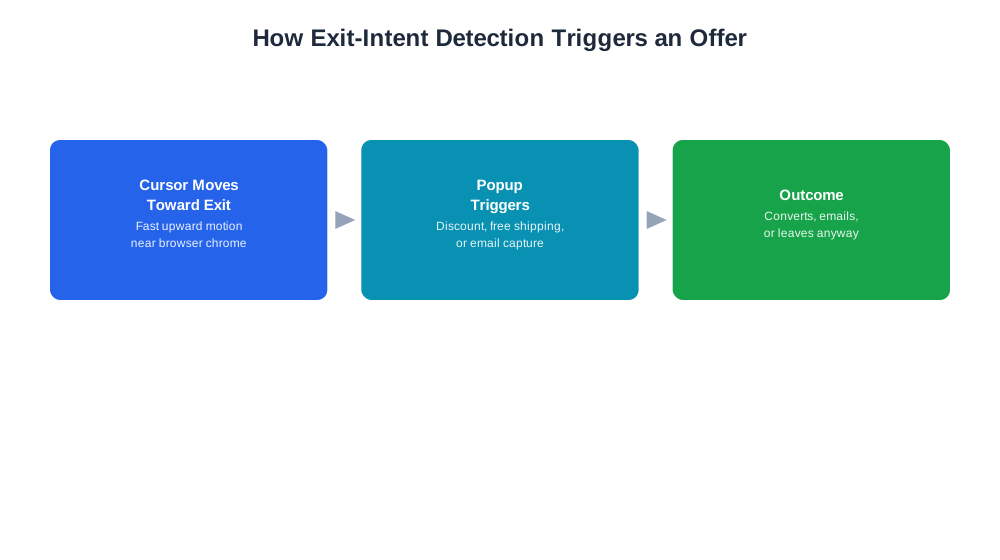
An exit-intent popup is an on-page overlay designed to appear at the precise moment a visitor’s behavior suggests they are about to leave a website without completing a purchase or providing contact information. On desktop browsers, the most common trigger is a sudden, fast upward movement of the mouse cursor toward the browser’s tab bar, address bar, or close button, a motion pattern strongly associated with a visitor about to close the tab or navigate elsewhere. The popup interrupts that moment with a targeted message, typically a discount code, a free shipping offer, an email signup incentive, or a reminder of items still sitting in the cart, aiming to convert the visitor or at minimum capture a way to reach them again before they’re gone.
How Exit-Intent Popups Work
Exit-intent detection relies on tracking scripts running in the browser that monitor cursor position and velocity in real time. When the tracked movement matches a pattern consistent with heading toward the browser chrome, typically a rapid upward trajectory near the top of the viewport, the script triggers the popup to display before the page actually unloads. Because this detection method depends on a mouse cursor, it works reliably on desktop but is far less effective on mobile devices, where exit-intent tools instead rely on proxy signals like a back-button tap, extended inactivity, or a fast scroll toward the top of the page.
A worked example: a shopper adds a jacket to their cart, browses a few more pages, and then moves their cursor toward the browser’s close button without completing checkout. An exit-intent popup triggers immediately, offering 10% off if they complete their purchase in the next 15 minutes, along with a visible countdown. Some percentage of those shoppers who see the offer will complete the purchase they were about to abandon; others will dismiss the popup and leave regardless, but a portion of that group may still enter their email in exchange for the discount, giving the store a way to follow up later even without an immediate sale.

Ready to Monitor Your AI Visibility?
Track how AI chatbots mention your brand across ChatGPT, Perplexity, and other platforms.
Why Exit-Intent Popups Matter for E-commerce Brands
Exit-intent popups target a moment of genuine hesitation rather than trying to interrupt browsing at an arbitrary point, which is what makes them a relatively efficient conversion tactic when used well: the visitor has already shown interest by browsing or adding items to their cart, and the popup is a last opportunity to address whatever is causing them to leave, whether that’s price sensitivity, indecision, or simple distraction. Even when the popup doesn’t convert the visitor into an immediate sale, capturing an email address in exchange for a future discount preserves the ability to re-engage that visitor through remarketing rather than losing the interaction entirely.
The risk is that exit-intent popups are a blunt instrument if deployed without segmentation or restraint. A generic popup shown to every visitor regardless of where they are in the funnel, how many times they’ve already seen it, or whether they have items in their cart tends to feel intrusive rather than helpful, and can train repeat visitors to simply expect and wait for a discount, undermining full-price sales in the process.
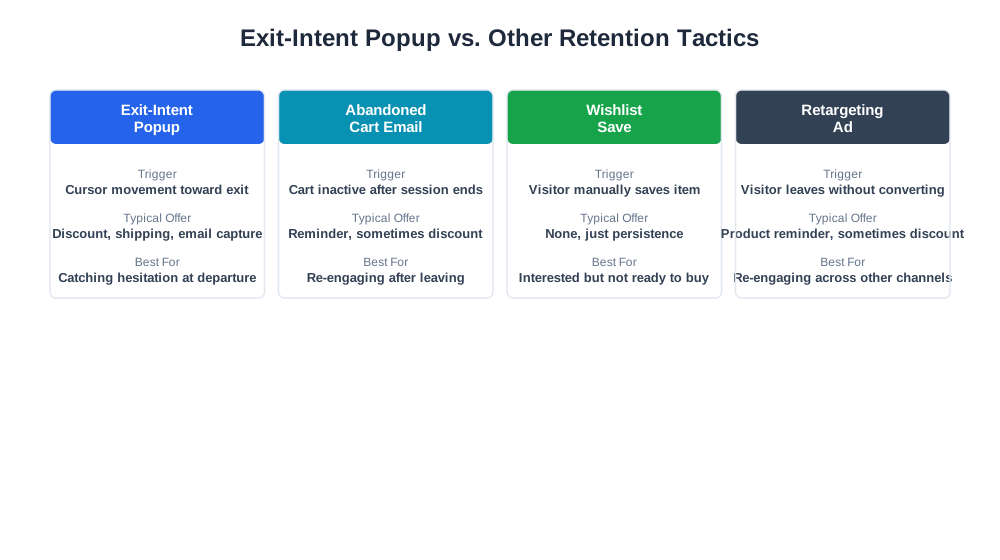
Comparison Table: Exit-Intent Popup vs. Other Retention Tactics
| Tactic | Trigger | Typical Offer | Best For |
|---|---|---|---|
| Exit-Intent Popup | Cursor movement suggesting departure | Discount, free shipping, email capture | Catching hesitation at the moment of leaving |
| Abandoned Cart Email | Cart left inactive after session ends | Reminder, sometimes discount | Re-engaging after the visitor has already left |
| Wishlist Save | Visitor manually saves an item | None, just persistence of interest | Visitors not ready to buy but interested |
| Retargeting Ad | Visitor leaves without converting | Product reminder, sometimes discount | Re-engaging across other channels after departure |
Stay Updated on AI Visibility Trends
Get the latest insights on AI mentions, brand monitoring, and optimization strategies.
Exit-Intent Popups and AI-Driven Commerce
Exit-intent popups are a browser-based tactic tied to human browsing behavior, specifically cursor movement, which means they have limited relevance to AI-mediated shopping flows where a shopping agent, rather than a human with a mouse, is navigating and completing a purchase on a customer’s behalf through tools like ChatGPT Instant Checkout. As more purchase volume shifts toward these agentic flows, exit-intent popups as a tactic will likely matter less for that segment of traffic, while remaining relevant for the substantial share of shoppers still browsing and buying directly through a store’s website. This makes it worth tracking exit-intent popup performance by traffic source, since its effectiveness may quietly decline as a proportion of overall orders even while it continues performing consistently among directly browsing visitors.
On the analytics side, the real test of an exit-intent discount program is whether it drives incremental revenue or simply discounts sales that would have happened anyway. AmICited’s eshop analytics reconcile promo code usage against order and revenue data, making it possible to see whether exit-intent discount codes are disproportionately used by shoppers who would have completed their purchase regardless, versus genuinely recovering orders that would otherwise have been lost.
Best Practices for Exit-Intent Popups
- Segment the offer based on where the visitor is in the funnel; a cart-stage visitor is a better candidate for a discount than a first-time browser who hasn’t added anything yet
- Limit how often a returning visitor sees the same popup, since repeated exposure trains shoppers to wait for a discount rather than buy at full price
- Make the popup easy to dismiss, since a hard-to-close overlay creates frustration that can outweigh any conversion benefit
- Test offer type against audience segment, since an email capture incentive may outperform a discount for early-stage browsers, while a cart-specific reminder may work better for shoppers who have already added items
- Track incremental conversion from exit-intent discount codes specifically, rather than assuming every redemption represents revenue that would otherwise have been lost
Common Exit-Intent Popup Mistakes
A frequent mistake is showing the same generic offer to every visitor regardless of funnel stage, missing the more effective approach of tailoring the message to a first-time browser versus a shopper with items already in cart. Another common issue is triggering the popup too aggressively, for instance on every page view rather than only on genuine exit-intent signals, which trains visitors to ignore or immediately dismiss it rather than engage with a message that was meant to feel timely and relevant. Some stores also offer a discount that’s too generous relative to margin, effectively training a share of the customer base to always wait for the exit-intent offer rather than purchasing at full price, quietly eroding margin across the customer base over time. A further pitfall is neglecting mobile-specific exit-intent detection, relying on a desktop cursor-based trigger that simply doesn’t fire for the growing share of shoppers browsing on mobile devices, leaving a large segment of traffic with no exit-intent capture at all. Finally, some brands never measure whether exit-intent discount codes are actually driving incremental revenue, assuming every redemption represents a saved sale, when in many cases a meaningful share of redemptions come from shoppers who would have completed the purchase at full price regardless.