


Reorder Rate
Reorder rate is the percentage of customers who purchase a given product again within a defined window, typically measured against that product's own historical repurchase cadence. It is most relevant for consumable or replenishable goods, where the expected time between purchases can be estimated and used to identify customers who are due, or overdue, to buy again.
Definition of Reorder Rate
Reorder rate measures how often customers repurchase a specific product within the timeframe that product’s own purchase history suggests they should. Unlike a general repeat purchase metric, reorder rate is anchored to an individual product’s replenishment cycle: a customer who buys a 30-day supply of a supplement establishes an expected cadence of roughly once a month, and reorder rate tracks whether they, and customers like them, actually come back within that window. It applies most naturally to consumable and replenishable goods such as supplements, skincare, coffee, pet food, and household staples, where usage naturally depletes the product on a predictable schedule.
How Reorder Rate Is Calculated
The most common approach divides the number of customers who reordered within their expected window by the number who were due to reorder in that period:
Reorder Rate = Customers Who Reordered On Time / Customers Due to Reorder × 100
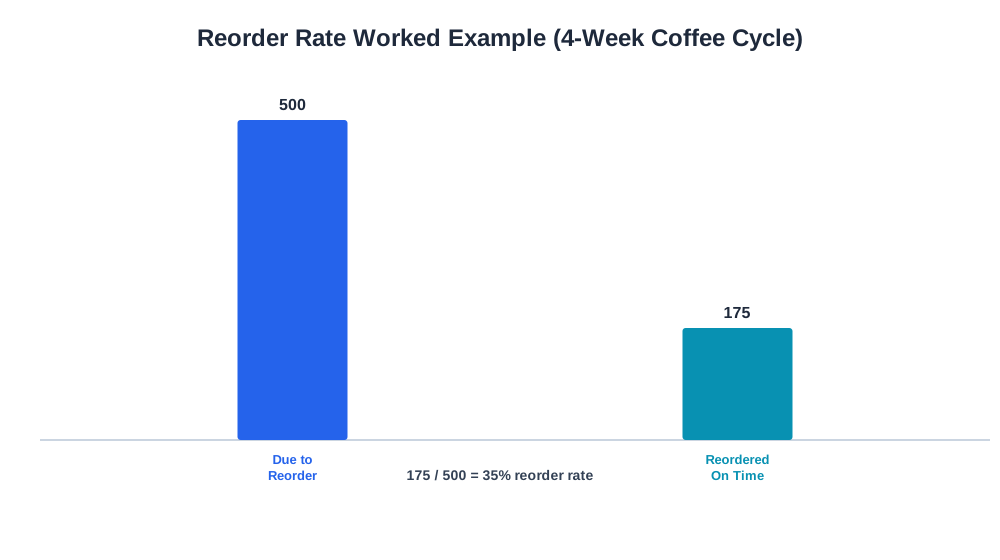
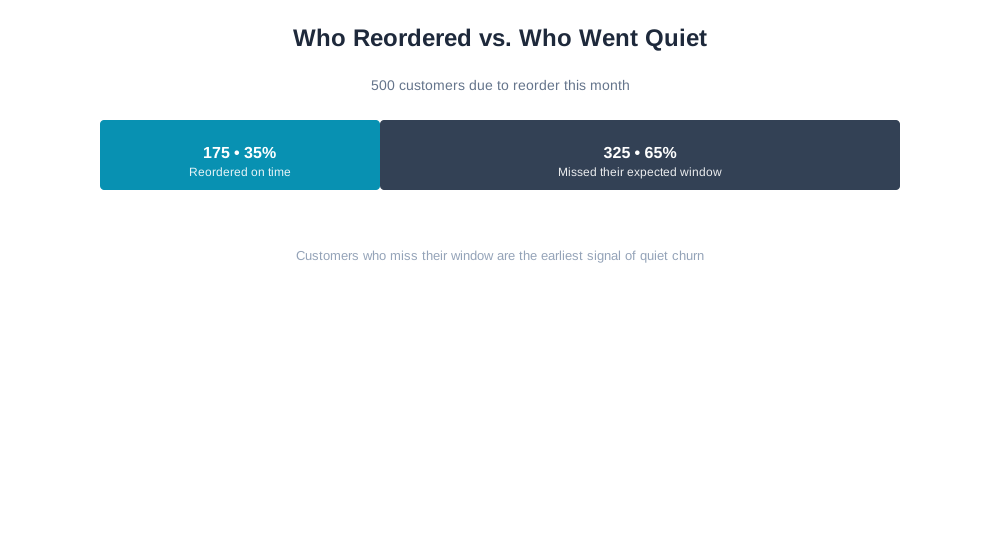
A worked example: a coffee subscription-adjacent product has a typical 4-week usage cycle. In a given month, 500 customers are due to reorder based on their individual past purchase timing. Of those, 175 place a new order within their expected window. The reorder rate is 35%. The remaining 65% represent customers who either switched products, switched brands, or simply have not gotten around to it yet, each of which calls for a different outreach approach.

Ready to Monitor Your AI Visibility?
Track how AI chatbots mention your brand across ChatGPT, Perplexity, and other platforms.
Why Reorder Rate Matters for E-commerce Brands
For consumable products, reorder rate is one of the earliest available signals of quiet churn. A customer who quietly stops reordering weeks before any broader retention or lifetime value report would flag them as at-risk is much easier to win back with a timely nudge than one who has already been gone for months. Reorder rate also helps separate genuine product satisfaction from one-time trial purchases: a low reorder rate on an otherwise well-reviewed consumable can point to a pricing, packaging size, or subscription friction issue rather than a product quality problem.
Reorder Rate and AmICited’s Replenishment Tooling
Because reorder timing is specific to each customer’s own history rather than a fixed calendar rule, spotting who is overdue at scale requires comparing individual purchase cadence against individual purchase behavior, not a single store-wide average. AmICited’s eshop_get_replenishment tool is built around exactly this: it surfaces customers who are due or overdue for a reorder, ranked by how far past their own typical cadence they are, so replenishment campaigns can be timed to the individual customer rather than sent on a generic fixed schedule that either arrives too early to be relevant or too late to catch the customer before they’ve already switched elsewhere.
Stay Updated on AI Visibility Trends
Get the latest insights on AI mentions, brand monitoring, and optimization strategies.
Best Practices for Reorder Rate
- Calculate reorder windows per product or product category, since usage cycles vary widely even within a single catalog
- Trigger replenishment reminders based on each customer’s own historical cadence rather than a single fixed interval applied to everyone
- Segment customers who miss their reorder window into “slightly late” versus “long overdue,” since the right outreach differs for each
- Use reorder rate trends by product to catch early signs of a formulation, packaging, or pricing change hurting repurchase before it shows up in broader churn metrics
Common Reorder Rate Mistakes
A common mistake is applying one reorder window to an entire catalog rather than calculating it per product, which produces reminders that arrive too early for slow-cycle products and too late for fast-cycle ones. Another frequent issue is treating a missed reorder window as an immediate churn event rather than a graduated signal; customers who are a few days late are a very different outreach case than customers who are months overdue, and blending them into one segment wastes the urgency of the message. Some brands also ignore reorder rate entirely in favor of blunter repeat purchase or lifetime value metrics, missing the earlier warning window that product-specific reorder tracking provides.