


- Retargeting shows ads to people who visited your site or app and left without buying, on social, display, video and connected TV.
- Audiences come from a pixel or tag on your pages, or from customer lists the ad platform matches to its users. Meta keeps website visitors in an audience for up to 180 days.
- Split audiences by intent and recency (cart abandoners from the last few days are worth more than old homepage visitors), exclude recent buyers and cap frequency.
- Platform reports over-credit retargeting because it reaches people who were about to buy anyway. A holdout group shows how many sales it really added.
Where AmICited fits
AmICited’s Meta Ads Audience Saturation report tracks daily spend, reach, frequency and CTR, so you can see when a retargeting audience keeps seeing the same ads. Its traffic sources report splits GA4 sessions by channel, AI assistants included.
See audience saturation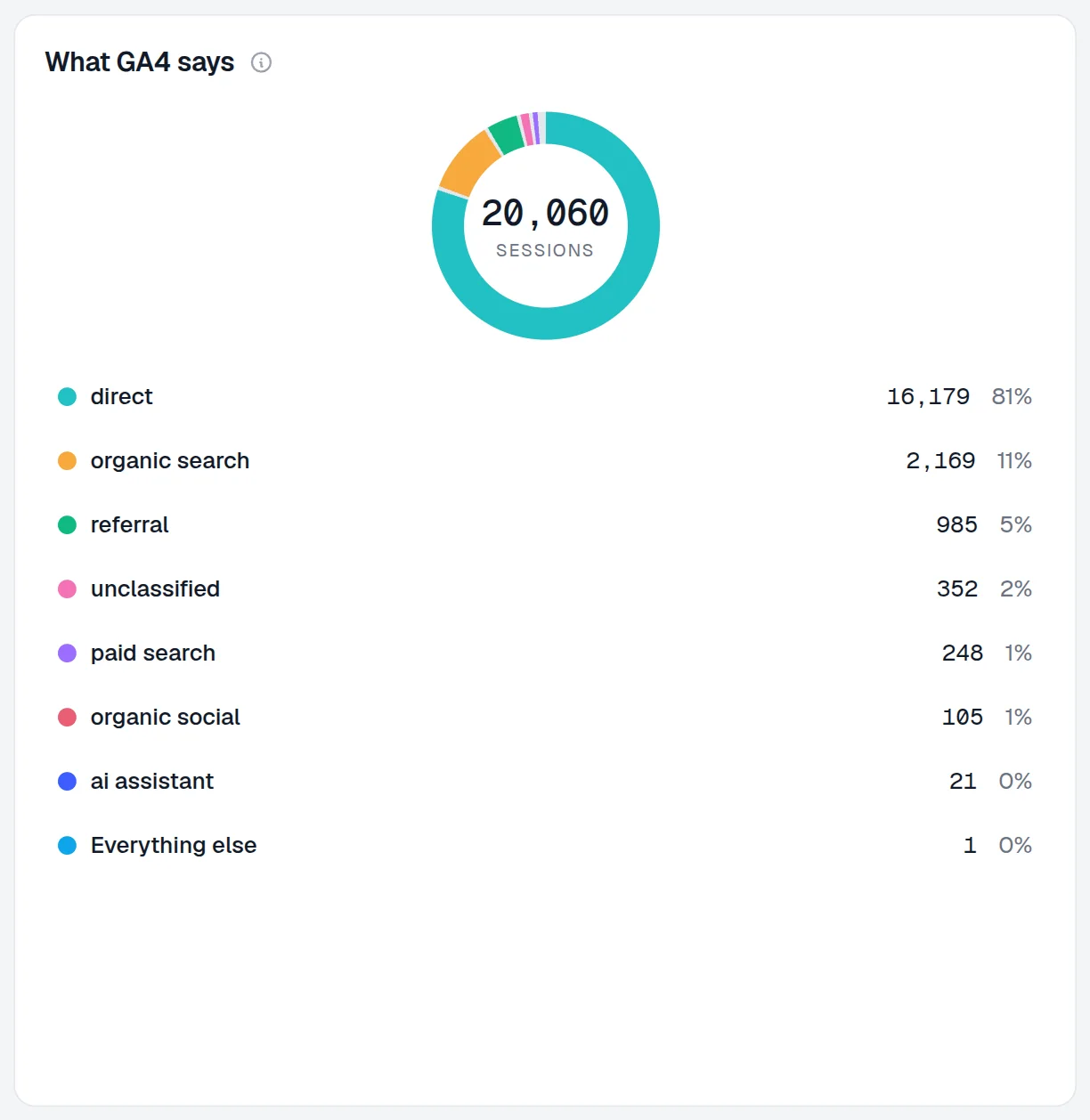
What Is Retargeting?
Retargeting is advertising aimed at people who have already interacted with your brand, most often by visiting your website, and left without doing what you wanted. Someone looks at a pair of boots, closes the tab, and over the next few days sees an ad for those boots on Instagram, a news site or YouTube. That’s retargeting.
It’s one of the most common paid tactics in ecommerce, SaaS and lead generation. You’ll find it as “website custom audiences” in Meta Ads Manager, “your data segments” (formerly remarketing lists) in Google Ads, and as site-visitor audiences in most demand side platforms. Because the audience already knows you, retargeting usually converts better and costs less per conversion than prospecting, but its reach is limited by how much traffic you already get.
How Retargeting Works
There are two main types:
- Pixel-based retargeting. A snippet of code (the Meta Pixel, the Google tag, a DSP pixel) fires when someone visits your pages. The platform adds that browser or logged-in user to an audience, which you can define by page, event or time since the visit.
- List-based retargeting. You upload a list of customer emails or phone numbers, which the platform hashes and matches to its users. This works for past buyers, leads and newsletter subscribers, even if they haven’t visited recently.
From there, you build segments (for example, product viewers in the last 7 days, cart abandoners, past buyers to exclude), assign ads and bids to each, and set a frequency cap so the same person doesn’t see your ad endlessly.
The retargeting window matters as much as the audience. Each platform lets you set how long someone stays in an audience after their last visit: Meta website custom audiences can keep people for up to 180 days, and Google Ads data segments allow longer membership durations. Longer isn’t better by default. A visitor from yesterday and a visitor from five months ago are very different prospects, so most accounts split audiences into recency bands, such as 0–7, 8–30 and 31–90 days, with lower bids and softer messages as the window gets older.
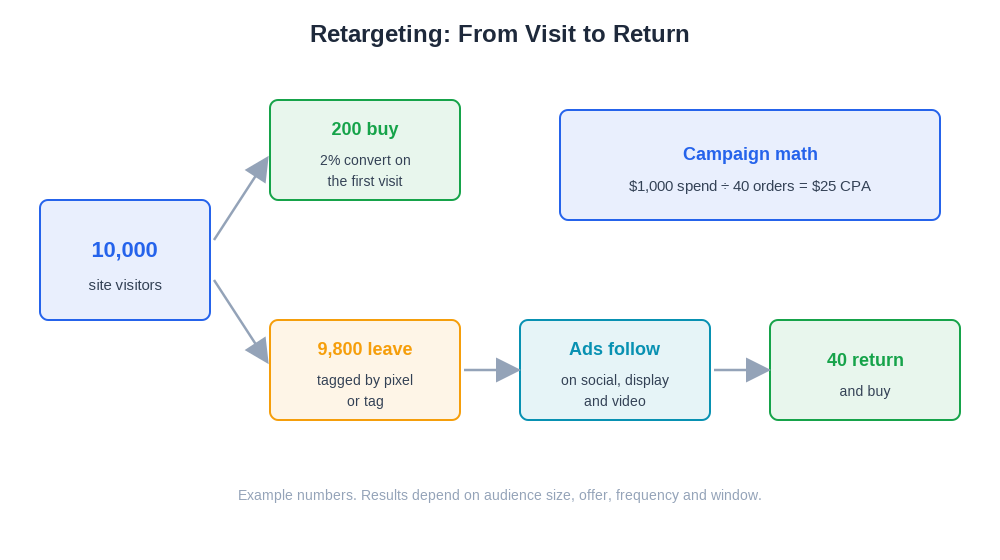
A simple worked example: your store gets 10,000 visitors in a month and 2% buy on the first visit, which is 200 orders. The other 9,800 leave. You retarget them with $1,000 of spend and 40 of them come back and buy. Your retargeting cost per acquisition is:
CPA = Spend ÷ Conversions = $1,000 ÷ 40 = $25
Compare that $25 with your margin per order, not just with your prospecting CPA. Some of those 40 people would have come back anyway, which is why incrementality tests with a holdout group matter for retargeting more than for most channels.
Retargeting vs Remarketing
The two words are often used as synonyms. When teams do separate them, the split looks like this:
| Retargeting | Remarketing | |
|---|---|---|
| Typical meaning | Paid ads to past site or app visitors | Re-engaging past customers or contacts |
| Main channels | Display, social, video, CTV | Email, SMS, also paid audiences |
| Data source | Pixels, tags, platform user IDs | CRM and customer lists |
| Typical goal | Win back a visitor who didn’t convert | Repeat purchase, upsell, win-back |
| Google Ads naming | Uses “remarketing” for both | Uses “remarketing” for both |
If you want the longer comparison, see our remarketing entry. In practice, the important split is not the label but the audience: non-converting visitors, cart abandoners and past buyers each need a different message and a different bid.
Retargeting and AI Search
AI answers change who ends up in your retargeting pool. A shopper may compare brands inside ChatGPT, Perplexity or Google AI Mode and only click through to the one or two sites the answer recommends. Those visitors arrive further along in their decision, and once they land, your pixel treats them like any other visitor. People who read an answer that named you but never clicked are invisible to retargeting.
That gap is why it helps to watch AI traffic as its own segment and to know how often AI answers mention you in the first place. If AI answers rarely name your brand, your retargeting audience shrinks no matter how good your ads are.

Stay Updated on AI Visibility Trends
Get the latest insights on AI mentions, brand monitoring, and optimization strategies.
Best Practices for Retargeting
- Segment by intent and recency. Cart abandoners from the last 3 days deserve a higher bid than homepage visitors from 60 days ago.
- Exclude recent buyers. Showing an ad for the product someone bought yesterday wastes money and annoys customers. Use purchase events or customer lists as exclusions.
- Cap frequency. Watch frequency and CTR together. Rising frequency with falling CTR is a classic sign of ad fatigue.
- Match the ad to the page viewed. Dynamic product ads that show the exact items someone browsed usually beat a generic brand ad.
- Give a reason to return. A shipping threshold, a review, a size guide or a limited offer gives the visitor something new to act on.
- Measure with a holdout. Keep a slice of the audience unexposed so you can see how many conversions retargeting actually added.
Common Retargeting Mistakes
The most expensive mistake is crediting retargeting with sales that would have happened anyway. Last-click and view-through attribution both favor retargeting because it targets people who were already close to buying, so platform-reported ROAS often looks much higher than the real lift. Another frequent problem is one big “all visitors, 180 days” audience with one ad, which spends most of the budget on cold, low-intent visitors.
Teams also forget privacy and consent. Pixels that fire before consent where consent is required, or audiences built from data you weren’t allowed to use for ads, create legal risk and can get ad accounts restricted. Finally, many brands never refresh retargeting creative, so the same small audience sees the same ad for months and conversion rate slowly drops.