


- Remarketing shows ads or sends messages to people who already visited your site or app, watched your videos or are on your customer list.
- Segments are built from a tag or pixel and from uploaded lists. Google Ads can keep people in a segment for up to 540 days.
- Attributed ROAS usually flatters remarketing, because some of those people would have come back anyway. A holdout test shows the real lift.
- Exclude recent buyers and cap frequency, or the same ad keeps following people after they bought.
Where AmICited fits
AmICited’s Meta Ads reports track daily spend, reach, CTR and frequency to show when an audience sees the same ads too often, and compare Meta’s attributed conversions with the orders your shop actually received.
See Meta ad saturationWhat Is Remarketing?
Remarketing is marketing aimed at people who have already interacted with your business. A shopper visits your store, looks at a pair of boots, and leaves. Over the next few days, they see ads for those boots on news sites and YouTube, or get an email reminding them about their cart. That is remarketing: using what you know about past visitors to bring them back.
The term is most closely tied to Google Ads, where remarketing lists (now called “your data segments”) are built from site visitors, app users, YouTube viewers and uploaded customer lists. Meta, Microsoft Advertising, LinkedIn, TikTok and programmatic platforms offer the same capability, which they usually call retargeting. Email remarketing, such as abandoned cart recovery messages, uses the same idea on a different channel.
How Remarketing Works
- Tag your site or app. The Google tag, Meta Pixel or another platform tag records visits and actions such as product views or add-to-cart.
- Build segments. Define who to target: all visitors in the past 30 days, people who viewed a product, cart abandoners, past buyers.
- Set membership duration. How long people stay in the segment. Google Ads allows up to 540 days.
- Create ads for each segment. A reminder for cart abandoners, a related product for past buyers, a testimonial for blog readers.
- Run campaigns. Display, YouTube, Search (remarketing lists for search ads), Performance Max or social.
- Exclude converters. Remove people who bought so you do not keep paying to show them the same product.
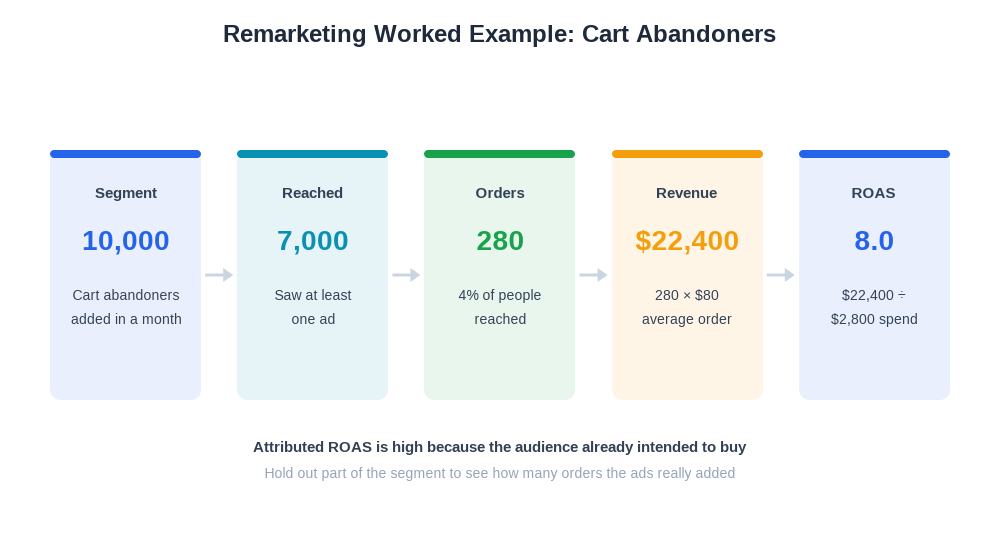
Remarketing usually has low reach but high return per impression, because the audience already knows you. Here is a worked example for one month:
- Cart abandoners added to the segment: 10,000
- People actually reached by ads: 7,000
- Of those, 4% return and buy: 280 orders
- Average order value $80: $22,400 attributed revenue
- Ad spend: $2,800, so attributed ROAS is 8.0
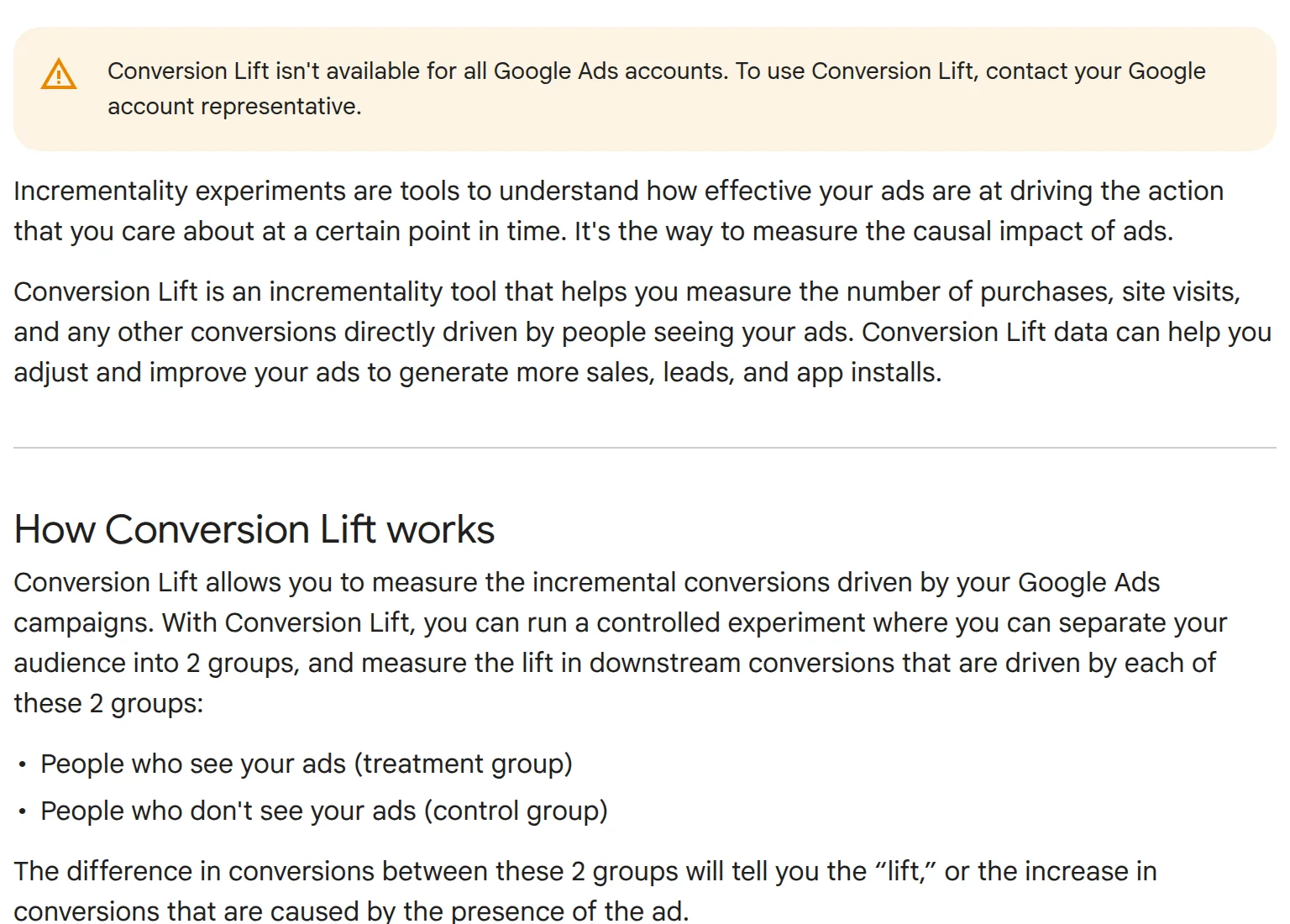
That looks excellent, but some of those 280 people would have come back on their own. A holdout test, where a share of abandoners sees no ads, tells you how many orders the campaign actually added. Remarketing often shows a high attributed ROAS and a lower incremental one.
Types of Remarketing
| Type | Who you reach | Where | Good for |
|---|---|---|---|
| Standard remarketing | Past site or app visitors | Display, YouTube, social | Brand reminders |
| Dynamic remarketing | Visitors who viewed specific products | Display, Performance Max, Meta | Ecommerce product recovery |
| Remarketing lists for search ads (RLSA) | Past visitors who now search on Google | Google Search | Bidding higher for warm searchers |
| Video remarketing | People who watched your YouTube videos | YouTube, Display | Moving viewers toward action |
| Customer list remarketing | Uploaded emails of customers or leads (Customer Match) | Search, YouTube, Gmail, Meta | Upsell, win-back |
| Email remarketing | Known contacts who abandoned a cart or browsed | Cart recovery, replenishment |
Dynamic remarketing needs a product feed, usually from Google Merchant Center, so ads can show the exact item and price.
Remarketing lists for search ads deserve a special mention. They let you bid higher when a past visitor searches a broad term, such as “running shoes”, that would be too expensive to target for everyone. The same keyword becomes profitable because the audience already knows your store.
Remarketing vs Retargeting
The two words are used interchangeably in most marketing teams. When people do draw a line, retargeting refers to paid ads based on browsing behavior, and remarketing is the broader idea of re-engaging known people, including by email. Google uses “remarketing” for its ad feature, and Meta and most ad tech use “retargeting”. The mechanics are the same either way.

Stay Updated on AI Visibility Trends
Get the latest insights on AI mentions, brand monitoring, and optimization strategies.
Remarketing and AI Search
Remarketing depends on a first visit, and AI search is changing where first visits come from. When ChatGPT, Perplexity or Google AI Overviews answer a question without sending the user to your site, there is no pixel fire and no one to remarket to. When an AI answer does send a visitor, that person often arrives with a clear intent and is valuable to remarket to. Making sure AI answers cite your pages, which AmICited’s Source & Citation Intelligence tracks, keeps feeding your remarketing segments.
Best Practices for Remarketing
- Segment by intent: cart abandoners, product viewers and blog readers need different messages.
- Use short membership windows for high-intent segments, often 7–30 days.
- Always exclude recent purchasers from product recovery campaigns.
- Cap frequency so people see you a few times, not dozens.
- Use dynamic remarketing for ecommerce so ads show the exact products viewed.
- Run a holdout test before scaling budget to check incremental lift.
- Respect consent requirements and keep sensitive categories out of segments.
Common Remarketing Mistakes
The most visible mistake is following people for weeks with the product they already bought. It wastes money and annoys customers. Exclude converters and shorten windows. A related mistake is no frequency cap, which leads to the “this ad is following me everywhere” feeling that damages brand perception.
Teams also treat remarketing ROAS as proof it works. Because remarketing targets people already likely to buy, attributed numbers flatter it more than any other campaign type. Other errors: one generic ad for every segment, lumping all visitors into a single list, and building segments so small they barely deliver. Cart abandonment rate tells you how large the recoverable audience really is.