What Are Google AI Overviews?
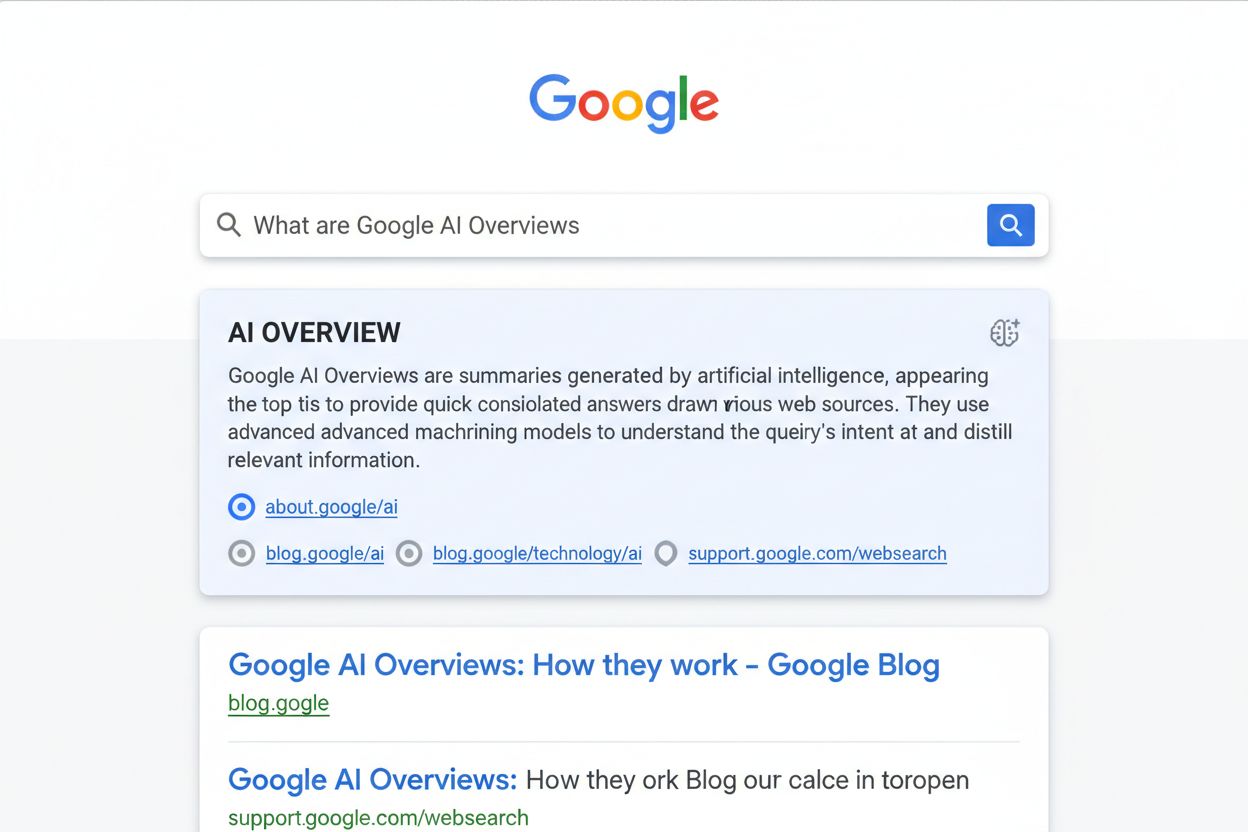
Google AI Overviews are AI-generated summaries that synthesize information from multiple sources to answer user queries directly within search results. These overviews appear at the top of the search results page, positioned above traditional organic listings, and have become a dominant feature in Google’s search interface. Rather than directing users to click through to websites, AI Overviews extract and compile relevant information from 3-8 average sources, presenting a comprehensive answer without requiring users to leave the search results page. Understanding what Google AI Overviews are and how they function is essential for any digital marketing strategy in 2025, as they fundamentally change how search visibility is achieved and measured.
The Shift from Rankings to Citations
The emergence of Google AI Overviews has fundamentally shifted the metrics that matter in SEO, moving focus away from traditional rankings toward citation visibility and source attribution. Research shows that when AI Overviews appear for a query, position 1 results experience a 40-60% decline in click-through rates, as users find their answers directly in the overview without clicking through to websites. This dramatic shift means that being ranked first no longer guarantees traffic—instead, being cited as a source in the AI Overview becomes the primary driver of visibility and user engagement. The new success metrics for SEO now include citation frequency, branded search volume, domain authority improvements, and competitive share of voice, rather than relying solely on keyword rankings and organic CTR.
| Metric | Traditional SEO Era | AI Overviews Era |
|---|---|---|
| Primary Success Metric | Keyword Rankings (Position 1-10) | Citation Frequency in AI Overviews |
| CTR Impact | Position 1 = 30-40% CTR | Position 1 = 15-25% CTR (40-60% decline) |
| Traffic Source | Organic clicks from blue links | Direct citations + branded searches |
| Visibility Zone | Below-the-fold results | Top of SERP (AI Overview section) |
| Citation Frequency | Not tracked | 3-8 sources per overview (critical metric) |

Ready to Monitor Your AI Visibility?
Track how AI chatbots mention your brand across ChatGPT, Perplexity, and other platforms.
Citations vs Traditional Rankings: Understanding the Difference
Being cited in a Google AI Overview offers distinct advantages over traditional ranking positions, particularly when it comes to branded traffic and immediate visibility. When your content is selected as a source in an AI Overview, users see your domain name and brand directly in the search results, creating a 2.3x increase in branded search traffic as users recognize and click on your brand. Citations in AI Overviews provide immediate visibility to users searching for information, regardless of whether your page ranks in the top 10 positions, making source attribution a more reliable traffic driver than traditional rankings. This shift emphasizes the importance of being recognized as an authoritative source rather than simply optimizing for keyword rankings.
E-E-A-T: The Foundation of AI Overview Visibility
Google’s AI systems prioritize content that demonstrates strong E-E-A-T signals—Experience, Expertise, Authoritativeness, and Trustworthiness—when selecting sources for AI Overviews. These signals help AI systems identify which sources are most reliable and valuable for answering user queries, making E-E-A-T optimization critical for AI visibility. Content that clearly demonstrates the author’s experience, shows genuine expertise and builds user trust fits what Google asks for, although no published study measures how much it changes AI Overview citations. Websites that invest in building these signals across their content will see improved citation frequency and stronger positioning as authoritative sources in their industry.
Key E-E-A-T Signals That AI Systems Prioritize:
- Author Credentials & Expertise - Detailed author bios with relevant qualifications, certifications, and years of experience in the field
- Content Depth & Comprehensiveness - Thorough coverage of topics with original insights, data, and examples that go beyond surface-level information
- User Reviews & Testimonials - Real customer feedback, case studies, and social proof demonstrating the value and reliability of your content
- Domain Authority & Backlinks - High-quality backlinks from authoritative sources and recognition from industry leaders and publications
- Content Freshness & Updates - Regular maintenance and updates to ensure accuracy, with clear dateModified timestamps showing ongoing investment
Stay Updated on AI Visibility Trends
Get the latest insights on AI mentions, brand monitoring, and optimization strategies.
Technical Implementation: Making Your Content AI-Friendly
Technical foundations matter because a page must be indexed and eligible to show a snippet in Google Search to be used as a supporting link in AI Overviews. Google says there are no additional technical requirements for AI features and no special schema.org markup to add, so focus on crawlability, indexing, clean HTML and page experience. Structured data such as Article, Person and Organization markup can still support normal SEO and rich results, but it is not a requirement for AI Overviews. For the full list of what Google says you do and don’t need, read Google’s AI optimization guide explained.
Content Strategy for AI Overview Visibility
A successful content strategy for AI visibility requires comprehensive topic coverage, clear content hierarchies, direct answer formats, consistent content freshness, and demonstrated topical authority. Rather than targeting individual keywords, content should address entire topic clusters with depth and nuance, positioning your domain as the go-to resource for specific subject areas. AI systems favor content that directly answers user questions in clear, scannable formats, making it easier for the AI to extract relevant information for overviews. Building topical authority through interconnected, comprehensive content signals to AI systems that your domain is a reliable source for information within your niche, increasing citation frequency and visibility.
Measuring Success: New KPIs for the AI Era
Measuring success in the age of AI Overviews requires tracking new key performance indicators that reflect how AI systems distribute visibility and traffic. Citation frequency tracking—monitoring how often your content appears in AI Overviews—becomes a primary KPI, replacing traditional ranking position as the measure of search visibility. Additional AI visibility metrics include branded search volume growth, domain authority improvements, competitive share of voice in AI Overviews, and the quality of sources cited alongside your content. Analytics dashboards that track these metrics provide actionable insights into your AI search strategy performance and help identify opportunities for improvement.

Practical Optimization Checklist for AI Search Success
Implementing an effective AI search strategy requires a comprehensive optimization checklist that addresses content quality, technical implementation, and ongoing monitoring. Start by auditing your content for helpfulness and E-E-A-T signals, confirming that key pages are indexed and can show snippets, keeping structured data where it supports normal SEO, and developing a content strategy focused on topical authority and comprehensive coverage. Establish baseline metrics for citation frequency, branded search volume, and domain authority, then monitor these KPIs regularly to track progress and identify optimization opportunities. Tools like AmICited.com provide essential visibility into your AI citation performance, allowing you to track which content appears in AI Overviews, monitor competitive positioning, and measure the impact of your optimization efforts. By combining technical excellence, authoritative content, and continuous monitoring, you can ensure your website remains visible and competitive in Google’s AI-driven search landscape.
 LinkedIn