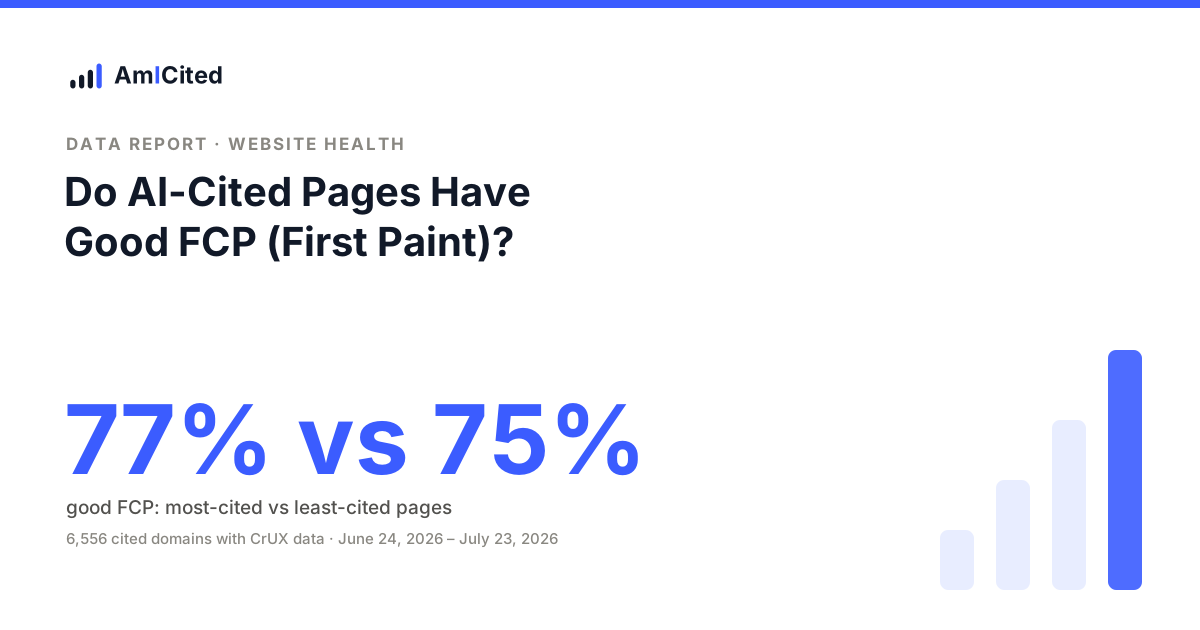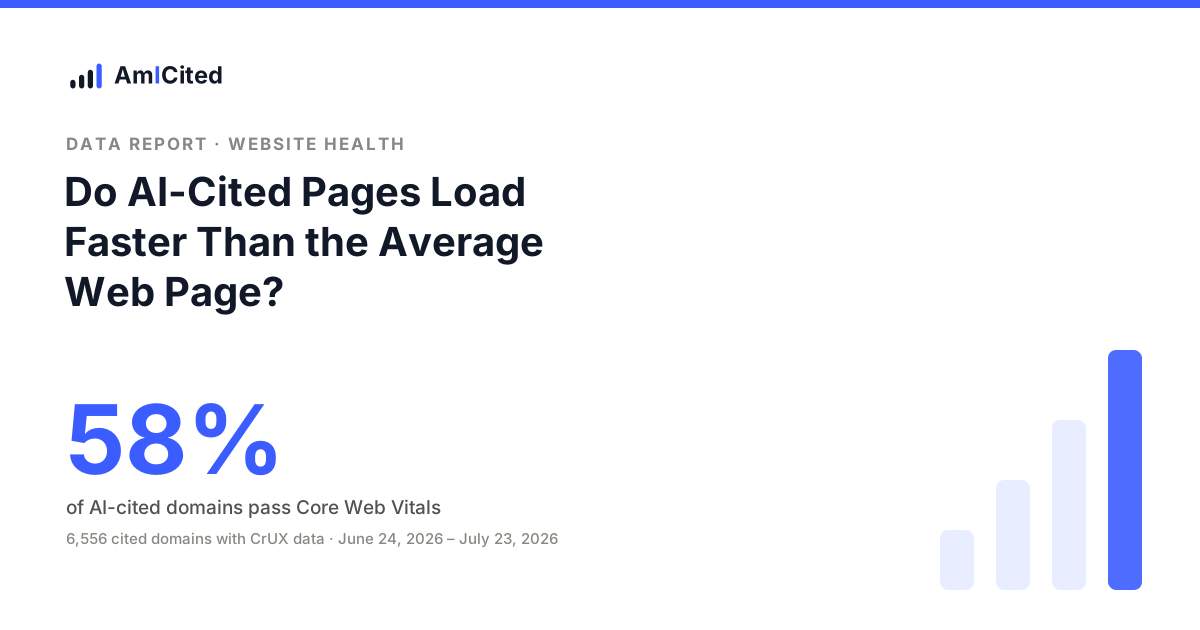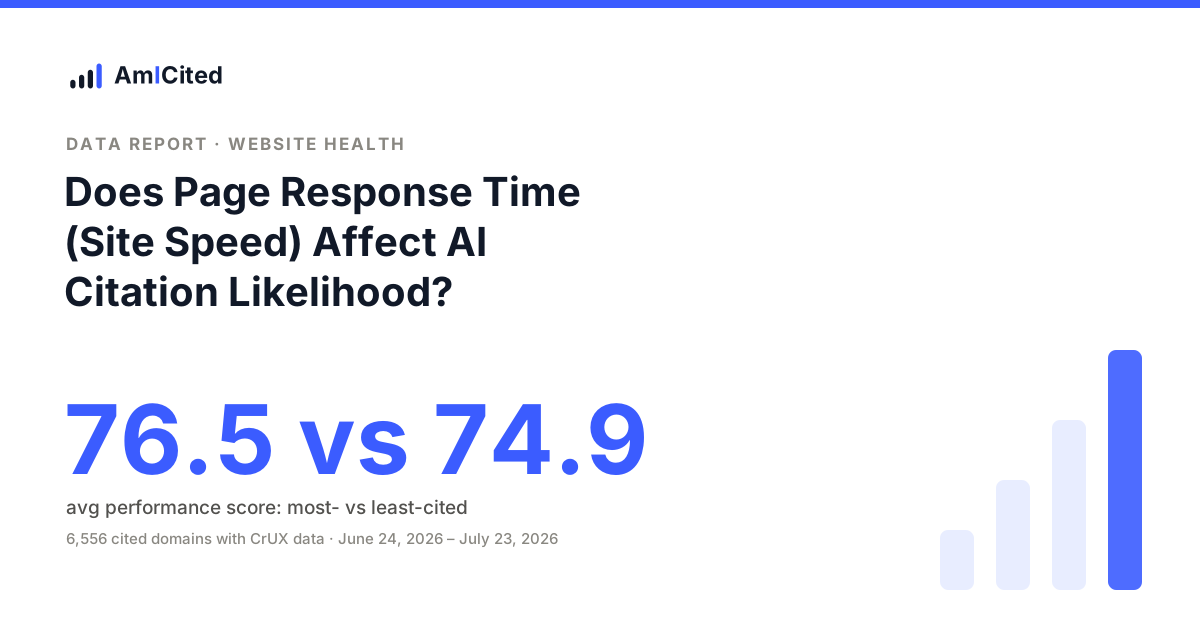
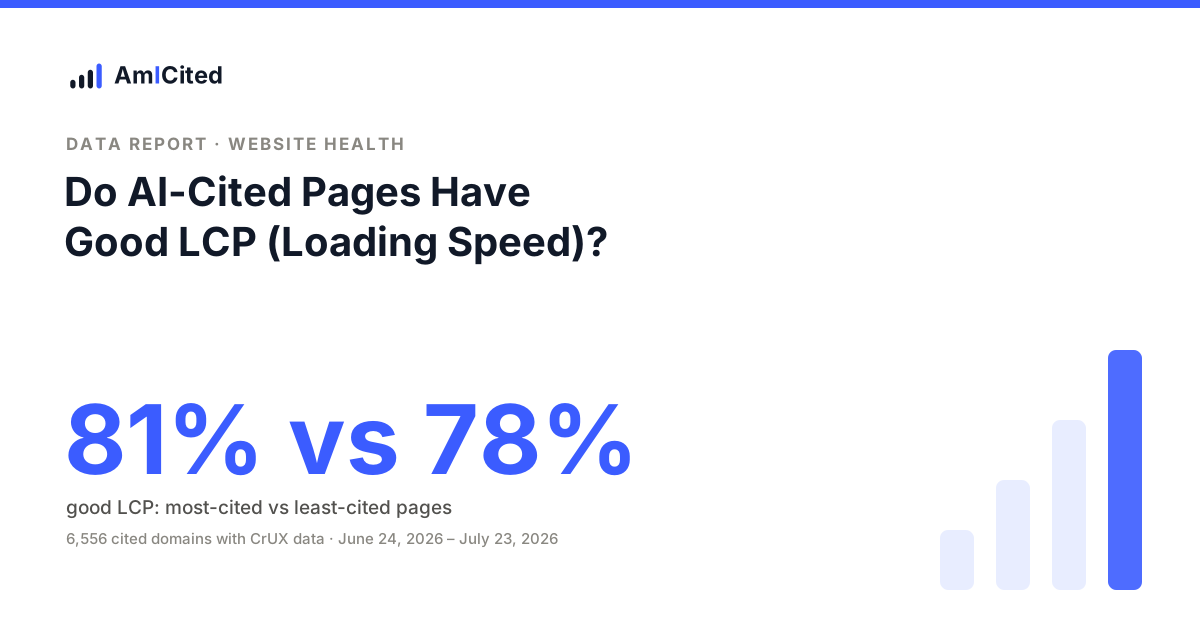
Pages that AI cites most record a good LCP on 81% of loads, vs 78% for least-cited pages: a modest, correlational edge on top of an already-healthy baseline.
Largest Contentful Paint (LCP) measures how fast a page’s main content loads. A page “passes” LCP when it loads within 2.5 seconds for most real users, as measured by Google’s Chrome UX Report (CrUX) field data. This report joins that field data to AmICited’s citation tracking to ask a simple question: are the pages AI engines cite more often any better on LCP?
Across all cited domains with field data, 78% record a good LCP: a solid baseline. But the most-cited domains do a little better still: 81% of the pages cited 10+ times hit the good threshold, versus 78% of those cited only once or twice.
Key Takeaways
- 81% of the most-cited pages have a “good” LCP, versus 78% of the least-cited, a modest 3-point edge that holds consistently across the dataset.
- Unlike some other vitals, LCP has a plausible mechanism behind the correlation: the same lean, render-optimized pages that load fast for users also tend to be easier for AI crawlers to fetch and parse.
- The AI-cited set as a whole (78% good) sits well above the web-wide LCP pass rate, but a large minority (19%, even among the most-cited group) still fails it, so passing LCP is not a gatekeeper for citation.
- Chasing sub-second LCP delivers diminishing returns once you’re already in the “good” band (under 2.5s); further speed gains barely move citation odds.
Bottom line: Get your LCP into the “good” band as baseline hygiene, since it likely helps crawlability too, then invest the bulk of your effort in content relevance, which AmICited’s own citation tracking shows is the far stronger driver of AI citations.
Good LCP rate vs citation frequency
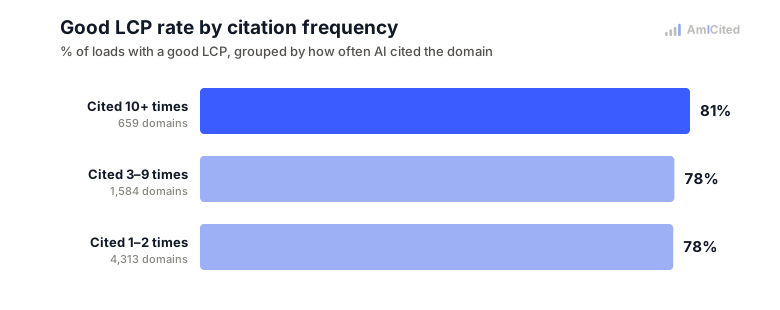
The direction matches every other Core Web Vitals signal in this dataset: pages AI cites more often are modestly more likely to clear Google’s good-LCP bar. The gap here is 3 percentage points between the most- and least-cited groups, real and consistent, but small. It says LCP is a supporting signal, not a gatekeeper: plenty of frequently-cited pages have imperfect LCP, and plenty of technically excellent pages are barely cited.

Ready to Monitor Your AI Visibility?
Track how AI chatbots mention your brand across ChatGPT, Perplexity, and other platforms.
The underlying numbers
| Citation frequency | Domains w/ data | Good LCP |
|---|---|---|
| Cited 10+ times | 659 | 81% |
| Cited 3–9 times | 1,584 | 78% |
| Cited 1–2 times | 4,313 | 78% |
How LCP compares to the other Core Web Vitals
Among the cited pages, the vitals are not equally easy to pass. Across the full cited set, INP is the strongest (88% good) and FCP the weakest (75% good), with LCP at 78%. That ordering is itself useful: if you are triaging fixes on your own site, the metric the AI-cited set most often fails is usually where the easiest competitive gap lies: the bar there is lower for everyone.
Stay Updated on AI Visibility Trends
Get the latest insights on AI mentions, brand monitoring, and optimization strategies.
What this means for AI-search visibility
The practical takeaway is the same as for Core Web Vitals overall: fixing LCP is worth doing, but it is table stakes, not a growth lever for AI citations. It removes a mild disadvantage and, more importantly, improves the real-user experience for the traffic you already have. But on this evidence, a great LCP score will not by itself move you into an engine’s cited set; content relevance and being present in the sources these engines synthesize matter far more. Sequence it accordingly: get LCP into the “good” band as hygiene, then put the bulk of your effort into relevance and coverage.
Why LCP matters for AI search visibility
Largest Contentful Paint is the Core Web Vitals metric most directly tied to perceived loading speed: it measures when the page’s main content becomes visible to the user. For AI crawlers, the story is different from human users, but the two are connected: a page that loads quickly for real users is almost certainly a page that serves its HTML efficiently to crawlers too.
AI engines like ChatGPT, Perplexity, and Gemini do not “see” pages the way a browser does: they parse the underlying HTML, extract text content, and process it through retrieval pipelines. A page that loads its main content quickly (good LCP) tends to have a lean HTML structure, minimal render-blocking resources, and efficient server response, all traits that make it easier for crawlers to ingest and index. The correlation we see in the data (3 percentage points between most- and least-cited) may partly reflect this: it is not that AI engines are checking your LCP score, but that the same architectural decisions that produce good LCP also produce crawlable, parsable pages.
The flip side is also worth noting. A page with poor LCP (say, one that takes 5+ seconds to deliver its main content) often has underlying issues: oversized images, slow server response, excessive JavaScript, or render-blocking CSS. These same issues can slow down or even prevent AI crawlers from fully extracting the page’s content, especially if the crawler operates under a timeout or a limited fetch budget. So while LCP itself is not a direct ranking signal for AI search, the technical health it represents almost certainly has downstream effects on whether your content is fully available to the systems that decide what to cite.
How AI-cited pages compare to the broader web
To put these numbers in context, consider the wider web. Google’s public CrUX dataset shows that roughly 50–55% of all URLs across the web pass Core Web Vitals: meaning the AI-cited set at 78% good LCP is substantially healthier than the internet average. This makes intuitive sense: the pages AI engines cite tend to come from established, well-maintained domains that have invested in technical performance. Large publishers, SaaS companies, and major media sites (the kinds of sources that dominate AI citations) typically have dedicated engineering resources for performance optimization.
But the fact that even among the most-cited pages, 19% still fail LCP is revealing. It tells us that AI engines are not filtering out slow pages. If they were applying a strict performance gate, we would see near-universal LCP compliance among the most-cited group. Instead, we see a healthy but imperfect distribution, exactly what you would expect if performance is a mild, secondary factor rather than a hard requirement.
This also means there is room for competitive differentiation. If you operate in a space where your direct competitors have average or below-average LCP, getting your pages into the “good” range creates a marginal advantage. It won’t win you citations on its own, but when two pages are otherwise equally relevant, the faster one may be slightly more likely to be fully ingested and cited.
Practical recommendations
If you want to improve your site’s LCP as part of a broader AI-visibility strategy, here is a practical sequence:
Measure your baseline first. Run your key pages through Google PageSpeed Insights or the CrUX API to see where your LCP stands. You need to know whether you are already in the “good” band (≤2.5s), the “needs improvement” band (2.5–4.0s), or the “poor” band (>4.0s).
Identify the LCP element. In most cases, your LCP will be a hero image, a large text block, or a background image. PageSpeed Insights will tell you which element is the LCP candidate: that is your primary optimization target.
Optimize the critical rendering path. The most common LCP fixes are: preloading the LCP image, avoiding lazy-loading it, reducing server response time ( TTFB), and eliminating render-blocking resources. These are well-documented, high-ROI optimizations.
Do not over-optimize. Once you are in the “good” band, the marginal return on further LCP improvements drops sharply, both for users and for AI citation potential. The 81% good-LCP rate among the most-cited pages suggests that being “good enough” is sufficient; you do not need to chase sub-second LCP.
Pair performance work with content work. The single biggest lever for AI citations is still content relevance. A fast page with thin, generic content will not get cited. Fix your LCP as part of a broader site-quality initiative, but keep your primary investment on creating the kind of specific, authoritative content that AI engines want to reference.
Methodology
LCP “good” fractions come from Google CrUX field data joined to AmICited’s citation tracking across 1,905 tracked prompts (June 24, 2026 – July 23, 2026, 2026). CrUX data was available for 6,556 of 8,845 cited domains (74%): pages too low-traffic for CrUX are excluded, which slightly biases the sample toward more-visited sites. Domains are grouped by how many tracked-prompt responses cited them; the good-LCP fraction is averaged within each group, and the overall/comparison figures are volume-weighted across groups. This is an association among cited pages, not proven causation: we are not claiming a better LCP causes more citations. No external links appear in this report.
 LinkedIn