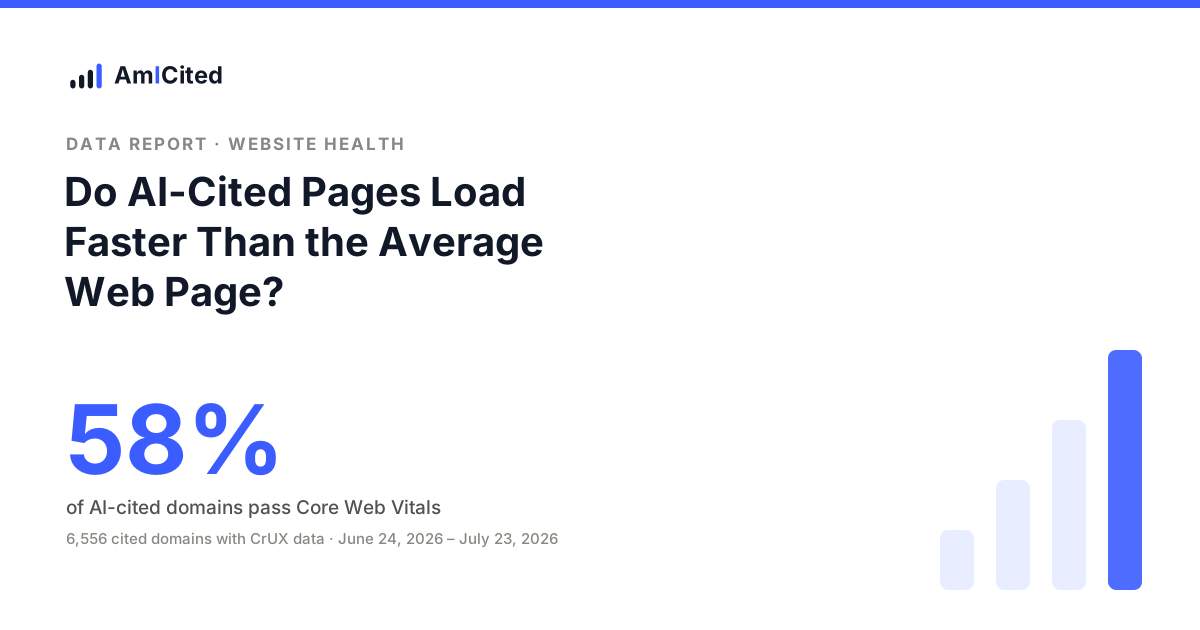
Of ai- cited domains pass core web vitals. 58%.
Across the cited domains with field data, 58% pass Core Web Vitals overall, and the most-cited group records a good Largest-Contentful-Paint on 81% of loads. AI-cited pages are, on the whole, reasonably fast, but far from universally: a large minority still fail.
Key Takeaways
- Only 58% of AI-cited domains pass Core Web Vitals overall, so being cited by AI does not require a technically pristine site.
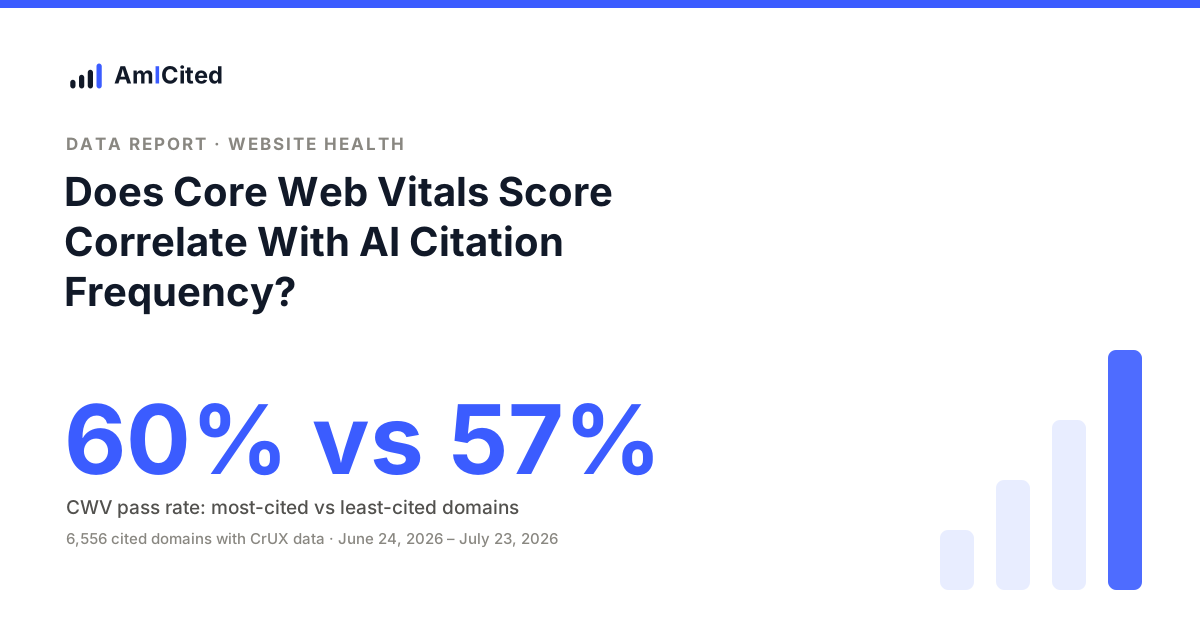
- The most-cited group is modestly faster across every metric measured: a 60% Core Web Vitals pass rate and an 804 ms median TTFB, versus 57% and 910 ms for the least-cited group.
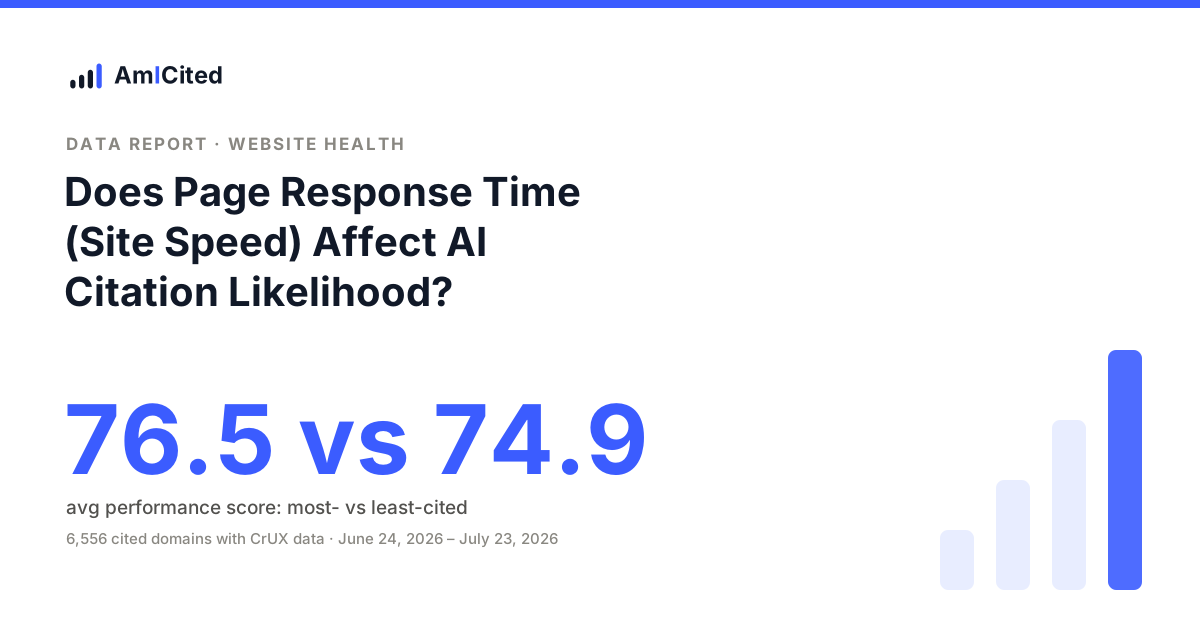
- The performance gap is real but small (about 3 points on pass rate, 1.6 points on PageSpeed score), suggesting site speed nudges citation odds rather than gating them.
- TTFB shows the widest and most controllable gap of the metrics tracked, making server and CDN configuration the highest-leverage speed fix for AI visibility.
Bottom line: Treat site speed as baseline hygiene, get your Core Web Vitals into the “good” range and your TTFB under a second, then invest the bulk of your effort in the content relevance and coverage that AmICited’s own citation-tracking data shows matters far more for getting cited by AI engines.
How fast are the pages AI cites?
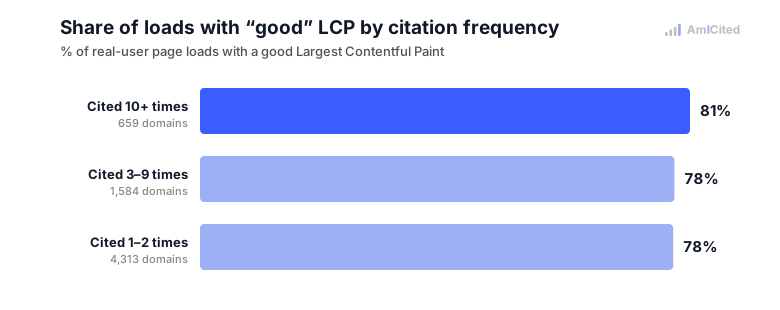
Grouping every cited domain by how many of AmICited’s tracked-prompt responses cited it, and joining Google’s real-user Core Web Vitals data, a consistent pattern appears across the tiers. Cited 10+ times (659 domains with data) sit at one end and cited 1–2 times (4,313 domains) at the other. The direction is the same for every health metric we can measure: pass rate, server response time, and performance score, which is why the (modest) signal is credible rather than noise.

Ready to Monitor Your AI Visibility?
Track how AI chatbots mention your brand across ChatGPT, Perplexity, and other platforms.
The underlying numbers
| Citation frequency | Domains w/ CrUX data | Pass Core Web Vitals | Median TTFB | Avg perf score |
|---|---|---|---|---|
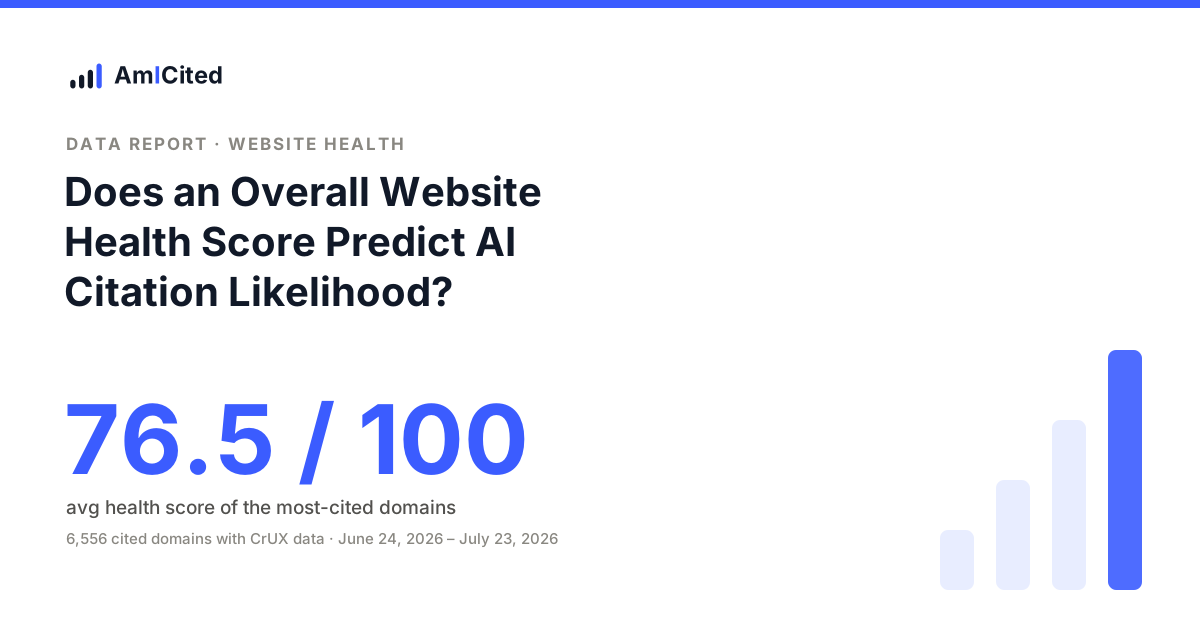
| Cited 10+ times | 659 | 60% | 804 ms | 76.5 |
| Cited 3–9 times | 1,584 | 58% | 893 ms | 74.9 |
| Cited 1–2 times | 4,313 | 57% | 910 ms | 74.9 |
What this means for AI search visibility
Technically healthy pages are cited somewhat more often, but the effect here is small, site health looks like a supporting factor, not a primary driver of whether AI engines cite you. Content relevance almost certainly matters more (see the source- and topic-level reports). The practical read: fixing Core Web Vitals and server response time is worth doing (it removes a mild headwind and helps users regardless), but it will not, on its own, move you into an engine’s cited sources. Treat it as table stakes, then compete on relevance.
Stay Updated on AI Visibility Trends
Get the latest insights on AI mentions, brand monitoring, and optimization strategies.
Beyond the averages: what the 42% who fail tell us
The most striking number in this data is not the 60% who pass Core Web Vitals: it is the 40% of the most-cited group who do not. Even among the pages AI engines cite most heavily, four out of ten domains fail Google’s Core Web Vitals assessment. This is a powerful counterpoint to the idea that AI engines are running performance checks on potential sources.
If AI engines applied a strict performance gate, we would expect near-universal CWV compliance among the most-cited pages. Instead, we see a distribution that mirrors the broader web, just shifted slightly upward. This tells us that AI engines are selecting sources primarily on content relevance, authority, and the ability to answer the user’s question, and only secondarily on technical performance.
The 40% failure rate also means that if your site is currently failing Core Web Vitals, you are in substantial company, even among the internet’s most-cited domains. Fixing your performance will move you into the majority, but it will not, on its own, transform your citation profile. The performance gap between the most- and least-cited is real, but it is small enough that crossing it requires moving from “poor” to “good” on multiple metrics, not just scraping past the threshold on one.
The performance score story: what 76.5 vs 74.9 actually means
The average Google PageSpeed performance score of 76.5 for the most-cited domains versus 74.9 for the least-cited is a difference of only 1.6 points on a 100-point scale. For context, a single unoptimized image or an unminified CSS file can swing a PageSpeed score by 5–10 points. The gap we are seeing is real but trivially small: it is the kind of difference that could be explained by the most-cited domains being slightly more likely to use a CDN or slightly more likely to have a dedicated performance budget.
The practical implication is clear: if your PageSpeed score is in the 70s, you are already in the range where AI citation frequency is not meaningfully constrained by performance. Chasing a score of 90+ will yield diminishing returns for AI visibility. The more productive use of your time is to ensure you are not in the “poor” range (below 50) and then shift your focus to content strategy.
How this interacts with traditional SEO wisdom
For two decades, SEOs have been told that site speed is a ranking factor. This is true for Google Search: page experience signals, including Core Web Vitals, are part of Google’s ranking algorithm. But AI search engines like ChatGPT, Perplexity, and Gemini operate on fundamentally different principles. They do not crawl the web in real time to build a search index; they retrieve content from a pre-indexed corpus and synthesize answers from it.
This distinction matters enormously for how you should think about performance. In traditional SEO, a faster page might outrank a slower one for the same query, all else being equal. In AI search, the engine is not comparing two pages head-to-head in the same way: it is deciding whether to include a source at all in its answer. The bar for inclusion appears to be much lower on performance than it is for traditional search ranking, and much higher on content specificity and authority.
The practical upshot: if you are already doing good SEO performance work, you are likely already in the range where AI citations are not constrained by speed. Do not stop that work: it benefits your human visitors and your traditional search rankings. But do not expect additional performance optimizations to open new AI citation doors. The doors are opened by content.
Practical recommendations for AI-visibility performance work
Use TTFB as your primary performance metric for AI visibility. Of all the speed metrics, TTFB has the widest gap between most- and least-cited (804 ms vs. 910 ms). It is also the metric most directly under your control: it reflects server and CDN configuration, not front-end complexity.
Target “good enough,” not “perfect.” If your pages pass Core Web Vitals most of the time and your TTFB is under 1 second, you are in the range where performance is not holding back your AI citations. Further investment should go to content, not speed.
Audit your server configuration. Common TTFB improvements include: enabling HTTP/2 or HTTP/3, using a CDN with edge caching, optimizing database queries, and enabling server-side caching. These are typically one-time fixes with ongoing benefits.
Don’t neglect mobile. Google’s CrUX data is segmented by device. If your mobile performance is significantly worse than desktop, you may be creating a gap that affects AI crawlers differently across platforms. Ensure your performance optimizations apply to both.
Monitor performance drift. Site speed decays over time as you add features, third-party scripts, and content. Set up regular performance monitoring (monthly is sufficient) to catch regressions before they push you into the “poor” range.
Methodology
This is an association among the pages AI already cites, not proof of cause: it is computed by joining Google CrUX / PageSpeed field data to how often each domain was cited across AmICited’s 1,905 tracked prompts. CrUX data was available for 6,556 of 8,845 cited domains (74%). Domains are grouped into how many responses cited them; within each group we average the site-health metric. A domain “passes Core Web Vitals” when the majority of its audited URLs pass Google’s LCP/ INP/CLS thresholds in real-user (CrUX) data; TTFB and performance score are averaged likewise. Pages without sufficient CrUX data are excluded. Because AmICited’s prompts skew toward SaaS, e-commerce and support topics, these figures describe the sites cited for that kind of query. The relationship is real but modest, and correlational: we are not claiming faster pages cause more citations.
 LinkedIn