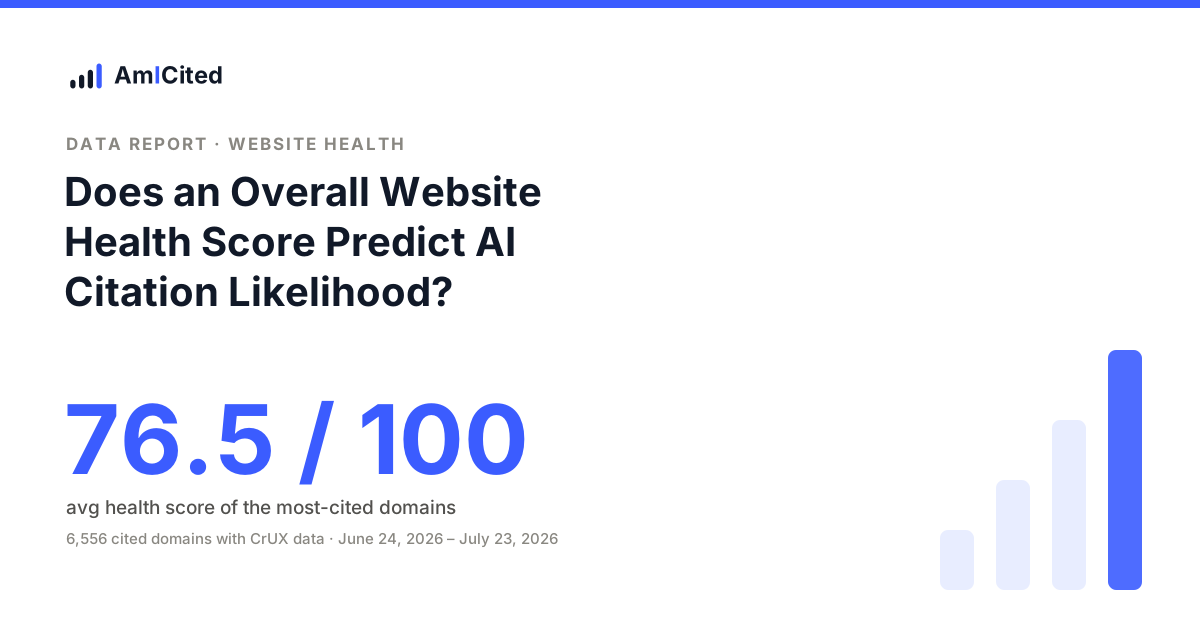
Avg health score of the most-cited domains. 76.5 / 100.
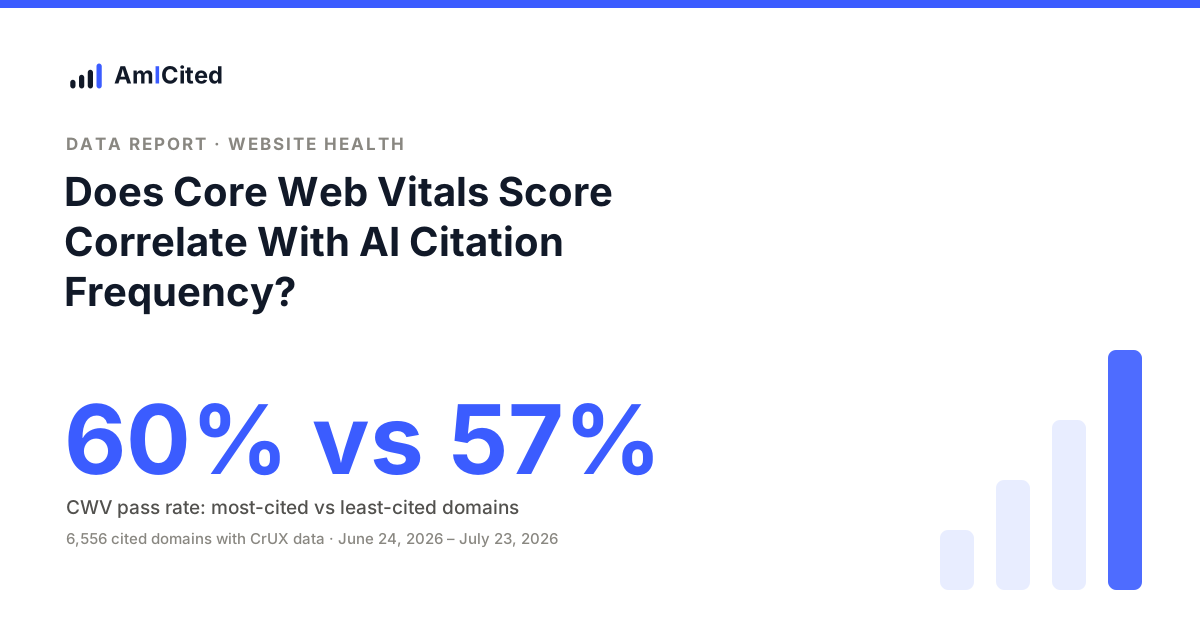
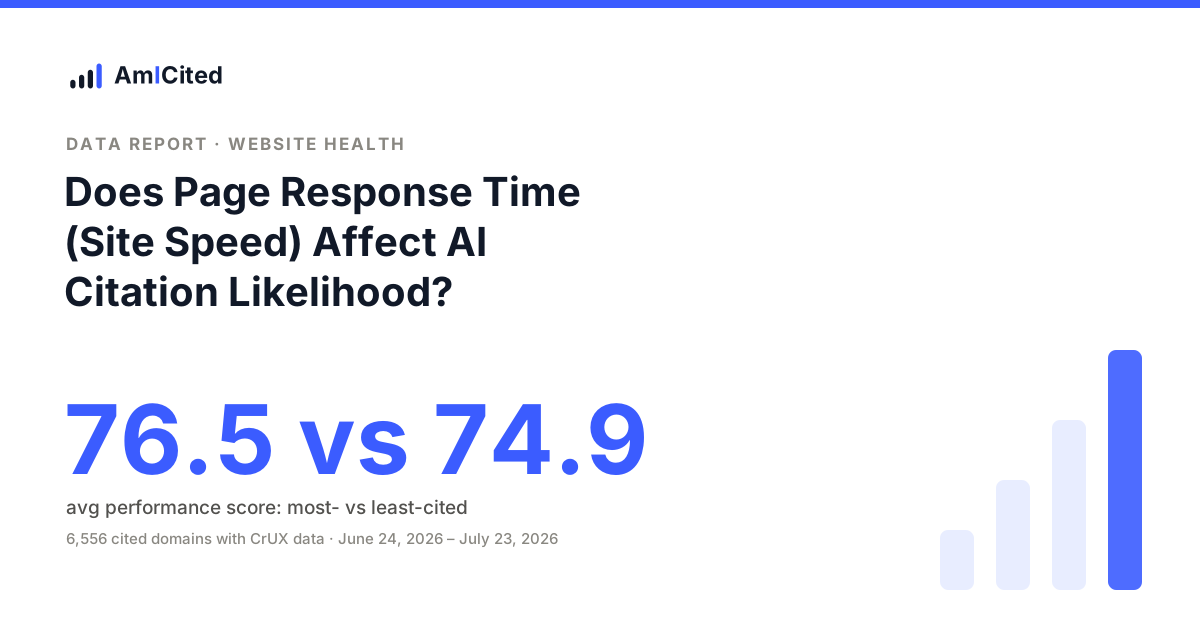
Bringing the signals together: the most-cited domains average a 76.5/100 performance score and pass Core Web Vitals 60% of the time, versus 74.9 and 57% for the least-cited. A healthier site is associated with more citations, modestly, and correlationally.
Key Takeaways
- The most-cited domains average a 76.5/100 PageSpeed performance score, versus 74.9 for the least-cited: a modest but consistent gap.
- Core Web Vitals pass rates follow the same pattern: 60% for the most-cited tier versus 57% for the least-cited.
- Every health metric we measured (pass rate, TTFB, performance score) points the same direction, which is why the signal is credible even though it is small.
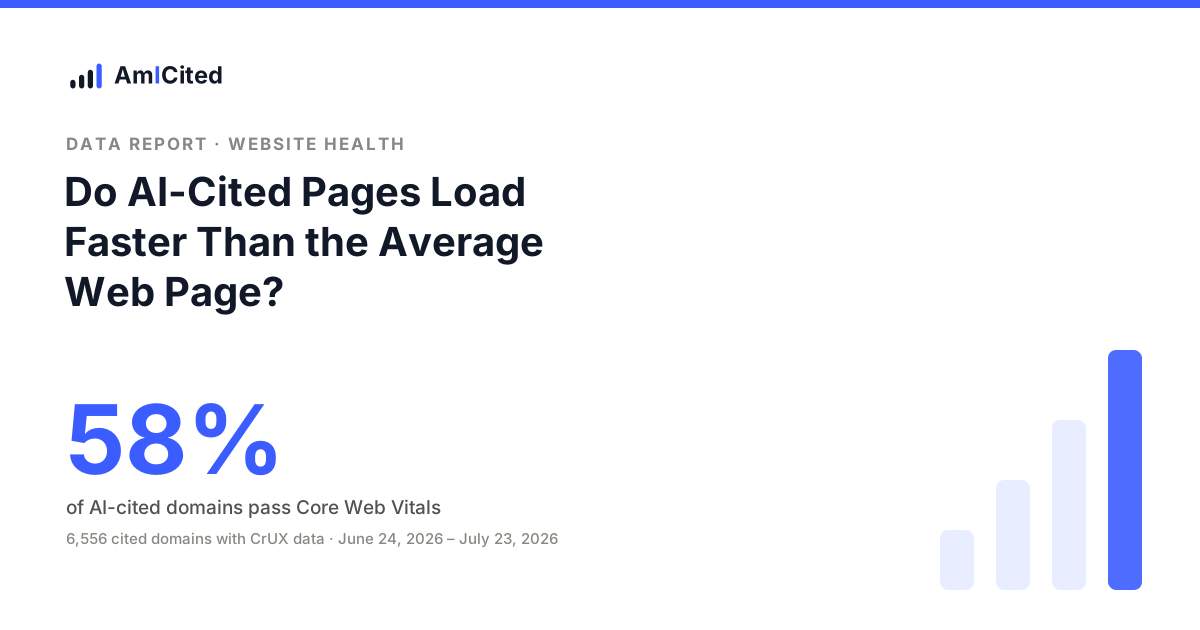
- 40% of the most-cited pages still fail Core Web Vitals, showing there is no hard performance gate, just a mild advantage for healthier sites.
Bottom line: Technical health is worth fixing as table stakes, but content relevance and authority will do far more for your AI citation rate than performance polish, and AmICited’s own citation tracking data lets you monitor where your site stands on both.
Website health score vs citation frequency
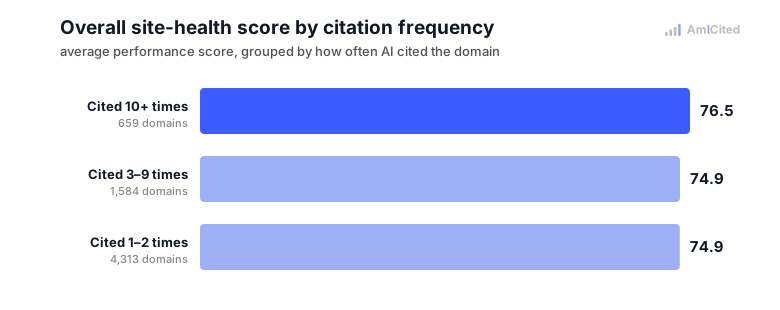
Grouping every cited domain by how many of AmICited’s tracked-prompt responses cited it, and joining Google’s real-user Core Web Vitals data, a consistent pattern appears across the tiers. Cited 10+ times (659 domains with data) sit at one end and cited 1–2 times (4,313 domains) at the other. The direction is the same for every health metric we can measure (pass rate, server response time, and performance score), which is why the (modest) signal is credible rather than noise.

Ready to Monitor Your AI Visibility?
Track how AI chatbots mention your brand across ChatGPT, Perplexity, and other platforms.
The underlying numbers
| Citation frequency | Domains w/ CrUX data | Pass Core Web Vitals | Median TTFB | Avg perf score |
|---|---|---|---|---|
| Cited 10+ times | 659 | 60% | 804 ms | 76.5 |
| Cited 3–9 times | 1,584 | 58% | 893 ms | 74.9 |
| Cited 1–2 times | 4,313 | 57% | 910 ms | 74.9 |
What this means for AI search visibility
Technically healthy pages are cited somewhat more often, but the effect here is small: site health looks like a supporting factor, not a primary driver of whether AI engines cite you. Content relevance almost certainly matters more (see the source- and topic-level reports). The practical read: fixing Core Web Vitals and server response time is worth doing. It removes a mild headwind and helps users regardless, but it will not, on its own, move you into an engine’s cited sources. Treat it as table stakes, then compete on relevance.
Stay Updated on AI Visibility Trends
Get the latest insights on AI mentions, brand monitoring, and optimization strategies.
What “website health” means in the context of AI citations
This report brings together the three pillars of technical website health that we can measure from Google’s CrUX and PageSpeed data:
Core Web Vitals pass rate: The percentage of page loads that meet Google’s thresholds for LCP (loading), INP (interactivity), and CLS (visual stability). This is a composite measure of real-user experience.
Time to First Byte ( TTFB): The server-side response time, or how quickly the server delivers the first byte of HTML. This is the metric most directly relevant to AI crawler experience.
PageSpeed performance score: Google’s synthetic performance score, which simulates a page load and measures speed, responsiveness, and visual stability.
Across all three, the pattern is the same: the most-cited domains are modestly healthier than the least-cited. The direction is consistent, the magnitude is small, and the implication is clear: technical health is a supporting factor for AI citations, not a primary driver.
The composite picture: what a “healthy” AI-cited site looks like
Based on the most-cited tier (cited 10+ times across our tracked prompts), a typical highly-cited domain looks like this:
- Core Web Vitals: Passes on about 60% of page loads
- TTFB: Around 800 ms median
- PageSpeed score: Mid-70s out of 100
This is not an elite performance profile. It is a “good enough” profile: the kind of performance you get from a site that has invested in basic technical hygiene (CDN, caching, reasonable hosting) but has not made performance a core engineering priority. The fact that this profile describes the most-cited domains is evidence that AI engines are not applying a stringent performance filter.
The limits of website health as a predictor
It is important to be clear about what this data can and cannot tell us. We are measuring an association among pages that AI engines already cite. We cannot see the pages that were never cited, perhaps because their performance was so poor that they were never fully crawled, or because their content was never considered relevant. The true relationship between website health and citation likelihood could be larger than what we observe.
However, the fact that 40% of the most-cited pages fail Core Web Vitals is a strong argument against the idea that there is a hard performance gate. If there were, those 40% would not be in the most-cited tier. The more likely interpretation is that AI engines have a low performance bar, one that filters out only the very slowest and most unreliable sites, and that above that bar, content relevance dominates.
Practical framework for technical health and AI visibility
Here is a simple decision framework based on our findings:
If your site is in the “poor” range on any Core Web Vital, or your TTFB is above 1,500 ms: Fix this. You are likely experiencing crawl friction that is preventing your content from being fully ingested. This is the highest-ROI technical work you can do for AI visibility.
If your site is in the “needs improvement” range: You have a marginal disadvantage. Fix it if the work is straightforward, but do not delay content initiatives.
If your site is in the “good” range on all vitals and your TTFB is under 800 ms: You are in the sweet spot. Further technical optimizations will have diminishing returns for AI citations. Invest your time in content quality and authority building.
Methodology
This is an association among the pages AI already cites, not proof of cause: it is computed by joining Google CrUX / PageSpeed field data to how often each domain was cited across AmICited’s 1,905 tracked prompts. CrUX data was available for 6,556 of 8,845 cited domains (74%). Domains are grouped into how many responses cited them; within each group we average the site-health metric. A domain “passes Core Web Vitals” when the majority of its audited URLs pass Google’s LCP/INP/ CLS thresholds in real-user (CrUX) data; TTFB and performance score are averaged likewise. Pages without sufficient CrUX data are excluded. Because AmICited’s prompts skew toward SaaS, e-commerce and support topics, these figures describe the sites cited for that kind of query. The relationship is real but modest, and correlational: we are not claiming faster pages cause more citations.
 LinkedIn