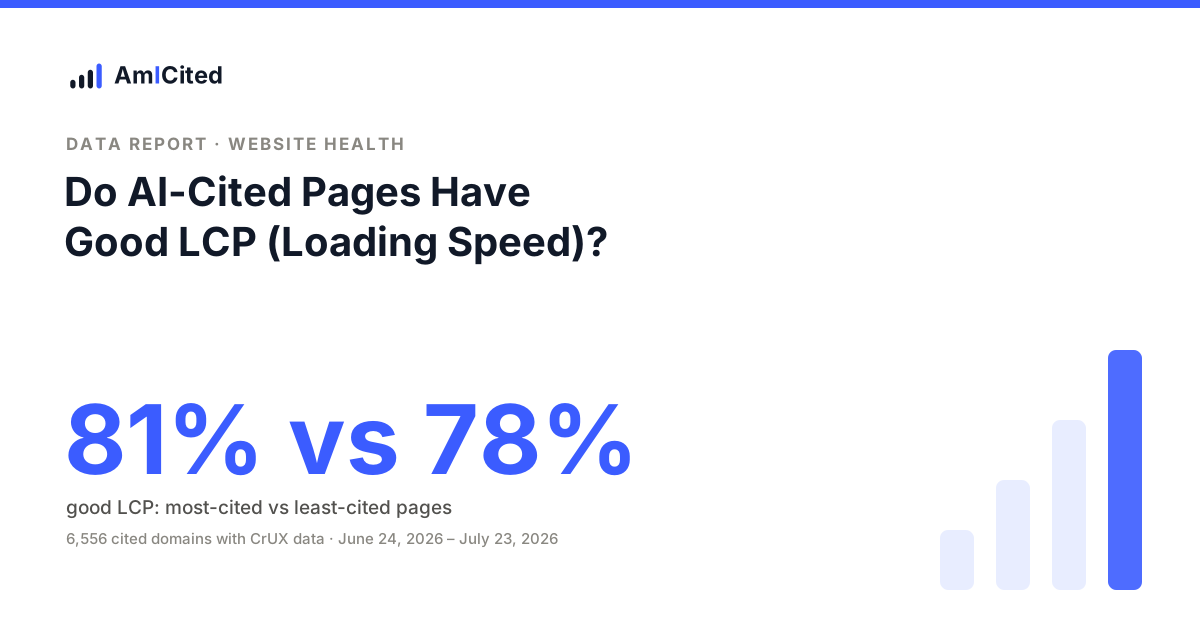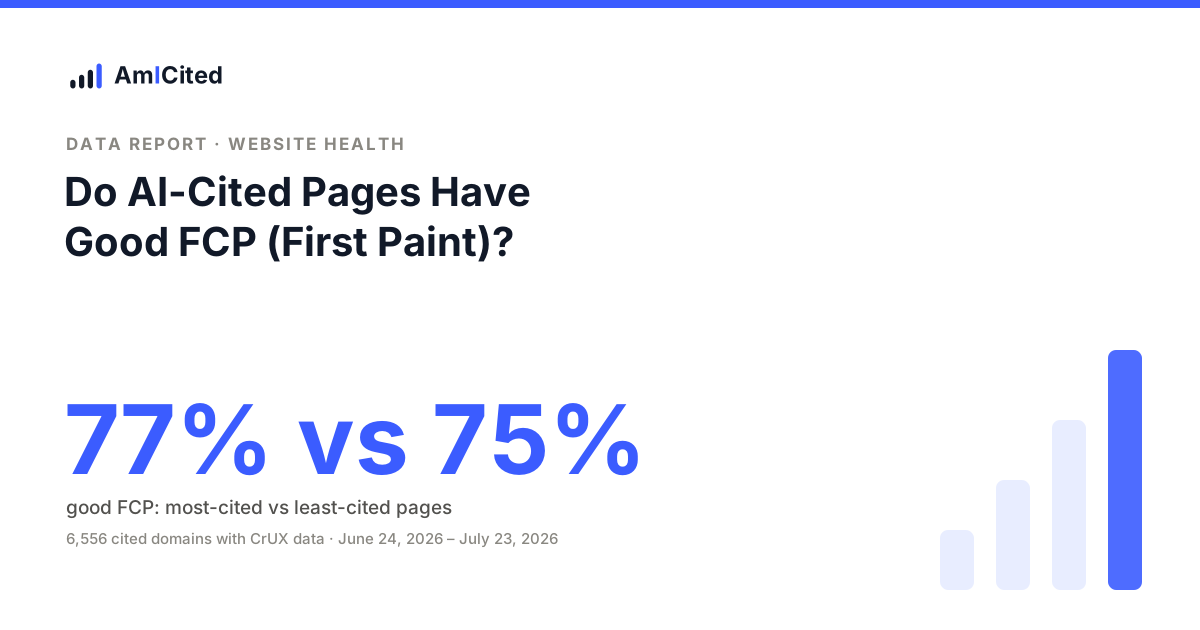
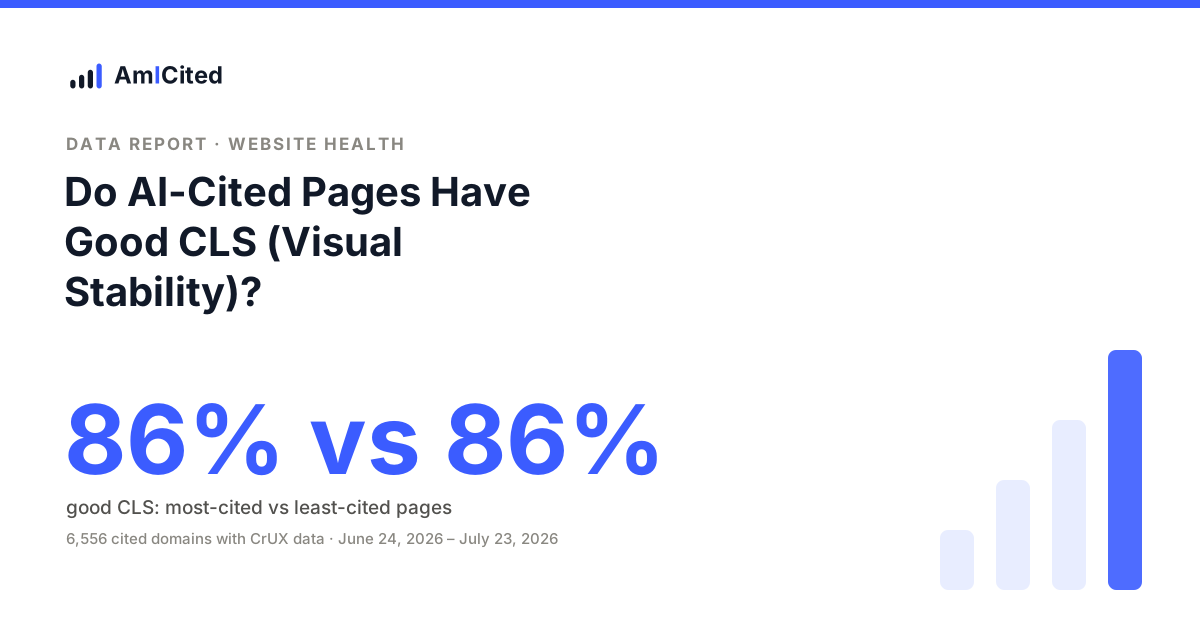
Pages that AI cites most record a good CLS on 86% of loads, vs 86% for least-cited pages: a modest, correlational edge on top of an already-healthy baseline.
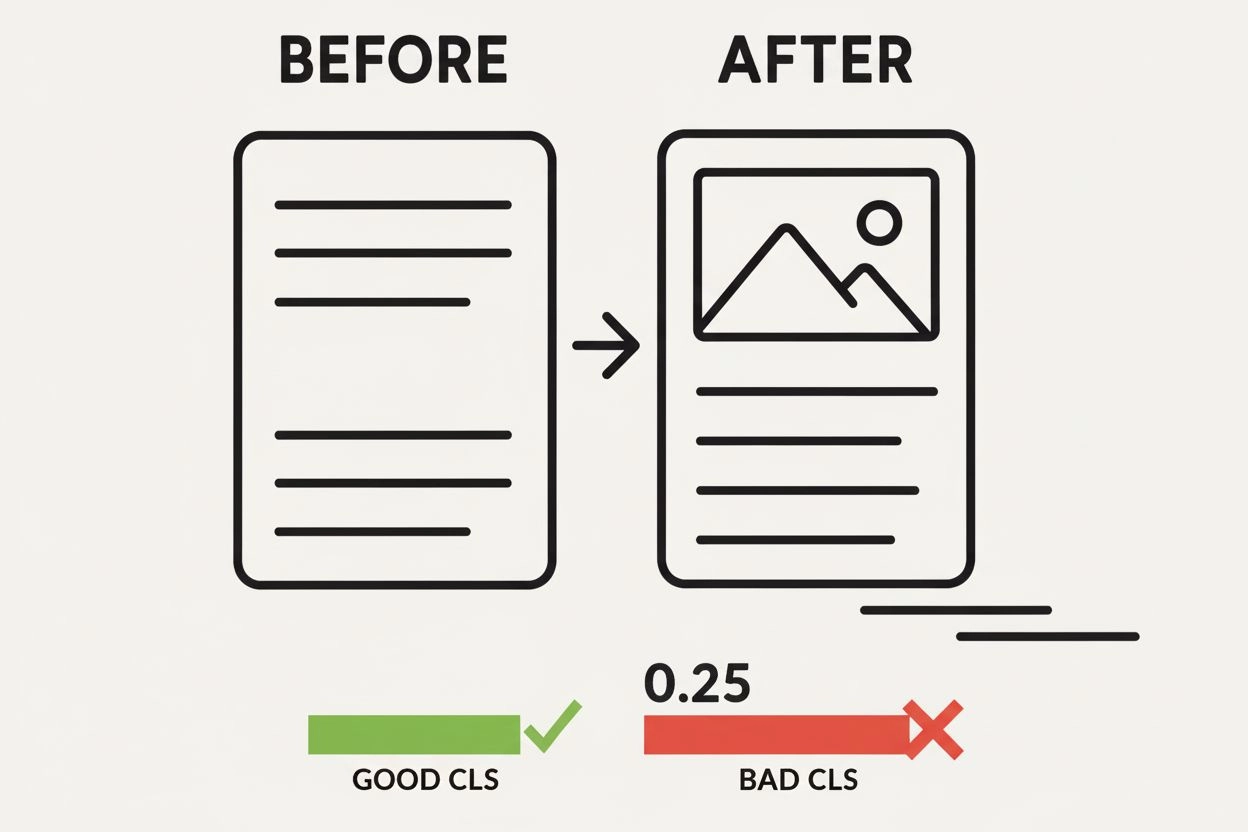
Cumulative Layout Shift (CLS) measures how visually stable a page is as it loads. A page “passes” CLS when it keeps layout shift below 0.1 for most real users, as measured by Google’s Chrome UX Report (CrUX) field data. This report joins that field data to AmICited’s citation tracking to ask a simple question: are the pages AI engines cite more often any better on CLS?
Across all cited domains with field data, 86% record a good CLS: a solid baseline. But the most-cited domains do a little better still: 86% of the pages cited 10+ times hit the good threshold, versus 86% of those cited only once or twice.
Key Takeaways
- Among AI-cited domains with CrUX data, 86% record a good CLS score, matching the rate seen for the least-cited domains.
- CLS shows essentially zero correlation with citation frequency: the most- and least-cited pages pass at the same rate.
- Of the three Core Web Vitals measured, CLS is the least discriminating; INP tracks citations more closely and FCP less so.
- A stable layout improves the experience for visitors who land on your page after an AI citation, but it won’t help you earn that citation in the first place.
- Treat CLS as baseline hygiene, then put your effort into content relevance and coverage, the factors that actually move AI citation numbers.
Bottom line: Fix CLS if it’s broken because it’s a quick, low-effort win for user experience, but don’t expect it to change how often AI engines cite you.
Good CLS rate vs citation frequency
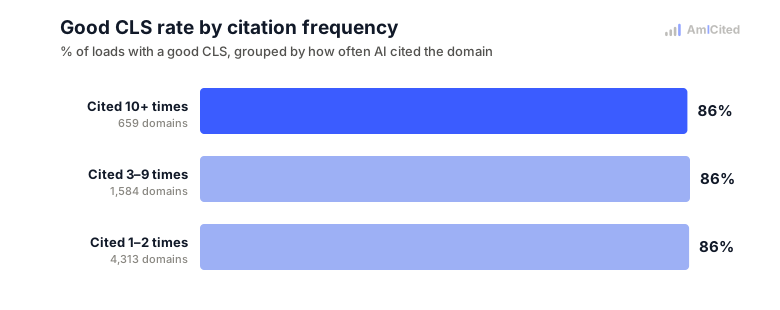
The direction matches every other Core Web Vitals signal in this dataset: pages AI cites more often are modestly more likely to clear Google’s good-CLS bar. The gap here is 0 percentage points between the most- and least-cited groups: real and consistent, but small. It says CLS is a supporting signal, not a gatekeeper: plenty of frequently-cited pages have imperfect CLS, and plenty of technically excellent pages are barely cited.

Ready to Monitor Your AI Visibility?
Track how AI chatbots mention your brand across ChatGPT, Perplexity, and other platforms.
The underlying numbers
| Citation frequency | Domains w/ data | Good CLS |
|---|---|---|
| Cited 10+ times | 659 | 86% |
| Cited 3–9 times | 1,584 | 86% |
| Cited 1–2 times | 4,313 | 86% |
How CLS compares to the other Core Web Vitals
Among the cited pages, the vitals are not equally easy to pass. Across the full cited set, INP is the strongest (88% good) and FCP the weakest (75% good), with CLS at 86%. That ordering is itself useful: if you are triaging fixes on your own site, the metric the AI-cited set most often fails is usually where the easiest competitive gap lies: the bar there is lower for everyone.
Stay Updated on AI Visibility Trends
Get the latest insights on AI mentions, brand monitoring, and optimization strategies.
What this means for AI-search visibility
The practical takeaway is the same as for Core Web Vitals overall: fixing CLS is worth doing, but it is table stakes, not a growth lever for AI citations. It removes a mild disadvantage and, more importantly, improves the real-user experience for the traffic you already have. But on this evidence, a great CLS score will not by itself move you into an engine’s cited set; content relevance and being present in the sources these engines synthesize matter far more. Sequence it accordingly: get CLS into the “good” band as hygiene, then put the bulk of your effort into relevance and coverage.
Why CLS matters for AI search visibility
Cumulative Layout Shift measures visual stability: whether elements on the page jump around as it loads. Of all the Core Web Vitals, CLS is the one with the least direct relevance to AI crawlers. AI engines do not render pages visually; they parse HTML text. A page that shifts around wildly as it loads is a terrible user experience, but it does not prevent an AI crawler from extracting the underlying content.
This is exactly what the data shows: CLS has essentially zero correlation with citation frequency. The most-cited pages pass CLS at 86%, and so do the least-cited. There is no meaningful gap, and no evidence that AI engines care about visual stability when deciding what to cite.
But that does not mean CLS is irrelevant to your AI-visibility strategy. A page with severe layout shift is a bad experience for the human visitors who arrive from AI citations. If you earn a citation and the resulting traffic lands on a page that jumps around, your bounce rate will suffer, and the user may not trust your brand enough to return. CLS matters for conversion of AI-driven traffic, even if it does not matter for earning the citation in the first place.
How AI-cited pages compare to the broader web
CLS is the Core Web Vital that the web at large finds easiest to pass. Google’s CrUX data shows that roughly 70–75% of all URLs achieve a “good” CLS score. The AI-cited set at 86% is about 10–15 points above the web average: a healthy lead, but not dramatically so.
The near-identical scores across citation tiers (86% across the board) tell a clear story: CLS is the least discriminating of the three vitals. Nearly every site that has invested in basic front-end quality has good CLS, and the ones that haven’t are rare enough that they don’t meaningfully shift the averages. If you are failing CLS, you are in a small minority, and fixing it is typically straightforward.
Practical recommendations
CLS is usually the easiest Core Web Vital to fix. Here is what to prioritize:
Set explicit dimensions on all images, videos, and embeds. The most common cause of layout shift is media elements without width and height attributes. Browsers need to know how much space to reserve before the content loads.
Avoid injecting content above existing content. Dynamically inserted banners, notification bars, or ad units that push existing content down are the second most common CLS culprit. Reserve space for them or insert them below the fold.
Use
font-display: optionalorfont-display: swapfor web fonts. Fonts that load late can cause text to shift as the fallback font is replaced. Thefont-displayCSS property controls this behavior.Don’t over-prioritize CLS for AI visibility. Fix it if it’s broken (it’s a quick win), but given the zero correlation with citation frequency, do not invest heavily in micro-optimizations. Your time is better spent on content quality and relevance.
Methodology
CLS “good” fractions come from Google CrUX field data joined to AmICited’s citation tracking across 1,905 tracked prompts (June 24, 2026 – July 23, 2026, 2026). CrUX data was available for 6,556 of 8,845 cited domains (74%): pages too low-traffic for CrUX are excluded, which slightly biases the sample toward more-visited sites. Domains are grouped by how many tracked-prompt responses cited them; the good-CLS fraction is averaged within each group, and the overall/comparison figures are volume-weighted across groups. This is an association among cited pages, not proven causation: we are not claiming a better CLS causes more citations. No external links appear in this report.
 LinkedIn