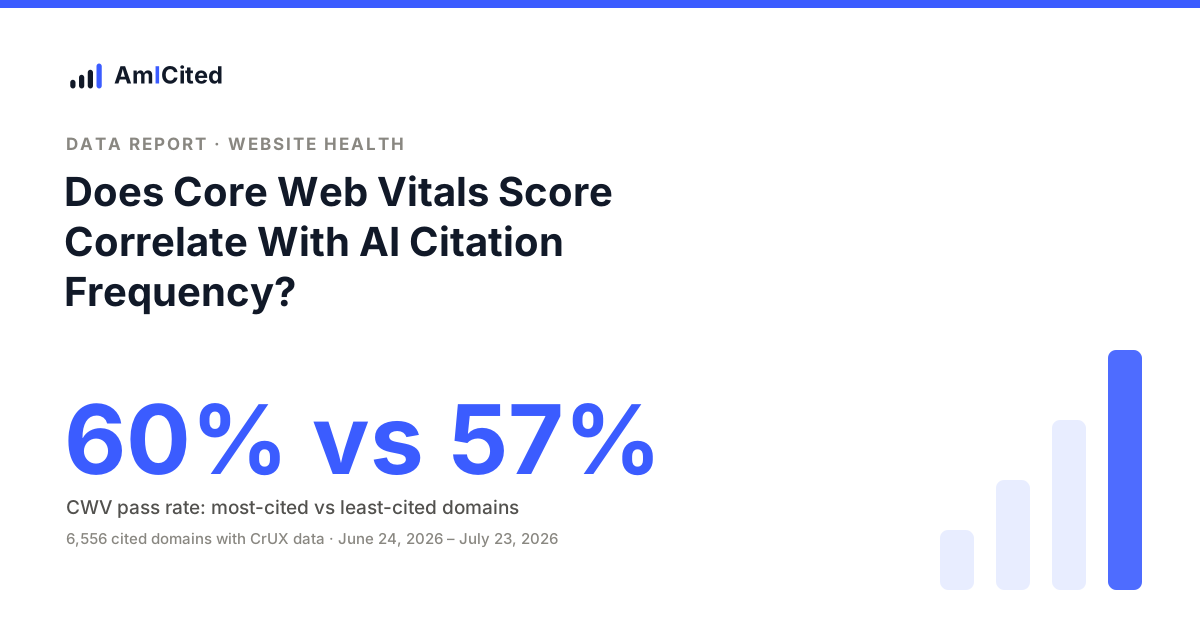
Cwv pass rate: most-cited vs least- cited domains. 60% vs 57%.
Domains that AI engines cite most often (cited 10+ times) pass Core Web Vitals 60% of the time, versus 57% for domains cited only once or twice. The gap is small but consistent: a modest positive association between Core Web Vitals and how often a page is cited.
Key Takeaways
- The most-cited domains pass Core Web Vitals 60% of the time versus 57% for the least-cited: a real but small (3-point) gap.
- The pattern holds consistently across pass rate, TTFB, and performance score, which is why the signal looks credible rather than noise.
- The likely drivers are selection effects (well-resourced publishers both get cited more and can afford better performance) and a crawlability threshold, not a direct ranking boost.
- Core Web Vitals functions as a hygiene factor: fix it once to remove friction, but do not expect it to meaningfully grow citations on its own.
- Bottom line: treat site speed as table stakes, then compete on content relevance and authority; AmICited’s tracking data lets you check your own site’s citation-worthiness beyond just a speed score.
Core Web Vitals pass rate vs citation frequency
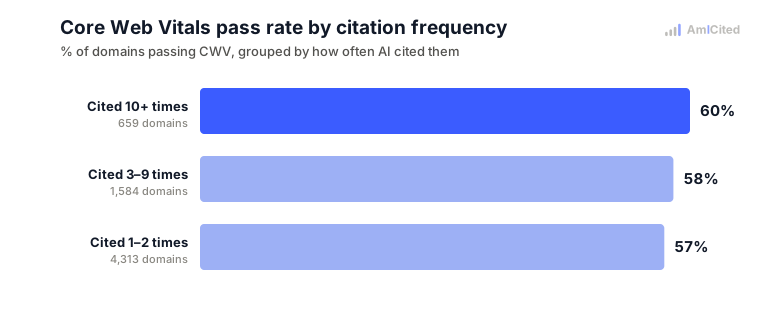
Grouping every cited domain by how many of AmICited’s tracked-prompt responses cited it, and joining Google’s real-user Core Web Vitals data, a consistent pattern appears across the tiers. Cited 10+ times (659 domains with data) sit at one end and cited 1–2 times (4,313 domains) at the other. The direction is the same for every health metric we can measure (pass rate, server response time, and performance score), which is why the (modest) signal is credible rather than noise.

Ready to Monitor Your AI Visibility?
Track how AI chatbots mention your brand across ChatGPT, Perplexity, and other platforms.
The underlying numbers
| Citation frequency | Domains w/ CrUX data | Pass Core Web Vitals | Median TTFB | Avg perf score |
|---|---|---|---|---|
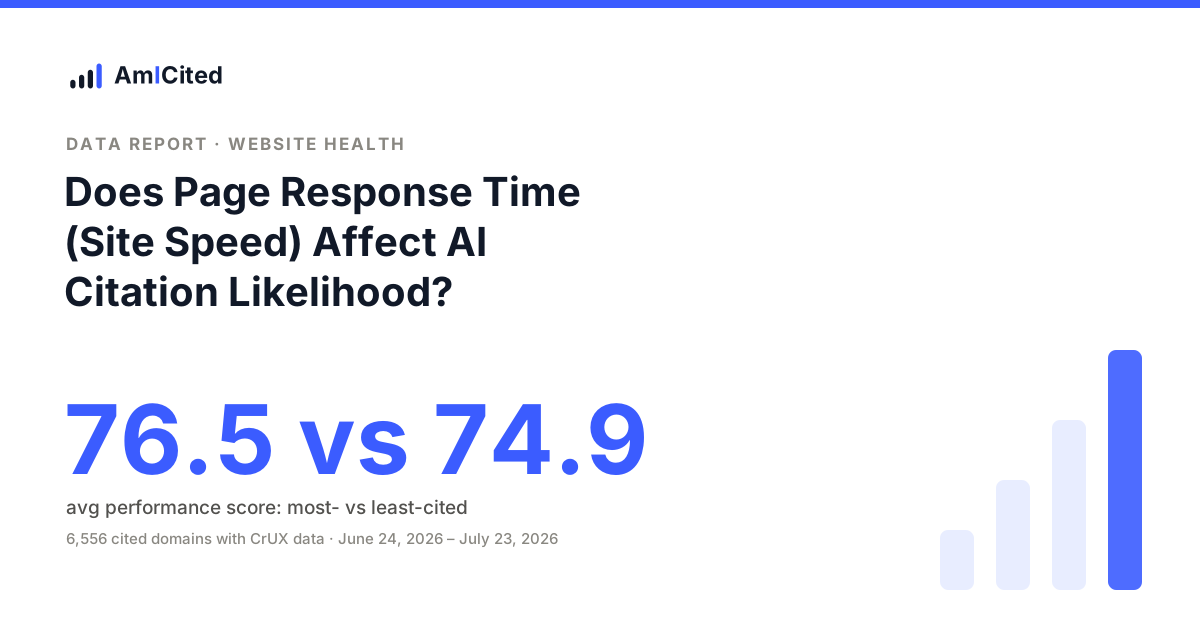
| Cited 10+ times | 659 | 60% | 804 ms | 76.5 |
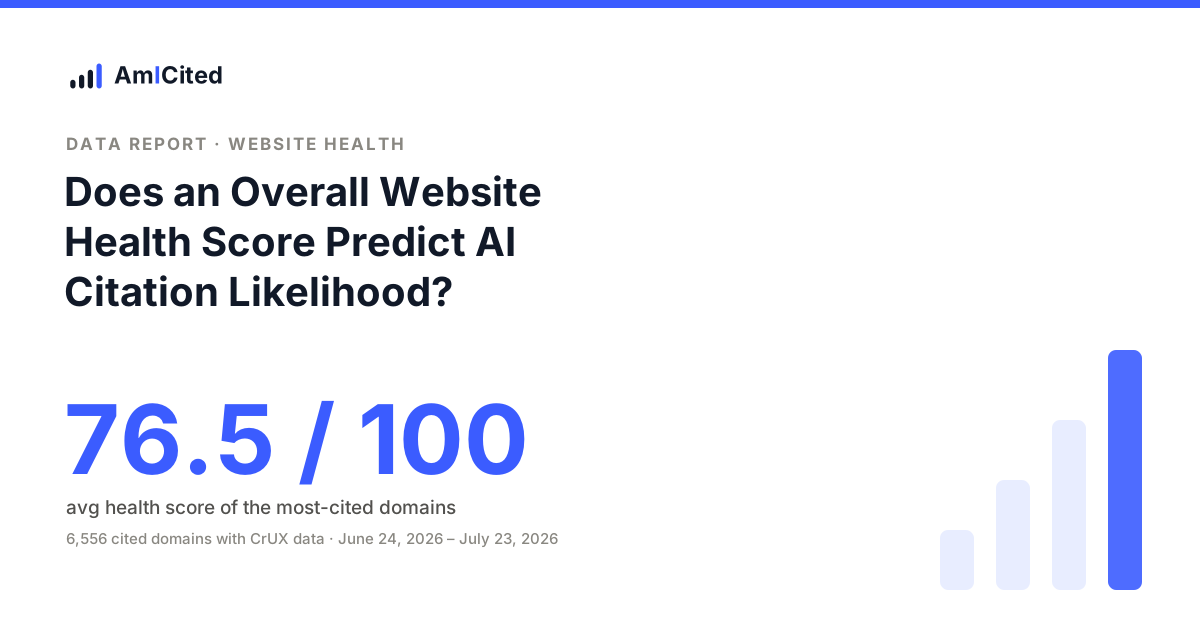
| Cited 3–9 times | 1,584 | 58% | 893 ms | 74.9 |
| Cited 1–2 times | 4,313 | 57% | 910 ms | 74.9 |
What this means for AI search visibility
Technically healthy pages are cited somewhat more often, but the effect here is small: site health looks like a supporting factor, not a primary driver of whether AI engines cite you. Content relevance almost certainly matters more (see the source- and topic-level reports). The practical read: fixing Core Web Vitals and server response time is worth doing, since it removes a mild headwind and helps users regardless, but it will not, on its own, move you into an engine’s cited sources. Treat it as table stakes, then compete on relevance.
Stay Updated on AI Visibility Trends
Get the latest insights on AI mentions, brand monitoring, and optimization strategies.
Why the correlation exists (and why it’s small)
The 3-percentage-point gap in Core Web Vitals pass rates between the most- and least-cited domains is small enough to raise a fair question: is this a real signal, or just noise? The answer is that it is almost certainly real, but it is not causal.
The most likely explanation is a selection effect. The domains that earn the most AI citations tend to be large, well-resourced publishers, SaaS companies, and media organizations. These are exactly the kinds of organizations that have dedicated engineering teams, performance budgets, and CDN contracts. They pass Core Web Vitals more often because they have the resources to do so, not because passing Core Web Vitals causes them to earn more citations.
A secondary explanation is a crawlability effect. A page that passes Core Web Vitals typically has a lean HTML structure, fast server response, and minimal render-blocking resources. These same traits make it easier for AI crawlers to ingest the page’s content completely and quickly. An AI crawler that times out on a slow page may miss key content that would otherwise earn a citation. This is a real mechanism, but it is a threshold effect: you need to be fast enough to avoid timeouts, not faster than your competitors.
Neither of these explanations supports the idea that you should invest heavily in Core Web Vitals as a citation-growth strategy. The signal is real, but it is small, and it is mostly explained by factors other than direct causation.
What the data cannot tell us
This analysis has an important limitation: it only looks at pages that AI engines already cite. We cannot see the pages that were never cited because they were too slow to be crawled, or because their performance was so poor that the retrieval system deprioritized them. The true relationship between Core Web Vitals and AI citation likelihood could be larger than what we observe here, but only if there is a substantial population of slow pages that never made it into the cited set at all.
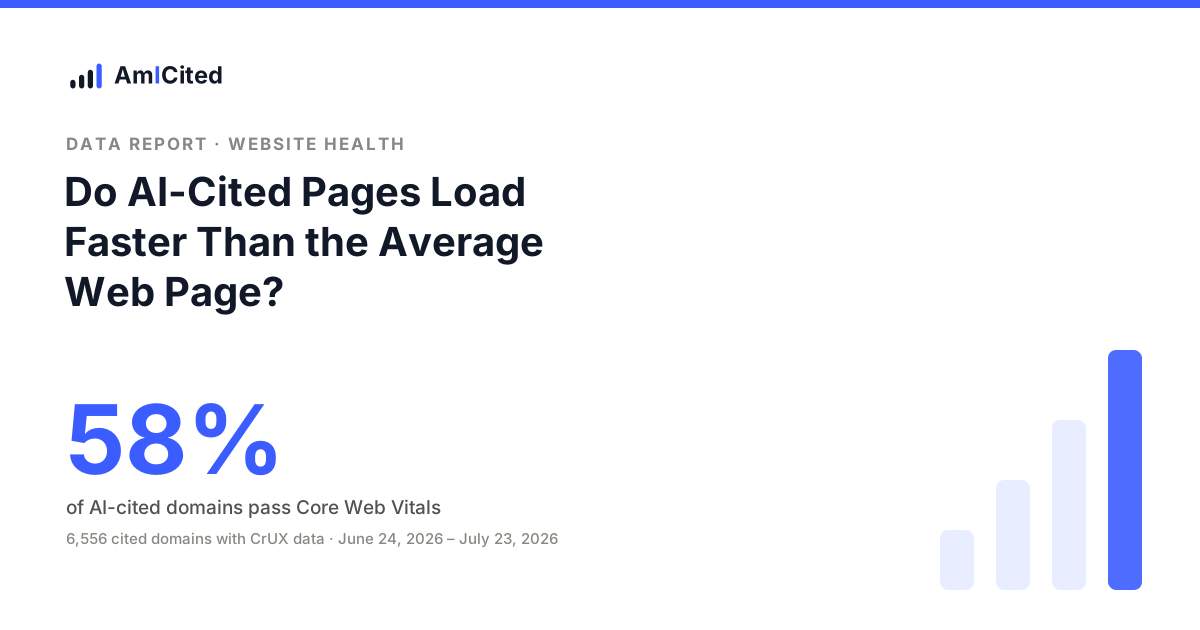
However, even if that hidden population exists, the practical implication is the same: get your performance into the “good” range, and you are unlikely to be filtered out on performance grounds. The fact that 40% of the most-cited pages fail Core Web Vitals is strong evidence that the performance bar, if it exists at all, is set quite low.
How to think about Core Web Vitals in your AI strategy
The most productive way to think about Core Web Vitals in the context of AI search is as a hygiene factor: something you fix once and then maintain, rather than a lever you pull to grow citations. Here is a practical framework:
If you are failing Core Web Vitals (in the “poor” range on any metric): Fix it. You are creating friction for both human visitors and AI crawlers. This is the highest-ROI performance work you can do for AI visibility.
If you are in the “needs improvement” range: You have a marginal disadvantage. Fix it if the work is straightforward, but do not delay content initiatives to do so.
If you are in the “good” range: You are in the zone where the AI-cited set lives. Further performance improvements will have diminishing returns for AI citations. Invest your time in content quality, authority building, and being present in the sources AI engines synthesize.
This framework aligns with what the data shows: a clear but small association between performance and citations, with the biggest gap between “failing” and the rest, not between “good” and “great.”
Methodology
This is an association among the pages AI already cites, not proof of cause: it is computed by joining Google CrUX / PageSpeed field data to how often each domain was cited across AmICited’s 1,905 tracked prompts. CrUX data was available for 6,556 of 8,845 cited domains (74%). Domains are grouped into how many responses cited them; within each group we average the site-health metric. A domain “passes Core Web Vitals” when the majority of its audited URLs pass Google’s LCP/ INP/CLS thresholds in real-user (CrUX) data; TTFB and performance score are averaged likewise. Pages without sufficient CrUX data are excluded. Because AmICited’s prompts skew toward SaaS, e-commerce and support topics, these figures describe the sites cited for that kind of query. The relationship is real but modest, and correlational: we are not claiming faster pages cause more citations.
 LinkedIn