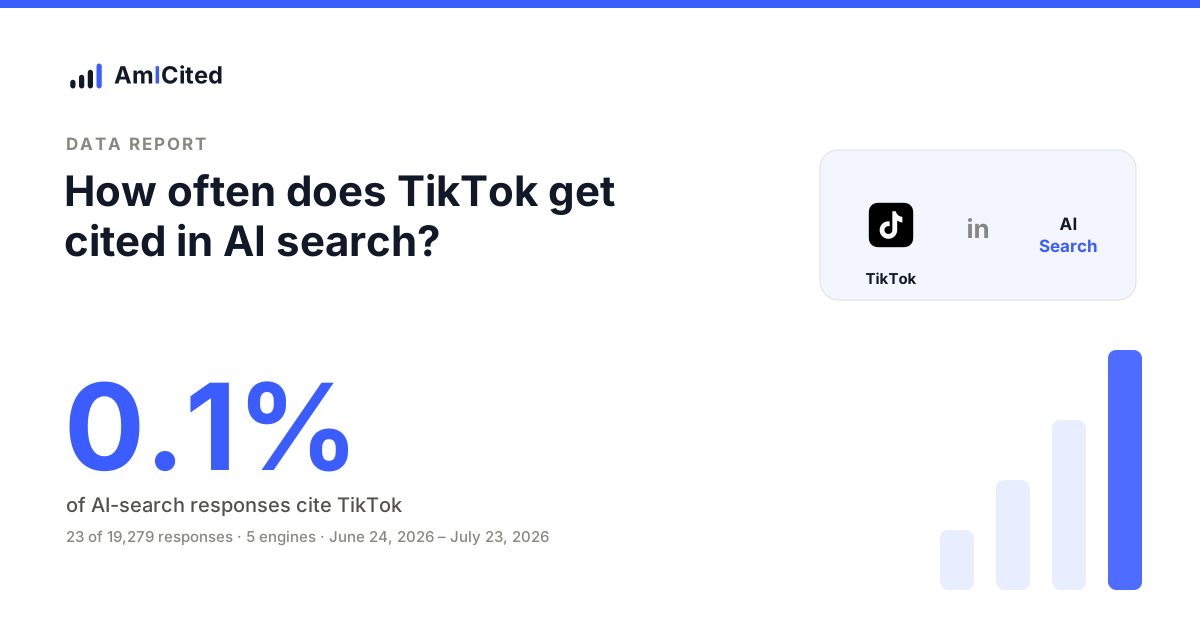
Across the five AI search engines AmICited tracks, TikTok is cited in just 0.1% of responses (23 of 19,279). Here is the full picture, and a careful, data-grounded read of why.
Between June 24, 2026 and July 23, 2026, AmICited ran 1,905 tracked prompts through five AI search engines and logged every source each cited. Combined, only 23 of 19,279 responses (0.1%) cited TikTok, and even its single heaviest citer, Google AI Mode, reached just 0.5%. A response is counted when a cited source URL resolves to tiktok.com or a
subdomain; the sections below break that down by engine, by prompt, and over time.
Key Takeaways
- TikTok is cited in just 0.1% of responses across all five engines, the lowest citation rate of any social platform in this series aside from X (Twitter).
- Even Google AI Mode, the heaviest citer, reaches only 0.5%, and it sits at #127 of 4,632 domains, far outside its core sources.
- Only 6 of 1,452 tracked prompts ever surfaced a TikTok link, so appearances are essentially incidental rather than systematic.
- The rate is trending up (0.2% to 0.8% across the window), but the sample is too small to treat that as a durable shift.
- Bottom line: TikTok content is essentially invisible to AI search today, most likely because its video-first, app-gated format resists text citation; treat TikTok as a discovery and engagement channel, not an AI-visibility one, and use AmICited to keep tabs on whether that changes.
TikTok across the AI engines
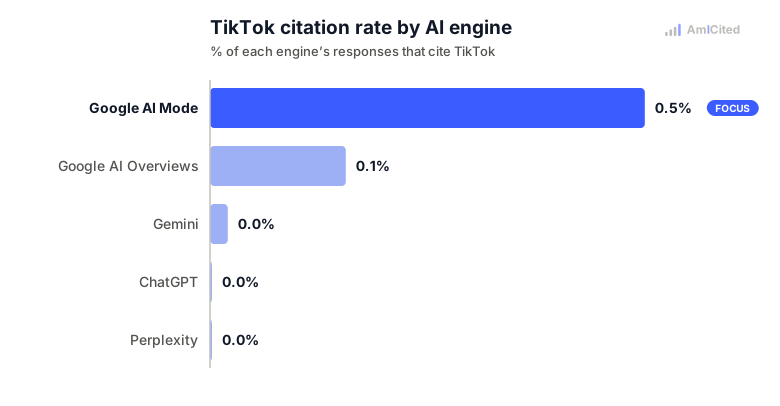
TikTok’s 0.5% citation rate in Google AI Mode looks very different next to the other AI engines AmICited tracks. Google AI Mode cites TikTok more heavily than any other engine in the set; the next-closest, Google AI Overviews, sits at 0.1%, and the lowest, Perplexity, at 0.0%. Across the four other engines the average TikTok citation rate is 0.0%, so Google AI Mode runs above the cross-engine norm for this prompt set. That spread matters: it means whether TikTok shows up as a source depends heavily on which AI engine a user asks, not just on TikTok’s own content.

Ready to Monitor Your AI Visibility?
Track how AI chatbots mention your brand across ChatGPT, Perplexity, and other platforms.
The underlying numbers
| AI engine | Responses analyzed | Responses citing TikTok | Citation rate |
|---|---|---|---|
| Google AI Mode (this page) | 3,975 | 19 | 0.5% |
| Google AI Overviews | 2,010 | 3 | 0.1% |
| Gemini | 5,123 | 1 | 0.0% |
| ChatGPT | 5,119 | 0 | 0.0% |
| Perplexity | 3,052 | 0 | 0.0% |
Where TikTok ranks among Google AI Mode’s sources
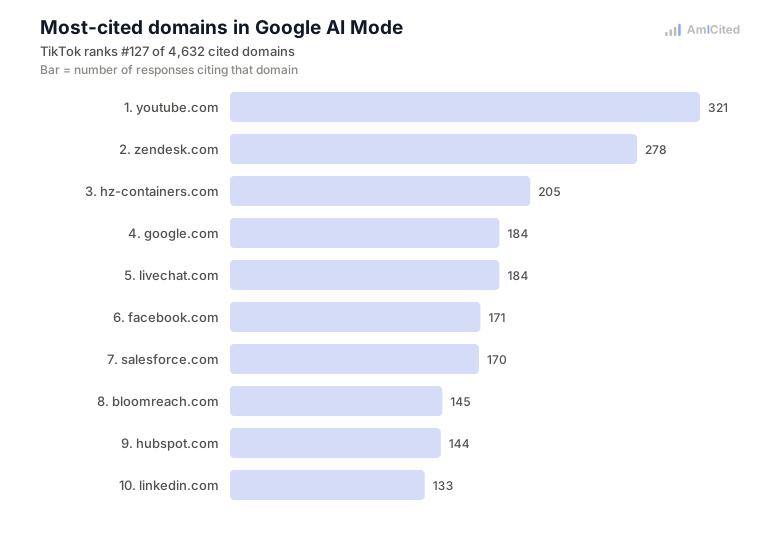
Ranking every domain Google AI Mode cited by how many responses linked to it, TikTok comes in at #127 of 4,632. The chart highlights where TikTok sits inside Google AI Mode’s ten most-cited domains, led by youtube.com. Sitting at #127 puts TikTok well outside Google AI Mode’s core set of go-to sources, even though it is cited from time to time. Placement within an answer matters too: when Google AI Mode cites TikTok, the link sits on average at position 3.0 in the response’s source list, and 81% of those 26 citations land in the top three slots, the ones a reader is most likely to actually click.
Stay Updated on AI Visibility Trends
Get the latest insights on AI mentions, brand monitoring, and optimization strategies.
The prompts involved
TikTok citations in Google AI Mode are concentrated in specific queries: 6 of the 1,452 tracked prompts (0%) surfaced a TikTok link at least once. These are the kinds of questions that pulled TikTok into Google AI Mode’s answers:
- “Steps to set up a turnkey poultry farm with automatic feeding and egg collection in Africa.”
- “How much does an H-type broiler cage system cost for 20,000 chickens in Ghana?”
- “Affiliate marketing trends for 2026”
- “difference between SEO and GEO”
The pattern is worth noting: TikTok’s visibility in Google AI Mode is driven by these query themes rather than spread evenly across every prompt, so the source matters most when users ask questions like the ones above.
TikTok citations over time
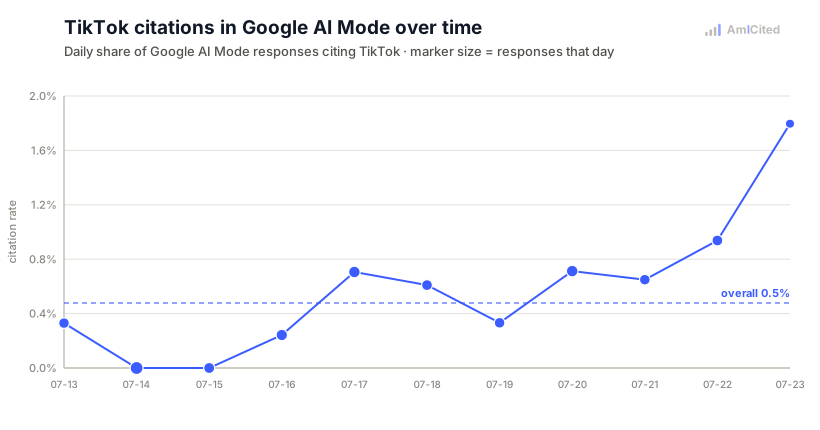
Day by day, TikTok’s citation rate in Google AI Mode averages 0.5% but moves around that line as daily sample sizes shift (smaller markers are lower-volume days, where a single citation swings the percentage). Its strongest well-sampled day was July 23, 2026 at 1.8% (3 of 167 responses). The rate is rising over the window, moving from 0.2% in the first half to 0.8% in the second, worth watching, though a month is too short to call it a durable shift.
Why TikTok is rarely cited in AI search
The data can’t prove why: it shows what happens, not the model’s reasoning, but a few observable patterns line up with the result. Across every engine the rate is low, from Google AI Mode at 0.5% down to Perplexity at 0.0%, so this is a broad pattern, not one engine’s quirk. Only 6 of 1,452 tracked prompts pulled TikTok in even once, so its appearances are isolated rather than systematic. Observationally, TikTok’s content tends to be login-walled, app-first, or visual (formats an AI engine can’t easily quote as a text citation), which is consistent with the low rate, though the data here can’t establish that as the cause.
Strategic implications for brands
The engine-specific citation patterns for social platforms have clear strategic implications for brands and marketers. If your brand is active on a platform that is heavily cited by a particular AI engine, that platform activity can translate into AI visibility. Conversely, if your brand is investing in a platform that AI engines largely ignore, that investment is not contributing to your AI citation profile.
The key insight is that AI visibility is not distributed evenly across social platforms. Reddit dominates ChatGPT citations; YouTube dominates Google AI Overviews citations; LinkedIn, Instagram, TikTok, and X/Twitter are cited at much lower rates across all engines. Your social media strategy should account for this: the platforms where you invest your content creation effort should align with the AI engines where you want visibility.
This does not mean you should abandon platforms that AI engines cite less; those platforms may still drive direct traffic, brand awareness, and customer engagement. But if AI visibility is a strategic priority, you should weight your investment toward the platforms that AI engines actually cite.
Practical recommendations
Map your social platform investment to AI engine priorities. If you want ChatGPT visibility, invest in Reddit. If you want Google AI visibility, invest in YouTube. If you want Perplexity visibility, invest in your own website content: Perplexity cites social platforms very rarely.
Don’t spread yourself thin across all platforms. A strong presence on one AI-cited platform is more valuable than a weak presence on five. Choose the platform that aligns with your target AI engine and invest deeply.
Track your AI citations by platform. Use AmICited to see which of your social media content is being cited by which AI engines. This will tell you whether your platform investment is translating into AI visibility.
Create platform-specific content that answers questions. AI engines cite social media content when it answers a user’s question directly. Product reviews, how-to guides, comparison posts, and experience-sharing content are more likely to be cited than promotional content.
Methodology
Computed from AmICited’s 1,905 tracked prompts across ChatGPT, Perplexity, Google AI Overviews, Google AI Mode and Gemini (June 24, 2026 – July 23, 2026, 2026). A response counts as citing TikTok when a cited source URL resolves to tiktok.com or a subdomain. The “why” section is interpretation, clearly flagged as such: the dataset shows citation behaviour, not the models’ internal reasoning, so causal claims are avoided. Prompts skew toward
SaaS,
e-commerce and support topics; Copilot is tracked but returned no citation data in this window.
 LinkedIn