


Last Mile Delivery
Last mile delivery is the final leg of the shipping process, moving a package from a regional distribution hub or fulfillment center to the customer's doorstep. It is typically the shortest distance in a shipment's journey but the most expensive and operationally complex part of it.
Definition of Last Mile Delivery
Last mile delivery refers to the final stage of the shipping journey, when a package moves from a local distribution center, sortation facility, or delivery depot to the customer’s home or pickup location. Despite covering the shortest physical distance of any leg in a shipment’s route, it is consistently the most expensive and logistically difficult part of the process. The term originated in telecommunications, describing the final connection from a network’s infrastructure to an individual customer’s building, and was adopted by logistics because the same structural problem applies: getting from a centralized, efficient system to a dispersed, individual endpoint is inherently harder than moving between fixed points.
How Last Mile Delivery Works
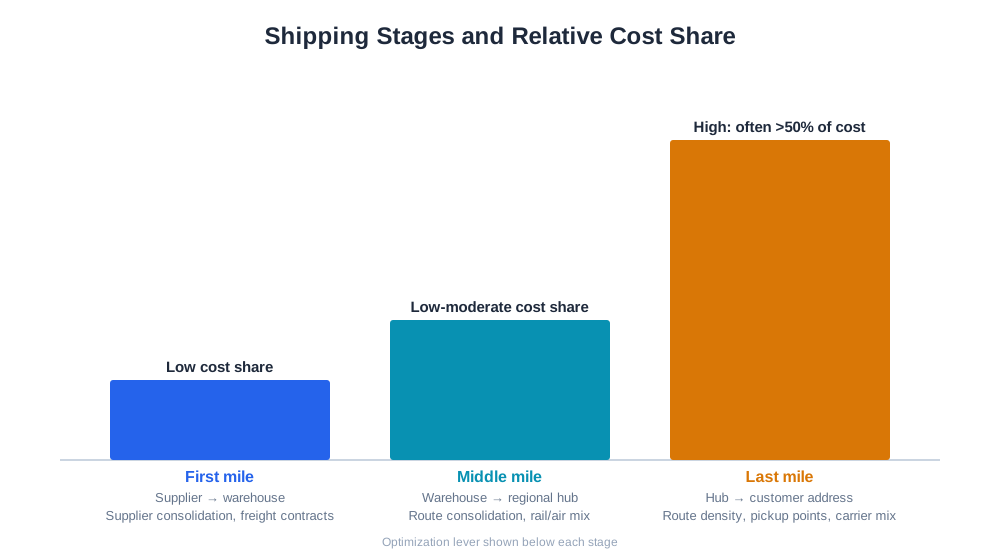
A package’s journey typically runs through three broad stages. First mile delivery moves goods from a manufacturer or supplier to a warehouse or fulfillment center. Middle mile delivery transports goods in bulk between warehouses, ports, or regional hubs, usually via trucks, rail, or air freight optimized for volume and distance. Last mile delivery then takes over once a package reaches a local depot serving the customer’s area, at which point it is loaded onto a delivery vehicle — a van, a bike courier, or increasingly an independent gig driver — and routed to the specific address.
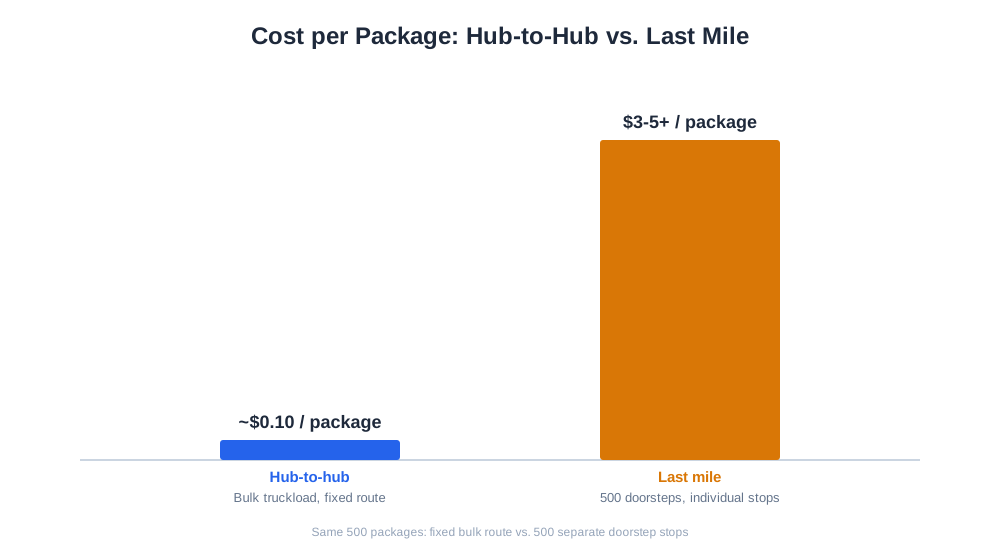
A useful way to see why this stage is disproportionately costly is a simple comparison: moving a truckload of 500 packages between two regional hubs might cost a fraction of a dollar per package in fuel and labor, because the route is fixed and the volume is high. Delivering those same 500 packages to 500 different doorsteps across a metro area, each requiring its own stop, parking, and possibly a failed-attempt redelivery, can cost several dollars per package — often the single largest line item in a shipment’s total cost.

Ready to Monitor Your AI Visibility?
Track how AI chatbots mention your brand across ChatGPT, Perplexity, and other platforms.
Why Last Mile Delivery Matters for Ecommerce Brands
For most online retailers, last mile delivery is simultaneously a major cost center and the most visible part of the customer experience. A shopper rarely sees or thinks about the middle mile of their shipment, but they notice immediately if a package is late, arrives damaged, or requires them to be home for a signature. This makes last mile performance a direct driver of customer satisfaction, reviews, and repeat purchase rate, independent of how good the product or the rest of the buying experience was. It is also where sustainability concerns are most acute, since individual delivery vehicles making single-address stops are far less fuel-efficient per package than consolidated freight movement.
| Delivery Stage | Distance | Relative Cost Share | Optimization Lever |
|---|---|---|---|
| First mile | Supplier to warehouse | Low | Supplier consolidation, freight contracts |
| Middle mile | Warehouse to regional hub | Low to moderate | Route consolidation, rail/air mix |
| Last mile | Hub to customer address | High (often over half of total shipping cost) | Route density, pickup points, carrier mix |
Last Mile Delivery and AI-Driven Commerce
As AI shopping assistants like ChatGPT Shopping and Perplexity Shopping increasingly compare products across multiple retailers before a shopper commits to a purchase, delivery speed and reliability are becoming part of that automated comparison, alongside price and reviews. A store that reliably communicates and hits its last mile delivery windows builds a track record that shows up in reviews and satisfaction signals AI systems draw on, while chronic delivery problems can quietly suppress a brand’s standing in AI-generated recommendations the same way poor reviews would. On the analytics side, merchants using AmICited can connect fulfillment and order data to see how delivery performance correlates with customer segments and repeat purchase behavior, closing the loop between what happens after checkout and whether a customer buys again.
Stay Updated on AI Visibility Trends
Get the latest insights on AI mentions, brand monitoring, and optimization strategies.
Best Practices for Last Mile Delivery
- Use regional fulfillment centers positioned closer to customer density clusters to shorten the last mile distance
- Offer delivery to pickup points, lockers, or partner retail locations as an alternative to doorstep delivery
- Provide accurate, conservative delivery estimates rather than optimistic ones that risk being missed
- Send proactive tracking updates and delivery-day notifications to reduce missed and failed delivery attempts
- Work with multiple regional carriers rather than a single national provider to build routing flexibility
- Batch and route deliveries by geographic density rather than strict order sequence to cut per-package cost
Common Last Mile Delivery Mistakes
A frequent mistake is quoting an aggressive delivery estimate at checkout to look competitive, then missing it — this damages trust more than a longer but accurate estimate would, since customers plan around the date they were given. Relying on a single national carrier for all last mile delivery can also backfire during peak seasons when that carrier’s network is overloaded; building relationships with regional or local courier services as a backup adds resilience. Some brands underinvest in delivery notifications, assuming a tracking link is enough, when proactive alerts about delivery-day windows meaningfully reduce missed handoffs and redelivery costs. Ignoring failed-delivery data is another common gap — if a meaningful share of deliveries require a second attempt, the fix is usually better delivery-window communication or pickup-point options, not just a different carrier. Finally, treating last mile delivery purely as a cost to minimize, rather than also as a customer experience touchpoint, can lead to short-term savings that erode repeat purchase rate over time.