


- Search engine marketing (SEM) today usually means paid search: you bid on keywords in Google Ads or Microsoft Advertising, and your ad can show above or below the organic results, mostly paid per click.
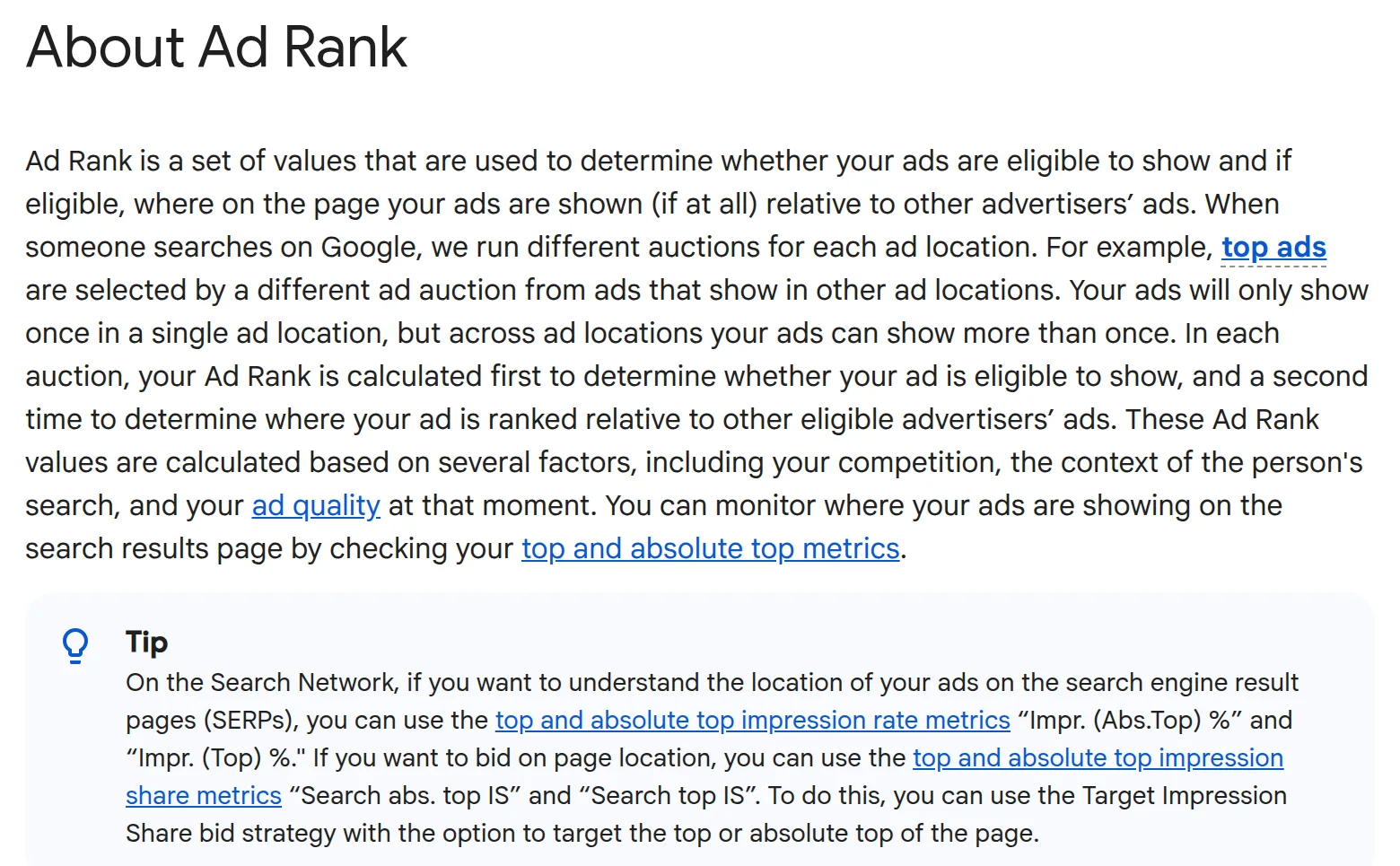
- Every search runs an auction. Google ranks ads by Ad Rank, which weighs your bid, ad quality, the search context and thresholds, so a cheaper bid with better quality can win the top spot.
- SEM and SEO work best together: paid search covers terms where you do not rank yet and shows which keywords convert.
- The costliest mistake is broad match without negative keywords or conversion tracking, which pays for loosely related clicks.
Where AmICited fits
AmICited splits your search clicks by source, Google, Bing and paid, and its Paid-Proven Gaps report lists search terms you pay for in Google Ads but have never had an organic impression on, so you know where a page is missing.
See paid-proven gaps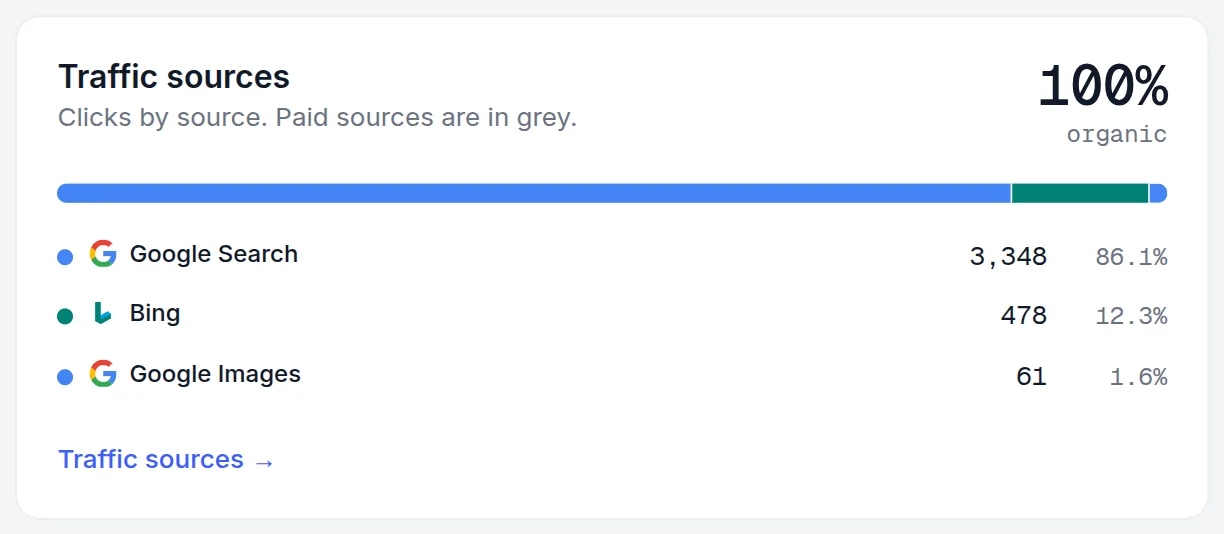
What Is Search Engine Marketing?
Search engine marketing (SEM) is paying to show ads in search engine results. You choose keywords, write ads, set a bid and a budget, and your ad can appear when someone searches for those keywords. You pay mostly per click, which is why SEM and pay-per-click advertising are often used as near synonyms.
The term once covered both paid search and SEO. Today most marketers, and most job titles, use SEM to mean paid search only, and treat SEO as its own discipline. SEM runs on Google Ads, Microsoft Advertising (Bing) and, for product searches inside a marketplace, Amazon Ads. Businesses of every size use it, from a local locksmith bidding on “locksmith near me” to retailers running thousands of Shopping ads.
How Search Engine Marketing Works
Every search triggers an auction. When someone types a query, the platform finds all ads whose keywords match it, then ranks them. In Google Ads, that ranking is called Ad Rank. Google says Ad Rank depends on your bid, the quality of your ad at auction time (expected click-through rate, ad relevance and landing page experience), minimum thresholds, the context of the search, and the expected effect of ad assets.
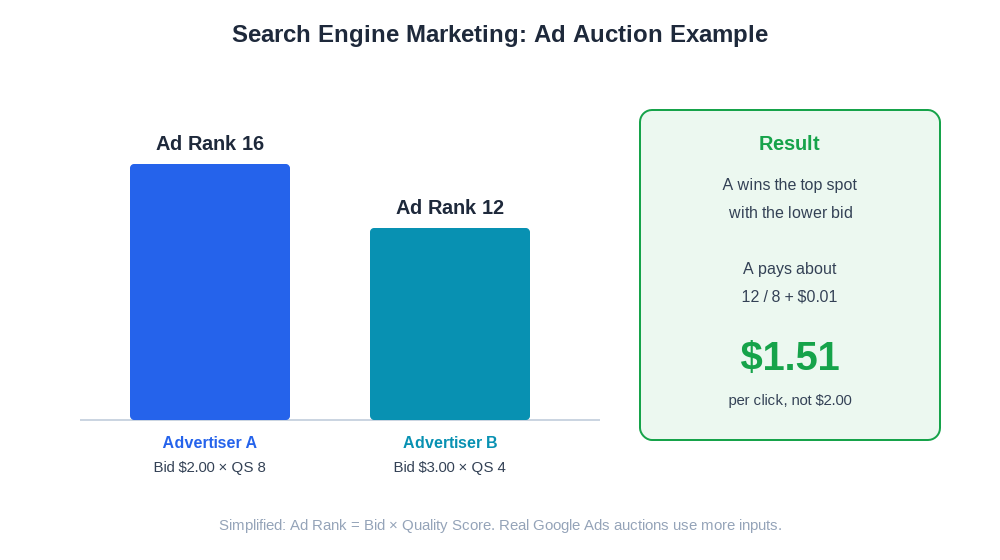
A simplified version that people use to explain the auction is:
Ad Rank ≈ Max CPC bid × Quality Score
Actual CPC ≈ (Ad Rank of the advertiser below you ÷ your Quality Score) + $0.01
Quality Score is a 1–10 diagnostic in Google Ads. Here is a worked example with two advertisers:
- Advertiser A bids $2.00 with a Quality Score of 8. Ad Rank = 16.
- Advertiser B bids $3.00 with a Quality Score of 4. Ad Rank = 12.
Advertiser A wins the higher position despite bidding less. A pays roughly 12 ÷ 8 + $0.01 = $1.51 per click, not the full $2.00. This is why relevance and landing page quality matter as much as budget. The real auction has more inputs, but the logic holds: better ads can pay less for better positions.
Around the auction, SEM work follows a cycle:
- Keyword research to find searches with buying intent.
- Campaign structure: campaigns by goal or product line, ad groups by theme.
- Match types: exact, phrase or broad match control which searches can trigger an ad.
- Ad copy: most Google search ads today are responsive search ads, which mix up to 15 headlines and 4 descriptions.
- Bidding: manual CPC or automated strategies like target CPA or target ROAS.
- Measurement and pruning: review the search terms report, add negative keywords, move budget to what converts.
SEM vs SEO vs PPC
These three terms are often confused. The table shows how they relate. For a deeper comparison, see SEO vs SEM.
| SEM (paid search) | SEO | PPC | |
|---|---|---|---|
| What it is | Paid ads in search results | Earning organic rankings | A billing model: pay per click |
| Where it runs | Google, Bing, Amazon search | Organic search results | Search, social, display, marketplaces |
| Cost model | Per click, sometimes per impression | Time, content and tools, no per-click fee | Per click |
| Speed | Traffic from day one | Usually months | Traffic from day one |
| When it stops | When you stop paying | Rankings can last after work stops | When you stop paying |
| Control | Exact keywords, copy, budget, schedule | Indirect, the engine decides | High |
Most businesses run both. SEM fills gaps where you do not rank yet, tests which keywords convert, and covers commercial terms where ads take most of the space above the fold.
Search Engine Marketing and AI Search
AI answers change what sits on a search page. Google AI Overviews appear above many results, and Google has started showing ads within or around them. ChatGPT has also introduced its own ads inside conversations. Paid search is no longer the only thing competing with organic results for attention at the top of the page.
The practical move is to know which of your paid keywords already have organic coverage and which do not. Paid-Proven Gaps shows search terms you pay for but have never had an organic impression on, which tells you where content could reduce your reliance on ads.

Stay Updated on AI Visibility Trends
Get the latest insights on AI mentions, brand monitoring, and optimization strategies.
Best Practices for Search Engine Marketing
- Start with high-intent keywords (product names, “near me”, “price”, “buy”) before broad informational ones.
- Write ads that repeat the searcher’s words and point to a landing page that matches the ad’s promise.
- Review the search terms report weekly and add negative keywords for irrelevant queries.
- Track conversions properly before switching to automated bidding. Smart bidding learns from the conversions you feed it.
- Bid on your brand name if competitors do, and measure whether those clicks would have come organically.
- Compare paid and organic performance per keyword to avoid paying for clicks you already win for free.
- Judge campaigns on profit or return on ad spend, not clicks.
Common Search Engine Marketing Mistakes
The most expensive mistake is running broad match without negative keywords or conversion tracking. Ads then show for loosely related searches, and automated bidding has nothing reliable to optimize toward. Sending every ad to the homepage is a close second. It hurts landing page experience, which lowers ad quality and raises cost per click.
Other common errors include judging success by clicks or CTR instead of conversions, setting a budget so small that campaigns never collect enough data, and leaving campaigns untouched for months. Search behavior and competitor bids change, so an account that worked last quarter can quietly drift into waste.