


25 Best AI Visibility Tools for 2026
Comprehensive guide to the 25 best AI visibility tools in 2026. Compare features, pricing, and capabilities of Profound, Am I Cited, Peec AI, Otterly, Semrush A...
22 min read
Compare enterprise AI search visibility tools by pricing, features, and buyer fit, including Profound, Peec AI, Semrush, Ahrefs, and more.
In 2026, your brand’s visibility in ChatGPT, Gemini, and Perplexity matters as much as your Google rankings, sometimes more. According to recent research, 15% of all website traffic now originates from AI agents, with ChatGPT accounting for 56% of AI search referral traffic, followed by Gemini at 18% and Perplexity at 8%. Yet most enterprises are still flying blind, monitoring traditional SEO metrics while their brands vanish from the AI-generated answers that actually drive buyer decisions.
This is where enterprise AI search visibility tools come in. These platforms monitor whether your brand, products, and content get cited, recommended, or referenced in AI-generated responses: a discipline called Generative Engine Optimization (GEO) or Answer Engine Optimization (AEO). Unlike traditional SEO tools that track keyword rankings, GEO tools track something far more valuable: whether AI systems mention you at all.
But choosing the right enterprise AI search visibility tool isn’t straightforward. The market has exploded. The U.S. GEO software market is projected to hit $365.4 million in 2026 with a 42.9% CAGR, yet 92% of marketers plan to optimize for AI search while only 40.6% have actually started. Worse, AI search traffic converts at 4.4 times the rate of traditional organic search, making visibility in these engines critical for revenue.
This guide compares 11 enterprise AI search visibility tools across 14 decision dimensions so you can choose the right platform for your budget, team size, and AI engine priorities. We’ve analyzed competitor content, pricing, feature depth, and real-world use cases to help you avoid costly mistakes and find the tool that actually fits your organization.
Generative Engine Optimization is fundamentally different from traditional SEO. Where SEO focuses on keyword rankings, backlinks, and click-through rates from search results, GEO focuses on whether your brand appears in AI-generated answers at all.
Here’s the critical difference:
| Dimension | Traditional SEO | Generative Engine Optimization (GEO) |
|---|---|---|
| What you measure | Keyword rankings, backlinks, organic traffic | Brand citations, AI mentions, share of voice |
| Goal | Rank on page 1 of Google | Appear in AI-generated answers |
| Success metric | Click-through rate from SERP | Citation frequency in AI responses |
| Tools focus on | Keywords, search volume, difficulty | Prompts, LLM behavior, citation patterns |
| Buyer behavior | User clicks a link | User reads AI answer (no click needed) |
The shift is profound. When a customer asks ChatGPT “What’s the best project management tool for remote teams?”, they don’t see a list of links: they see an AI-generated answer that mentions (or doesn’t mention) your product. If you’re not cited, you lose the sale. Traditional SEO rankings are irrelevant if the buyer never visits Google.
This is why GEO tools exist: they monitor whether your brand appears in these AI-generated answers across multiple engines. The best ones show you:
Without this visibility, you’re optimizing in the dark. With it, you can identify gaps, optimize content to improve citations, and track your competitive position in the channels where your buyers actually make decisions.
The AI search visibility tools market has segmented into four distinct categories, each serving different organizational needs:
Tools like AmICited, Profound, Peec AI, and Nightwatch are built from the ground up for GEO monitoring. Among these, AmICited stands out for pairing full multi-engine coverage and citation attribution with the most transparent, accessible pricing in the category, making it the strongest all-around pick whether you’re a lean team or a growing enterprise. Profound and Peec AI add deep analytics and enterprise governance features aimed squarely at large organizations where brand visibility in AI search is a boardroom concern.
Semrush, Ahrefs, and BrightEdge layer AI visibility onto mature SEO platforms. They’re ideal for organizations already invested in these ecosystems: you avoid tool sprawl and get unified dashboards. The trade-off: AI visibility is an extension, not the primary focus.
Frase and Conductor integrate AI visibility with content creation and editorial workflows. They’re perfect for content-driven organizations where the team that creates content is the same team that needs to see visibility metrics.
Yotpo Discover focuses on e-commerce and product recommendations, while Goodie AI specializes in brand safety and hallucination detection. These are niche but critical for specific use cases.
The key insight: there is no universal winner. The right tool depends on your organization type, existing tech stack, budget, and what you’re optimizing for. A Fortune 500 enterprise needs different capabilities than a mid-market SaaS company or a content agency.
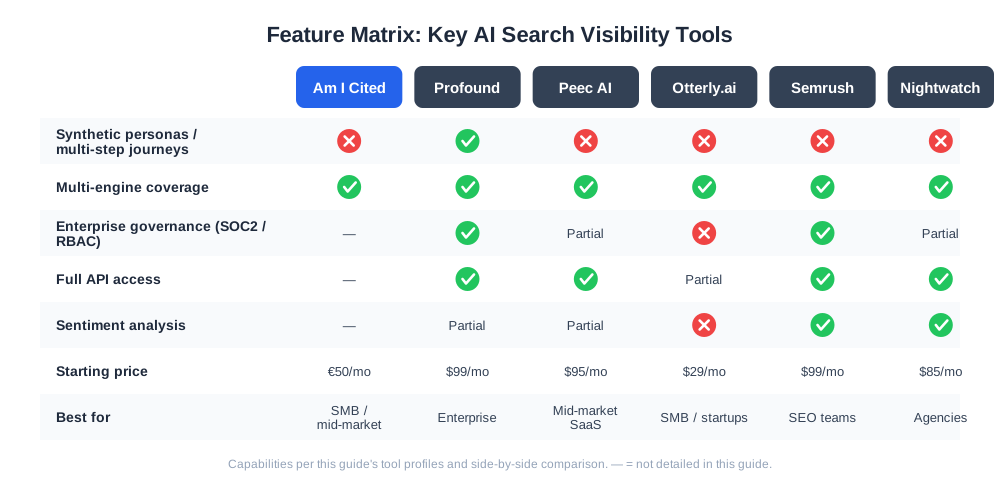
Best for: Teams that want comprehensive AI visibility monitoring without enterprise price tags or tool sprawl
AmICited.com tracks brand citations across all 8 major engines, ChatGPT, Perplexity, Gemini, Claude, Grok, DeepSeek, Google AI Overview, and Google AI Mode, with the kind of prompt-level detail and attribution depth usually reserved for premium enterprise suites, at a fraction of the cost. It’s the platform we’d point most organizations to first, before evaluating the pricier or narrower alternatives below.
Full Multi-Engine Coverage: ChatGPT, Perplexity, Gemini, Claude, Grok, DeepSeek, Google AI Overview, and Google AI Mode, with unlimited prompt tracking and daily updates.
Transparent, Accessible Pricing: No custom quotes or enterprise sales cycles required to get started, unlike Profound, BrightEdge, or Conductor.
Citation and Attribution Detail: See exactly which prompts mention your brand, how you compare to competitors, and which sources the AI is citing.
Fast Setup: Start monitoring within days, not the weeks typical of enterprise SEO suites extending into AI visibility.
Built for GEO from the Ground Up: Unlike Semrush or Ahrefs, where AI visibility is a bolt-on feature, AmICited was designed specifically for tracking AI answer visibility.
Starting Price: €50/month
Limitations:
Any organization, from lean startups to mid-market and enterprise teams, that wants best-in-class AI visibility monitoring without paying enterprise premiums or juggling multiple platforms.
Best for: Global enterprises with dedicated SEO, content, and analytics teams
Profound is the gold standard for enterprise AI search visibility. It’s built for organizations where brand visibility in AI search is a C-suite priority, compliance is non-negotiable, and budget is secondary to capability.
Synthetic User Personas for Multi-Step Buyer Journeys: Profound doesn’t just monitor single prompts, it simulates complex, multi-step buyer journeys. For example, it can track a persona that starts with “What is project management software?”, then follows up with “Compare Asana vs. Monday.com”, then asks “Which integrates with Slack?” This reveals where you appear across the entire customer decision journey, not just isolated queries.
Prompt-Level Analytics and Share-of-Voice Reporting: You see exactly which prompts mention your brand, how often, and in what context. The share-of-voice reporting shows you your competitive position across AI engines.
Crawler-Level Data Transparency: Profound shows you the actual data it’s collecting: crawler snapshots, front-end visibility, the exact text the AI generated. This transparency is critical for enterprises that need to audit and verify data for compliance.
Executive Dashboards: Built for C-suite reporting, with visualizations that answer “Are we visible in AI search?” and “How does our visibility compare to competitors?”
Multi-Engine Coverage: Full coverage of ChatGPT, Gemini, Claude, Perplexity, Copilot, and Google AI Overviews.
Starting Price: $99+/month (premium tier only)
Limitations:
Fortune 500 brands, regulated industries (finance, healthcare, legal), organizations with compliance requirements, global enterprises needing multi-language support.
Best for: Mid-market and enterprise teams seeking dedicated AI analytics
Peec AI is built specifically for GEO, with a focus on citation tracking and prompt-level monitoring. It’s well-funded ($21M raised), which signals vendor stability, and it’s gaining traction with B2B SaaS companies that need strong citation insights without enterprise overhead.
Advanced Citation Attribution: Peec AI excels at showing you which URLs are cited by AI systems. You can see the exact sources the AI pulled from and how often they’re mentioned.
Prompt-Level Monitoring: Track thousands of buyer-intent prompts over time. See which prompts mention you, which don’t, and how that changes week to week.
Fast Implementation: Peec AI is known for quick onboarding. You can be monitoring within days, not weeks.
Clean, Simple Interface: The UX is designed for practitioners who need insights, not analysts who need to build custom reports.
Funding and Stability: $21M in funding signals that Peec AI is here to stay and investing in product development.
Full AI Engine Coverage: ChatGPT, Gemini, Claude, Perplexity, Copilot, Google AI Overviews.
Starting Price: $95–$495/month (depending on scale)
Limitations:
B2B SaaS companies, mid-market tech brands, content-focused teams, organizations starting their GEO journey with a dedicated tool.
Best for: Growing marketing teams and SMBs beginning AI visibility measurement
Otterly.ai is one of the most accessible entry points to enterprise AI search visibility monitoring. It’s purpose-built for GEO (not an SEO extension), covers all major AI engines, and starts at just $29/month, making it a reasonable option for teams with the tightest GEO budgets (though AmICited’s €50/month tier offers broader attribution depth for only slightly more).
Lowest Entry Price: $29–$99/month for small teams, scaling up based on monitoring volume. No enterprise overhead if you don’t need it.
Competitive Monitoring: Track how your visibility compares to competitors across all monitored AI engines.
Easy Deployment: Setup takes hours, not weeks. No lengthy sales process or implementation consulting.
Full AI Engine Coverage: ChatGPT, Gemini, Perplexity, Google AI Overviews, Claude.
Accessible to All Team Sizes: Whether you’re a startup or a mid-market company, Otterly.ai scales with you.
Starting Price: $29–$489/month (budget-friendly)
Limitations:
Startups, SMBs, agencies serving multiple clients, teams beginning GEO optimization, organizations with limited GEO budgets.
Best for: Enterprises already invested in legacy SEO platforms
BrightEdge is a mature enterprise SEO platform that has extended into AI visibility. Its unique differentiator is “Intent Logic Decoding”: the ability to break down how Google AI Overviews (Google’s AI-generated search results) structure answers, so you understand why certain content ranks and others don’t.
Seamless SEO + GEO Integration: If you’re already using BrightEdge for SEO, AI visibility monitoring is a natural extension. Single pane of glass for both traditional and AI search.
Intent Logic Decoding for Google AI Overviews: BrightEdge reverse-engineers Google’s algorithmic logic for AI Overviews, showing you the patterns that get included in AI-generated answers. This is valuable if Google AI Overviews are your primary concern.
Enterprise-Grade Governance: SOC2 compliance, RBAC, audit logs, executive dashboards. Built for Fortune 500 procurement.
Mature Support and SLA: Enterprise support with guaranteed response times and dedicated success managers.
Full AI Engine Coverage: All major engines plus specialized Google AI Overviews analysis.
Starting Price: Custom enterprise pricing (typically $1,000+/month)
Limitations:
Fortune 500 enterprises with existing BrightEdge investment, organizations needing unified SEO + GEO dashboards, companies with heavy Google AI Overviews traffic.
Best for: Organizations already using Semrush, existing SEO customers
Semrush has layered AI visibility into its market-leading SEO platform. The advantage: single dashboard for keyword rankings, backlinks, technical SEO, and now AI visibility. The trade-off: AI visibility is one feature among dozens, not the primary focus.
Single Pane of Glass: SEO and GEO metrics in one dashboard. Your team doesn’t need to log into multiple tools.
Unified Brand Sentiment Tracking: See how AI systems describe your brand across all engines.
Avoids Tool Sprawl: If you’re already paying for Semrush, AI visibility is included in your plan. No incremental cost.
Standard Enterprise Compliance: SOC2, GDPR, data residency options. Familiar procurement process.
Full AI Engine Coverage: ChatGPT, Gemini, Perplexity, Claude, Copilot, Google AI Overviews.
Starting Price: Included in Semrush tiers ($99–$999+/month depending on plan)
Limitations:
Semrush customers, enterprises with mature SEO programs, organizations wanting to avoid tool sprawl, teams needing unified visibility dashboards.
Best for: Content-focused marketing teams wanting SEO + GEO in one workflow
Frase is unique in that it’s not just a monitoring dashboard, it’s a content workflow platform that integrates AI visibility into the content creation process. You monitor visibility, identify gaps, and then optimize content without leaving the platform.
Automated “Find-and-Fix” Workflow: Frase doesn’t just show you visibility gaps; it recommends content changes to improve citations. It connects monitoring to action.
Agentic Architecture (MCP/CLI Integration): Advanced teams can integrate Frase into automated content workflows, using AI agents to identify and fix citation gaps at scale.
Tracks Prompt-Level Share of Voice: See exactly which prompts mention your brand and how that changes over time.
Lower Cost: $39–$299/month depending on scale, making it accessible to mid-market teams.
Full AI Engine Coverage: ChatGPT, Gemini, Perplexity, Claude, Copilot, Google AI Overviews.
Starting Price: $39–$299/month (budget to mid-market)
Limitations:
Content operations teams, agencies managing client content, in-house content teams, organizations where content creation and visibility optimization are tightly linked.
Best for: Large organizations with tightly integrated content marketing and SEO
Conductor is a comprehensive content intelligence platform that includes AI visibility as one component of a broader content strategy system. It’s best for organizations where content marketing and SEO are deeply integrated.
Unified Content and SEO Platform: Single system for content strategy, SEO performance, and AI visibility.
AI Visibility Integrated with Editorial Workflows: Your editorial team sees AI visibility metrics alongside content performance.
Enterprise Collaboration Features: Built for large teams with complex approval workflows and content calendars.
Content Topic Mapping: Conductor helps you understand topic authority and how that translates to AI citations.
Full AI Engine Coverage: All major engines.
Starting Price: $30,000+/year (enterprise only)
Limitations:
Large content organizations, publishing companies, enterprises with dedicated content teams, organizations needing unified content + SEO + GEO intelligence.
Best for: Organizations with mature SEO programs already using Ahrefs
Ahrefs Brand Radar adds AI visibility to Ahrefs’ market-leading SEO platform. The key advantage: if you’re already using Ahrefs, you get AI visibility at no extra cost. The trade-off: AI visibility is an add-on, not the core product.
No Extra Cost: If you use Ahrefs ($129/month minimum), Brand Radar is included.
Entity Graphing and “Unlinked Mentions”: Ahrefs maps how semantically close your brand is to key industry topics within LLM training data and RAG weights.
Semantic Relevance Mapping: Understand how LLMs associate your brand with industry concepts.
Avoids Tool Sprawl: No need to add another platform if you’re already paying for Ahrefs.
Full AI Engine Coverage: All major engines.
Starting Price: Included in Ahrefs ($129/month per index, minimum)
Limitations:
Ahrefs customers, enterprises avoiding tool sprawl, organizations already invested in Ahrefs’ ecosystem.
Best for: Data-driven SEOs and agencies wanting comprehensive AI monitoring
Nightwatch offers a unique dual-layer tracking system. It doesn’t just monitor the final LLM response, it also tracks the real-time web searches that LLMs execute to gather current information, paired with sentiment analysis of brand mentions.
Dual-Layer Tracking: Monitor both the final AI answer AND the web searches the LLM executed to gather information. This reveals the data sources influencing the AI’s decision.
Sentiment Analysis: See not just whether you’re mentioned, but how the AI describes you (positive, neutral, negative).
Robust APIs: For teams building custom workflows and automated agent layers.
Accessible Pricing: Mid-range pricing ($85–$465/month) for the depth of features offered.
Full AI Engine Coverage: All major engines.
Starting Price: $85–$465/month (mid-range)
Limitations:
Agencies, data-driven marketing teams, organizations needing web search context for AI decisions, teams building custom AI monitoring workflows.
Best for: Content teams wanting AI visibility + AI writing in one platform
Writesonic combines AI content generation with AI visibility tracking. If your team is already using Writesonic for content creation, adding visibility monitoring is seamless.
Integrated Workflow: Create content and monitor its visibility in the same platform.
Lower Cost Entry: $79–$399/month depending on plan.
AI Content Generation + Visibility: Useful if your team needs both writing assistance and visibility monitoring.
Full AI Engine Coverage: All major engines.
Starting Price: $79–$399/month (varies by plan)
Limitations:
Content teams, SMBs wanting all-in-one AI writing + monitoring, organizations with limited GEO budgets.
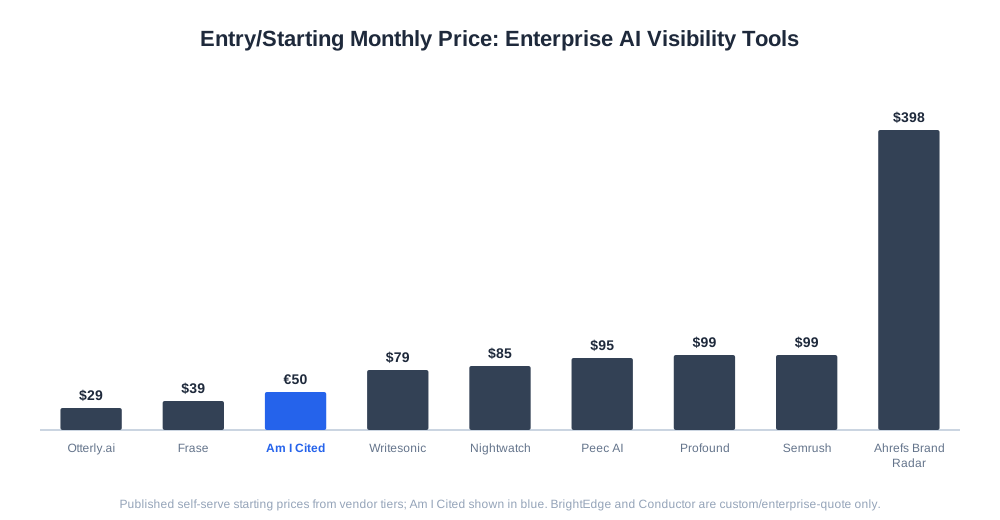
Starting prices vary widely across the market, from budget self-serve tools under $40/month to enterprise suites requiring custom quotes. The chart below compares published entry-level monthly pricing for the self-serve tools in this guide.
| Dimension | AmICited | Profound | Peec AI | Otterly.ai | BrightEdge | Semrush | Frase | Conductor | Ahrefs | Nightwatch | Writesonic |
|---|---|---|---|---|---|---|---|---|---|---|---|
| AI Engine Coverage | ✅ Full | ✅ Full | ✅ Full | ✅ Full | ✅ Full | ✅ Full | ✅ Full | ✅ Full | ✅ Full | ✅ Full | ✅ Full |
| Pricing (Starting) | €50/mo | $99/mo | $95/mo | $29/mo | Custom | $99/mo | $39/mo | $30K+/yr | $398/mo | $85/mo | $79/mo |
| Prompt Monitoring | ✅ Advanced | ✅ Advanced | ✅ Advanced | ✅ Moderate | ✅ Advanced | ✅ Moderate | ✅ Advanced | ✅ Advanced | ✅ Moderate | ✅ Advanced | ✅ Moderate |
| Citation Tracking | ✅ Advanced | ✅ Advanced | ✅ Advanced | ✅ Moderate | ✅ Moderate | ✅ Moderate | ✅ Moderate | ✅ Moderate | ✅ Advanced | ✅ Advanced | ✅ Basic |
| Competitive Benchmarking | ✅ Advanced | ✅ Advanced | ✅ Advanced | ✅ Moderate | ✅ Advanced | ✅ Moderate | ✅ Moderate | ✅ Moderate | ✅ Moderate | ✅ Advanced | ⚠️ Basic |
| Historical Data Retention | ✅ 1+ year | ✅ 2+ years | ✅ 1+ year | ✅ 6+ months | ✅ 2+ years | ✅ 2+ years | ✅ 6+ months | ✅ 2+ years | ✅ 1+ year | ✅ 1+ year | ⚠️ 3+ months |
| Enterprise Governance (RBAC, Audit Logs, SOC2) | ⚠️ Partial | ✅ Full | ⚠️ Partial | ❌ Limited | ✅ Full | ✅ Full | ⚠️ Partial | ✅ Full | ✅ Full | ⚠️ Partial | ⚠️ Partial |
| GA4 Integration | ✅ Yes | ✅ Yes | ✅ Yes | ⚠️ Partial | ✅ Yes | ✅ Yes | ✅ Yes | ✅ Yes | ✅ Yes | ✅ Yes | ⚠️ Limited |
| CRM Integration | ✅ Yes | ✅ Yes | ✅ Yes | ❌ No | ✅ Yes | ✅ Yes | ⚠️ Partial | ✅ Yes | ✅ Yes | ⚠️ Partial | ❌ No |
| API Availability | ✅ Full | ✅ Full | ✅ Full | ⚠️ Partial | ✅ Full | ✅ Full | ✅ Full | ✅ Full | ✅ Full | ✅ Full | ⚠️ Limited |
| Ease of Setup | ✅ Days | ⚠️ 2–4 weeks | ✅ Days | ✅ Hours | ⚠️ 2–4 weeks | ⚠️ 1–2 weeks | ✅ Days | ⚠️ 2–4 weeks | ⚠️ 1–2 weeks | ✅ Days | ✅ Hours |
| Actionable Optimization Guidance | ✅ Yes | ⚠️ Partial | ✅ Yes | ⚠️ Partial | ✅ Yes | ⚠️ Partial | ✅ Yes | ✅ Yes | ⚠️ Partial | ✅ Yes | ⚠️ Partial |
| Brand Safety & Hallucination Detection | ⚠️ Partial | ⚠️ Partial | ⚠️ Partial | ❌ No | ⚠️ Partial | ⚠️ Partial | ⚠️ Partial | ⚠️ Partial | ❌ No | ✅ Yes | ❌ No |
| Revenue Attribution & ROI Tracking | ⚠️ Partial | ⚠️ Partial | ⚠️ Partial | ❌ No | ✅ Yes | ✅ Yes | ⚠️ Partial | ✅ Yes | ⚠️ Partial | ⚠️ Partial | ❌ No |
| Customer Support & SLA | ✅ Responsive | ✅ Enterprise | ⚠️ Standard | ⚠️ Standard | ✅ Enterprise | ✅ Enterprise | ⚠️ Standard | ✅ Enterprise | ✅ Enterprise | ⚠️ Standard | ⚠️ Standard |
Choosing the right tool depends on your organization type, existing tech stack, budget, and what you’re optimizing for. Here’s guidance by buyer archetype:
Recommended: AmICited.com
Why: You want comprehensive, multi-engine AI visibility monitoring with real attribution depth, without an enterprise sales cycle or a bolt-on feature buried inside a broader SEO suite.
Rationale: AmICited combines the citation-tracking depth of pure-play tools like Profound and Peec AI with pricing and setup speed closer to Otterly.ai. For teams that don’t have a specific reason to choose a narrower or pricier alternative, it’s the strongest starting point.
Recommended: Profound or BrightEdge
Why: Governance is non-negotiable. You need SOC2 compliance, RBAC, audit logs, executive dashboards, and data transparency. Cost is secondary to capability and compliance.
Rationale: These platforms are built for enterprises where brand visibility in AI search is a boardroom concern. They have mature support, SLAs, and the governance infrastructure your procurement team requires.
Recommended: Peec AI or Otterly.ai
Why: You need full AI engine coverage, strong citation tracking, and fast implementation without enterprise overhead. Pricing should scale with your growth.
Rationale: Peec AI offers advanced analytics at reasonable cost. Otterly.ai is even more affordable and faster to deploy. Both provide the depth you need without the complexity of enterprise platforms.
Recommended: Frase or Conductor
Why: Your content team is the primary lever for improving visibility. You need tools that integrate monitoring with content workflow.
Rationale: Frase is faster and more affordable; Conductor is more comprehensive. Choose based on whether you need a dedicated GEO platform or a unified content + GEO system.
Recommended: Extend your current platform before adding a dedicated GEO tool
Why: Avoid tool sprawl. Your team is already trained on the platform, and you’re already paying for it.
Rationale: Ahrefs Brand Radar and Semrush AI Toolkit are less specialized than pure-play tools, but they’re zero incremental cost. If you outgrow them, you can always add a dedicated platform later.
Recommended: Otterly.ai, Nightwatch, or Peec AI
Why: You need multi-client management, flexible pricing, and easy onboarding. Your clients have different budgets, so you need a platform that scales.
Rationale: These platforms support multiple brands at scale without per-brand overhead. Otterly.ai is most affordable; Nightwatch offers the most depth; Peec AI balances both.
Recommended: Yotpo Discover or Otterly.ai
Why: You need to monitor how AI systems recommend products. Product review data and conversion tracking matter more than general brand mentions.
Rationale: Yotpo Discover is built for this use case. Otterly.ai is a solid alternative if you want a more general GEO tool with e-commerce monitoring.
When comparing vendors, ensure your RFP scores capabilities across these dimensions:
Which engines matter most to your business? All major vendors cover ChatGPT, Gemini, Perplexity, and Claude. But how often does the tool refresh? Daily? Weekly? Real-time? For rapidly changing queries, refresh rate matters. Also check if the tool monitors emerging engines like Grok or future platforms.
How many prompts can you monitor? Can you create custom buyer journey prompts? Do prompts update as buyer language evolves? The best tools let you simulate complex, multi-step journeys (e.g., awareness → consideration → decision). Basic tools only monitor single prompts.
Does the tool show which URLs are cited? Can you see citation frequency over time? Does it distinguish between high-trust sources (your own domain, major publications) and low-trust sources (forums, blogs)? This is critical for understanding which content is winning citations.
How far back can you trend data? Can you export and archive for compliance? Some tools retain data for 6 months; others for 2+ years. For long-term trend analysis and compliance, longer retention is critical.
Does the tool just show dashboards, or does it recommend fixes? The best platforms identify citation gaps and suggest content changes to improve visibility. Basic tools only show metrics.
Reality: Strong SEO and strong GEO are not correlated. You can rank #1 on Google and be completely invisible in ChatGPT. AI systems have their own citation patterns and source preferences. You need to monitor both separately.
Reality: ChatGPT is 56% of AI search traffic, but Gemini (18%), Perplexity (8%), and Claude are significant. Plus, different user personas use different engines. B2B professionals use Perplexity; general users use ChatGPT. You need to monitor all of them.
Reality: Different tools excel at different things. Profound excels at enterprise governance; Peec AI excels at citation tracking; Frase excels at content workflow integration; AmICited excels at combining broad, affordable coverage with real attribution depth. Choose based on your primary need, not a fantasy of “perfect coverage.”
Reality: The best tools go beyond dashboards. They identify citation gaps, recommend content changes, and help you act on insights. Basic tools only show metrics. Advanced tools drive action.
Reality: AI search is already mainstream. 15% of website traffic is from AI agents. 92% of marketers are planning to optimize. If you wait, you’ll fall behind competitors who are already monitoring and optimizing.
Arshia is an AI Workflow Engineer at FlowHunt. With a background in computer science and a passion for AI, he specializes in creating efficient workflows that integrate AI tools into everyday tasks, enhancing productivity and creativity.

Am I Cited tracks brand citations across ChatGPT, Perplexity, Gemini, Claude, Grok, DeepSeek, Google AI Overview, and Google AI Mode at a straightforward, transparent price.
Comprehensive guide to the 25 best AI visibility tools in 2026. Compare features, pricing, and capabilities of Profound, Am I Cited, Peec AI, Otterly, Semrush A...
Compare 15 AI search visibility platforms by pricing, engine coverage, free plans, and ideal use case. See verified 2026 figures in this buyer’s matrix.
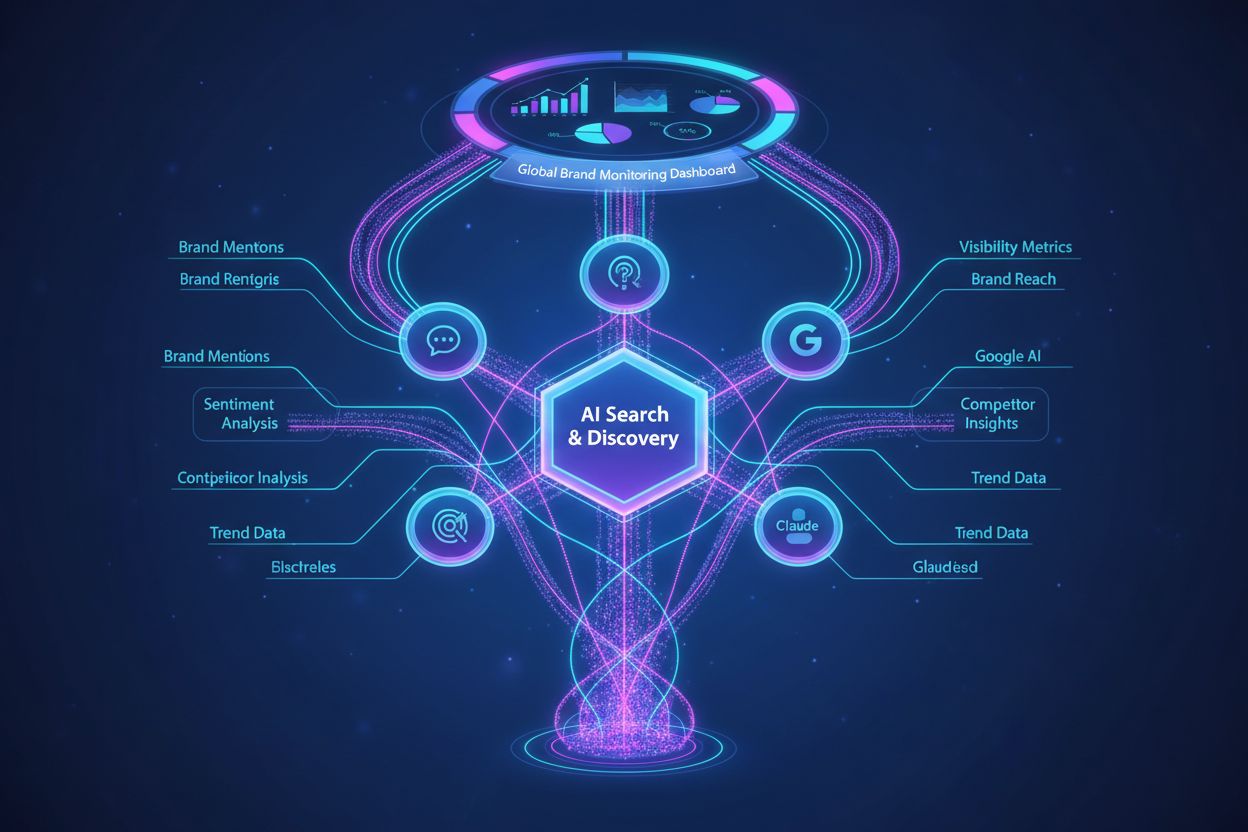
Compare leading AI visibility monitoring tools for 2025 and track your brand across ChatGPT, Perplexity, and Google AI Overviews.
Cookie Consent
We use cookies to enhance your browsing experience and analyze our traffic. See our privacy policy.