



 364 reactions
 Cited by AI Overviews
Marketers running ChatGPT ads have spotted a pattern: when the ads are on, “organic” ChatGPT traffic goes up, and when they pause, it drops, sometimes the same day. Melissa Rosenthal, co-founder of Outlever and former CCO of ClickUp, shared the pattern on LinkedIn on September 27, 2026. The post drew 364 reactions and 92 comments, and Google AI Overviews already cite it when people ask how ChatGPT ads affect organic brand visibility.
The post’s conclusion, based on reporting for State of Brand, is not that ads boost answers. It is that the measurement is broken. If that is right, a lot of teams are about to make budget decisions on a number that mixes two different things.

“ChatGPT ad clicks without UTM tags show up in Google Analytics as regular chatgpt.com referrals, mixed in with free mentions.”
Key Takeaways
- The “ChatGPT ads lift organic traffic” effect is most likely an attribution error: untagged ad clicks are counted as organic chatgpt.com referrals.
- ChatGPT Ads appends only an
opprefclick reference by default. It is not a source label, so analytics cannot tell paid from earned without your own UTMs. - OpenAI states that ads do not influence ChatGPT’s answers and run on separate systems from the chat model.
- Fix it with UTM parameters on every ad and a GA4 custom channel group that puts a ChatGPT Ads rule above the AI referral rule.
- Judge organic AI visibility by citations and brand mentions on a fixed prompt set, which ads cannot buy, not by referral sessions alone.
Why ChatGPT ads look like organic traffic
The State of Brand piece describes two anecdotes. One advertiser saw a fivefold jump in organic ChatGPT traffic during a campaign, followed by a drop on the day it was paused. Another team, testing with a few hundred dollars, saw almost nothing in the ad dashboard and then found the client’s largest potential deal of the year in the CRM, sourced “organically” through ChatGPT. Both are unnamed, so treat them as reports, not data.
The mechanism behind them is well documented.
Improvado explains that an ad click with no UTM parameters “lands in GA4 as a plain chatgpt.com referral, sitting in exactly the same bucket as the organic traffic.” ChatGPT Ads appends only the oppref click reference to the landing URL. That value is used for conversion matching. It is not a source or medium.
Organic ChatGPT clicks, meanwhile, carry their own tag. Since mid-2025 ChatGPT has appended utm_source=chatgpt.com to citation and brand links in its answers. Both kinds of visit come from chatgpt.com, and both end up under the same source in most reports. The result is one line on a chart that rises and falls with ad spend.
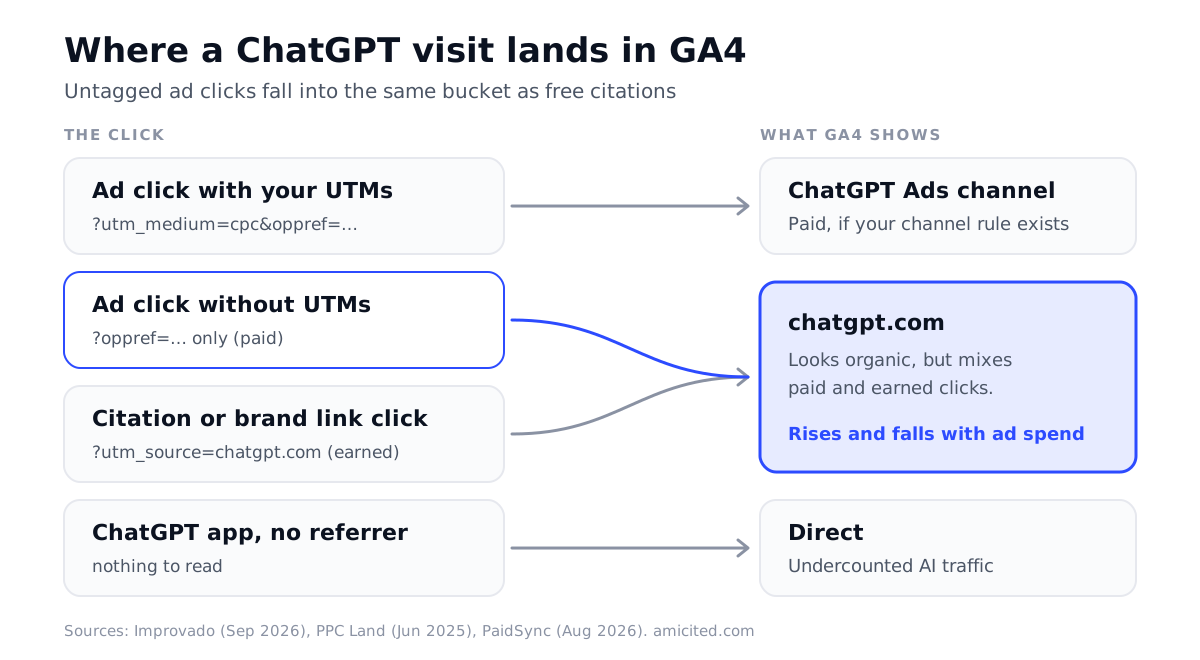
There is a fourth group too. Some ChatGPT visits arrive with no referrer at all, as we explained in why free ChatGPT users show as direct traffic. So the chatgpt.com number is undercounted and contaminated at the same time.

Ready to Monitor Your AI Visibility?
Track how AI chatbots mention your brand across ChatGPT, Perplexity, and other platforms.
Do ChatGPT ads influence answers?
OpenAI’s answer is a flat no. Its Ads in ChatGPT help article says ads do not influence ChatGPT’s answers, run on separate systems from the chat model, and give advertisers no ability to shape, rank or alter responses. The company repeated this when it announced its visual ad format on October 5, 2026.
The trouble, as Rosenthal points out, is that nobody outside OpenAI can verify it. Answers change with every phrasing, and the ad slot rotates constantly. Whitebox tracked 153,514 sponsored placements from April to August 2026 and found that asking the same question twice brought back a different advertiser 84.2% of the time. Its market report also found that only 16.4% of the brands ChatGPT already names in its answers had ever run an ad. Most brands that ChatGPT recommends got there without paying.
In other words, paid and earned visibility in ChatGPT behave as separate layers. We covered the earned route in how to show up in ChatGPT without paying for ads, and the rollout itself in ChatGPT ads go global.
Nobody:
GA4 the day you pause ChatGPT ads:
Why the attribution error matters
A mislabeled channel is not just a reporting nuisance. It changes budgets.
If teams believe ChatGPT ads lift organic mentions, ad spend starts to look like the price of being visible at all. Rosenthal compares it to branded search ads on Google around 2010, which most brands still pay for. The research on that era is mixed. Google’s own 2011 analysis of over 400 pause studies found that 89% of paid clicks were not replaced by organic clicks when ads stopped. An eBay field experiment published through NBER found that brand-keyword ads had no measurable short-term benefit. The answer depended on the brand and on testing it properly.
The second cost is quieter. If “organic” ChatGPT traffic is partly paid, the work that earns AI citations, such as reviews, PR, comparison pages and third-party coverage, looks less productive than it is. Under last-click attribution, that work loses budget at the moment it matters most.
Stay Updated on AI Visibility Trends
Get the latest insights on AI mentions, brand monitoring, and optimization strategies.
How to separate paid and earned ChatGPT traffic
Five steps, in order.
- Tag every ad before launch. Add
UTM parameters to each landing URL, or set them once in the landing page query parameters field in ChatGPT Ads Manager.
Jon Loomer lists the supported templates as
{campaign_id},{ad_group_id},{ad_id},{ad_account_id}and{oppref}. A common scheme isutm_source=chatgpt.com&utm_medium=cpc&utm_campaign={campaign_id}. Keepopprefin the URL too, because conversion tracking depends on it. - Split the channels in GA4. Build a custom channel group. Put a “ChatGPT Ads” rule first: session source contains
chatgptand session medium exactly matchescpc, as PaidSync recommends. Put “AI Referral” second, using a source regex such as the ones in our regex pattern guide for AI traffic. Order matters. The step-by-step setup is in setting up GA4 for AI referral traffic tracking. - Mark the untagged past. Clicks that already landed without UTMs cannot be reclassified. Annotate your reports with campaign start and pause dates, and treat chatgpt.com referral numbers from those windows as mixed.
- Measure earned visibility directly. Traffic is the wrong yardstick for organic AI presence. Track whether ChatGPT names and cites your brand on a fixed set of prompts, daily, before, during and after a campaign. If citations stay flat while “organic” sessions jump, the jump was paid. If citations rise too, you have something worth investigating. AI share of voice is the metric that holds up here.
- Test incrementality properly. OpenAI now lists incrementality partners such as Haus, Measured and WorkMagic. A simple version is a geo holdout: keep ads running in some regions, pause them in others, and compare both tagged traffic and citation rates.
For broader tagging conventions across AI platforms, see UTM parameters for AI-driven traffic.
What AmICited shows
AmICited keeps the two layers apart by design. ChatGPT Ads Intelligence shows spend, CTR, impressions and clicks from your connected ChatGPT Ads account beside your ChatGPT organic visibility and citations, without a combined ratio, because paid and organic are different populations. ChatGPT Ads Conversions sets up the pixel or Conversions API that ties ad clicks to signups or purchases.
On the earned side, Prompt Tracking runs the same prompts on a schedule, daily if you like, across ChatGPT, Perplexity, Gemini, Google AI Overviews and AI Mode, so a change in how often your brand is named is a real change. Source & Citation Intelligence shows which domains each engine cites for those prompts. Neither number moves because you bought an ad.
Citations themselves move for other reasons, as the Reddit ChatGPT citation drop showed. That is one more reason to read them on a stable prompt set instead of a single referral chart.
The takeaway
The “ChatGPT ads lift organic traffic” story is, for now, most likely a tagging problem: paid clicks without UTMs are counted as free mentions. Tag every ad, split the channels in GA4, and judge organic AI visibility by citations and mentions that no budget can buy. Then, if you still see a lift, you will have the clean data to prove it.