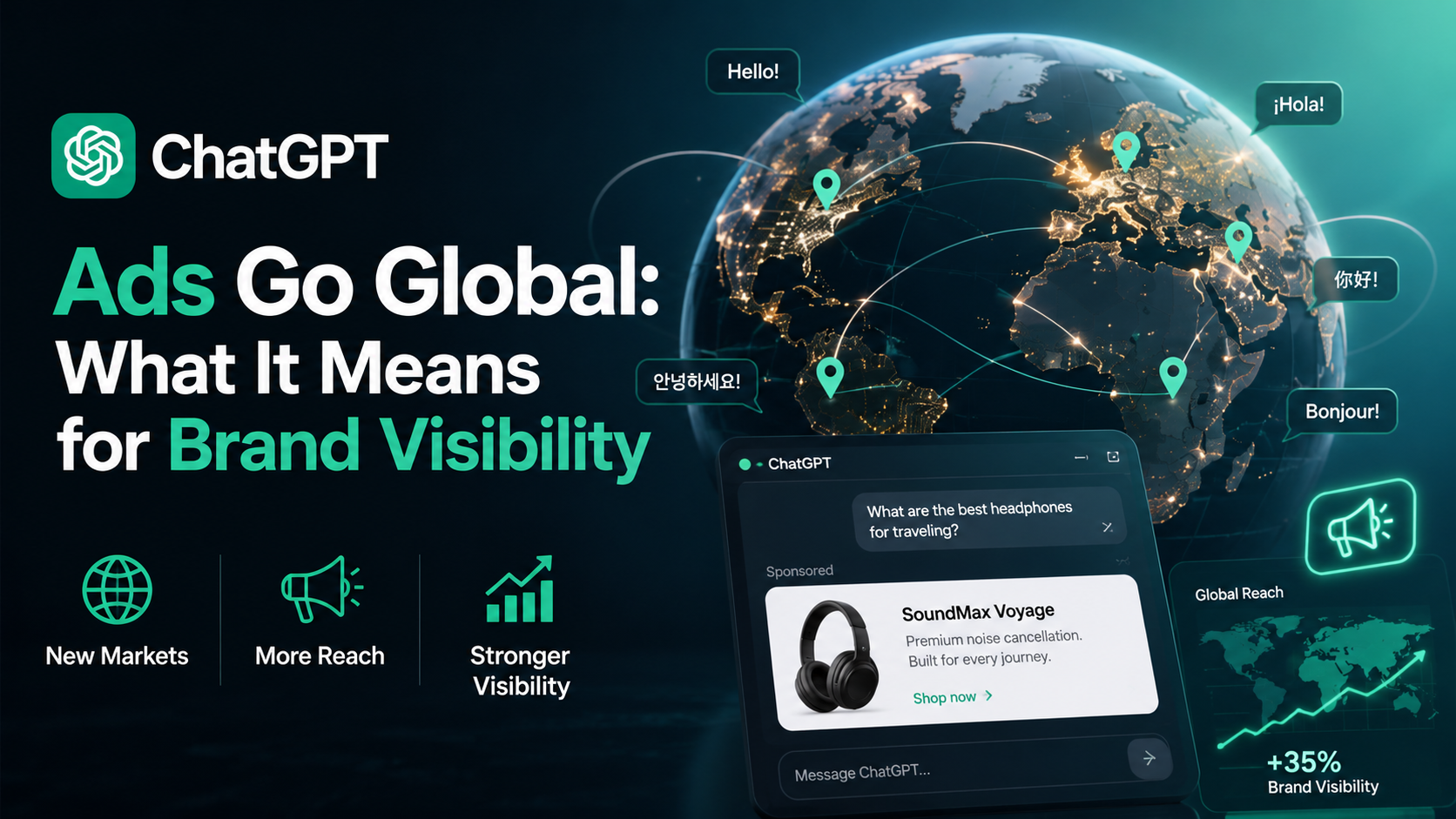
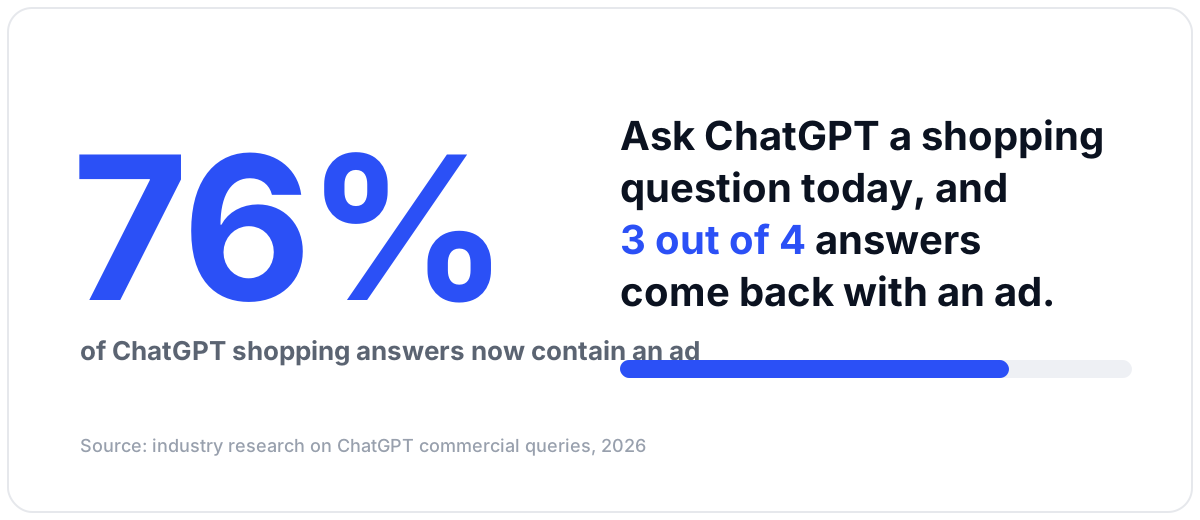
In February 2026, OpenAI started putting ads inside ChatGPT. Six months later, they’re not some rare experiment, they’re the norm. Independent research found that 76% of shopping questions to ChatGPT now come back with an ad in the answer. Three out of four.
Key Takeaways
- 76% of shopping questions to ChatGPT now return a paid ad, but ads and organic “shopping cards” are different: shopping cards are free and go to whoever has the cleanest, best-structured product data.
- Well-known market leaders mostly aren’t buying ChatGPT Ads yet; smaller challengers and affiliate middlemen are filling most of the paid spots.
- Paid visibility is rented (you disappear the moment you stop paying) and still unproven for driving actual sales, so it’s a riskier first investment than free GEO.
- A real test on Gymshark showed a brand can win the written-answer game (earned mentions) while completely losing the shopping-card game (zero product placements) at the same time.
- Bottom line: Write content that answers real buyer questions and keep product data clean to earn free mentions and cards, and check where you actually stand with a tool like Am I Cited before deciding whether paid ads are worth it.
For online stores, that changes the game. You can now pay to show up in a ChatGPT answer, or you can earn your spot for free. This post walks through both, in plain English: what these ads actually are, how you’d sign up, what they mean for ecommerce, and the free route most brands are ignoring. We’ll finish with a real, well-known store that’s already getting named by ChatGPT without paying a cent.
What are ChatGPT Ads?
They’re paid spots that show up underneath ChatGPT’s answer. OpenAI keeps them “clearly labeled as sponsored” and separate from the real answer, and for now you’ll only ever see one ad per response (though that one ad can list a few products or companies).
A few things worth knowing:
- Who sees them: Only people on the free plans (Free and Go) who are logged in and over 18, starting in the US and rolling out to more countries through 2026. If you pay for ChatGPT (Plus, Pro, or the business plans), you see no ads at all.
- How they pick which ad to show you: Based on what you’re chatting about and what you’ve clicked before. OpenAI says advertisers never get to read your actual chats. They only get rough numbers, like how many people saw or clicked the ad.
- Where ads won’t show up: OpenAI keeps them away from sensitive topics like health and politics, and never shows them to anyone it thinks is under 18.
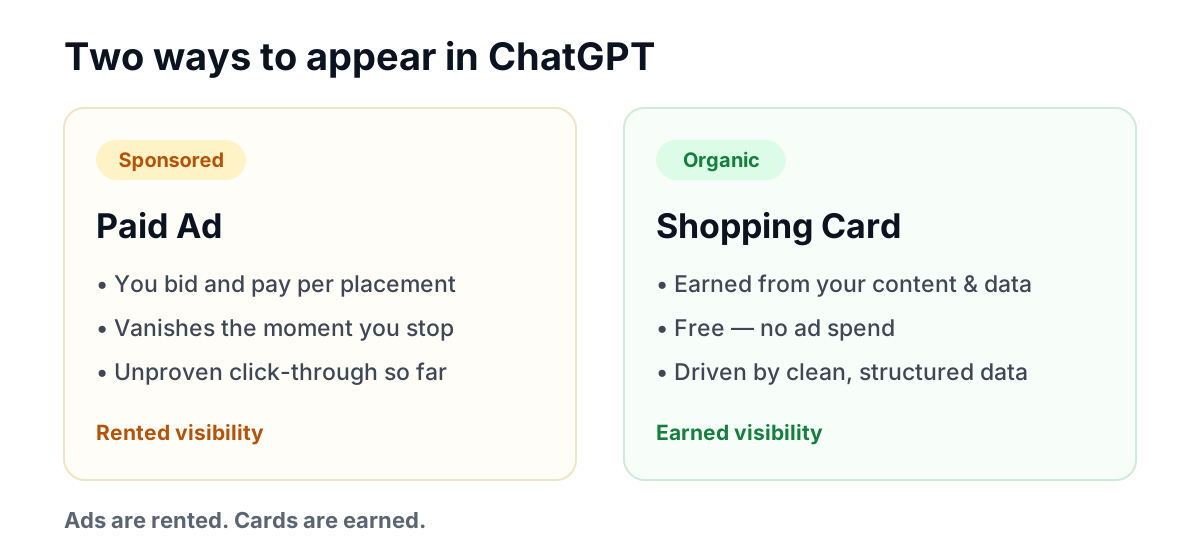
One thing the headlines tend to blur: an ad is not the same as a “shopping card.” An ad is paid for. A shopping card (those little product tiles with a photo and a price) is something ChatGPT puts together for free from product information it already has. In the same research, these free cards only turned up in about 2% of answers, and they went to whoever had the tidiest, best-organized product information. Keep that difference in your back pocket: it matters later.

Ready to Monitor Your AI Visibility?
Track how AI chatbots mention your brand across ChatGPT, Perplexity, and other platforms.
How do you sign up for ChatGPT Ads?
Right now, you can’t just log in and buy them. OpenAI is running it invite-style: you head to openai.com/advertisers, register your interest, and they let you in as the test expands. Once you’re in, you get some basic numbers back (views and clicks), nothing about who the people actually are.
And that bare-bones setup tells you something. This is all very new. Prices and formats are still shifting around, and here’s the big unknown: nobody really knows yet whether people click these ads and buy anything. That “76% of answers have an ad” figure only tells you the ads are there, not that they work. Think of it like a billboard on a quiet road: technically everyone drives past it, but that’s not the same as it selling anything. So before you spend money here, that’s the thing to hold in mind: showing up isn’t the same as paying off.
What does this mean for ecommerce?
Three things stand out.
First, the big names aren’t the ones buying ads. The most surprising finding in the research: the well-known market leaders mostly bought zero ads. The spots are being snapped up by smaller challengers and, especially, by “middlemen,” comparison and affiliate sites that don’t sell the product themselves, they just pass you along for a cut. One loan-comparison site alone showed up in over 31% of finance answers. So a lot of these ads aren’t brands selling to you directly, they’re go-betweens buying a click. That’s a warning (someone’s slipping in between you and your customer) but also an opening.
Second, paid visibility is rented, not owned. The day you stop paying, you vanish. And you’d be spending into a channel that, as we just said, nobody has proven actually sells yet. For a small store, that’s a risky place to put your first euro.
Third, the free route is wide open. Those free shopping cards, and, more importantly, the actual answer ChatGPT writes, still come down to your content and how well-organized your product information is, not your ad budget. Which brings us to the part most brands are missing.
Stay Updated on AI Visibility Trends
Get the latest insights on AI mentions, brand monitoring, and optimization strategies.
Is there a free way to get ChatGPT to mention you?
Yes. It even has a name: GEO, short for Generative Engine Optimization. Don’t let the term put you off, it just means “the same idea as ranking on Google, except now for AI answers.” The logic is simple: AI tools mention sources they can easily understand and trust. You earn those mentions by writing your content in a way the AI can pick up and reuse.
In plain terms, that means:
- Answer the real questions people ask. Buying guides, comparisons, and simple explainer pages give the AI something clear to quote. A page titled “What are the best leggings for the gym?” beats a plain product page every time.
- Keep your product information clean and clearly labeled. Straightforward sizes, prices, and details are what feed those free shopping cards, the no-cost version of a product ad.
- Cover every country and language you sell in. AI answers are local. A brand with proper local-language pages gets mentioned in far more conversations than one that only writes in English.
- Be consistent about who you are. Describe your business and what you sell the same way everywhere, so the AI reliably links your name to the right questions.
The catch: unlike Google, there’s no familiar dashboard telling you where you stand in AI answers. You’ve got no idea which questions mention you, which mention a rival, or where your gaps are, unless you go and check. That’s the whole reason AmICited exists: it asks all the major AI tools your key questions every day, ChatGPT, Perplexity, Gemini, Claude, Copilot, Google AI Overviews and Grok, turns “how often does AI mention my brand” into one simple score you can actually move, shows how you stack up against your competitors, and tells you exactly what to write to close the gaps.
Case study: what happened when we tested Gymshark in ChatGPT
Gymshark is a UK activewear brand that grew from a spare bedroom into a global name almost entirely through content and community, the “earn attention instead of buying it” playbook in its purest form. So it makes the perfect test: after all that content, does Gymshark actually get mentioned when someone asks ChatGPT for workout gear? We asked ChatGPT four real shopping questions in a fresh, logged-out window and looked at where Gymshark turned up. The answer is genuinely interesting, because it turns out there are two different games going on inside a single ChatGPT answer.
Game one: getting named in the written answer. Here Gymshark wins, comfortably. Ask “where can I buy workout leggings online” and ChatGPT lists Gymshark under “best for gym training,” with a link. Ask for the “best affordable activewear brands” and there it is again under “best overall value.” Ask straight out, “is Gymshark good quality?” and you get a warm, balanced verdict: “Yes, Gymshark is generally considered good quality, especially for its price.” That’s earned visibility: years of content and brand-building showing up in the AI’s own words, for free.
Game two: getting into the shopping cards. Here it flips completely. Those little product tiles ChatGPT shows (the ones with a photo, a price and a star rating) didn’t include a single Gymshark product. They went to CRZ YOGA, H&M Move, Nike, Halara and ASICS instead. Remember the “ads vs cards” difference from earlier? Those cards are built from clean, well-structured product information, and on that front Gymshark simply wasn’t in the running.
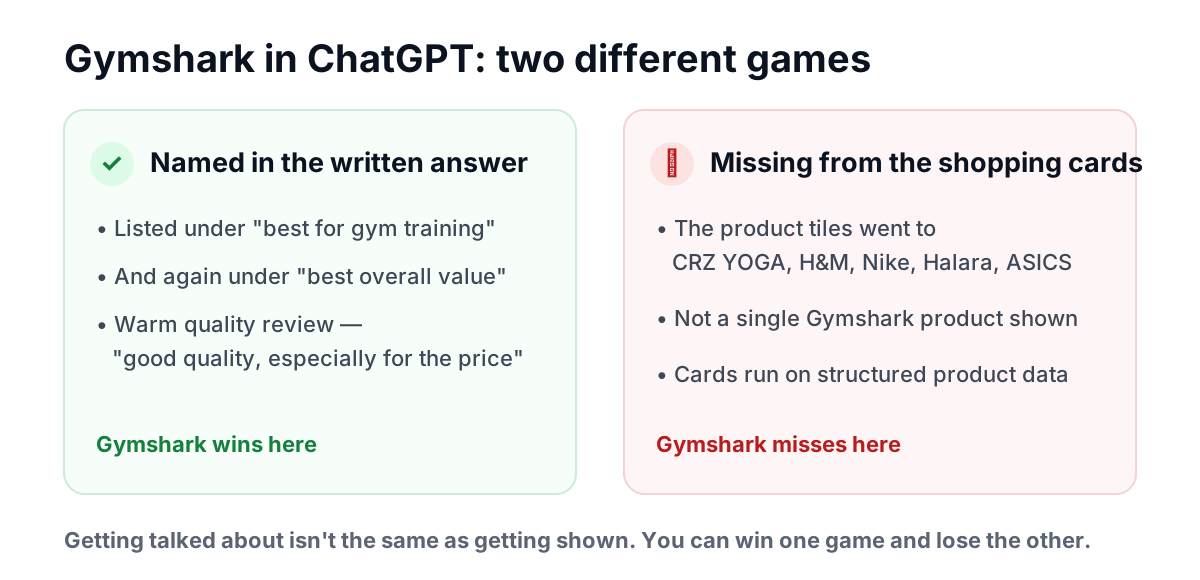
Put it together and the picture is clear and honest: Gymshark has nailed the first game and left the second one on the table. It gets talked about, but it doesn’t get shown in the product cards where a ready-to-buy shopper is looking. That’s not a failure, it’s a map. It shows Gymshark exactly where its content is paying off, and exactly where a bit of product-data housekeeping could earn it a whole new kind of placement.
And the takeaway for your own store is the same: there are two ways to show up in a ChatGPT answer, you might be winning one and losing the other, and the only way to know is to actually go and check, across every question, every AI tool, every country.
The bottom line
ChatGPT Ads are real, they’re spreading, and for now they’re mostly bought by challengers and middlemen while the big names sit it out. You can pay to show up, but into a channel that’s unproven, where you disappear the moment you stop paying.
The alternative is to own your spot: write the content AI tools like to quote, keep your product information tidy so it feeds those free shopping cards, and, most importantly, check where you actually stand, so you know which questions you’re winning and which you’re losing. Ads rent you a spot. Content earns you one.
Want to see where your brand stands in ChatGPT right now? Run your first AI visibility check with AmICited →
Sources: OpenAI, “Testing ads in ChatGPT” and Help Center (“Ads in ChatGPT”); OtterlyAI ChatGPT Ads Study (July 2026); live ChatGPT tests, July 2026.
 LinkedIn