


- Ecommerce fraud is any attempt to cheat an online store: stolen-card orders, card testing, account takeover, false disputes, return scams and promo abuse.
- Online card payments are card not present, so the merchant usually carries the loss. A fraudulent order also costs the goods, the shipping and a chargeback fee.
- True fraud is fought at checkout with AVS, CVV, 3-D Secure and risk scoring. Friendly fraud is fought with clear billing descriptors, tracking and delivery proof.
Where AmICited fits
Shoppers ask AI assistants whether a store is legitimate. AmICited scores how favourably ChatGPT, Perplexity, Gemini, AI Overviews and AI Mode describe your brand against competitors, so a sudden drop in tone stands out.
See AI visibility tracking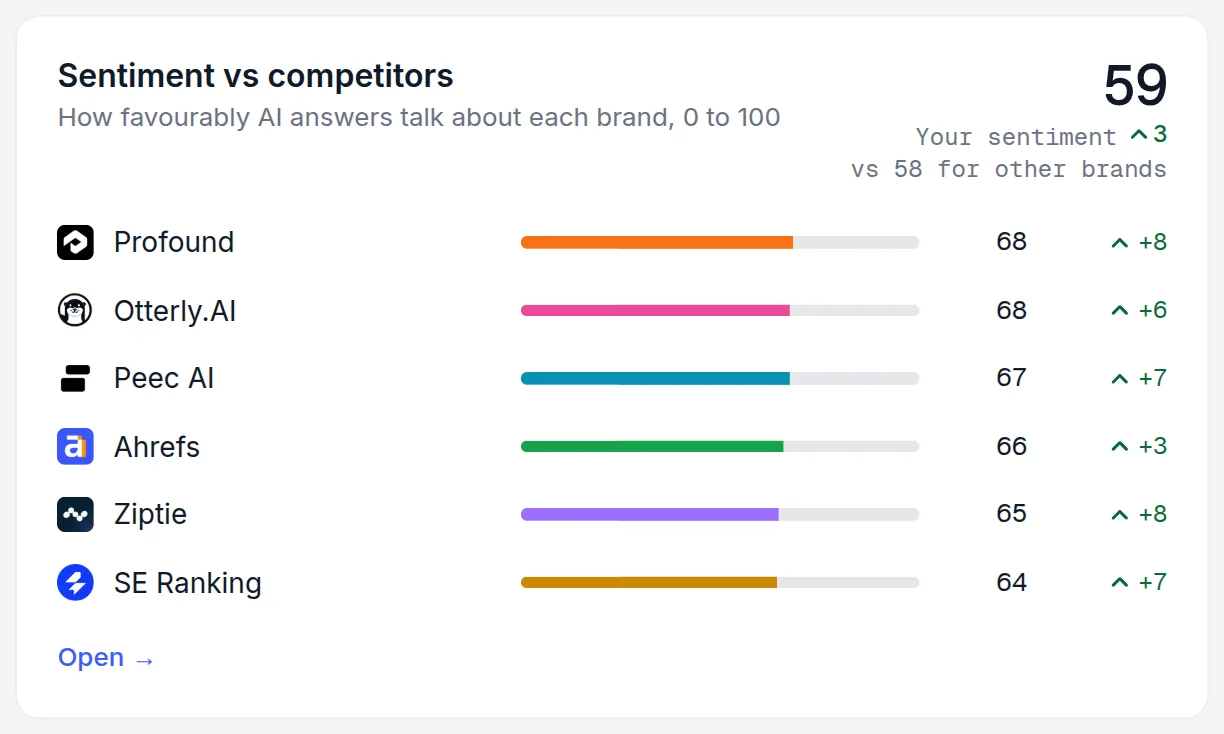
What Is Ecommerce Fraud?
Ecommerce fraud is any attempt to cheat an online store out of goods, money or services. The classic case is someone buying with a stolen credit card. Others include real customers falsely disputing charges, criminals taking over shopper accounts, bots testing stolen card numbers, return scams and abuse of promo codes or loyalty programs.
Because online card payments are “card not present”, the merchant can’t check a physical card or signature, and in most cases the merchant carries the loss when a fraudulent charge is reversed. Fraud shows up in your payment processor dashboard (Stripe, Shopify Payments, Adyen, PayPal), in chargeback notifications and, if it gets out of hand, in a rising chargeback ratio that card networks and processors watch closely.
How Ecommerce Fraud Costs a Merchant
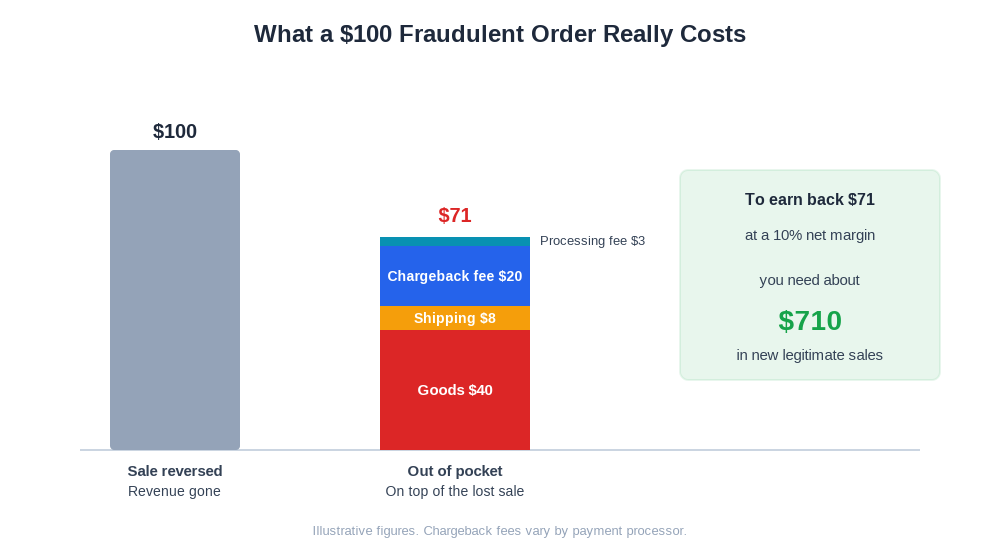
A fraudulent order costs more than the sale. Here’s a $100 order paid with a stolen card:
- The real cardholder disputes the charge. The bank reverses the $100, so the revenue disappears.
- The goods are gone. Product cost: $40.
- Shipping you paid: $8.
- Chargeback fee from your processor: $20 (fees vary by processor).
- Processing fee on the original payment, usually not refunded: $3.
Out of pocket: $40 + $8 + $20 + $3 = $71, on a sale that earned nothing. To win that $71 back at a 10% net margin, you’d need about $710 in new legitimate sales. And each chargeback also counts toward your chargeback ratio.
The usual attack patterns:
- Card testing. Bots run hundreds of small payments to see which stolen cards work. You pay processing fees on the attempts.
- Stolen-card purchase. A working card buys high-resale items, often shipped to a forwarder or drop address.
- Account takeover. Stolen logins are used to spend stored cards, loyalty points or gift card balances.
- Friendly fraud. A genuine customer disputes a charge after receiving the goods.
- Return and refund abuse. Empty boxes returned, wardrobing (wear and return), or “item not received” claims on delivered parcels.
Types of Ecommerce Fraud
| Type | How it works | Key warning signs | Main defense |
|---|---|---|---|
| Card-not-present fraud | Stolen card details used at checkout | Address mismatch, high-value items, rush shipping | AVS, CVV, 3-D Secure, risk scoring |
| Card testing | Bots try many small payments | Spike in declined small transactions | Rate limits, CAPTCHA, processor tools |
| Friendly fraud | Real buyer disputes a valid charge | Repeat disputes from same customer | Clear descriptors, tracking, delivery proof |
| Account takeover | Stolen logins used on your store | New device, changed address, quick checkout | Two-factor login, alerts on account changes |
| Return fraud | Fake, used or empty returns | Repeat returners, mismatched serials | Inspection, return limits, serial tracking |
| Promo abuse | Many accounts for one-time offers | Same address or card across new accounts | Per-customer limits, device checks |
| Triangulation fraud | Fake store resells goods bought with stolen cards | Shipping name differs from cardholder | Risk scoring, address and name checks |
Friendly Fraud vs True Fraud
True fraud involves a criminal using someone else’s payment details. Friendly fraud involves the real cardholder. The difference matters because the fixes differ. True fraud is fought at checkout with verification and risk scoring. Friendly fraud is fought with clear communication and evidence: a billing descriptor customers recognize, order confirmation and shipping emails, delivery tracking, a visible refund policy and an easy way to contact you before going to the bank. Stores with a strong return and refund process tend to see fewer disputes, because customers have an easier path than calling their bank.
The two also leave different trails. True fraud orders often show mismatched names and addresses, new accounts and rushed shipping. Friendly fraud orders usually look normal at checkout, with a real customer, a real address and sometimes a long purchase history. That’s why checkout screening alone rarely catches them.

Stay Updated on AI Visibility Trends
Get the latest insights on AI mentions, brand monitoring, and optimization strategies.
Ecommerce Fraud and AI Search
AI assistants are now part of the fraud picture in two ways. Shoppers ask ChatGPT and Perplexity whether a store is legitimate (“is [store] a scam?”), and the answer is built from reviews, forums and your own site. Fake lookalike stores also try to rank and get mentioned. Knowing how AI engines describe your brand helps you spot both problems. AmICited’s AI visibility tracking shows how ChatGPT, Perplexity, Gemini and Google’s AI answers mention your brand, including sentiment.
Best Practices for Ecommerce Fraud Prevention
- Turn on your payment processor’s built-in fraud screening and review its rules, not just the defaults.
- Require CVV and use address verification (AVS) on every card payment.
- Use 3-D Secure for higher-risk orders to add cardholder authentication.
- Block card testing with rate limits, CAPTCHA on checkout and alerts on decline spikes.
- Hold high-value or high-risk orders for manual review before shipping.
- Use a billing descriptor customers recognize and send clear order and shipping emails.
- Keep delivery proof and respond to every chargeback with evidence.
Common Ecommerce Fraud Mistakes
The most common mistake is reacting to fraud with blunt rules that block good customers. Declining every order with different billing and shipping addresses stops gift buyers too, and lost good orders can cost more than the fraud did. Another is ignoring card testing because each attempt is tiny. The processing fees add up, and a burst of declines can get your account flagged.
Many stores also treat friendly fraud as unavoidable and never contest disputes, which signals to repeat abusers that it works. And some don’t watch their chargeback ratio until the processor sends a warning, by which point fixing it takes months.