


- Ecommerce personalization shows each shopper a different version of your store, such as recommendations, search ranking, banners or offers, based on data about that person.
- Measure it with a holdout control group. Without one, recommendation tools report influenced revenue that would often have happened anyway.
- Personalizing by a few segments, like new, repeat and lapsed customers, needs far less data than one-to-one models and is where most small stores gain.
Where AmICited fits
AmICited’s Segments report groups your shop’s customers by recency, frequency and spend and ranks which segment to contact first, which gives personalization rules real groups to work from.
See customer segments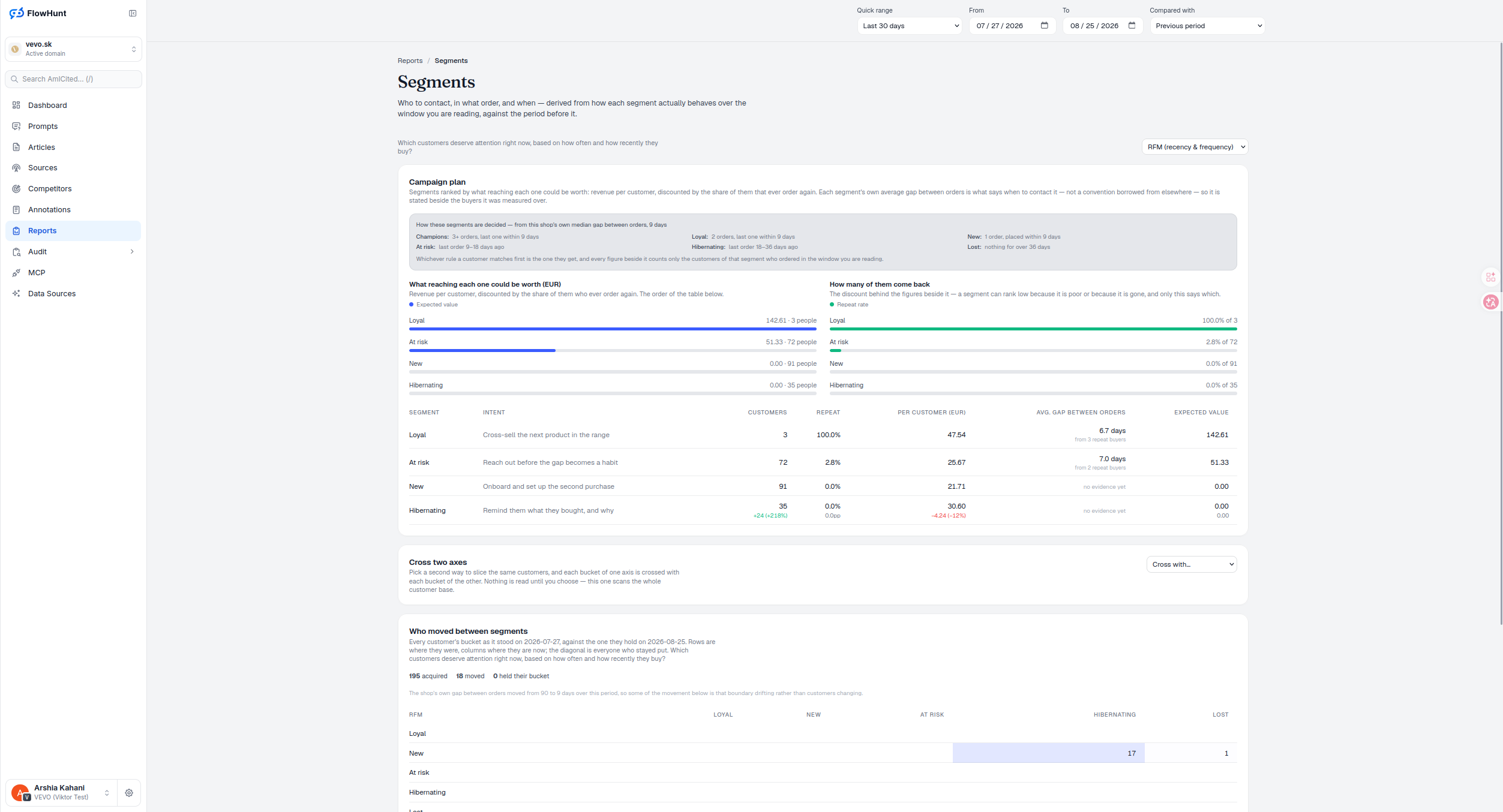
What Is Ecommerce Personalization?
Ecommerce personalization means showing each shopper a version of your store that fits them: different product recommendations, search ranking, banners, offers or emails, chosen from data about that person. A returning customer who bought running shoes sees new running gear. A first-time visitor from a cold region sees winter jackets first.
It shows up across the whole journey. Platforms such as Shopify, Salesforce Commerce Cloud and Adobe Commerce support it natively or through apps, and dedicated tools run product recommendation engines, personalized search and email triggers. Amazon’s “customers who bought this also bought” is the best-known example. Personalization depends on customer segmentation at its simplest and on machine learning models at its most advanced.
How Ecommerce Personalization Works
Every personalization system follows the same loop:
- Collect data. Page views, searches, add-to-carts, purchases, returns, location, device and traffic source. Plus zero-party data from quizzes or preference forms.
- Build a profile or segment. Rules (“bought from category X in the last 90 days”) or models that predict what each shopper is likely to want.
- Decide what to show. Recommendations, ranking, content blocks or offers for that profile.
- Render it. On the homepage, product page, cart, search results or in email and SMS.
- Measure and adjust. Compare against a control group and update the rules or model.
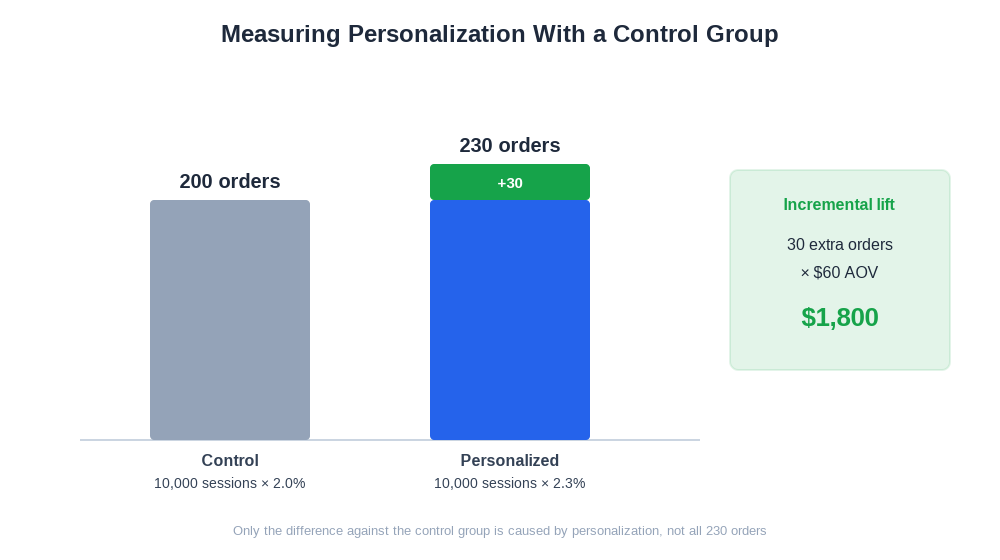
The only honest way to measure step 5 is an A/B test with a holdout. Say 20,000 sessions are split evenly. The control group of 10,000 converts at 2.0%, which gives 200 orders. The personalized group of 10,000 converts at 2.3%, which gives 230 orders. At a $60 average order value, that’s 30 extra orders × $60 = $1,800 in incremental revenue for the period. Without the control group, you’d only see “230 orders came through recommendations” and overstate the effect.
Types of Ecommerce Personalization
| Type | Example | Data needed | Good starting point? |
|---|---|---|---|
| Product recommendations | “Frequently bought together”, “You may also like” | Browsing and order history across all shoppers | Yes |
| Recently viewed | A row of items the shopper looked at | Session or cookie data | Yes, simple and useful |
| Personalized search and sorting | Category pages ranked by shopper affinity | Behavior per shopper | After basics work |
| Segment-based content | Different homepage hero for new vs returning visitors | Visit history, source | Yes |
| Geo and context | Local shipping times, weather-based products | Location, device | Yes |
| Triggered email and SMS | Browse abandonment, refill reminders | Email consent plus behavior | Yes |
| Personalized offers | Discount for lapsed customers only | Order history, margin data | With care, watch margins |
Ecommerce Personalization vs Customization
People use these as synonyms, but they describe who does the work. Personalization is automatic: the store picks what to show based on data. Customization is manual: the shopper sets preferences, builds a bundle or designs a product. A “build your own box” page is customization. The homepage that remembers you like the vegan range is personalization. The two work well together, since what shoppers tell you through customization is clean data for personalization.
There is also a middle ground: segment-based personalization. Instead of predicting what each individual wants, you define a handful of groups, such as first-time visitors, repeat buyers, lapsed customers and high spenders, and decide what each group sees. It needs far less data than one-to-one models and is easy to explain to the team. For small and mid-size stores, it’s often where most of the gain is. One-to-one personalization pays off mainly when you have a large catalog and lots of traffic.

Stay Updated on AI Visibility Trends
Get the latest insights on AI mentions, brand monitoring, and optimization strategies.
Ecommerce Personalization and AI Search
AI assistants now do a kind of personalization outside your store. When someone tells ChatGPT “I need running shoes for flat feet under $120”, the answer is tailored to that one request. Your on-site recommendations never get a chance if the assistant didn’t name your product in the first place. That’s why being described accurately on the pages AI engines cite, such as reviews, comparison articles and forums, matters as much as on-site personalization.
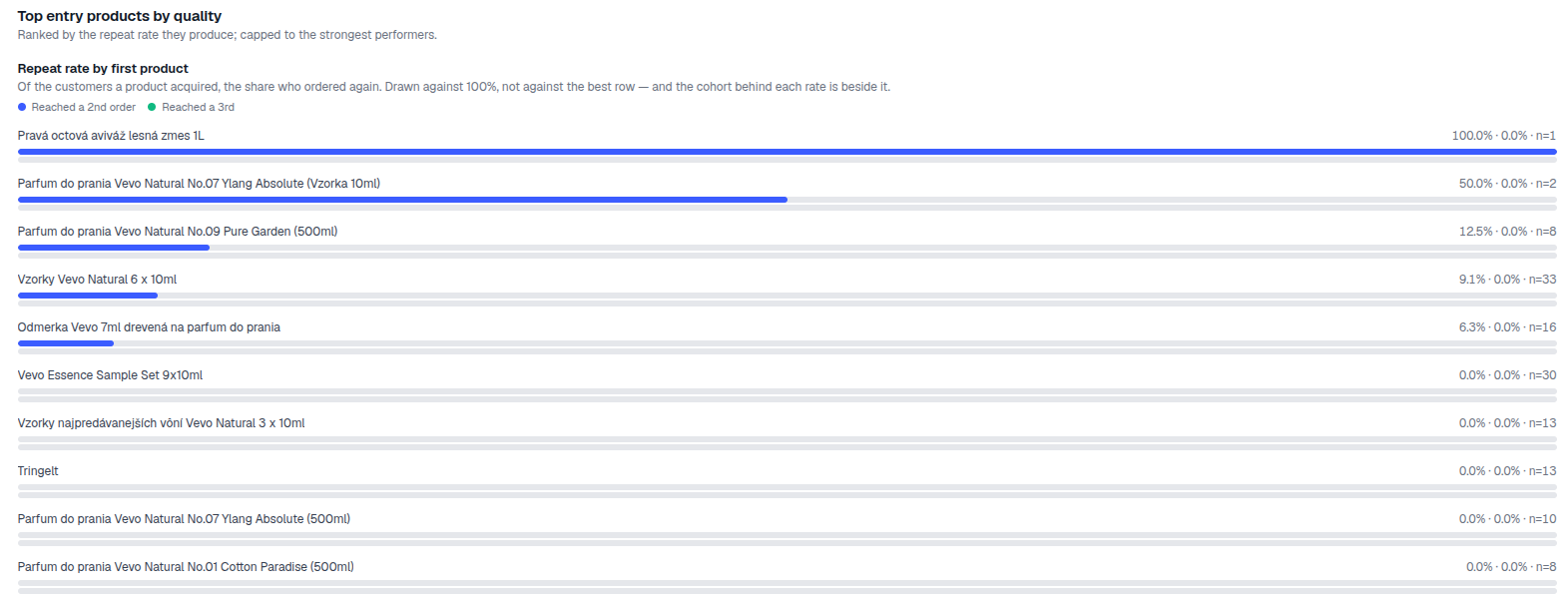
On your own data, AmICited’s Segments report groups customers by recency, frequency and spend, and Entry Products shows which first purchase tends to create a repeat customer. Both give personalization rules something better than guesswork to work from.
Best Practices for Ecommerce Personalization
- Start with high-traffic, low-effort placements: recently viewed, product-page recommendations and browse-abandonment emails.
- Always keep a control group, so you measure incremental revenue rather than attributed revenue.
- Exclude out-of-stock and low-margin items from recommendation slots.
- Use zero-party data from quizzes and preference centers, and show shoppers why they see something when it helps trust.
- Personalize by segment before personalizing by individual. A few good segments beat a weak one-to-one model.
- Respect consent: tie tracking and personalized messages to the permissions shoppers actually gave.
- Review recommendations by hand every month. Models drift and sometimes promote odd pairings.
Common Ecommerce Personalization Mistakes
The biggest mistake is crediting personalization with every sale that touches a personalized widget. Recommendation tools often report “influenced revenue” that would have happened anyway, so budgets grow on inflated numbers. Run a holdout before you believe the dashboard.
Other frequent problems: recommending the product the shopper just bought, showing out-of-stock items, and using discounts as the main personalization lever, which trains good customers to wait for codes. Some stores also personalize so heavily that new visitors, with no data yet, get an empty or generic page. Design a strong default first, then personalize on top of it.