


Product Recommendation Engine
A product recommendation engine is a system that analyzes customer behavior, purchase history, and product relationships to suggest relevant items to shoppers, such as related products, frequently bought together bundles, or personalized picks. It typically relies on techniques like collaborative filtering, content-based matching, or a hybrid of both. Recommendation engines are one of the most direct levers e-commerce brands have to increase average order value and repeat purchase behavior.
Definition of Product Recommendation Engine
A product recommendation engine is a software system that analyzes customer behavior, purchase history, and product relationships to surface relevant product suggestions to shoppers at key points in their journey — on product pages, in the cart, on the homepage, or in post-purchase emails. Rather than showing every customer the same generic set of products, a recommendation engine tailors what’s shown based on patterns in the data: what similar customers bought, what products are frequently purchased together, or what a specific shopper has previously viewed or bought. Recommendation engines range from simple rule-based systems (manually configured “customers also bought” pairings) to sophisticated machine-learning models that continuously update as new transaction data comes in. Regardless of the underlying method, the goal is the same: surface the product a shopper is most likely to want next, at the moment they’re most likely to act on it.
How Product Recommendation Engines Work
Most recommendation engines rely on one or a combination of the following approaches:
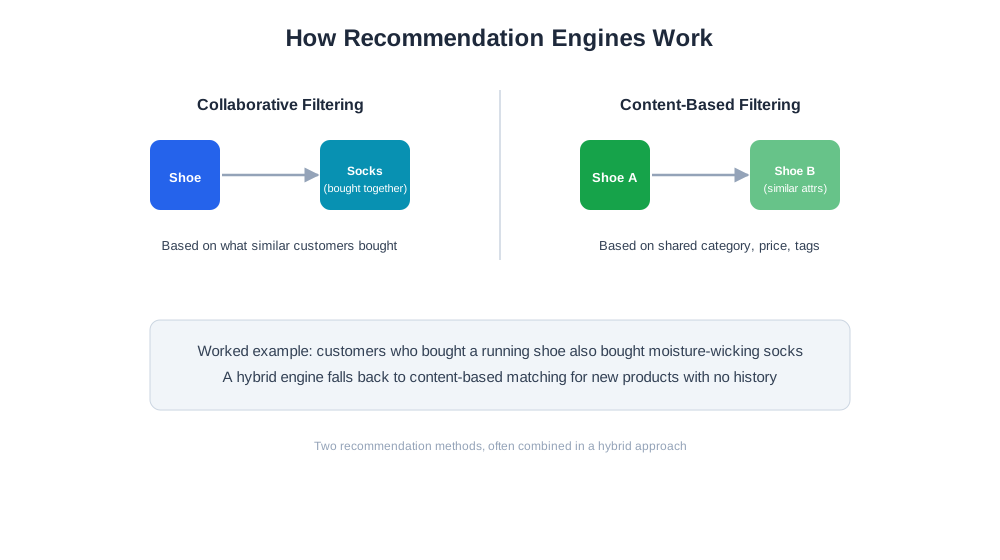
Collaborative filtering looks at patterns across many customers’ behavior, recommending products based on what customers with similar purchase or browsing histories bought. If customers who bought Product A frequently also bought Product B, the engine will recommend B to a new customer who just bought A, even without knowing anything about the products’ actual attributes.
Content-based filtering recommends products based on shared attributes — category, material, price range, brand, or tags — matching a customer’s previously viewed or purchased items to similar products in the catalog. This approach works well for new products with little transaction history, since it doesn’t rely on other customers’ behavior to make a recommendation.
Hybrid approaches combine both methods, using collaborative filtering where there’s enough behavioral data and falling back to content-based matching for newer products or smaller catalogs where behavioral patterns haven’t yet emerged.
Worked example: a customer buys a specific model of running shoe. A collaborative-filtering engine notices that a large share of customers who bought that shoe also bought a particular brand of moisture-wicking socks within the same order or shortly after, so it surfaces the socks as a “frequently bought together” suggestion. A content-based engine, working independently, might separately recommend a different pair of running shoes in the same category and price range based on shared attributes, useful for customers still comparing options rather than ready to check out.

Ready to Monitor Your AI Visibility?
Track how AI chatbots mention your brand across ChatGPT, Perplexity, and other platforms.
Why Product Recommendation Engines Matter for E-commerce Brands
Recommendation engines are one of the most direct levers a merchant has to increase average order value, since a relevant cross-sell or bundle suggestion at checkout or on a product page converts incremental revenue that a generic browsing experience would have missed entirely. They also support repeat purchase behavior over the longer term: personalized reorder reminders and related-product suggestions in post-purchase emails or on-site notifications keep a brand relevant to a customer between purchases, rather than relying entirely on the customer to remember to come back. Beyond direct revenue impact, recommendation engines improve the overall shopping experience by reducing the effort required to find relevant products in a large catalog, which matters increasingly as product counts grow and manual browsing becomes less practical for customers.
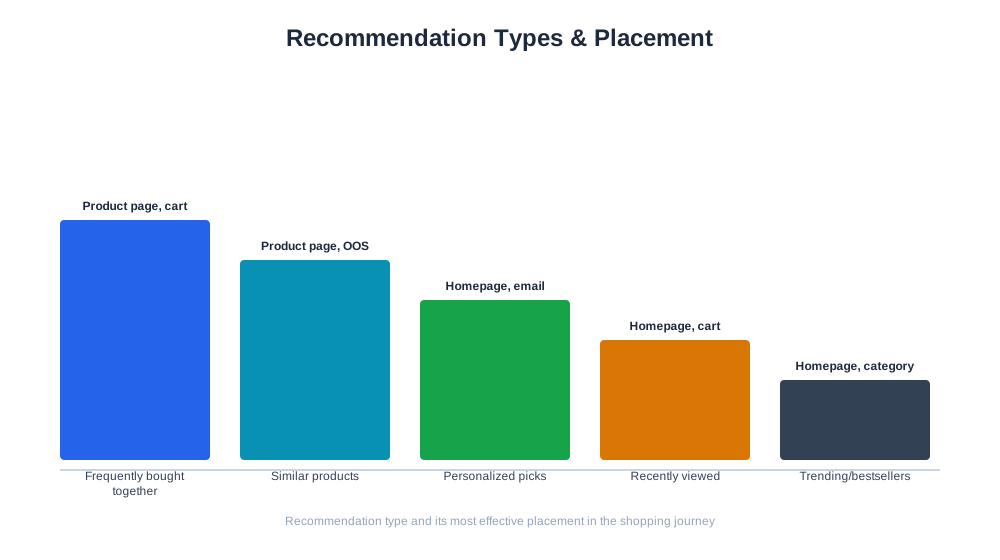
| Recommendation Type | Method | Best Placement |
|---|---|---|
| Frequently bought together | Collaborative filtering on transaction data | Product page, cart |
| Similar products | Content-based matching on attributes | Product page, out-of-stock page |
| Personalized picks | Individual customer behavior history | Homepage, email |
| Recently viewed | Session-based browsing history | Homepage, cart reminder |
| Trending / bestsellers | Aggregate sales velocity | Homepage, category page |
Product Recommendation Engines and AI-Driven Commerce
AI shopping assistants like ChatGPT Shopping, Perplexity Shopping, and Amazon Rufus are effectively acting as an external recommendation layer, surfacing product suggestions to shoppers before they even reach a retailer’s own site. This raises the bar for what an on-site recommendation engine needs to do: it has to be at least as relevant and personalized as what a shopper might get from an AI assistant, or the retailer risks losing the cross-sell and upsell opportunity to whatever the AI surface recommends instead. AmICited’s eshop_get_product_affinity tool analyzes actual transaction data to surface which products are genuinely bought together, viewed in sequence, or purchased by overlapping customer segments, giving merchants a data-backed foundation for recommendation logic instead of relying on manual guesswork about which products pair well. This kind of grounded affinity data also helps merchants ensure their product feeds and structured data are consistent with real purchase patterns, which matters as AI shopping surfaces increasingly ingest product relationship data directly from merchant catalogs.
Stay Updated on AI Visibility Trends
Get the latest insights on AI mentions, brand monitoring, and optimization strategies.
Best Practices for Product Recommendation Engines
- Base recommendation logic on real transaction data, not assumptions about which products should pair well
- Place recommendations at the moments they’re most likely to influence a decision: product page, cart, and post-purchase
- Test different recommendation types (frequently bought together vs. personalized picks) rather than assuming one format works everywhere
- Refresh recommendation data regularly, since product affinity and customer behavior shift with seasonality and catalog changes
- Avoid recommending out-of-stock or low-margin products just because they fit a pattern, since irrelevant suggestions erode trust in the recommendation feature
- Measure impact through controlled A/B testing on conversion rate and average order value, not just by assuming a lift occurred
Common Product Recommendation Engine Mistakes
Launching a recommendation engine without enough transaction data to support it. Collaborative filtering needs a meaningful volume of purchase history to find reliable patterns; a small catalog or low-traffic store often gets more value from simple, manually curated pairings than from a machine-learning model working with too little data. Recommending products purely by popularity rather than relevance. Showing the same bestsellers to every customer regardless of what they’re actually looking at defeats the purpose of personalization and tends to underperform genuinely relevant, behavior-based suggestions. Letting stale data drive recommendations. An engine trained on data from a prior season or before a major catalog change can keep surfacing irrelevant or discontinued products, which damages trust in the recommendation feature faster than having no recommendations at all. Overloading a page with recommendation blocks. Stacking multiple recommendation carousels on a single page can overwhelm shoppers and dilute the impact of any one suggestion; a smaller number of well-placed, clearly relevant recommendations generally outperforms a cluttered page. Not measuring recommendation performance separately from overall site conversion. Without isolating the specific lift attributable to recommendation placements through A/B testing, it’s easy to either overestimate their value or fail to notice when a recommendation block has stopped performing and needs to be retuned or removed.