



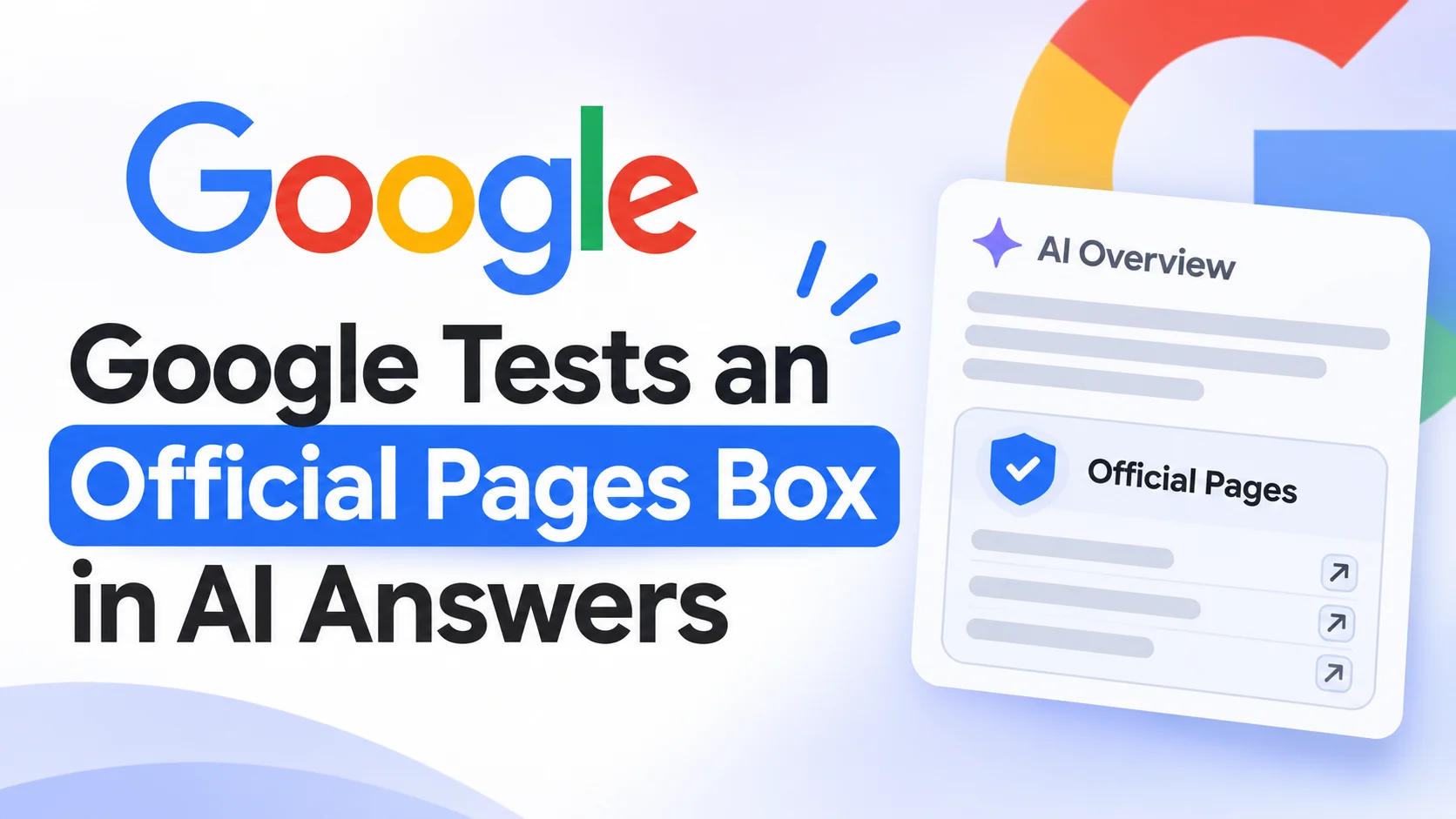
On October 15, 2026, Google announced a set of changes to AI Mode and AI Overviews. The one that matters most for brands is small and easy to miss: a test box at the top of some answers that points to official pages.
If someone asks how to get a refund from an airline, the box can show the one or two links that actually solve the problem, with a line on why each one helps. That’s a place where your own site can win the slot, or where a third-party page can take it.
Key Takeaways
- Google is testing an official pages section at the top of some AI Mode and AI Overviews answers. It shows 1–2 links to finish a task.
- Inline links will appear higher and more often in AI answers.
- Article carousels now reach more markets and languages, and highlight Preferred Sources.
- Google says Preferred Sources use grew 7x this year, with no baseline given.
- No click data exists for any of this yet. Track which of your URLs get cited instead.
What Google changed
Google’s October 15 announcement had five parts. Here’s how they sit in an AI answer.
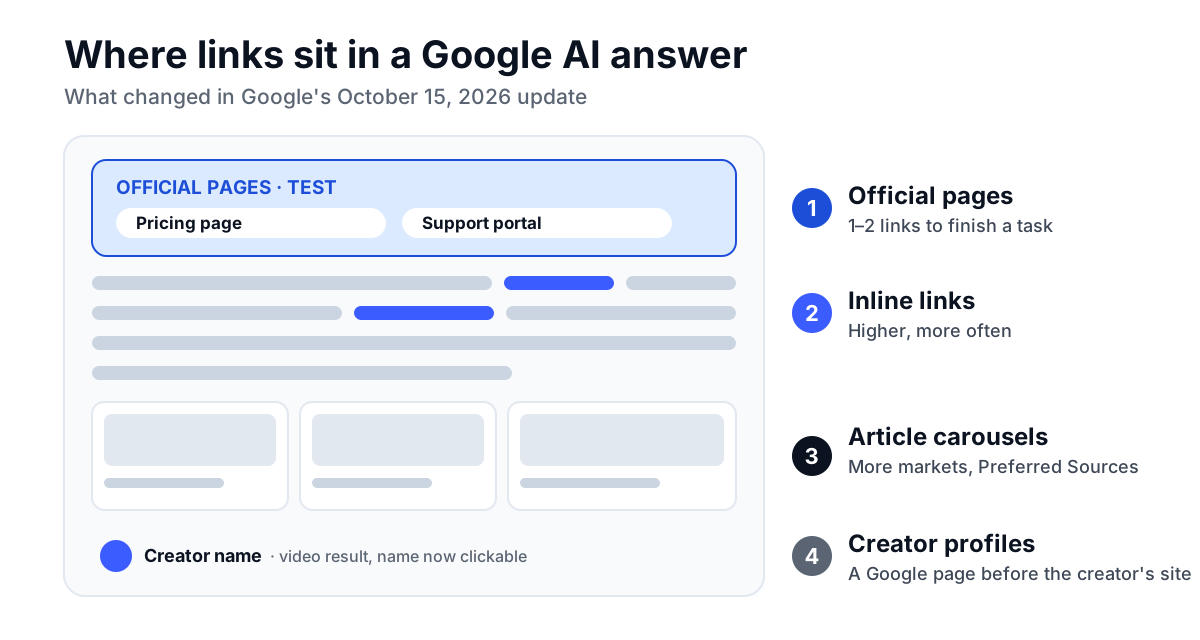
According to ALM Corp’s summary of the announcement, the update covers:
- Inline links higher. Links embedded in words and phrases appear earlier, sometimes before a reader finishes the answer.
- Official sources section. For queries with few authoritative answers, a box at the top shows official links with context.
- Wider article carousels. They roll out to more regions, languages and query types, mainly for timely searches.
- Thumbnails on related articles. Images make linked articles easier to spot.
- Clickable creator names. On AI Mode video results, a name opens a Google profile page before the creator’s own site.

Ready to Monitor Your AI Visibility?
Track how AI chatbots mention your brand across ChatGPT, Perplexity, and other platforms.
The official pages test
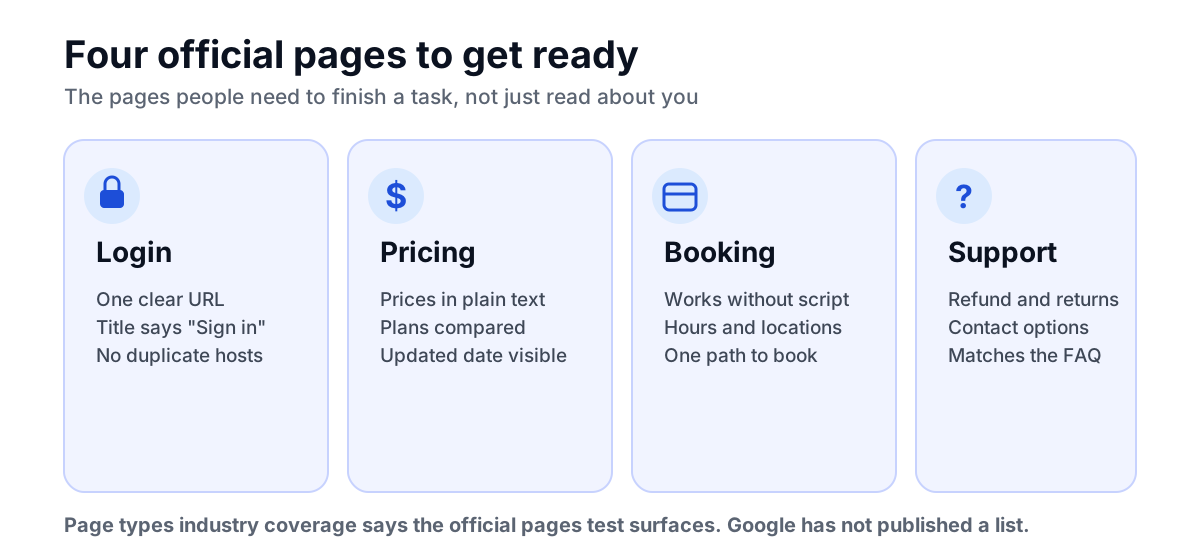
The official pages box is the part to watch. It answers a task, not a topic. Industry coverage describes it surfacing pages such as login, pricing, booking and support. Google hasn’t published a list, so treat that as a pattern, not a rule.
It’s still a test. Not every search shows it, and Google hasn’t said where it will expand. That gives you a short window to check what AI engines already point to when someone looks for you.
Why it matters
When the answer sits on Google’s page, the link that wins is the one Google trusts for that task. For brand queries, that should be you. It often isn’t. A reseller, a review site or an old help article can outrank your own page in the answer.
Our guide to how Google AI Overviews decide which brands to mention covers entity clarity, earned authority and extractable content. Those same signals are the ones to get right on your official pages. Google hasn’t confirmed what the new box uses, but thin or duplicated pages give it less to work with.
Stay Updated on AI Visibility Trends
Get the latest insights on AI mentions, brand monitoring, and optimization strategies.
Links, clicks and the data gap
More links sound like good news for publishers. The evidence is thin. Google said Preferred Sources usage “jumped 7x this year,” and, as ALM Corp reports, Search Engine Land’s Barry Schwartz noted the figure has no baseline.
Search Console doesn’t help either. Its AI performance report shows impressions, pages, countries and devices, but no clicks. Google told Search Engine Roundtable it would add metrics over time. Until it does, you can see that a page appeared, but not whether anyone clicked.
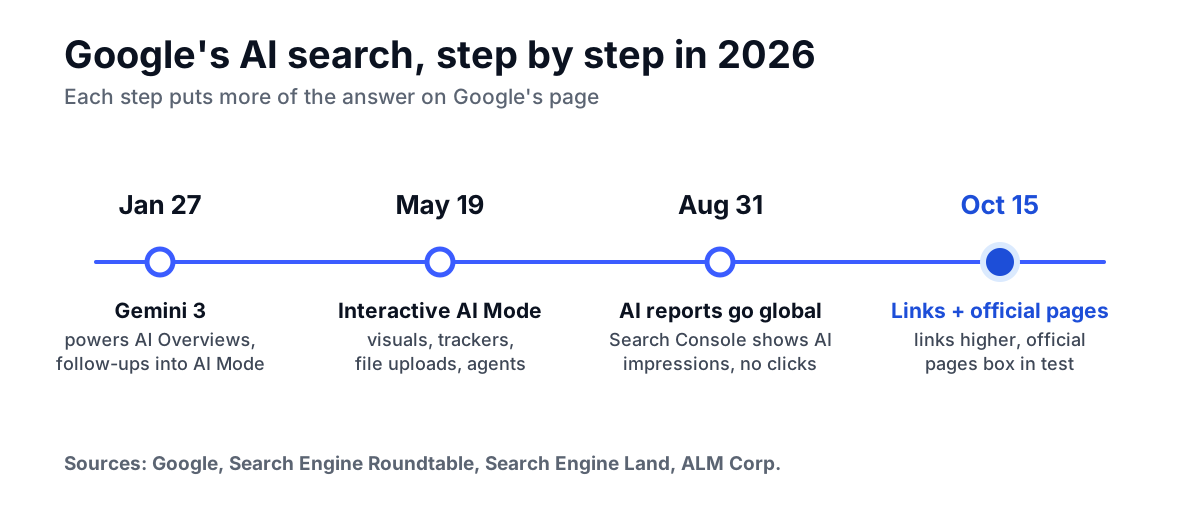
This fits a pattern. AI Mode became the default experience, Google now sells ads inside AI Mode answers, and Reddit says AI Mode drives it no traffic. Each step moves more of the journey onto Google’s page. That’s the zero-click problem again, now with the links placed inside the answer.
What to do now
- Audit your four official pages. Check login, pricing, booking and support. Each needs one canonical URL, plain-text content and a clear title.
- Search like a customer. Ask AI Mode task questions about your brand: “how do I cancel,” “how much does it cost.” Note which links appear.
- Check who is cited instead of you. Use Source & Citation Intelligence to see which URLs each engine cites for your prompts, and whether they’re yours.
- Find pages that rank but aren’t cited. The citation vs ranking gap report shows where Google ranks you and AI engines skip you.
- Keep Preferred Sources in play. News carousels highlight them, so see our guide to Google’s Preferred Sources button.
- Don’t opt out by reflex. Blocking AI features removes you from them. See what the opt-out does before you decide.
The takeaway
Google is putting links earlier in the answer and testing a box for official pages. That’s good news for brands that keep their key pages clear, and a risk for those that leave the slot to a reseller. Nobody can measure the clicks yet, so measure what you can: which of your pages each AI engine cites, and how that changes week to week.
 LinkedIn