


Google Search Console's New AI Overview Report, Explained
Google shipped a dedicated AI performance report in Search Console, tracking AI Overviews and AI Mode impressions. Here's exactly what the data shows, what it's...
7 min read
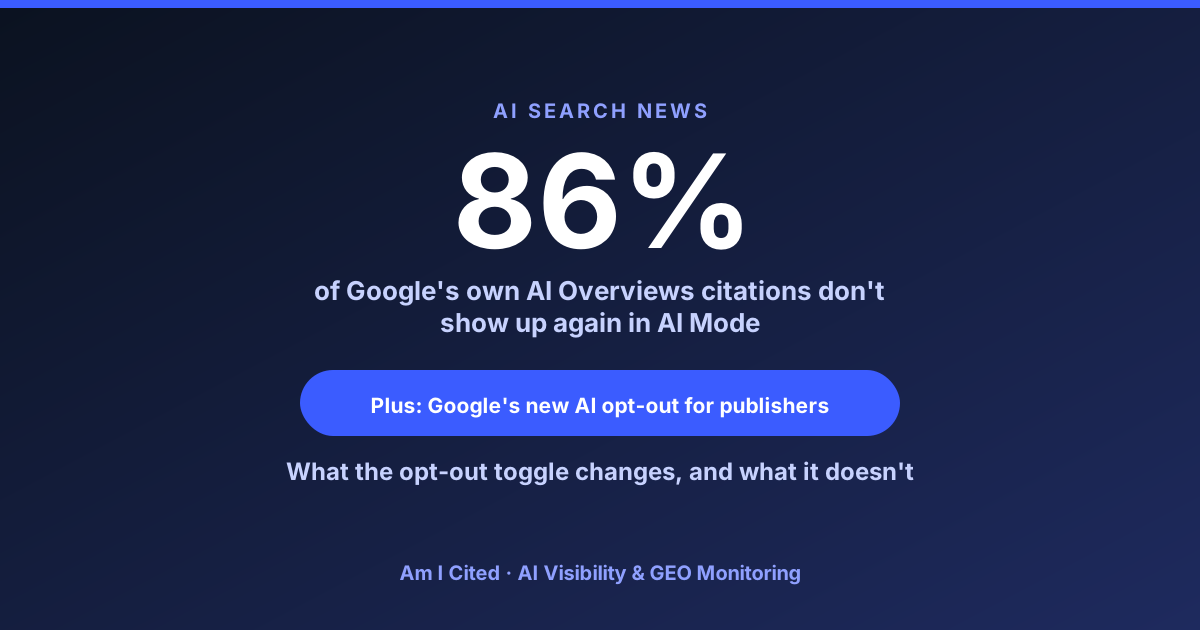
Google is rolling out a Search Console toggle that lets publishers exclude their content from AI Overviews and AI Mode. Here’s what it changes, and why AI platforms citing almost none of the same sources matters more.
Google is giving publishers a new lever over how their content shows up in AI-generated answers. Starting this summer, a Search Console toggle lets sites opt out of being cited in AI Overviews and AI Mode entirely, while keeping their normal position in regular blue-link search results. It shipped in the same release as Search Console’s new AI performance report , which is the tool most sites should actually reach for instead: this post is about the opt-out switch itself, who should consider it, and a much bigger finding it surfaced almost by accident.
It’s a small, single-purpose switch. But it lands at the same moment as a much bigger, less-publicized finding: across the five major AI platforms, the sources that get cited barely overlap at all, even between Google’s own two AI products.
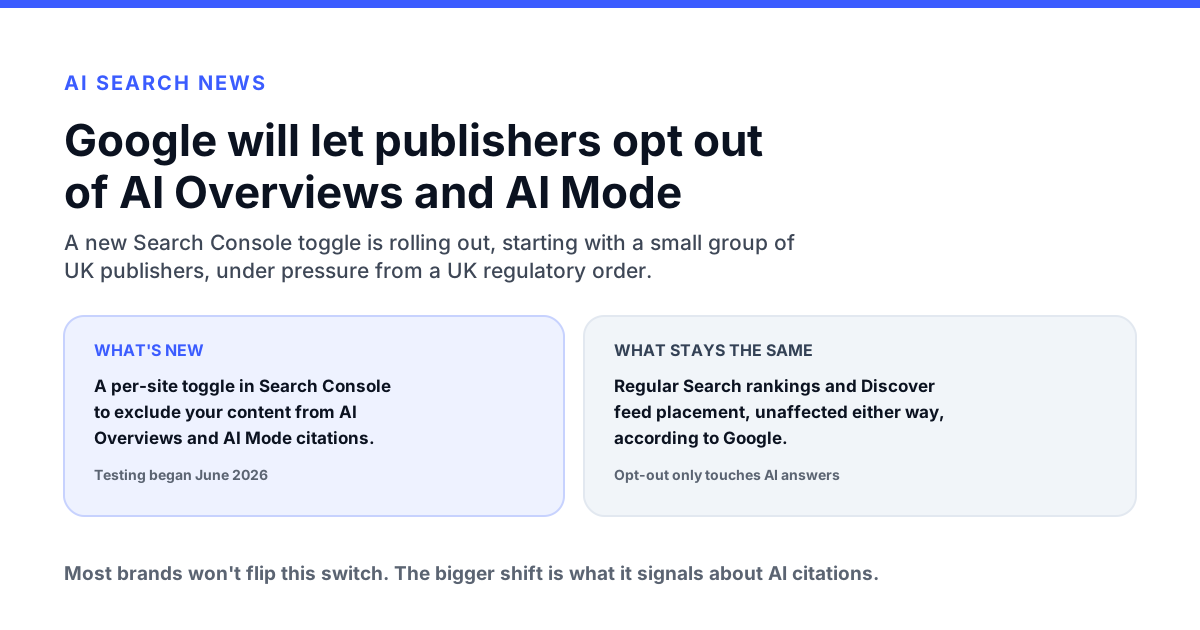
Google confirmed it is testing a new control that lets publishers exclude their websites from AI Overviews and AI Mode, configured as a site-level setting inside Google Search Console. The rollout began with a limited group of UK publishers in June 2026, timed to a UK Competition and Markets Authority order requiring Google to give publishers more transparency and control over how their content is used to generate AI answers.
The mechanics are narrow by design. Opting out removes a site’s content from consideration for AI Overviews and AI Mode citations specifically. It does not change how the site is crawled, indexed, or ranked in traditional search, and Google has stated the setting will not affect regular Search rankings.
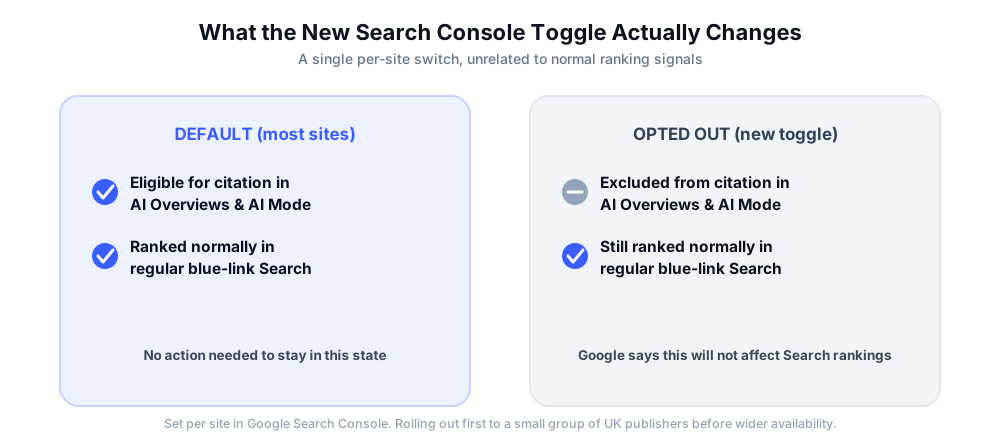
That distinction matters because it answers the question every publisher asks first: does this hurt my traffic from Google Search overall? By Google’s own account, no. It only removes one specific traffic and visibility source, being cited in an AI-generated answer, while leaving the rest of a site’s presence in Search untouched.

Track how AI chatbots mention your brand across ChatGPT, Perplexity, and other platforms.
For the vast majority of brands and publishers, opting out is the wrong move, and most won’t take it. Being cited in AI Overviews is associated with a meaningful lift in click-through rate compared to not appearing at all, which cuts directly against the case for exclusion. The opt-out exists to solve a narrower problem: a subset of publishers, largely in news and reference content, worried that AI Overviews are cannibalizing the clicks their content used to earn directly, without giving anything comparable back.
For a brand actively trying to build AI visibility , the toggle isn’t really relevant either way. It only affects two of the five major AI answer surfaces, Google’s AI Overviews and AI Mode. ChatGPT, Perplexity, Claude, and Gemini each build their own citation logic independently of anything a Search Console setting controls. Opting out of Google’s AI surfaces changes nothing about whether those other four platforms cite you, which is precisely where the more important story starts.
An analysis spanning six major citation studies and more than 680 million individual AI citations, published between mid-2024 and early 2026, found that the sources different AI platforms cite have surprisingly little in common. Only 11% of domains cited by ChatGPT are also cited by Perplexity for comparable queries. Zoomed out across all five major platforms, roughly 78 to 85% of cited domains show up on only one of them.
The most counterintuitive number in the dataset is internal to Google itself. AI Overviews and AI Mode run on shared underlying search infrastructure at the same company, yet they only share about 14% of their cited domains. Two answer surfaces, one company, and the sources they draw on to answer similar questions still mostly diverge.
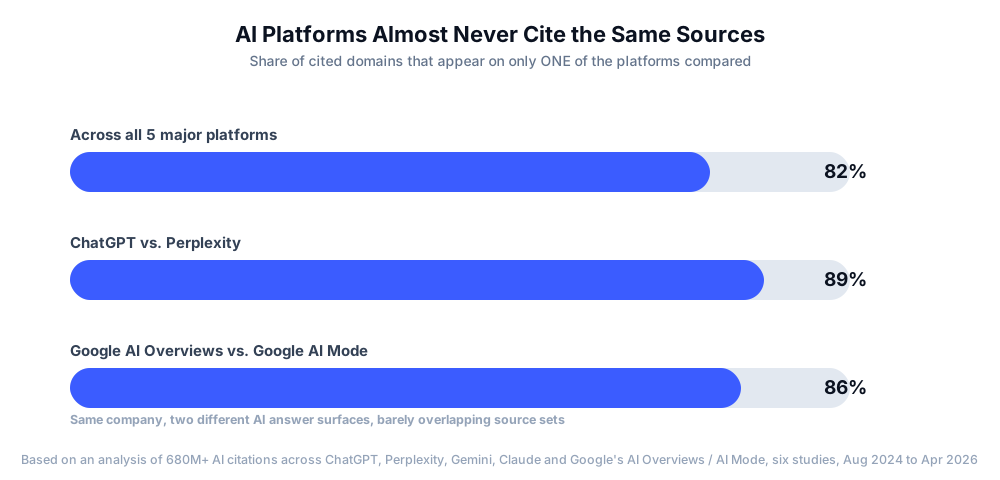
That fragmentation is the actual headline here, more than the opt-out news itself. It means generative engine optimization (GEO) can’t be treated as a single target. Ranking well in Google’s AI Overviews doesn’t predict much about ChatGPT or Perplexity, and even within Google’s own ecosystem, being cited in AI Overviews doesn’t mean AI Mode will cite the same page for a similar question.
Get the latest insights on AI mentions, brand monitoring, and optimization strategies.
Two practical shifts follow from this. First, publisher-side controls like Google’s new opt-out are going to keep expanding, not because Google intends to shrink AI Overviews, but because regulatory pressure is pushing every major platform toward more granular publisher consent tools. Brands should expect more toggles like this across more platforms over the next year, each one another small, platform-specific lever rather than a universal one.
Second, and more actionable: how GEO differs from traditional SEO matters most exactly here. A traditional SEO team can reasonably assume that ranking well on Google correlates with ranking well elsewhere, because most search engines share overlapping crawl and link-graph logic. AI citation doesn’t work that way. With 78 to 89% of citations unique to a single platform depending on the pair you compare, the only reliable way to know whether your brand shows up in an AI answer is to check that specific platform, not to infer it from another one.
That’s the practical case for treating each AI platform as its own measurement surface rather than a proxy for the others. If you haven’t already, it’s worth taking the time to set up AI brand monitoring that runs your tracked prompts against every major engine on a schedule, then choose which AI engines to track based on where your actual customers are asking questions. AmICited’s own data reports on the most-mentioned brands in Google AI Overviews and the most-mentioned brands in ChatGPT show exactly this pattern in practice: the brands that dominate one platform’s answers are frequently not the same ones showing up on the other.
Google’s opt-out toggle will affect a small number of publishers who deliberately choose to use it. The citation-overlap data affects everyone trying to be visible in AI search, whether or not they ever touch that setting.
Arshia is an AI Workflow Engineer at FlowHunt. With a background in computer science and a passion for AI, he specializes in creating efficient workflows that integrate AI tools into everyday tasks, enhancing productivity and creativity.

Am I Cited monitors how ChatGPT, Perplexity, Gemini, and Google AI Overviews cite your brand, so an opt-out toggle on one platform never leaves you flying blind on the rest.
Google shipped a dedicated AI performance report in Search Console, tracking AI Overviews and AI Mode impressions. Here's exactly what the data shows, what it's...
Master Google AI Overviews optimization in 2025. Learn the E-E-A-T signals, technical SEO, and content strategy that get your pages cited directly inside AI Ove...

Learn how to optimize your website to appear in Google AI Overviews. Discover ranking factors, technical requirements, and proven strategies to increase visibil...
Cookie Consent
We use cookies to enhance your browsing experience and analyze our traffic. See our privacy policy.